

When people talk about the Autoimmune Protocol, it’s often through personal stories or anecdotal success. But for many patients—and clinicians—the question has always been the same:
Where is the research?
In Episode 59 of the Autoimmune Wellness Podcast, I’m starting a brand-new series called AIP Medical Research Reviews, where I walk through the published clinical studies on the Autoimmune Protocol, what they examined, what they found, and what the results actually mean for people living with autoimmune disease.
This first episode focuses on the groundbreaking Scripps studies on AIP for inflammatory bowel disease (IBD)—the very first clinical research ever conducted on the Autoimmune Protocol.
.
Watch the Episode
.
The Patient Story That Sparked AIP Research
In 2015, Autoimmune Wellness received an email that quietly changed the trajectory of AIP.
It came from Dr. Gauree Konijeti, a gastroenterologist and clinical researcher at Scripps. One of her ulcerative colitis patients—still flaring despite treatment—had asked to try the Autoimmune Protocol for 30 days.
Dr. Konijeti approved the experiment.
When that patient returned for a follow-up colonoscopy, the improvement was so striking that Dr. Konijeti wanted to know more. That curiosity led her to Autoimmune Wellness, and soon after, to a research collaboration that would become the first AIP clinical pilot study for IBD.
For those of us who had already seen AIP work in real life, this marked a turning point—when community experience began to move into formal medical research.
.
Why Inflammatory Bowel Disease Matters Here
IBD is an umbrella term for Crohn’s disease and ulcerative colitis, two autoimmune conditions involving chronic inflammation of the digestive tract.
These diseases:
- Affect at least 1 in 100 people
- Often begin early in life
- Require long-term management
- Can significantly reduce quality of life
Standard treatments—immunosuppressants, steroids, biologics, and sometimes surgery—are essential for many patients. But even with these therapies, a substantial number of people continue to experience symptoms, flares, and limitations.
Historically, dietary approaches were controversial in IBD care, largely due to a lack of high-quality research. That’s what makes the Scripps studies so important.
.
The Two Scripps Studies Reviewed in This Episode
This episode covers two published, peer-reviewed studies led by Dr. Konijeti and her team:
- 2017 Pilot Study: Efficacy of the Autoimmune Protocol Diet for Inflammatory Bowel Disease
- 2019 Follow-Up Study: An Autoimmune Protocol Diet Improves Patient-Reported Quality of Life in Inflammatory Bowel Disease
Together, these papers examine both clinical outcomes and quality of life changes in adults with longstanding IBD.
.
Who Participated in the Pilot Study
The pilot study enrolled 15 adults with Crohn’s disease or ulcerative colitis.
These were not mild or newly diagnosed cases:
- Average disease duration was nearly 19 years
- All participants had active disease at baseline
- Many were already on biologic therapy, steroids, or immunomodulators
- None had prior experience with AIP
This is important because it challenges the idea that AIP only works for “easy” cases or highly motivated diet experts. This was a group where improvement would reasonably be difficult.
.
What the AIP Intervention Looked Like
This was not a “here’s a food list—good luck” study.
The intervention included:
- A 6-week staged elimination (“SAD to AIP in SIX”)
- Followed by a 5-week elimination maintenance phase
- Guidance on nutrient density
- Education on sleep, stress, movement, and support
- One-on-one dietitian feedback
- Health coaching
- A moderated group environment
The dietary phase aligned with what we now call Core AIP, removing grains, legumes, dairy, eggs, nightshades, nuts and seeds, alcohol, coffee, and food additives—while emphasizing whole, nutrient-dense foods.
This holistic structure matters. The results reflect AIP as a full framework, not just a list of eliminations.
.
How Outcomes Were Measured
Researchers assessed:
- Clinical symptom scores
- Harvey-Bradshaw Index (Crohn’s)
- Mayo Score (Ulcerative Colitis)
- Inflammatory markers
- C-reactive protein (CRP)
- Fecal calprotectin
- Quality of life
- Short Inflammatory Bowel Disease Questionnaire (SIBDQ)
This allowed them to evaluate both objective inflammation and lived experience.
.
The Results: Clinical Outcomes
The most striking finding:
73% of participants achieved clinical remission by week six.
This was true for both Crohn’s disease and ulcerative colitis.
Even more notable:
- Many participants improved before reaching full elimination
- Symptom scores dropped significantly
- Improvements were maintained through the study period
For a population with long-standing, active IBD, these results were remarkable.
.
Biomarkers and Medication Changes
Inflammatory markers like CRP and fecal calprotectin showed meaningful downward trends, though statistical significance was limited by the small sample size.
Some participants:
- Discontinued steroids
- Reduced or stopped mesalamine
- Maintained remission despite medication changes
These changes were not required by the study and always documented, reinforcing that AIP was used alongside medical care, not in opposition to it.
.
Safety Considerations
AIP was generally well tolerated, but two participants with known strictures withdrew due to symptom worsening.
This highlights an important takeaway: People with strictures or surgical changes need personalized guidance and medical oversight when making dietary changes.
Safety and personalization are essential.
.
Quality of Life Improvements
The 2019 follow-up study focused on quality of life—and the results were compelling.
Participants reported:
- Improved bowel function
- Reduced stress
- Better ability to engage socially and physically
- Sustained gains into the maintenance phase
Several participants moved from poor to good quality of life within weeks.
These findings reinforce something we see repeatedly: quality of life often improves before labs normalize, and it matters.
.
Why These Studies Still Matter
Even with limitations—a small sample size, no control group—these studies changed the conversation.
They showed that:
- AIP is feasible and safe when properly supported
- Dietary and lifestyle changes can lead to rapid improvement
- Results can rival medication outcomes for some patients
- AIP deserved a place in evidence-based autoimmune care
They also helped shape what we now recognize as Modified AIP, informed by early improvements seen during phased elimination.
.
What This Means for People with IBD Today
Key takeaways:
- Improvement can happen quickly
- Personalization is essential
- Modified AIP can be a smart starting point
- Lifestyle factors matter just as much as food
- Support improves outcomes
- The odds of improvement are genuinely encouraging
These studies remain foundational because they show what’s possible—even after years of disease.
.
AIP Foundation Series: Learn the Framework
If this episode sparked your interest in the science behind AIP—or if you’re considering applying it yourself—the AIP Foundation Series is a helpful next step.
This free, 5-day email course includes:
- Clear explanations of Core and Modified AIP
- Printable food lists and guides
- Practical tools to reduce overwhelm
- Evidence-informed education
You can sign up here:
.
The New Autoimmune Protocol (Coming Soon)
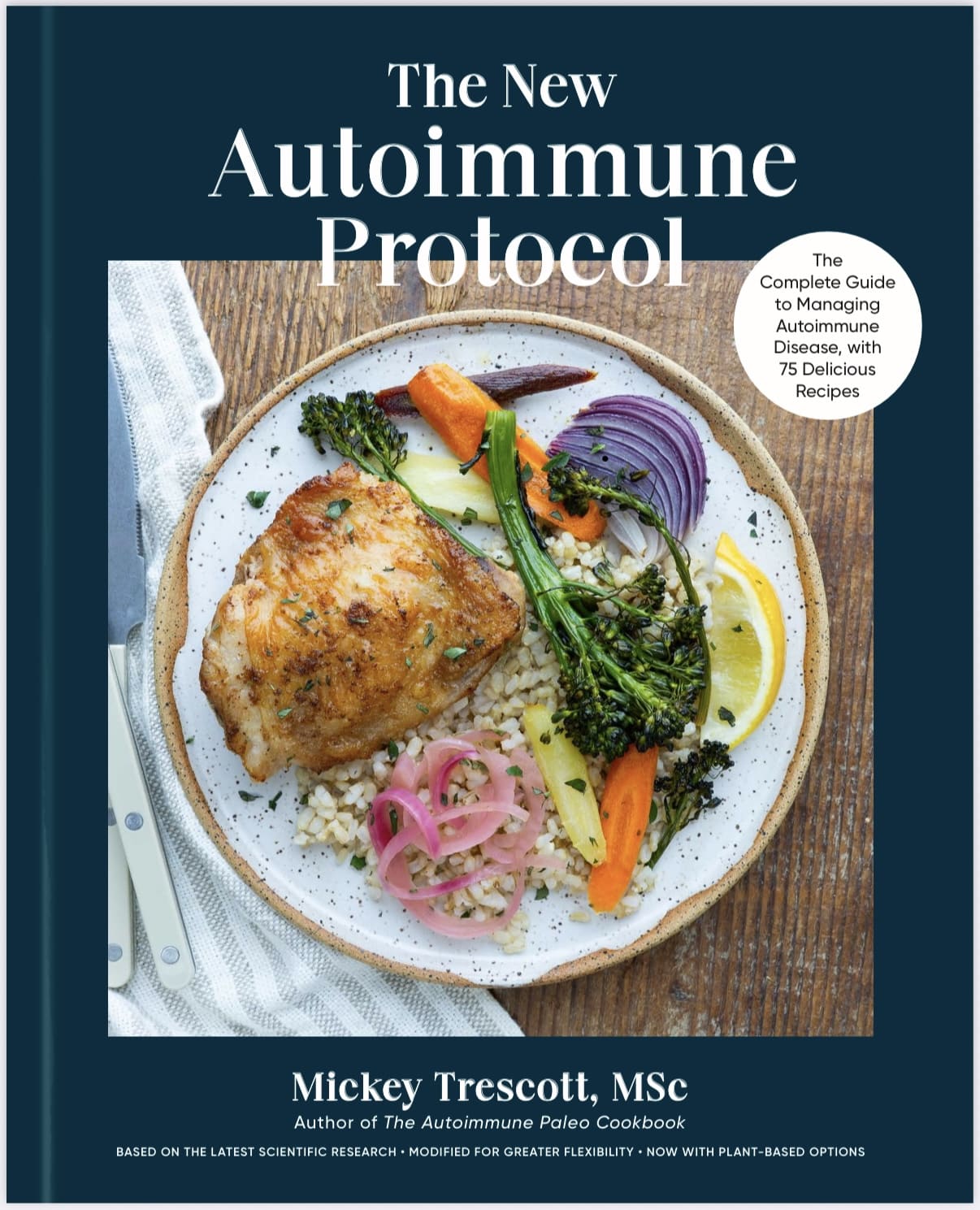
If you’re interested in the science behind AIP and how to apply it in real life, my upcoming book, The New Autoimmune Protocol, brings together:
- Updated medical research
- Clear guidance on Core and Modified AIP
- New recipes and step-by-step meal plans
👉 Pre-order The New Autoimmune Protocol
Listen to the Episode
.
Episode Timeline
00:00 – The patient story that started AIP research
02:35 – Overview of the Scripps studies
03:46 – Understanding IBD and standard treatments
05:10 – Why study AIP for IBD
06:13 – Study participants
08:19 – The AIP intervention
11:41 – Clinical endpoints and biomarkers
13:58 – Results and remission rates
17:19 – Medication changes
19:05 – Safety considerations
20:54 – Quality of life findings
23:53 – Why these studies matter
27:15 – Practical takeaways
31:03 – Recap and wrap-up
.
Episode Transcript
Below is the full transcript of Episode 59 of the Autoimmune Wellness Podcast.
This transcript is provided for accessibility and reference.
Title: AIP for IBD: The Groundbreaking Scripps Pilot & Quality of Life Studies (Ep 059)
AIP for IBD: The Groundbreaking Scripps Pilot & Quality of Life Studies (Ep 059)
[00:00:00] Introduction: The Patient That Started It All
In 2015, Autoimmune Wellness received an email that marked a quiet but pivotal shift in the Autoimmune Protocol movement. It was from Dr. Gauree Konijeti, a gastroenterologist who shared that one of her ulcerative colitis patients had asked to try the Autoimmune Protocol for 30 days because they were still struggling with persistent flare despite treatment.
Dr. Konijeti had given this patient the go ahead to try the AIP, and their follow up colonoscopy showed such a dramatic improvement that she then asked them where she could learn more about the protocol. That led her to the Autoimmune Wellness website, and soon after she reached out to Angie and me directly to better understand best practices in using AIP.
Of course, we were thrilled. That email began a collaboration that ultimately became the very first pilot study of AIP for inflammatory bowel disease. So if you’re not familiar, IBD includes both Crohn’s disease and ulcerative colitis. It was a remarkable example of genuine scientific curiosity by Dr. Konijeti, and in many ways, fortunate timing for us since we had already been teaching and coaching about AIP for many years at that point.
There was also a little luck involved as Dr. Konijeti was not just a regular gastroenterologist. She was the head of the IBD program and a clinical researcher at Scripps who was actively exploring dietary therapies for IBD, and her patient’s results using AIP aligned perfectly with questions she was already hoping to study.
For those of us who had already seen AIP’s impact in our own lives, in our communities, and in clinical practice, this was the moment when those early success stories began to shift into research results. And today we’re going to walk through all of the details of the study: how it began, the intervention that was examined, the results, and why it continues to matter nearly a decade later.
Welcome back to the Autoimmune Wellness Podcast. I’m your host, Mickey Trescott, and today we’re kicking off a brand new series: AIP Medical Research Reviews, where I walk you through the published clinical studies on the Autoimmune Protocol, what each one examined, what they found, and what it means for real people living with autoimmune disease.
As always, this podcast is for educational and informational purposes only and is not intended as medical advice. Be sure to work with your healthcare provider before making any changes to your treatment plan.
[00:02:35] Episode Overview: The AIP IBD & QoL Studies
In this first research episode, we’re diving into two of the four groundbreaking studies from Scripps, by Dr. Gauree Konijeti and her team, which represent the very first medical research ever conducted on the Autoimmune Protocol.
The two papers we’ll be discussing are: Efficacy of the Autoimmune Protocol Diet for Inflammatory Bowel Disease published in 2017, and An Autoimmune Protocol Diet Improves Patient-Reported Quality of Life in Inflammatory Bowel Disease published in 2019.
If you’d like to follow along, I’ve included direct links to both of these open-access papers in the show notes.
We’re going to walk through the study design, who participated, what the AIP intervention looked like in the clinical setting, and of course all of the results, including some truly remarkable improvements in people who had been living with inflammatory bowel disease for a very long time.
Along the way, I’m going to explain the science and everyday language and highlight what these studies mean for the evolution of AIP today, including why the early improvements documented in these studies helped inspire the Modified AIP approach.
[00:03:46] Understanding IBD and Standard Treatments
Before we get into the details of the studies themselves, it’s important to understand the landscape of inflammatory bowel disease, otherwise known as IBD, and why this research is so significant. IBD is an umbrella term for two chronic autoimmune conditions: Crohn’s disease and ulcerative colitis. Both involve misdirected immune activity that causes inflammation in the digestive tract, often leading to abdominal pain, bleeding, diarrhea, fatigue, weight loss, and potentially serious complications over time.
Crohn’s and ulcerative colitis are also some of the most prevalent autoimmune conditions, affecting at least one out of every 100 people. These conditions typically require long-term management and can be incredibly disruptive to daily life. The standard treatments for IBD include medications like immunosuppressants, steroids, and biologics, along with surgery in some cases. These are powerful interventions and for very many patients they are essential.
But even with these therapies, there is a significant number of patients that continue to experience symptoms, flares, or reduced quality of life. And despite decades of research, the role of diet in IBD has historically been controversial. Until recently, dietary approaches were often considered experimental or alternative with very little high-quality research to guide clinicians.
[00:05:10] Why Study AIP for IBD?
So given that context, you might wonder why would a gastroenterology researcher consider studying a diet like AIP in the first place? Part of the answer goes back to that patient story, but there’s definitely more to it. Around this time there was a growing awareness of dietary interventions like AIP and other therapeutic approaches gaining anecdotal traction in IBD communities. At the same time, clinicians were increasingly aware that their patients were seeking out complimentary diet and lifestyle strategies on their own, simply because the standard care alone wasn’t meeting all of their needs.
AIP entered the picture as a comprehensive elimination and reintroduction protocol designed to reduce inflammation, support gut health, and identify individual dietary triggers. While many healthcare providers and patients were becoming familiar with the anecdotal success stories, there hadn’t yet been any clinical research to document its effects, especially in a specific autoimmune population with longstanding and active disease.
[00:06:13] Study Participant Profile
With that background, it’s time to dig into the pilot study and start with the participant profile because who is included in this study shapes how we interpret the results.
The study enrolled 15 adults with inflammatory bowel disease representing both Crohn’s disease and ulcerative colitis. Now, these were not mild cases or newly diagnosed individuals. In fact, the mean disease duration in this group was nearly 19 years, meaning that many participants had been living with IBD for the majority of their adult lives.
And most importantly, all were experiencing active disease at the beginning of the study, despite treatment with standard therapy. So they were not in remission, they were not between flares, but they were still symptomatic and struggling despite this care.
And you can see that many of these patients were on standard medications for IBD, including 47% on mesalamine, 47% on biologic therapy and 13% on an immunomodulator, and then 20% on systemic steroids. And as we discussed before, these therapies are the standard of care for IBD, and for many patients they are essential. But the fact that these participants remained symptomatic despite these treatments, underscores just how challenging their level of disease activity was.
Another important detail is that none of these patients had experience with AIP before. They were coming in without prior experience using dietary interventions to manage their IBD, and many had not received much nutritional guidance as a part of their conventional care. This means that they were encountering AIP as a completely new approach.
This matters because it pushes back against the assumption that AIP only works for highly motivated or diet savvy people. This group wasn’t selected because it would be easy for them or likely that they would be successful. If anything, they represented a population where achieving change would be very challenging, and that’s part of why the outcomes from the study were so striking.
[00:08:19] The AIP Study Intervention
Next, let’s talk about how the research team structured the AIP intervention in this pilot study, because this wasn’t just like a handout, start, AIP on day one. It was a very intentional phased program. In this study, participants used a six week staged elimination process called SAD to AIP in SIX, designed by Angie Alt.
Instead of removing all foods at once, they followed a weekly sequence where different food groups were eliminated step by step. This approach was designed to support consistency, reduce overwhelm, and make it easier for people with active disease to adopt the protocol safely.
After the six week transition, participants completed a five week maintenance phase. This is actually what we in the AIP community call the Elimination Phase. The research team here just used a little bit of a different terminology. This means that the total intervention period was 11 weeks, six weeks, doing that phased transition to full elimination, and five weeks of maintaining that Elimination Phase before any assessments were done.
The Elimination Phase used in the study aligns with what we now call Core AIP and removed: grains, legumes, nightshades, dairy, eggs, coffee, alcohol, nuts and seeds, and food additives. And alongside these eliminations, the program also emphasized nutrient density and whole food patterns, encouraging a wide variety of vegetables, high quality meats and seafood, healthy fats, fermented foods, bone broth and organ meats.
And next, the lifestyle and education component. So it’s also important to highlight that AIP in this study was not just about food. Participants received guidance on stress management, sleep and sleep hygiene, building a support system, navigating grocery shopping and meal prep, incorporating gentle movement and understanding nutrient density.
So this is reflective of AIP as a holistic framework, not just a dietary pattern, which is exactly how it is practiced and taught today. And I think that this is a point that can easily get lost when we discuss the results. So remember that the intervention here did not just focus on eliminations, but also in adding nutrient-dense foods as well as making lifestyle changes too.
Another core part of the study was the support structure. Participants worked with a certified health coach who guided the dietary transition, a registered dietitian who provided one-on-one feedback and troubleshooting, and they also participated in a moderated group setting where participants could ask questions and connect with one another, which is a really cool feature. The researchers themselves did not participate in the group, but the dietitian and coach monitored their dietary intake, they reviewed the food logs, and provided individualized guidance throughout.
This coaching model is very much in line with what we’ve long taught in the Autoimmune Protocol Certified coach program. A structured, supportive and education-based approach helps people implement AIP safely, accurately, and in a way that respects their symptoms, their capacity, and their medical needs.
[00:11:41] Clinical Endpoints & Biomarkers Used
Next, let’s discuss the clinical measures the researchers used. These are the areas that they are looking to see changes due to the intervention. The first tool is the Harvey-Bradshaw Index, or HBI, which is used specifically for Crohn’s disease. It’s a symptom-based scoring system that looks at things like daily abdominal pain, number of liquid stools, presence of abdominal mass, and complications like joint pain or fever. Higher HBI scores indicate more active disease and lower scores indicate improvement or remission.
For participants with ulcerative colitis, the study used the Mayo score. This is a combination of rectal bleeding, stool frequency, endoscopic findings, so that’s what the inflammation looks like on a colonoscopy, and a physician’s global assessment. The Mayo score is one of the most widely used clinical tools in UC research. And again, just like the HBI, higher scores indicate more active disease.
So next, the researchers measured C-reactive protein or CRP. This is a protein produced by the liver in response to systemic inflammation. It doesn’t tell you where the inflammation is happening, but it is a useful marker for whether inflammation is rising or falling in the body as a whole and is commonly measured in autoimmune disease research.
And to understand inflammation specifically in the gastrointestinal tract, researchers measured fecal calprotectin. This biomarker is released by neutrophils, a type of immune cell when there is inflammation in the gut lining. Higher levels indicate active intestinal inflammation, lower levels suggest an improvement.
And then lastly, the researchers used a quality of life assessment that we will discuss later as this was published as a separate study.
So taken together, these tools allow the researchers to measure both objective changes. So what they could see in blood work, stool tests or colonoscopy scoring and subjective changes, how the person actually feels, functions, and experiences their disease. Like most autoimmune diseases, IBD is complex. So using multiple types of measures helps ensure a more accurate and meaningful assessment of change.
[00:13:58] Results – Clinical Outcomes
Onto the results. Let’s start with the clinical outcomes, the changes participants actually experienced in their symptoms. One of the most striking findings from this pilot study is that 73% of participants achieved clinical remission by week six, and all of these patients maintained that state for the duration of the study.
This finding was consistent between those with Crohn’s disease and ulcerative colitis, meaning it worked equally well for both conditions. And remember, these were individuals with a mean disease duration of 19 years, all of whom were mid-flare when they started the study, regardless of the medications they were on. So that is, frankly, an amazing result.
Using the Harvey Bradshaw Index for Crohn’s and the Mayo score for ulcerative colitis, researchers saw meaningful reductions in symptom severity across the board. People reported less abdominal pain, fewer trips to the bathroom, improvements in rectal bleeding, and overall better daily functioning.
One important detail is that many of these improvements began before participants had even reached full elimination. Because the study design involved a gradual, stepped transition into AIP, week six was the first point when everyone was firmly in the Elimination Phase and yet symptoms had already improved. So for a population with longstanding, moderate to severe IBD, this kind of rapid improvement is pretty noteworthy.
Early dietary and lifestyle changes before someone is fully doing that Elimination Phase may have meaningful effects on symptom burden, and we will discuss how this factors into the new Modified AIP protocol later.
Next, let’s look at the objective biomarkers, the measurable indicators of inflammation that the researchers collected at baseline, week six, and week 11. The two primary markers used in the study were CRP, that C-reactive protein, which reflects the systemic inflammation, and fecal calprotectin, which reflects intestinal inflammation specifically.
So for participants who completed lab work at baseline and week six or week 11, mean CRP levels decreased, although the change was not statistically significant, that means that the general direction was downwards, suggesting some improvement, but the sample size was too small to confidently determine whether the change was meaningful across the whole group.
Next fecal calprotectin, this is that gut specific inflammatory marker, also showed an interesting pattern among participants with elevated FC at baseline, so that’s above 50 μg/g. Mean levels dropped from 701 micrograms per gram to 139 micrograms per gram, which is a sizable numerical improvement that didn’t reach statistical significance, but it is interesting.
And among the 11 participants who achieved clinical remission, six provided stool samples at both baseline and week 11, and in that subgroup, mean fecal calprotectin decreased from 471 micrograms per gram to 111 micrograms per gram . Again, a meaningful numerical change, but not statistically significant given the small number of samples.
[00:17:19] Medication Changes During the Study
Next we’ll talk about medication changes during the study. The research team advised participants not to make any changes to their medications before the study began, because medication stability helps isolate the effects of the dietary intervention. However, a few participants did make changes on their own during the course of the trial, and those cases were documented in the final paper.
Two participants who were taking oral mesalamine, a common therapy for ulcerative colitis chose, to discontinue it. One of these patients who stopped the oral mesalamine entirely still achieved clinical remission by week six, with their partial Mayo score falling from six at baseline to zero. Another participant discontinued the oral form but continued using a suppository and their partial Mayo score also decreased from five to zero by week six.
There were also three participants on steroid therapy at the start of the study. Two of them were able to discontinue steroids during the trial, and in both cases, their partial Mayo scores dropped to zero by week six. The third participant on steroids was lost to follow up due to an insurance change.
These medication changes weren’t part of the original study design, but they’re important to note because they suggest that some participants experienced improvements significant enough that they felt comfortable adjusting their therapy. And in each documented case with follow-up data, these individuals achieved clinical remission by week six.
It’s also worth mentioning that medication decisions are deeply individual and should always be made with a healthcare provider. But in this study, the changes that did occur support the idea that the intervention was compatible with ongoing medical treatment and may have contributed to meaningful improvements during the trial period.
[00:19:05] What About Safety?
So what about safety? When we consider safety in a nutrition and lifestyle intervention, especially for people with longstanding IBD, it’s important to look at the full picture. In this pilot study, the overall safety profile of AIP was good, but there were two adverse events, and both occurred in participants with known strictures.
A stricture is a narrowing in the intestine caused by prior inflammation, scar tissue, or surgery. When the bowel is narrowed, certain foods, especially high fiber or raw foods can be harder to move through, and dietary changes need to be made more cautiously, so little alarm bells might be going off if you’re familiar with AIP.
So in this study, one case symptoms worsened after the participant rapidly increased their intake of raw vegetables and other high-fiber foods. They did not communicate these changes to the dietary team and they dropped out. In the other case, a participant with an ileocecal valve stricture experienced worsening symptoms during the Elimination Phase and withdrew before the study was completed.
These events highlight an important point: individuals with strictures or anatomical changes in the bowel often need specific dietary modifications, and any structured protocol, including AIP, should be adapted accordingly. Participants tolerated the intervention well, adherence was extremely high and no other significant adverse events were reported.
And just a reminder, if you are an IBD patient, you have a known stricture, a history of bowel surgery, or any concerns about how food moves through your digestive system, make sure that you are working closely with your gastroenterology or your medical team and communicating openly about any dietary changes you’re making. Support and personalization are essential parts of doing AIP safely.
[00:20:54] The Quality of Life Study
After the initial pilot study was completed, the research team conducted a second analysis to look specifically at quality of life changes, something that is often under measured in traditional IBD research.
The researchers use the Short Inflammatory Bowel Disease Questionnaire, or SIBDQ, which is a validated tool that measures day-to-day functioning in people with Crohn’s and ulcerative colitis. Scores range from 10 to 70 with 50 or above indicating good health-related quality of life.
Across the group, mean SIBDQ scores improved at every measured time point. So at baseline they started at 46.5, at week 3, 54.0, week 6, 53.3, and week 9, 62.2. These are statistically significant improvements at weeks three, six, and nine, meaning participants were reporting less bowel-related distress, better ability to function socially and physically, and improved overall wellbeing.
The researchers also looked at scores in terms of good quality of life, and so these are the scores of 50 and higher. Several participants who started with poor quality of life improved into the good range by week three. More participants reached the good quality of life threshold by week six, and among the four participants who completed every survey through week 11, all had scores over 50 by the end of the study.
And importantly, no participants who started with already good quality of life dropped below 50 at later time points. So when researchers looked at those individual SIBDQ questions, they found significant improvements early in the intervention, including a 36% improvement in bowel movement frequency, 28% improvement in perceived stress, 29% improvement in ability to perform leisure or sport activities.
Another key finding is that many participants maintained or continued improving into the five week maintenance phase after reaching full elimination. So in that subgroup with all of the complete data, mean SIBDQ scores rose from 46.5 at baseline to 61.5 by week 11. While this wasn’t statistically significant due to the small group, the trend was clearly upward.
This mirrors what we see in real world practice. When people have guidance, structure and community, AIP becomes easier to integrate and sustain, and that’s when the quality of life benefits tend to compound. And it reinforces something that we say often: AIP is not a diet, it is a comprehensive approach. Improvements in stress, sleep, social support and daily functioning play a meaningful role in how autoimmune disease is experienced, and this study helps quantify that impact.
[00:23:53] Discussion & Why These Studies Matter
So let’s move on to a discussion of all of these findings. Even though this pilot study was small, it marked a true turning point in how the Autoimmune Protocol was understood, both inside the AIP community and within clinical gastroenterology.
For the very first time, researchers documented what many patients had long experienced. That structured dietary change can lead to rapid, meaningful improvements in inflammatory bowel disease. Here we saw 73% of participants reaching clinical remission by week six, which is incredibly impressive, and the authors even noted that this rate, quote “rivals that of most drug therapies for IBD.”
What made these findings powerful wasn’t just the speed of the improvement. It was the fact that the participants had longstanding disease, objective inflammation at baseline, and nearly half of them were already on biologic therapy. The study also documented parallel changes that matter clinically: decreases in fecal calprotectin for many of them, reductions in rectal bleeding among those with ulcerative colitis, and endoscopic improvements in six of the seven people who completed follow-up procedures. These shifts reinforce something that symptom scores alone can’t show: that diet can influence measurable inflammatory activity.
These studies also underscore the importance of safety and personalization, while AIP was well tolerated overall, those two participants with strictures had issues, and this finding is critical. People with strictures need tailored guidance from their GI team, and AIP might need to be modified to avoid high fiber or raw foods, or even large volume meals during the earliest phases.
And so of course the authors acknowledge some limitations. The sample size was small, there wasn’t a control group. Blinding is not possible with this type of a diet and lifestyle intervention, and we can’t really tell what lifestyle elements are separated from the dietary ones. Not everybody completed their follow-up endoscopies, which limited statistical conclusions about that mucosal healing.
And still, even with these constraints, the consistency of symptom improvements, some of these biomarker trends and endoscopic changes point in the same direction, towards meaningful benefit. And this matters because these early publications moved AIP out of the realm of just stories and anecdote and into an evidence-based one.
They demonstrate in a clinical research setting that diet and lifestyle interventions deserve a seat at the table in autoimmune care. They also help establish a preliminary safety profile for AIP when implemented with structure, education, and clinical oversight, opening the door for more practitioners to feel confident about recommending it. And much of today’s AIP research, including larger thyroid and mechanistic studies, grew directly out of this first wave of work.
So most importantly, these studies reframed what is possible. They show that even after years of illness, change can happen quickly and that diet can produce improvements comparable to conventional medical therapy, especially when used in partnership. For many people that insight has been life changing.
[00:27:15] Practical Takeaways for Listeners
So what does all of this mean if you are considering using AIP to support inflammatory bowel disease today? Across the original IBD pilot study, and years of clinical experience, several clear themes emerge.
First, improvements can happen pretty quickly, often within just a few weeks. In this pilot study, 73% of participants reached clinical remission by week six, and many saw improvements even earlier during the phased elimination itself. For a condition as complex as IBD, that speed is remarkable and tells us that dietary and lifestyle interventions can influence inflammation far more quickly than many people expect.
Two, personalization is essential, especially for people with strictures or surgical changes. So again, most people tolerated AIP well, but we really need to know if you have a stricture, a resection, other anatomical changes. You got to work closely with your medical and GI team. You may still benefit from AIP, but you’ll likely need modifications such as softer textures, reduced raw foods, smaller, more frequent meals, or a slower pace of making changes.
Three, Modified AIP can be a smart and sustainable starting point. Because many of these IBD patients in the study improved even before reaching full elimination, this is between weeks three and six, and because, let’s be real, overwhelm is a very real feeling in this community, Modified AIP can offer a gentler entry point. It preserves the nutrient density and the lifestyle focus that drives so much of the benefit while reducing the number of eliminations you take on at once. So if you are just about to start, I would highly encourage you to go for Modified AIP.
Four, nutrient density and lifestyle changes are not optional. They are core to the process. So this intervention was not just an elimination, participants also received guidance on nutrient-rich meals, sleep hygiene, stress management practices, social support, physical activity. These lifestyle pillars directly affect immune function, gut inflammation, and resilience. And so AIP works best when all of these pieces are in place, not just the food eliminations, so don’t forget about that.
Number five, look for improvements in quality of life, not just your specific symptoms. So participants here just didn’t report fewer flare symptoms. Many described having more energy, having more capacity, having more stability in daily life, better emotional wellbeing. These changes matter just as much as what shows up on a symptom tracker. So quality of life is one of the earliest and most powerful indicators of progress, don’t ignore it.
Number six, the odds of improvement are genuinely in your favor, especially if you have IBD. In this pilot study, three out of four participants had significant success with AIP. That doesn’t guarantee the same outcome for everyone, but it does tell us that this approach is worth exploring.
Seven, support makes the process safer, clearer, and more effective. Nobody does AIP alone, nor should they. Participants in the study had structured coaching, dietary guidance, and regular clinical follow-up, and that support contributed to their success. If you thrive with guidance, working with an AIP Certified Coach or a supportive GI dietitian can make a meaningful difference.
Taken together, these studies are still referenced today because they demonstrated something powerful. With the right structure and personalization, change is possible, even after years or decades of living with IBD, and in many cases that change can begin sooner than you think.
[00:31:03] Recap and Wrap-Up
So today we covered: who was studied, adults with longstanding Crohn’s and ulcerative colitis, many inactive flare and on major medications. What changed: symptom improvement, clinical remission, favorable biomarker trends, and significant quality of life gains. And why it’s important: AIP proved to be feasible, safe, and potentially effective, and these studies help launch the entire field of AIP research.
If you found this episode helpful, I would love for you to subscribe so you don’t miss the rest of the upcoming research series. If you’re listening on Apple or Spotify, please leave a rating or review. Or if you’re watching on YouTube, leave me a comment. It’s one of the best ways to support the show and help other people find it.
If you’re looking for an AIP friendly provider in your life, you can also visit the AIP Certified Coach directory to find professionals trained in guiding clients through these protocols safely and effectively.
And finally, if you want to continue learning, download my AIP Foundation series at theautoimmuneprotocol.com/foundations. It’s a free, five day email course with over 60 pages of resources and guides. Once you download it, you’ll automatically receive an email every time a new AIP study is published so that you can stay up to date with the science as it evolves.
And if today’s episode got you excited about the science, you are going to love my forthcoming book. It’s called The New Autoimmune Protocol, releasing This May. It brings together all of the updated medical research plus completely refreshed recipes and step-by-step meal plans so that you can put science into practice. And yes, it includes everything for both Core AIP and Modified AIP. You can pre-order your copy now and it truly helps get this work into the hands of more people who need it.
Thank you so much for joining me for this first episode in my AIP Medical Research Review series, and I’ll see you next time.
.
References
Konijeti, G. G., Kim, N., Lewis, J. D., Groven, S., Chandrasekaran, A., Grandhe, S., … & Saeed, S. A. (2017). Efficacy of the Autoimmune Protocol Diet for Inflammatory Bowel Disease. Inflammatory Bowel Diseases, 23(11), 2054–2060. https://doi.org/10.1097/MIB.0000000000001238
Konijeti, G. G., Groven, S., Chandrasekaran, A., Grandhe, S., Lewis, J. D., & Saeed, S. A. (2019). An Autoimmune Protocol Diet Improves Patient-Reported Quality of Life in Inflammatory Bowel Disease. Crohn’s & Colitis 360, 1(2), otz019. https://doi.org/10.1093/crocol/otz019
.










0 comments