
 If you’ve ever stood in your kitchen thinking, I know what I should eat, but I just don’t know what to make, you’re not alone.
For many people navigating autoimmune disease, healing doesn’t hinge on finding the perfect ingredient or following a protocol flawlessly. It hinges on whether nourishing food can actually work in real life—when energy is low, time is short, and decision fatigue is real.
In Episode 60 of the Autoimmune Wellness Podcast, I’m launching a new Small Bites mini-series called Behind the Recipe. These episodes are about slowing down and looking at the meals we actually come back to—the ones that quietly support us again and again—not because they’re fancy, but because they’re reliable, flexible, and realistic.
For the very first Behind the Recipe episode, I’m joined by Ginny Mahar, creator of Hypothyroid Chef and author of the newly released Thyroid30 Cookbook. Together, we dig into one of those staple recipes: Veggie-Packed Meatloaf Muffins.
They’re protein-rich, veggie-forward, batch-cook friendly, freezer-friendly, and deeply satisfying—exactly the kind of recipe that helps bridge the gap between knowing what to eat and actually eating it.
.
Watch the Episode
.
Veggie-Packed Meatloaf Muffins and Worcestershire Sauce (Full Recipes)
These are the full-text recipes shared in Episode 60, from Ginny Mahar’s Thyroid30 Cookbook. Ginny was generous to share these recipes for us, and bookmark this page for future reference!
As discussed in the episode meatloaf muffins work beautifully as a make-ahead dinner, an easy protein for lunches, or a freezer staple for low-capacity days. They’re Core AIP–friendly, clearly portioned, and designed to be flexible based on what you have on hand.
- ½ cup apple cider vinegar
- 2 tablespoons coconut aminos
- 2 tablespoons water
- 2 teaspoons blackstrap molasses
- 1 heaping teaspoon minced anchovy filets
- ¼ teaspoon ground ginger
- ¼ teaspoon mustard powder (omit for AIP)
- ¼ teaspoon onion powder
- ¼ teaspoon garlic powder
- ⅛ teaspoon cinnamon
- ⅛ teaspoon ground cloves
- ¼ teaspoon freshly ground pepper (or ground mace for AIP)
- ½ teaspoon fine sea salt
- Combine all ingredients in a small saucepan and whisk thoroughly to combine. Place over medium heat and bring to a simmer. Cook for 5 to 7 minutes or until the sauce has thickened slightly. Remove from heat and let cool. Pour through a fine mesh sieve to strain.
- Transfer to a container with a tight-fitting lid and store in the refrigerator for up to 2 weeks, or freeze for up to 3 months.
- Unrefined coconut oil, for greasing
- 1 tablespoon extra virgin olive oil
- 10 ounces frozen cauliflower rice, thawed (about 2 cups)
- 1 cup grated carrot or zucchini
- ½ cup minced shallot or onion
- 2 large cloves garlic, minced
- 2 lbs. grass-finished ground beef
- 1 tablespoon minced fresh thyme
- 1 tablespoon minced fresh rosemary
- 1½ teaspoons fine sea salt
- ½ teaspoon black pepper (omit for AIP)
- ¼ cup Homemade Worcestershire Sauce
- ¼ cup cassava flour
- 1 tablespoon coconut aminos
- 1 tablespoon balsamic vinegar
- Preheat the oven to 375 °F / 190 °C. Lightly grease a 12-cup muffin tin with coconut oil or line with parchment liners. Place on a rimmed baking sheet to catch any drips.
- Heat the olive oil in a large skillet over medium heat. Add the cauliflower rice, grated carrot (or zucchini), minced shallot (or onion), and garlic. Cook, stirring occasionally, until the veggies are tender and excess moisture has evaporated. Remove from the heat and let cool slightly.
- Add the veggies to a large mixing bowl along with the ground beef, fresh herbs, sea salt, pepper (if using), Homemade Worcestershire Sauce, and cassava flour. Mix just until combined. Divide the mixture evenly among the muffin cups, pressing gently to smooth the tops.
- Combine the coconut aminos and balsamic vinegar in a small dish. Brush the muffin tops lightly with this mixture.
- Bake for 20 to 25 minutes or until muffins are browned on top and cooked through to an internal temperature of 160 °F / 71 °C. Let the muffins rest for about 5 minutes before serving. Leftovers can be stored in an airtight container in the fridge for up to 4 days or frozen for up to 3 months.
.
Why This Recipe Works (Beyond the Instructions)
Some recipes look good on paper but never quite make it into rotation. Others quietly become part of your life. This one falls firmly into the second category.
Here’s why these Veggie-Packed Meatloaf Muffins work so well for people navigating autoimmune and thyroid conditions:
1. Built-In Portioning Reduces Decision Fatigue
Each muffin is a clearly defined portion, which makes meals easier to plan and assemble. Two muffins equal roughly a four-ounce serving of protein—a simple building block that pairs easily with roasted vegetables, salads, or leftovers. There’s no guessing, no overthinking, and no extra mental load at mealtime.
2. Protein and Vegetables in One Place
These muffins are deceptively veggie-forward. Finely chopped cauliflower and carrot are folded right into the meat, boosting nutrient density without adding extra prep steps or side dishes. That’s especially helpful on days when cooking more feels overwhelming.
3. Freezer-Friendly = Real-Life Friendly
Recipes that freeze well become lifelines. These muffins can be cooked in batches, frozen individually, and pulled out as needed—turning higher-energy days into support for lower-capacity ones. This is exactly the kind of “future you” care that makes AIP sustainable.
4. Flexible by Design
The recipe welcomes substitutions. Beef can be swapped for bison, lamb, turkey, or poultry blends. Vegetables can shift based on what’s available. Flavor boosters can be simplified when needed. That flexibility means the recipe adapts to you, not the other way around.
5. Flavor Without Complexity
Fresh herbs, gentle spices, and a thoughtfully designed AIP Worcestershire-style sauce add depth without requiring complicated techniques. This matters more than we sometimes admit—because food that tastes good is food you’ll actually want to eat again.
6. Family-Friendly and Approachable
Mini portions feel familiar and unintimidating, especially for kids or family members who aren’t following AIP themselves. That makes this recipe easier to serve at shared meals without cooking multiple dinners.
Altogether, this recipe reflects something Ginny and I talk about often in the episode: healing food doesn’t need to be impressive—it needs to be dependable.
.
Recipe Adaptations & Serving Ideas
- Pair with roasted sweet potatoes and broccolini for an easy sheet-pan meal.
- Serve with an AIP-friendly barbecue sauce, gravy, or no-tomato ketchup to change up the flavor profile.
- Use muffins as a quick protein addition to salads or bowls.
- Freeze extras so you always have a low-effort option available.
.
About the Thyroid30 Cookbook
Ginny Mahar’s Thyroid30 Cookbook includes 100 gluten-free, dairy-free, anti-inflammatory recipes designed for people with thyroid conditions—and the broader autoimmune community.
Over a third of the recipes are Core AIP–friendly, with the rest clearly marked and easily adaptable for reintroductions. The book also includes multiple 30-day meal plans and a whole-person approach that goes beyond “what to eat” to focus on sustainability and consistency.
You can find the book wherever books are sold.
Ginny’s website: The Hypothyroid Chef
Ginny on Instagram: Hypothyroid Chef
.
Episode Timeline
00:00 – Why some recipes truly stick
01:18 – Introducing the Behind the Recipe mini-series
01:18 – Guest intro: Ginny Mahar
03:31 – Why these meatloaf muffins work so well
04:52 – Ingredients, binders, and flavor strategy
07:04 – Portioning, batch cooking, and meal pairing
09:05 – Freezing and reheating tips
10:57 – Substitutions and variations
15:14 – Serving ideas and sauces
17:06 – Accessibility and time-saving hacks
19:28 – The Thyroid30 Cookbook
21:21 – Wrap-up
.
Listen to the Episode
.
Episode Transcript
Below is the full transcript of Episode 60 of the Autoimmune Wellness Podcast. This transcript is provided for accessibility and reference.
[00:00:00] Introduction: Behind the Recipe
Mickey Trescott: If you’ve ever stood in your kitchen thinking, I know what I should eat, but I just don’t know what to make, this episode is for you.
For many of us navigating autoimmune disease, healing doesn’t hinge on a single ingredient or a protocol. It hinges on whether we can make nourishing food work in real life. Food that is satisfying, flavorful, flexible, and doesn’t require a full afternoon of energy that we just don’t have.
That’s why some recipes just stick. They become the ones that you come back to again and again, not because they’re fancy, but because they quietly support you on your hardest days. They’re reliable, comforting, and realistic. And today’s episode is about one of those recipes.
Mickey Trescott: Welcome back to the Autoimmune Wellness Podcast. I’m your host, Mickey Trescott, and this is a Small Bites episode. And today I’m kicking off a brand new mini series that I’m really excited about, called Behind the Recipe.
In these episodes, I will be cooking a recipe and then sitting down to talk about it. Sometimes with the recipe author, sometimes with a friend, and sometimes highlighting recipes from the broader autoimmune community.
The goal is to go beyond instructions and talk about why a recipe works, how you might adapt it, and what it teaches us about cooking for healing in a sustainable and real life way.
[00:01:18] Today’s Guest: Ginny Mahar the Hypothyroid Chef
Mickey Trescott: Joining me today is Ginny Mahar, and I’m so excited to have her here for the very first behind the recipe episode. Ginny is the author of the Thyroid30 Cookbook, which was released this week and officially out now.
She is a Le Cordon Bleu trained chef and a functional medicine certified health coach, and her work focuses on creating supportive, nourishing recipes for people with thyroid conditions, including a number of recipes that are clearly labeled for Core AIP.
Ginny’s journey into thyroid health began after being diagnosed with hypothyroidism and Hashimoto’s back in 2011. Through experimenting with food and lifestyle changes she experienced firsthand how powerful, simple whole food approaches can be.
She went on to create Hypothyroid Chef and the Thyroid30 program to help others simplify their approach to healing and feel more like themselves again.
So we’re going to get Ginny on the line.
[00:02:10] Hello and Book Launch Check-In[00:02:10] Marker
Mickey Trescott: Hey Ginny, I’m so glad to have you here. Your book just launched. How are you feeling now that it is officially out in the world?
Ginny Mahar: Hi, Mickey, great to be here. Thank you so much for having me. Yeah, it’s just surreal, this is my first cookbook and for me, this has been a lifelong dream since I was nine years old.
I’ve been cooking since I was tall enough to turn on the stove. This is like, my passion really. And as you know, the process of creating a cookbook is, especially if you’re doing the photos too, it’s a wild ride.
So it’s been a lot, and especially when you’re doing that with Hashimoto’s. But beyond that, I’m just absolutely thrilled to be able to finally offer this to people, not just to hand over the recipe collection, but really for this like whole food, whole health system, that Thyroid30 offers. I’m over the moon about it.
Mickey Trescott: Oh, well, I wanted to have you on for this very first behind the recipe episode because you created a cookbook specifically for people with thyroid conditions, which is a very big part of the autoimmune community. But you are also very intentional about including recipes that meet Core AIP guidelines.
So you’ll notice on the cover of the book it says AIP-friendly. So you guys know that a lot of these recipes are perfect if you’re doing AIP.
[00:03:31] The Veggie-Packed Meatloaf Muffins from The Thyroid30 Cookbook
Mickey Trescott: Today we’re gonna talk about a recipe you graciously allowed me to share with everybody listening. They are the veggie packed meatloaf muffins from the Thyroid30 Cookbook, you’re gonna find the full recipe linked in the show notes.
And when I looked through my advanced copy of the book, this recipe immediately stood out because it’s honestly everything I look for in a healing AIP recipe. It’s a good amount of protein, it’s got lots of vegetables, it’s really easy to batch, and it’s done in under an hour. Honestly, a dream. And then bonus points for the incredible flavor.
[00:04:04] Visual Description of the Muffins
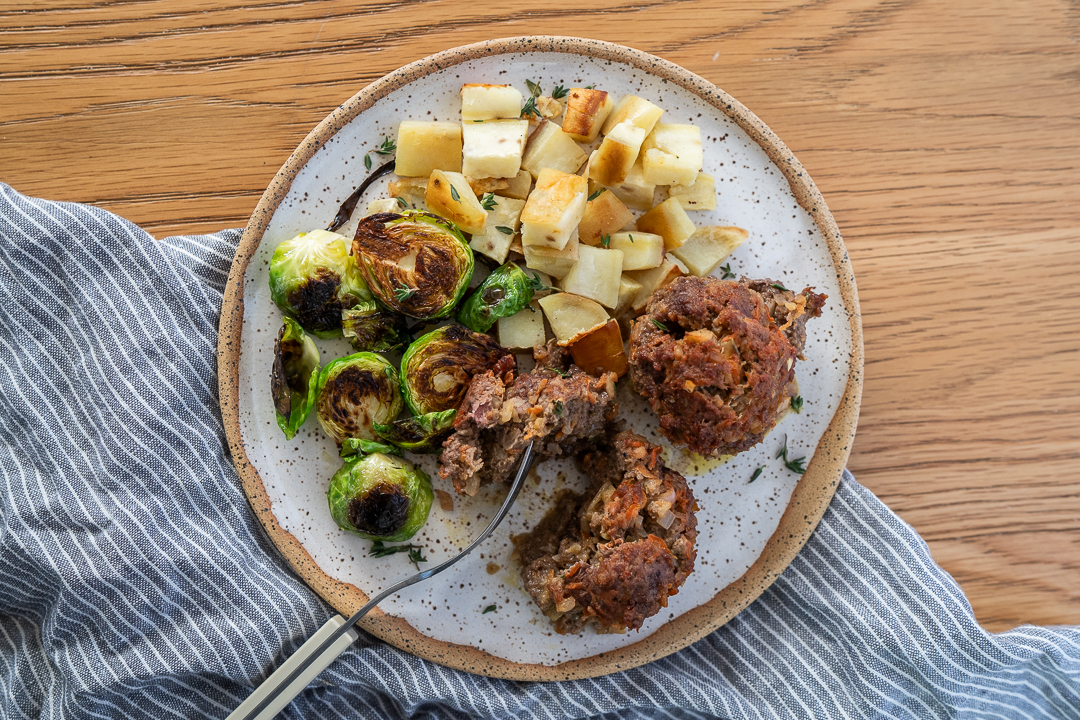
Mickey Trescott: So before you and I talk about how to make them, I wanna take a moment to describe them for anybody listening. These are individual meatloaf portions baked in a muffin tin. They’re hearty, but they’re not heavy. They’re packed with finely chopped vegetables and they hold together beautifully.
When they come out of the oven, they’re lightly browned on top. They’re tender in the middle, and they’re incredibly versatile. You can eat them hot, warm, or even cold. And honestly, they’re the type of recipe that feels equally home on a dinner plate or pulled straight from the fridge when you need something quick. I have been eating them this week after my workouts as a little protein snack. They’re so flexible.
And so now that people can picture them, can you walk us through what’s in these meatloaf muffins and the basic idea of how they come together?
[00:04:52] Ginny Describes the Process of Cooking Them
Ginny Mahar: Yeah, sure Mickey, and I’m so glad that you picked this recipe because I think it’s something that can really appeal to everyone as well. These start with grass finished beef as the base, which is just so easy to work with, it’s affordable, it’s pretty easy to source these days.
And then we combine that with a mixture of vegetables. So cauliflower rice, grated carrot, I like minced shallot, garlic, saute that in a little bit of olive oil to get them nice and tender, flavorful. Also to cook out just a little bit of the moisture, but you can mix up the veggies too. Zucchini would work really well here. If you don’t have shallot, onion works great, so you can get a little bit creative there with what you put in these.
Now, one thing about AIP meatloaf or meatballs, things like that, is that it does help it hold together to have a binder. And of course, we’re not using eggs or breadcrumbs or things like that. So my favorite binder for this purpose is cassava flour, which is what I use in this recipe.
For flavor, fresh herbs are always just one of my go-tos. They’re so delicious, they’re so aromatic. So there’s a tablespoon each of thyme and rosemary in these.
And then the other big flavor booster is my homemade Worcestershire sauce, and that’s gonna add some acidity, some sweetness, some umami flavors, and some spice. There’s ginger, clove, cinnamon, so lots of nice flavor boosters there.
And once we blend all that together, we just can divide that mix into our muffin molds. Brush the top with a one-to-one blend of coconut aminos and balsamic vinegar, and that’s gonna help give the tops just that like glistening glaze effect, and also add like a final bright pop of flavor that just put these over the top.
Mickey Trescott: I think it’s a perfect recipe. 10 out of 10. When I made these, I have been turning them into a complete meal by just throwing a pan of sweet potatoes and broccolini in the oven at the same time, they cook at the same temperature and you’ve got a whole batch cook right there, and it feels incredibly satisfying.
[00:07:04] Mickey’s Meal Pairing and Portioning
Mickey Trescott: One thing that I really love is just how practical the portion sizes are. So two muffins, which you make 12 in the batch. And so two of them gives you about a four ounce serving of meat, which is a really easy building block for a meal. That’s kind of where I like to base my protein portions.
If you’re somebody who just needs a quick breakfast, maybe even freezing them and reheating them, depending on what works for you. And I’d love to know, was batch cooking part of your intention when you designed this recipe?
Ginny Mahar: Oh yeah. I mean, absolutely. I’m all for batch cooking whenever possible, right? And I’ve done a lot of different, like breakfast sausage recipes and things that I also will pre-cook and then reheat. So I knew that this was similar and that it would probably also store and freeze really well, which it does.
But also I was thinking about my son who loves mini meat loaves, and I mean, it could really be the same recipe and like a full-size loaf and it just wouldn’t be as appealing for him. So I think that was part of my thinking too, like miniaturizing things can go a long way toward making things a little bit more family friendly, and that can be really helpful when we’re on elimination phase AIP if we are cooking for a family.
If we are cooking for kids. And you know, I love to cook but even I don’t wanna make two dinners for my family. So I know when I can come up with something like this, especially recipes that are AIP compliant, that are batch cook friendly, and family friendly. That’s like a win win win in my book.
Mickey Trescott: Yeah. And I love how you mentioned just the portions appealing to certain people. I know that whenever I buy two pounds of meat, I’m just dividing it up and how many meals that’s gonna be, because meat is the most expensive thing in our grocery budgets, also. So I think having them portioned up really tells me like, okay, I’m gonna have two. Which if you’re cooking a big skillet or a soup or something, it’s just really hard to tell, know how much you are intending to eat of that, and so it makes it really easy there.
[00:09:05] Freezing, Meal Prep, and Reheating
Mickey Trescott: Another big win for these is just how beautifully they freeze. Do you have any tips for freezing and making them ahead for when they’re ready to go?
Ginny Mahar: Yes I do. So there’s a couple different ways you can freeze this, and one thing you can do is you can make a double batch of the meat mixture and then you could bake half and also freeze the other half just as is. So that then all you have to do is thaw that, pop it into your muffin, molds, brush the tops and bake, so you could enjoy them fresh that way.
The other way is you can bake ’em all ahead of time and if you wanna squirrel some away, they, they’ll keep for about four or five days in the fridge and you know, as you mentioned, they can be good cold, reheated.
To freeze, I really like to freeze them on a sheet pan on some parchment first so that they don’t stick together. And then pop those off of the sheet pan, put ’em into maybe a silicone freezer bag or another container so that then you can just grab as many as you want for a meal and reheat them that way.
And what I do when I’m reheating things like this or like my homemade breakfast sausage and things like that, we gotta think about keeping them moist. So I find that the best way to do that is, well, ideally if you have time and like the forethought and planning to thaw them in the fridge first, that’s always gonna be the best way to do it.
But, you know, being realistic, a lot of times we’re like, oh, I need something to eat right now, what’s in the freezer so you can grab them frozen, and I’ll typically use the microwave at like 50% power and start with a couple minutes so that they’re just more gently thawed and and heated through instead of like petrified on the outside and still frozen in the middle. Which can happen like sometimes if you’re using high power.
[00:10:57] Substitutions and Variations
Mickey Trescott: So let’s talk about substitutions because that’s always something that people ask about and we’re big on substitutions in the AIP community. So first let’s talk about that Worcestershire Sauce. I made your AIP version from the book. It is so flavorful.
I was really surprised by it. I loved it. If somebody did not have time to make that. Which,
Ginny Mahar: yeah.
Mickey Trescott: I will say, start to finish, making the sauce and making these muffins took me an hour. So it wasn’t even that much time investment, but if somebody just doesn’t wanna make it, could something like some coconut aminos and fish sauce work in a pinch? ‘Cause really it’s the umami that
Ginny Mahar: Hmm.
Mickey Trescott: going for there, right?
Ginny Mahar: Yeah, umami is part of it. And yes, I think fish sauce and coconut aminos could definitely work and is a great idea. You might wanna cut down a little bit on the amount, like it wouldn’t necessarily be a one-to-one substitution because both of those things are salty, the fish sauce and the coconut aminos, you might wanna just dial it down so it doesn’t get overly seasoned.
But one of the other key ingredients in that Worcestershire sauce is apple cider vinegar, and that just adds a lot of brightness. It really helps with things like meatloaf for like those homemade sausage blends. And also anchovy adds a lot of umami flavor.
So if I were to substitute, if I was just like, I don’t have the ingredients or the time, or , I don’t feel like making a batch of of the W sauce, I would probably do apple cider vinegar, coconut aminos and then either fish sauce or some minced anchovy even.
And that would kind of help you get those basic flavor elements that the homemade Worcestershire sauce provides. I will echo that the W sauce is really easy. To make it super simple, it takes less than 20 minutes. You can freeze it for up to three months.
So if you have most of the ingredients on hand, it’s also probably worth it to just whip up a batch. You can use it for marinades, burgers and just, you know, the acidity and brightness goes a long way, flavor wise.
I really tried to integrate that into the Thyroid30 cookbook, like this system where people could make some of these simple staple condiments and have them on hand, use them in several different recipes to boost flavor to make them more interesting.
Mickey Trescott: Yeah. I love that you mentioned that because whenever we do these protocols, the thing that people complain about is just that it lacks flavor and excitement. You’re kind of eating the same foods over and over, which is so nice for convenience, because we’ve batch cooked and we’ve planned ahead. But just having something that is adding flavor is really transformative. So I’m going to encourage you guys to pick up Ginny’s book and check out that sauce because it is really nice.
What about switching up the protein? So instead of beef, could we try lamb pork, turkey? Do you have any thoughts on, how to make those modifications if people wanted to?
Ginny Mahar: Yeah, I say feel free. I think some of the best options here would be wild game, bison, lamb would be absolutely perfect here. I really love ground turkey. I always look for a blend of light and dark meat with poultry so that it stays a little bit more moist and flavorful.
I’d probably also add like a tablespoon of olive oil or some, a little bit of additional fat, just to keep that mixture moist. Same goes for ground chicken. Again, I feel like more often I’ll see like a hundred percent ground chicken breast, sometimes with no dark meat. That’s gonna be very, very lean, quite a bit more prone to dryness.
So sometimes what I’ll do if I’m using that is maybe I’ll do one pound of that and one pound of something a little bit fattier, like even a pound of ground pork you could combine a pound of chicken and a pound of pork here. So that would work really well. You do have to think about dryness with those super lean meats, you know, especially poultry.
Even some ground beef blends that have like less than 10% fat. But I think that’s part of what works with these, is that the veggies do sort of help to keep the meat moist.
Mickey Trescott: Yeah, I love that. A ground pork and turkey is actually one of my favorite combos to kind of combat how lean the poultry is.
[00:15:14] Serving Ideas and Sauces
Mickey Trescott: Another thing I kept thinking while having these was just how well they would pair with a sauce, like a barbecue sauce and just kind of switch up the flavor profile.
I’ve got a couple on my website. I’ve got a cherry barbecue sauce and an apricot one. I love the idea of serving these with something like that on the side. Do you have any favorite ways to serve these or a different way to add flavor without complicating the recipe?
Ginny Mahar: Oh my gosh, yes. Well, first, your cherry barbecue sauce would be amazing on these, or the apricot, either of those. I think those sweet and savory combinations are always so good, and definitely some of my favorites, and that’s why I have your books up on the shelf, right in my kitchen next to my own. I think those would be wonderful options.
Really anything that would work well on regular meatloaf would work well here. So again, those sweet and sour flavors, even like a no tomato ketchup might be a good AIP option. I also really like these with that sort of classic mashed potato pairing. So I have a recipe in the book for velvety truffle mashed cauliflower and white sweet potatoes and that looks like and, and tastes similar to like a traditional mashed potato.
Now, if you were gonna do something like that, you could also go with something really savory like an AIP-friendly gravy. And it doesn’t have to be complicated. You don’t have to roast a turkey to make gravy. You, it can be as simple as some cassava flour, make a roux with some kind of AIP-friendly fat and use some really good beef bone broth or even any kind of like homemade bone broth I think would work really well to make a quick gravy, add maybe a touch of that W sauce for a little bit of acidity and zing. That’s another one I find that’s really family friendly too. Put gravy on anything and my kiddo will eat it.
Mickey Trescott: Oh, I love that.
[00:17:06] Veggie-Forward and Accessibility
Mickey Trescott: I also wanna call out how much I love that these are so veggie forward, so I know they look like a meat dish, but there is a lot of carrot and cauliflower in here. And the fact that the cauliflower is frozen and pre riced, it just feels like a win for people who are tired or overwhelmed and we’re always looking for cooking hacks to just make things easier for people.
Was that accessibility piece intentional for you in this cookbook?
Ginny Mahar: Yes. And you know, I think one of the realities that we live with when we are living with chronic illness, when we’re living with autoimmune illness, is that we need to cook more. We need to cook more for ourselves. And so it needs to be accessible, simple, doable. It needs to be time efficient.
And I also learned really early on when I started blogging thyroid friendly recipes at Hypothyroid Chef that I had had previous food blogs where it was more just about like, regular recipes, chefy recipes, right?
Well, all of a sudden now, I’m not catering to people who are foodies. I was catering to people, including myself, who don’t necessarily feel good, don’t necessarily have a lot of energy to cook, who don’t necessarily like or want to cook, but they do want to feel better.
And so that community that I serve, really we need easy, whole food recipes that taste good, that our families will like, that are quick and easy to make, that we’d be excited to share with company, with whoever we’re sharing meals with.
I really had to shift out of that chef mindset of I need to blow their minds, I need to impress. Into more of a mindset of how can I use my time saving and flavor boosting chef tricks to make this more easy and delicious for people. It’s gotta be low lift and I don’t know about you, but I don’t wanna get out my giant food processor to make cauliflower rice if I don’t have to.
Things like that are so wonderful, such favorite time savers. With those frozen veggies, you know, the prep is done, they’re washed, chopped, ready to go. The quality and nutritional value is typically just as good as fresh. So that’s one of my favorite time saving hacks.
Mickey Trescott: Yeah, I love that and, and I love that some of these ingredients have become so affordable too.
[00:19:28] The Thyroid30 Cookbook
Mickey Trescott: Before we wrap up, I would love for you to share a bit more about the Thyroid30 Cookbook, who it’s for, what people can expect, and where they can find it now that it’s officially out.
Ginny Mahar: Yeah, the Thyroid30 Cookbook, it has a hundred gluten-free, dairy-free anti-inflammatory recipes. There’s three different 30 day meal plans that include gluten-free, dairy-free paleo, and AIP. I cover and sort of cater to and try to provide modifications for all of those common dietary templates that people in the thyroid community use.
So I would say over a third of the recipes in the book are elimination phase AIP-friendly, and the rest of them are modifiable and friendly for the reintroduction phases of AIP. And then it also is really a complete guide to my Thyroid30 system, really designed to help people embark on this journey of not just what should I eat and what is the lifestyle aspect of this, but how do I do these things consistently and sustainably so that I can feel better for the long term, not just 30 days.
All of the recipes are really based on the fundamental principles of functional nutrition, which is geared towards the management and prevention of chronic illness. So of course, this is tailored to the thyroid community and addresses a lot of the unique challenges we face. The recipes, I think, are really friendly for anyone in the autoimmune community.
Anyone looking for colorful, whole food, anti-inflammatory meals that are just easy, accessible, and full of flavor. So yeah, the book is out now. Pretty much anywhere books are sold. You can learn more on my [email protected] slash cookbook. But yeah, just go to your favorite book seller and you should be able to find the Thyroid30 Cookbook there.
[00:21:21] Wrap-Up and Thank You
Mickey Trescott: Awesome. Thank you so much, Ginny, not just for being here, but for creating recipes that truly support people in the day to day of healing.
You’ll find the full veggie packed meatloaf muffins recipe linked in the show notes and more information about how you can get your hands on the Thyroid30 Cookbook. And I will be seeing you guys next time for another Kitchen Confidence episode. See you next time.
.




4 comments
What cooking time do you recommend if cooking this recipe in a 9×5 loaf pan? Thank you.
Hi Sara!
I haven’t tried this myself, but I would extend the cooking time by at least 10 minutes if cooking in a loaf pan, and then go by temp. It could take even longer.
These were an instant hit. Great taste, the glaze is a nice flavor touch!
So happy you loved them Beth!