
When people complete the Elimination and Reintroduction Phases of the Autoimmune Protocol, one question almost always follows:
Now what?
Are you supposed to eat this way forever?
What happens if your health shifts?
And how do you apply what you’ve learned to real-life situations like travel, stress, celebrations, or simply aging?
In Episode 75 of the Autoimmune Wellness Podcast, I talk about what life after AIP is really meant to look like: not a permanent strict phase, but a flexible, sustainable long-term maintenance plan that evolves with you.
.
Watch the Episode
.
What Does It Mean to “Finish” AIP?
One of the biggest misconceptions about AIP is that it has a clear endpoint. You complete Elimination. You finish Reintroductions. You’re done.
But that’s not really how it works.
AIP isn’t something you complete and leave behind. It’s a process you move through, learn from, and carry forward. When I think about “finishing” AIP, I don’t think about checking a box. I think about having gathered enough information to make confident decisions about your health going forward.
Finishing AIP usually means:
- You’ve established a clear baseline during Elimination
- You’ve learned something meaningful during Reintroductions
- You’ve shifted from following rules to applying a framework
That shift—from external structure to internal awareness—is where the real transformation happens.
.
A Post-AIP Dietary Philosophy
After AIP, there isn’t one “right” diet you’re supposed to land on.
What you’re building instead is a hyper-personalized way of eating based on what you’ve learned about your body. You’re no longer asking, Is this AIP compliant? You’re asking, Does this support how I feel right now?
For many people, the most valuable information from AIP isn’t just what to avoid—it’s what to include. Broth, fermented foods, fibrous vegetables, seafood, nutrient-dense meals—these often become cornerstones of long-term stability.
And your needs will change.
There will be seasons where your diet is more expansive. There may also be seasons where you need more structure. That flexibility is not failure—it’s skill.
.
What a “Return to AIP” Can Look Like
Autoimmune disease is dynamic. Hormones shift. Stress accumulates. New diagnoses emerge. Flares happen.
Returning to AIP doesn’t mean starting over.
Sometimes it’s full Elimination.
Sometimes it’s simply removing a few known triggers.
Sometimes it’s leaning more heavily into nourishing foods and lifestyle foundations.
The goal is stability—not rigidity.
.
Batten Down the Hatches vs. Unfurl the Sails
I often use the metaphor of battening down the hatches and unfurling the sails.
When your body is under strain—flare, illness, stress—you move toward structure. You simplify. You stabilize.
When things are steady and resilient, you expand. You experiment. You enjoy more flexibility.
Neither state is better. Both are appropriate at different times.
The skill is knowing when to shift.
.
Using AIP Principles Beyond Food
One of the most powerful long-term outcomes of AIP is learning how to evaluate what works for you.
That framework extends far beyond food.
You can apply it to:
- Supplements
- Exercise routines
- Sleep habits
- Work schedules
- Stress exposure
- Social commitments
The pattern is simple: remove or reduce a variable, observe, reintroduce intentionally, and assess.
Over time, you develop body awareness and confidence that makes rigid rules unnecessary.
.
AIP and Medical Care: A Both-And Approach
Long-term autoimmune management is never either-or.
It is always both-and.
AIP is a powerful framework for dietary and lifestyle support. It is not a replacement for medical care.
For many people—including me—there are seasons where medical treatment, imaging, lab work, or medication adjustments are necessary. That does not mean AIP failed. It means you’re responding appropriately to changing circumstances.
The strength of AIP is that it integrates with medical care, not competes with it.
.
AIP Foundation Series: Start With Clarity
If you’re earlier in the AIP process—or want a clear refresher on the structure of Transition, Elimination, and Reintroduction—the AIP Foundation Series is the best place to begin.
It’s a free, 5-day email course designed to help you:
- Understand each phase of AIP
- Use printable food lists and meal plans
- Navigate reintroductions confidently
- Build a foundation for long-term success
.
The New Autoimmune Protocol (Pre-Order)
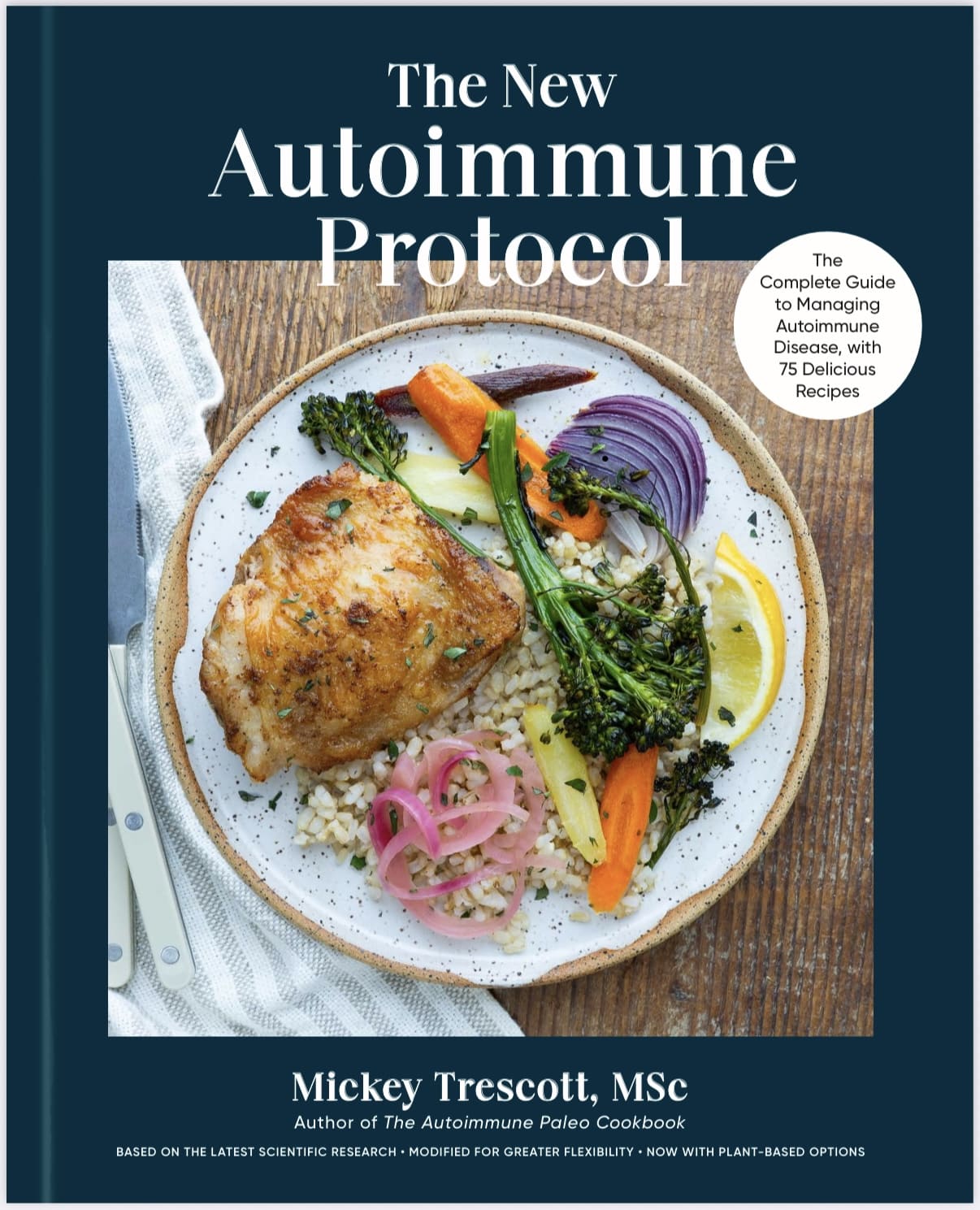
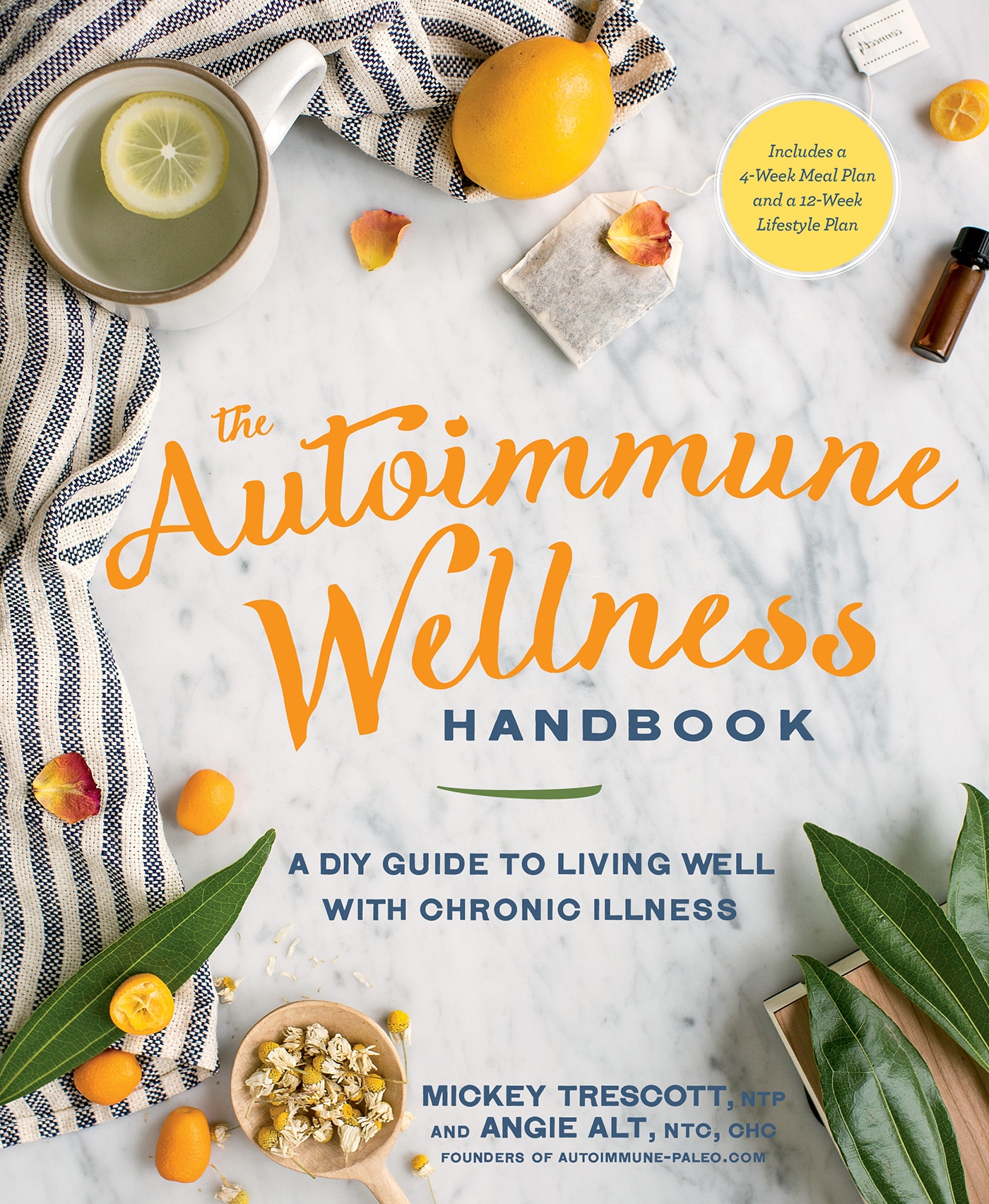
If you want a resource that reflects the most up-to-date understanding of AIP—flexible, realistic, and designed for long-term sustainability—this is exactly why I wrote The New Autoimmune Protocol.
Inside, you’ll find:
- Updated guidance on Modified AIP
- Nutrient-dense, practical recipes
- Long-term maintenance strategies
- A framework designed for real life
👉 Pre-order The New Autoimmune Protocol
.
Episode Timeline
00:00 – What does life after AIP look like?
03:18 – What does it mean to “finish” AIP?
06:58 – A post-AIP dietary philosophy
10:33 – What a return to AIP can look like
13:11 – Batten down the hatches vs. unfurl the sails
17:41 – Using AIP principles beyond food
20:11 – Combining medical care with AIP
22:36 – Building a sustainable long-term life
24:23 – Life after AIP, 15 years in
26:18 – Wrap-up
.
Listen to the Episode
.
Transcript
Below is the full transcript of Episode 75 of the Autoimmune Wellness Podcast.
This transcript is provided for accessibility and reference.
Title: Life After AIP: Building Your Long-Term Maintenance Plan | Deep Dive (Ep 075)
Mickey: What does life actually look like after you complete the Autoimmune Protocol? This is something that comes up a lot once people move through the Elimination and the Reintroduction Phases. You’ve completed the hard work, you’ve learned so much about your body, and then there’s this natural question of, okay, now what?
Are you supposed to eat this way forever? What happens if your health changes or you experience a new autoimmune flare? And how do you apply what you’ve learned to real life situations? Things like travel, stress, celebrations, or just simply the passage of time.
In today’s episode, I want to talk through what AIPis really meant to lead to: a long-term, personalized approach to living with autoimmune disease that is flexible, sustainable, and realistic. And this is not about staying in an unnecessarily strict Phase indefinitely. It’s about using AIP as a framework that you can return to, adapt and rely on as your needs change over time.
Mickey: Welcome back to the Autoimmune Wellness Podcast. I’m Mickey Trescott, and this episode is part of our ongoing AIP Deep Dive series. So far in this series, we have covered the Transition Phase, the Elimination Phase, and the Reintroduction Phase, the core pieces of how to prepare your body, reduce inflammation, and systematically identify which foods and habits support your best health.
If you want to go deeper into the details of the Autoimmune Protocol itself, episode 51 is a full overview. Episodes 52 through 54 walk, step-by-step through Transition, Elimination and Reintroduction. Episode 55 is about nutrient density and lifestyle foundations. And episode 69 covers how to decide which Elimination option, Core or Modified is the best fit for you. And together they are a full masterclass on how to implement the Autoimmune Protocol.
Today’s episode builds on all of that and focuses on what comes after those phases: how to take what you’ve learned and apply it over the long term. Because completing AIP doesn’t mean that you are “done”, and it doesn’t mean that you’ve failed if you need to make adjustments down the road. What it does mean is that you now have all of this information, experience, and tools that can guide your decisions moving forward.
In this episode, I’ll walk you through what it means to finish AIP, how I think of a post-AIP way of eating, and how to move up and down the spectrum of structure and flexibility as your health allows. We’ll also talk about using principles of AIP beyond food, and how this framework fits alongside medical care over the long term.
The goal here is absolutely not rigidity or perfection. It’s building an approach to health that you can truly live with, one that feels confident, adaptable, and supportive of your whole life.
And as always, what I share here is for education and inspiration, not medical advice. Make sure to make any health decisions in partnership with your healthcare team.
[00:03:18] What Does It Mean to “Finish” AIP?
Mickey: Let’s get started. What does it mean to finish AIP? When people think about this, they’re often imagining an endpoint, like you reach the end of reintroductions, you check the box, you’re done. I’m sorry to be the one to say it, but that’s not really how the Autoimmune Protocol works.
AIP isn’t something you complete and leave behind. It’s a process you move through learn from, and then you carry it forward with you. Essentially, it changes you. The value isn’t in reaching that endpoint. It’s in what you understand about your body once you have gone through it. So when I think about what it means to finish AIP. I don’t think of it as being “done”. I think about having gathered enough information to start making confident decisions going forward.
And in general, finishing AIP usually means a few key things. First, you’ve spent enough time in the Elimination Phase to establish that clear baseline. You’ve seen a measurable improvement from where you started, and that improvement doesn’t have to be perfect, it rarely is, but you’ve seen enough change to know that the protocol made a difference for you.
Second, you’ve moved into Reintroductions and you’ve used that process to learn something very real about your body. You’ve identified those foods that feel supportive, the foods that clearly don’t, and probably many foods that are in that weird gray area between. And just as important, you learned how to observe your body’s responses without immediately jumping to conclusions.
And third, you’ve started to shift from following a set of clearly defined rules to applying a framework. This is a really important transition. Early in your time on AIP, the structure is external. You’ve got food lists, you’ve got guidelines. There is a very clear sense of what to do and what not to do. That structure is necessary and incredibly helpful when you’re trying to reduce inflammation and just get your bearings. But over time, the goal for that structure is to become internal. Instead of asking, is this AIP compliant? You start asking, does this support how I feel right now? Instead of wondering what you’re allowed to eat, you’re thinking about patterns, how you feel, how you recover, and what helps you stay stable over time.
And I hope that in describing this, so many of you are just having this “aha” moment. I know that I did when I first realized this. And this is also where it’s really important to clear up a common misconception. Finishing AIP doesn’t mean that you’re never going to need these tools again. You already know that autoimmune disease is so dynamic. I mean, I know that we all wish we could make it less dynamic, right? On top of that, there are other health changes, life changes, hormones, stress levels, not to mention just aging. All of that affects how your body responds even years after you’ve had a long run of good health.
So if you need to adjust your diet again in the future, or return to more structure for a period of time, it doesn’t mean that AIP didn’t work. It actually means that it did exactly what it was supposed to do. It gave you a way to respond when things change. Finishing AIP isn’t about achieving this perfect permanent state of health, that is not a real thing. It’s about understanding your body well enough to navigate change with more ease, less fear, and a lot more confidence.
That’s the foundation we’re going to build on as we talk about what long-term maintenance really looks like.
[00:06:58] A Post-AIP Dietary Philosophy (Personalized Eating)
Mickey: Let’s talk about a post-AIP dietary philosophy, which is really just, hyper-personalized eating. Once you’ve worked through Elimination and Reintroduction, the big shift is that you’re no longer following the structure, you’re following your own personalized way of eating. This is something I want to be really clear about because its easy to think that there’s this single right post-AIP diet that you’re supposed to land on. Spoiler alert, it’s not Paleo. But that’s never been the goal of the protocol.
For me, my post-AIP way of eating is something I discovered by using AIP as a tool, not something I decided on ahead of time. It’s based on what I learned through that Reintroduction process, how my body responds over time, and what supports my best health overall. As a side note, if you want a more detailed look of how this shows up in my own life right now, including what I eat and the food triggers I still pay attention to, I talk all about this in episode 56, which is my most recent healing update.
Here’s something that often surprises people. Not all of the most valuable information you learn through AIP is about those food triggers. Yes, identifying foods that don’t work for you is important. But just as important and sometimes even more impactful depending on your situation, is learning which foods actively support your health. For many people, AIP reveals that certain inclusions make a noticeable difference. Things like broth, fermented foods, lots of fibrous vegetables. These are foods that might not have been regular parts of your diet before, I know for me they weren’t, but once you start to include them consistently, you realize they really work for you. They might support your digestion, your energy, your recovery, or your overall resilience, and that kind of information is just as valuable as knowing what to avoid.
There are so many foods in my diet now that weren’t a part of the Elimination Phase. They’re foods that I tolerate well, that add variety and enjoyment, and they make my day-to-day life easier. And at the same time, there are foods that I know don’t really support my health, and those are the foods that I generally choose not to include. That balance is really intentional. What’s also important is that this way of eating is not fixed. It’s not something that I figured out once and then locked in forever. My tolerance has really changed a lot over time. My needs have changed, my health has gone through different seasons, and my diet has adapted right along with that.
So that’s one of the biggest takeaways I hope that you get from AIP. Your best way of eating isn’t static. Instead of thinking in terms of being “on” or “off” a protocol, I think in terms of support. Does this way of eating support my health right now? Does it help me feel stable, nourished, and resilient? And sometimes that means that my diet looks a lot more structured. Like last year when I was having a big autoimmune flare, I was getting diagnosed with a new condition, I was trying to figure out what was going on. And then other times it’s much more expansive, when I’m feeling well. Both can be appropriate depending on what’s going on in my body and in my life.
And this is also where I encourage you to move away from labels. “I am AIP” or I can never eat this or that again. Those labels can be really helpful very early on in the process, but long term they can start to feel very limiting. AIP is the framework that helps you build your own approach. What you end up with is a personalized way of eating that reflects your tolerance, your needs, and what truly supports your health.
[00:10:33] What a “Return to AIP” Can Look Like
Mickey: Once you’ve settled into that personalized way of eating, it’s common to wonder what happens if your health shifts again. And for many of us, it’s going to shift. So I want to talk about what a return to AIP can look like because this is an area where people often get stuck in that all or nothing thinking.
First, returning to AIP does not mean you’re starting over and it doesn’t mean that you failed at maintenance. Autoimmune disease isn’t static. There are periods where things might feel stable and predictable, and there are periods where symptoms might increase or new challenges might show up. We are exposed to varying amounts of stress, we might have different illnesses, travel, disruptions to our sleep, hormonal changes. All of these are going to affect how our body responds, even if we’ve had a very long stretch of good health. And if you listen to my healing update episode back in January, you know that this has been very true for me recently.
Over the past year, I was diagnosed with psoriatic arthritis after experiencing uveitis for the very first time. And I’m also navigating some health changes related to perimenopause. Those are significant shifts and they’ve required me to reassess what support looks like for my body right now. And this is where revisiting AIP principles becomes useful. When health changes like this happen, many people benefit from temporarily bringing back more structure.
That doesn’t have to look exactly like the Elimination Phase. For some people, a return to AIP might mean removing one or two foods that you already know don’t support you. For others, it might mean simplifying your meals or leaning more intentionally into foods that you know are especially nourishing and stabilizing. It can also mean revisiting lifestyle foundations. So going back to prioritizing your sleep, adjusting your exercise routine, lowering your overall stress whenever possible, or just creating more consistency around your meals and your daily routines.
It’s also important to note that a return to AIP is often temporary. The goal isn’t to stay in a tightened up phase indefinitely. The goal is to create enough stability that you can start expanding again. So over time, many people move in and out of these phases multiple times. It’s not a sign of regression, it’s simply a part of that long-term autoimmune management. Learning when to add structure and when to loosen it again is one of the most valuable skills that AIP teaches. The first time you do it, it’s going to feel like, wow, this is a lot. But as you do it over and over, for myself, I’ve been doing this over 10 years, it becomes so much easier.
[00:13:11] Batten Down the Hatches vs. Unfurl the Sails
Mickey: I like to use this metaphor that I call batten down the hatches and unfurl the sails to think about long-term autoimmune diet management. It’s a way of understanding that life with autoimmune disease isn’t about finding this perfect or permanent routine, it’s about adjusting your level of structure based on what your body and your life need at any given time.
So let’s start with battening down the hatches. This is what it looks like when your body’s under more strain. Maybe you’re in an autoimmune flare. Maybe you have extreme stress from something outside that you can’t control, maybe your sleep has been off, maybe you’re dealing with an illness, travel, hormonal changes, or you have a new diagnosis, something that’s cropped up. These are the times when your system just has less margin. When you batten down the hatches, you’re moving towards that safer, more supportive baseline, and you guys are going to get sick of me saying this, but that baseline is going to be different for everyone.
For some people it might mean returning very close to the Elimination Phase. An example, if you have IBD, you did AIP when you were in an active flare, you got that flare under control, you greatly expanded your diet. You notice a new flare coming on. You might go back to that Elimination Phase ’cause that’s what worked great for you first time. That is totally fine.
Now, for others and people like me, it might actually mean something much lighter, removing a few known trigger foods, simplifying your meals, or just being more consistent with the foods and routines that you know already work well for you.
For me, battening down the hatches doesn’t mean that full Elimination, it means leaning into foods I know feel deeply nourishing and stabilizing for my body. Practically, that looks like including a lot of cooked, brothy soups, sometimes even for breakfast. During these times, I’m focusing on meals that are warm, easy to digest. They have a good amount of protein and veggie rich, they are very consistent. I also include more liver pate because it’s something that I know my body responds extremely well to nutritionally. I make a point to have fermented vegetables at least once a day, and I prioritize cold water fatty fish like sardines, salmon, and mackerel.
Alongside that, when I’m battening down my hatches, I eat lots of roasted root vegetables, I eat lots of greens, mostly cooked sometimes during this time raw doesn’t really work for me. These are foods that feel really grounding, steady and supportive to my system rather than stimulating or experimental. And just as important, battening down the hatches for me also means reducing experimentation. So I’m not testing new foods, I’m not pushing boundaries. Generally, I’m cooking at home. I’m not eating out. I’m creating that predictable stability with food, with routines, and with lifestyle factors like sleep and movement.
Now, on the other end of the spectrum is unfurling the sails, and this is what it looks like when things are looking great. Things are going well, symptoms feel manageable, your body feels resilient, you have more capacity. These are the times when it makes sense to expand, to enjoy more variety, to travel, to celebrate, and to experiment a bit. This might be where you try new foods, you eat out more often, you loosen that structure in a way that supports your quality of life.
Unfurling the sails doesn’t mean abandoning everything you’ve learned. It means you’re using that stability to explore. You’re paying attention. But you’re not overly cautious. You’re asking, what can I get away with right now? And you’re doing that from a place of curiosity, not fear.
What’s important here is that neither of these states is better than the other. Battening down the hatches isn’t a failure. Unfurling the sails isn’t reckless. They’re simply different responses to different circumstances that you have in your health as a person who lives with autoimmune disease. And over time, you’ll likely move back and forth along the spectrum again and again. That’s completely normal and I have done it time and time again. The real skill is learning when to shift, when to add more structure, and when to allow more flexibility without judging yourself for either choice.
And this is where I think AIP really shines as a long-term framework. It gives you reference points, it helps you recognize when your body is asking for more support, when it’s capable of handling a little more flexibility and freedom. And I promise it gets easier with time and with practice.
[00:17:41] Using AIP Principles Beyond Food
Mickey: Now let’s talk about using these AIP principles beyond food. And one of the things that I’ve seen over and over again, both in my own life and in working with this community is that once you’ve gone through AIP, it changes how you think far beyond food. Because what you’re really learning through the AIP is a process. At its core, it’s teaching you how to evaluate what’s working for you and what isn’t, and how to do that in a structured and thoughtful way. So the same process can be applied to many other areas of your life.
The basic framework looks something like this: if something feels suspicious, or if you’re noticing symptoms creeping in, you reduce or remove that variable when possible, and then you see what happens. If things get better or improve, you’ve got some information and if you choose to bring it back later, you do so intentionally and pay attention to how your body responds.
This might sound familiar because it’s exactly what you do with food Reintroductions, but food isn’t the only variable in your life. You can apply this way of thinking to supplements, with your provider’s blessing if they are prescribed. Adding or removing something and noticing whether it actually helps. You can apply it to your exercise routine, your work schedule, your sleep habits, or even how often you are socializing.
Sometimes it’s not about eliminating something entirely, but adjusting the dose or the frequency. Maybe a certain type of workout works well when your health is stable, but not during a flare. Maybe a supplement felt supportive at one point, but no longer feels necessary. Maybe certain commitments drain you more than you realize. So AIP really helps you develop that body awareness, the ability to notice patterns, subtle shifts, cause and effect relationships, and that’s a skill you carry with you long after the protocol itself is over.
Once you’ve learned how to listen to your body and trust the feedback that you’re getting, you don’t need rigid rules to tell you what to do. You have those internal signals and the confidence to respond to them. This absolutely doesn’t mean that you’re always going to get it right. It doesn’t mean that every experiment is going to go perfectly, but it does mean that you’re no longer guessing blindly or outsourcing every decision. You are engaged in an ongoing conversation with your body and that ability to assess, to adjust, to reevaluate that is one of the most valuable long-term outcomes of working through AIP.
[00:20:11] Combining Medical Care with AIP (Both-And Approach)
Mickey: Another important part of long-term maintenance is understanding how AIP fits alongside medical care. And I want to be really clear about this. It is never either or, it is always both and. AIP powerful framework for understanding how food and lifestyle affect your health, but it’s not meant to replace medical care. It’s just one tool in a larger toolbox. And depending on where you are on your health journey, different tools may matter more or less at different times. For some people, dietary and lifestyle changes create this dramatic improvement early on.
For others, those changes are supportive but not sufficient on their own. And for many of us, that balance shifts over time. New symptoms can emerge, conditions can evolve, hormones can change, and not every health issue is something that can or should be addressed with diet alone. Sometimes what your body needs isn’t another food change. It might be a medication adjustment, it might be some imaging, lab work, or a new diagnosis. It might be a procedure, physical therapy, or a different type of specialist support.
Using medical care doesn’t mean that AIP stopped working. It means you’re responding appropriately to what you’re experiencing. And for me, this has been especially relevant over the past year. With a new diagnosis and the shift that comes with perimenopause, my needs are extremely different than they were earlier in my autoimmune journey. AIP principles still guide my foundation, how I eat, how I notice patterns, how I support my body, but they exist alongside changes with how I approach my medical care, not instead of it.
This is where the flexibility of AIP really matters. Because when you start to see AIP as a framework rather than that rigid plan, there’s no conflict between dietary support and medical treatment. You’re simply using all of your available resources to support your health as it exists right now.
Long-term autoimmune management often requires reassessment. Revisiting what’s helping, revisiting what’s no longer enough, and what new support might be needed right now. That’s not a setback, that’s you responding to changing circumstances and learning how to integrate your care rather than choosing sides is a big part of building a sustainable, realistic approach to living well with autoimmune disease.
[00:22:36] Building a Sustainable Long-Term Life
Mickey: As we zoom out and think about long-term maintenance, one of the most important questions to ask is this: does my approach to health actually fit my life? Because the goal isn’t just symptom management, it’s creating something that is accessible, sustainable, and livable over the long haul. Your approach to health shouldn’t feel like you’re constantly on a diet or managing a rigid routine. It should feel confident and familiar, something that you can return to without a lot of mental effort.
And yes, this might mean that there are things that you don’t do that other people do. Maybe you don’t eat gluten, maybe you don’t drink alcohol, or you drink very selectively. Maybe you are careful about how much you commit to or how you structure your days. When those choices are connected to how you feel, to your health, your energy, and your ability to live well, they tend to feel less like deprivation and more like self-respect.
It also becomes easier to set boundaries both internally and externally. Internally, you’re not constantly debating or second guessing yourself. Externally, you’re able to communicate your needs more clearly without feeling like you have to justify them. And at the same time, it’s important to say this, if you choose to do something that you know might not support your health, that’s okay too. This is your life. You get to do what you want.
Long-term maintenance isn’t about perfection, it’s about informed choice. Sometimes you decide the trade off is worth it. Sometimes you decide it’s not. What matters is that you are making those decisions consciously with awareness of how they affect you. When your approach is flexible and grounded in real information about your body, there’s room for both care and enjoyment. Structure and freedom, and that balance is what makes a long-term approach not just possible, but sustainable.
[00:24:23] Life After AIP, 15 Years In
Mickey: Before we wrap up, I want to share one last perspective because it really captures what life after AIP has looked like for me over the long term. When I was first diagnosed with autoimmune disease, I was 26 years old. That was about 15 years ago now. At that time, I was in a pretty intense health crisis, and I experienced the world almost entirely through my illness. Everything was filtered through how my body felt. My energy, my relationships, my work, my plans, even very small decisions in my life.
They all ran through this question of: how is this going to affect my health or can my body even handle this? When you’re in that place, it makes a lot of sense. Your body is asking for all of the attention, and what AIP gave me over time wasn’t just this improvement in my symptoms. It helped clarify what my body needed, and once I had that clarity, something really important shifted. That health filter didn’t completely disappear, but it stopped being the only lens that I was looking through.
Because I understood my triggers, my supports, and how to respond when things shifted, my illness didn’t have to dominate every single decision in my life. I wasn’t constantly monitoring or second guessing myself. I had a baseline that I could rely on, and that made room for all of the rest of my life again. I could see myself as more than someone managing an autoimmune disease. I could put more energy into my relationships, meaningful work, creativity, and day-to-day living without everything being overshadowed by my health.
So even now, even as my health shifts again with things like a new diagnosis and perimenopause, that foundation still matters. My health may move more into the foreground at times, like right now, but it doesn’t take over the entire picture the way that it once did.
And for me, that’s what life after AIP really looks like. It’s not this absence of autoimmune disease, but a more balanced relationship with it .
[00:26:18] Wrap-Up
Mickey: So as we close out today, I want to briefly recap what we covered. Life after AIP isn’t about being finished or leaving the protocol behind. It’s about using what you learn to build a long-term maintenance approach that can adapt as your health and your life change.
That includes understanding your personalized way of eating, paying attention to both exclusions and inclusions, knowing when to batten down the hatches and when to unfurl the sails, and using AIP as a framework that extends beyond food. It also means combining dietary and lifestyle support with medical care rather than treating them as separate or opposing things.
If you’re listening to this episode and you’re earlier in the process, maybe you’re just starting AIP or thinking about starting. Everything we talked about today is where the protocol is meant to lead. And if you’d like a clear current place to begin, consider pre-ordering a copy of my upcoming book, The New Autoimmune Protocol.
It reflects the most up-to-date understanding of AIP, and walks you through how to get started in a way that is realistic, flexible and sustainable. You can find links and resources in the show notes.
Thank you so much for spending this time with me and for being a part of this community. I’ll see you next time.
.



0 comments