
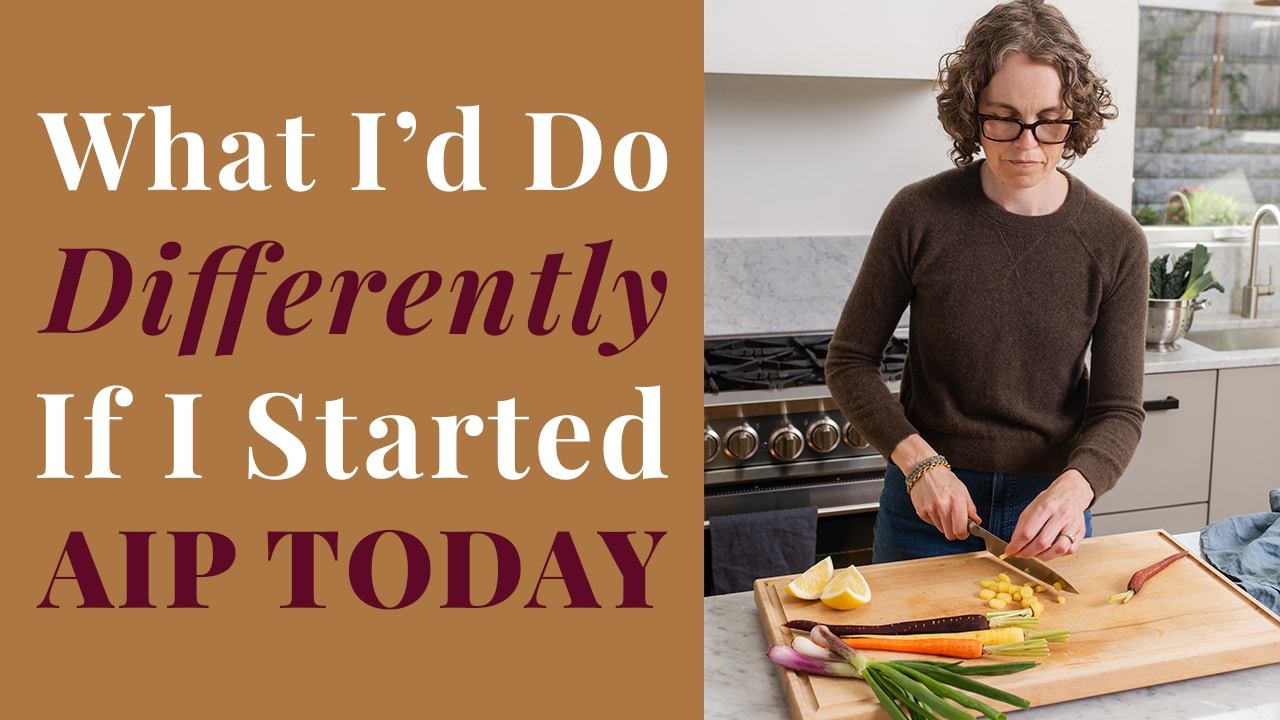
If you’re starting the Autoimmune Protocol for the first time—or returning to it after trying it years ago—you might be asking a slightly different question:
What would someone do differently if they were starting AIP today?
When I first implemented AIP in 2011, I was in the middle of a severe health crisis after being diagnosed with Hashimoto’s and celiac disease. The protocol became a turning point in my healing.
But more than a decade later, with years of experience, research, and perspective behind me, there are several things I would approach differently if I were beginning again today.
In Episode 73 of the Autoimmune Wellness Podcast, I share the biggest lessons I’ve learned since those early days—and how they would shape the way I would start AIP now.
.
Watch the Episode
.
Why Starting AIP Looks Different Today
When I first found the Autoimmune Protocol, there were very few structured resources available. Most people were piecing together information from scattered blogs and forums.
Today, we understand much more about how to implement AIP in a way that supports long-term healing and sustainability, not just short-term elimination.
That includes:
- Focusing on nutrient density early
- Tracking symptoms to understand patterns
- Working with medical providers alongside dietary changes
- Building realistic timelines for healing
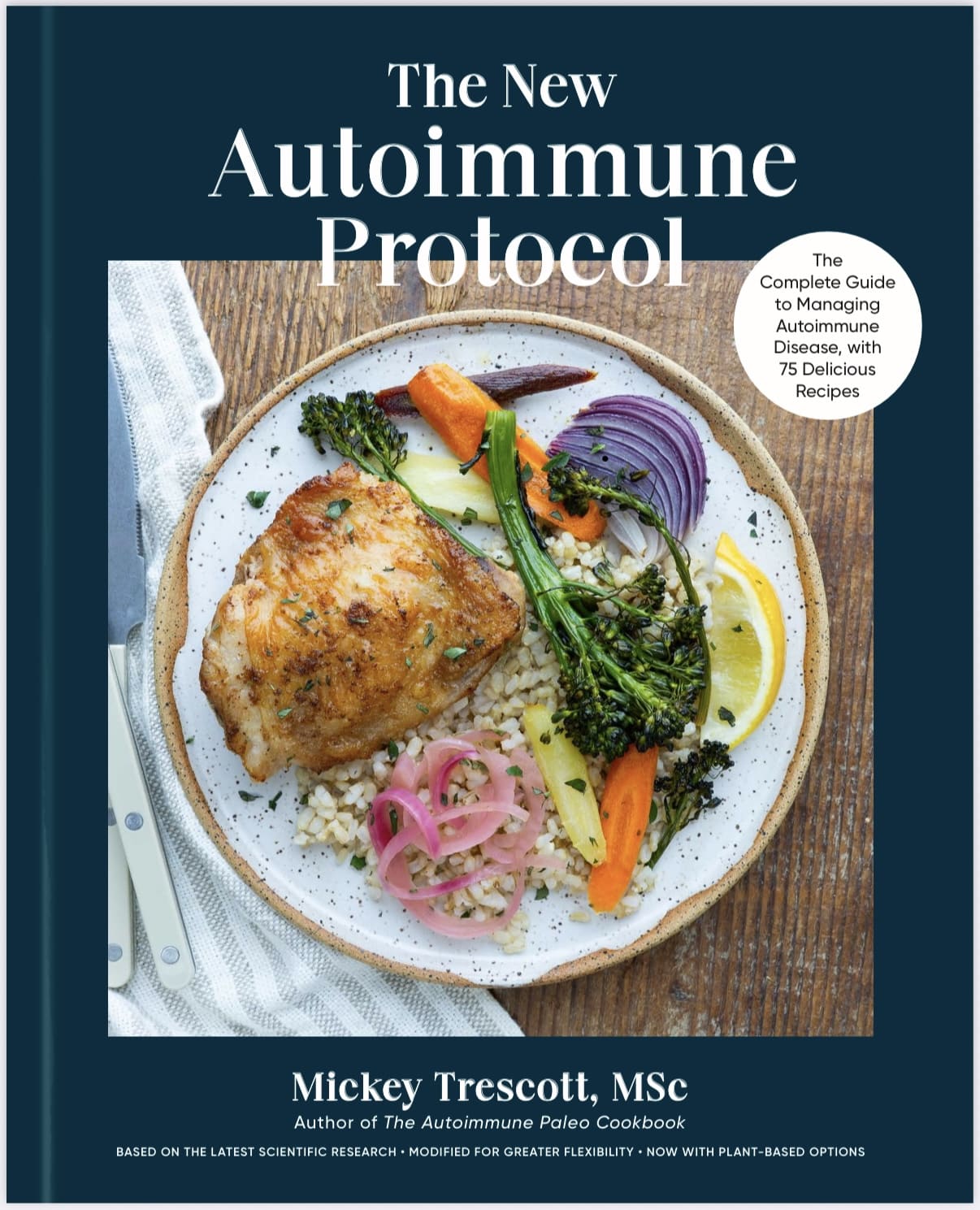
These insights are a big part of what shaped my upcoming book, The New Autoimmune Protocol, which reflects how AIP is practiced today with a more flexible, sustainable framework.
👉 Pre-order The New Autoimmune Protocol
.
Journal From Day One
If I were starting AIP today, I would begin tracking symptoms immediately.
Healing often happens gradually. Without some form of tracking, it can be difficult to recognize slow improvements or patterns in symptoms.
A simple journal can help you track:
- Energy levels
- Sleep quality
- Pain or inflammation
- Digestion
- Mood and neurological symptoms
Tracking doesn’t need to be complicated—just consistent enough to notice trends over time.
.
Focus on Nutrient Repletion First
Early in my AIP journey, I focused almost entirely on eliminating foods.
If I were starting today, I would focus first on nutrient repletion.
Many people with autoimmune disease arrive at AIP after years of restrictive diets, gut dysfunction, chronic stress, or nutrient depletion.
Foods that played a huge role in my recovery included:
- Seafood
- Red meat
- Organ meats like liver
- Bone broth
- Deeply nourishing whole foods
These foods supply the raw materials your body needs to repair and regulate immune function.
Nourishment—not restriction—is what drives healing.
.
Advocate for Medical Care Sooner
Diet can be incredibly powerful, but it’s rarely the entire picture.
If I were starting again, I would continue pursuing medical support alongside dietary changes, rather than pausing that search once my symptoms began improving.
In my case, AIP helped tremendously—but finding proper thyroid treatment ultimately completed my recovery.
Healing with autoimmune disease often requires both lifestyle changes and medical partnership.
.
Respect Fatigue Instead of Pushing Through
Before I became ill, my instinct when tired or stressed was to push harder.
Looking back, that approach likely slowed my recovery.
Fatigue is often a signal that your body needs:
- Rest
- Recovery
- Reduced stress load
If I were starting AIP today, I would treat fatigue as information—not something to push past.
.
Don’t Let AIP Become Your Identity
When AIP begins improving your health, it can easily become the center of your life.
While focus and boundaries are important early on, the goal is not to become “an AIP person.”
The goal is to:
- Use AIP as a tool
- Learn how your body responds to food
- Build a personalized way of eating that works long term
Over time, health should support your life—not define it.
.
Seek Community Earlier
One of the hardest parts of chronic illness is isolation.
When I first started AIP, there was very little community available. Much of my early healing happened alone.
Later, connecting with others implementing AIP made an enormous difference.
Community helps provide:
- Perspective
- Encouragement
- Shared learning
- Support during difficult phases
Healing may be personal, but it does not have to be lonely.
.
Measure Progress in Months—Not Weeks
When you’re sick, it’s natural to hope for rapid improvement.
But healing from autoimmune disease rarely happens on a 30-day timeline.
A full AIP process—including transition, elimination, and reintroduction—often spans six months or more.
Some improvements happen quickly. Others may take years.
Thinking in months and seasons rather than weeks helps create a more realistic and sustainable approach.
.
The New Autoimmune Protocol
Many of the lessons shared in this episode helped shape my upcoming book, The New Autoimmune Protocol.
This book reflects everything we’ve learned about implementing AIP today, including:
- Transition and preparation strategies
- Nutrient-dense meal planning
- Personalization and sustainability
- A framework designed for real life
👉 Pre-order The New Autoimmune Protocol
.
Episode Timeline
00:00 – What I’d do differently starting AIP today
03:22 – Journaling from day one
06:16 – Nutrient repletion before restriction
08:31 – Advocating medically sooner
10:36 – The identity shift of illness
12:41 – Respecting fatigue
14:05 – Why AIP shouldn’t become your identity
16:06 – Seeking community sooner
18:11 – Measuring progress over months and years
20:07 – The long view of healing
22:00 – The New Autoimmune Protocol community
24:59 – Closing reflections
.
Listen to the Episode
.
Transcript
Below is the full transcript of Episode 69 of the Autoimmune Wellness Podcast.
This transcript is provided for accessibility and reference.
Title: What I’d Do Differently if Starting AIP Today (Ep 073)
Mickey: If I were starting the Autoimmune Protocol today, not back in 2011, in the middle of my health crisis, but today with everything I now understand, I would do it very differently. Not because AIP doesn’t work, or because I regret my experience, but because over the last decade my understanding of healing has matured. The science about AIP has evolved, and I’ve learned that the way that we begin something matters just as much as the protocol itself.
So in this episode, I want to walk you through what I would do differently if I were starting AIP right now.
Mickey: Welcome back to the Autoimmune Wellness Podcast. I’m your host, Mickey Trescott, and this is where we explore what it actually looks like to live well with autoimmune disease through lived experience, science, and practical tools that support long-term health. Today’s episode feels. Especially meaningful because it reflects not just where I started, but where AIP stands today.
When I first implemented AIP, I was completely in survival mode. I was exhausted, I was overwhelmed, and I was desperate for relief after having been diagnosed with both Hashimoto’s and celiac disease. I made the best decisions that I could with the information that I had at the time, and truly those decisions changed my life.
But if I imagine starting over now with the benefit of more research, more clinical insight, more years of just living in my body and all of the perspective that I’ve gained, there are some things that I would approach differently. Not in a way that abandons the protocol or anything we know, but in ways that feel more structured, supported, and more aligned with long-term healing.
And that reflection is a big part of what shaped my upcoming book, the New Autoimmune Protocol. This book represents everything we understand now about how to implement AIP thoughtfully today, including transition, personalization, reintroduction, and sustainability.
And with this book release, I’m doing something that I have never done before. When you pre-order the book and submit your receipt at theautoimmuneprotocol.com/preorder, I’ll put the link in the show notes, you’ll be onboarded into a private community that begins right now.
From now and through April we’re going to be introducing ourselves, sharing exclusive recipes that are not in the book or my website, and gathering for a couple exclusive live sessions just for the group.
And then in May, I will be guiding everyone through the transition phase week by week, so that when the book arrives on May 26th, you’re not starting from scratch, you will have already done all the steps that you need to prepare for AIP.
And then on June 1st we’ll begin what I believe will be the largest ever group AIP, together. My vision here is simple. If you’re going to start, don’t do it alone. And so I’m going all out on this book release to really say thank you to those of you who have pre-ordered. I’ll share more details about all of that at the end of the episode, but I want you to know at the top that if you’re looking get started, there couldn’t be a better time.
Now let’s slow down and talk about if I were to start AIP today, what I would actually do differently. Here’s where I would begin.
[00:03:22] I Would Journal From Day One
Mickey: Number one, I would journal from the start. So when I first found AIP, I was riddled with brain fog. Hello, I have Hashimoto’s. I had been sick for months and I was dealing with debilitating fatigue. I had lots of pain. I also had some weird neurological symptoms. I didn’t have any organized way of tracking what was happening, and I remember thinking that tracking felt pointless. I felt so terrible. I didn’t want to hone in on those feelings, right?
I was also convinced that nothing would change. I truly believed that I was probably permanently broken, and why would I spend time writing that down? But then something would shift. Maybe I’d have a slightly better morning or an afternoon where that fatigue was not completely crushing and I wouldn’t have a record of the last time that I felt that way.
I couldn’t tell if it was a fluke or if it was progress, and it really took me a long time to get in the groove of tracking. And I’ve mentioned this before, what finally worked for me wasn’t an app or a fancy spreadsheet. It wasn’t color coded data or anything elaborate. It was just a simple notebook that I kept by my bed. I’d write in it first thing when I woke up, and then again right before bed. Nothing complicated, just some quick notes about my energy levels, my pain levels, neurological symptoms, sleep, digestion, and mood.
And that small habit became one of the most powerful tools in my healing because the truth is that healing was impossibly slow for me. So slow that without tracking it was almost invisible.
For example, I had some numbness in my fingers and toes. It was actually my very first symptom that anything was wrong. That continued for many years after I changed my diet, literally years. I genuinely believed that it was permanent and I assumed that the nerve damage was from undiagnosed celiac and critical B vitamin deficiencies, especially B12, and I accepted that this would just be a part of my life.
And then one day, I realized it was gone, like completely gone, but I had no idea when it had resolved. I just couldn’t remember the last time that I felt it. So that’s just one tiny story. It was such a lesson for me, not because tracking would’ve made it heal faster, but because tracking would’ve shown me that it was improving gradually, even if I couldn’t feel that progress in real time.
So if I were starting AIP today, I would track from day one, not obsessively, not in a fear-based way, but to look for trends, when you’re in the middle of brain fog and fatigue, especially, your memory is unreliable, your perception is skewed towards the hardest days, and tracking gives you that evidence and sometimes the evidence is what helps you keep going.
And if you’d like a much deeper discussion on tracking, like what to track, how to track different methods you can use, be sure to revisit episode 52, where I walk through that process in a lot of detail.
[00:06:16] I Would Focus on Nutrient Repletion Before Restriction
Mickey: Number two, if I were starting AIP today, I would focus on nutrient repletion before restriction. Instead of obsessing over what to remove first, I would ask a different question, what is my body missing?
When I came to AIP I had been vegan for almost a decade. Combined with undiagnosed celiac disease that meant that I was dealing with some pretty extreme nutrient deficiencies. My body wasn’t just inflamed, it was completely depleted, and in the beginning, I naturally took a restrictive approach.
I focused on what I needed to eliminate. That made sense at the time, and honestly, that was the framework that we had with AIP. What I missed early on was that power of nutrient density. It was only after a few months that I started noticing something interesting. Certain foods were making a disproportionate difference in the way that I felt, especially liver, red meat, seafood, broth. And when I leaned into these foods consistently, I felt warmer, my brain fog cleared. I felt more stable, and my energy shifted in ways that were tangible. And that was a big turning point for me.
It wasn’t just that I was removing inflammatory triggers, I was giving my body the raw materials it needed to rebuild. Things like iron, B12, zinc amino acids, fat soluble vitamins, and no, we’re not talking supplements here, you guys, I’m talking about food. I was supporting my stomach acid with practices around meal times.
And we know from the Polish AIP study done in patients with Hashimoto’s that the AIP elimination phase is often hundreds of times higher in certain nutrients than standard diets. So be sure to revisit episode 65 if you missed that one. And for me, I just can’t emphasize this enough. Replenishment changed everything.
If I were starting today, I would emphasize that piece from day one, not as an afterthought or an optional bonus. It’s literally foundational. Because for many of us with autoimmune disease, especially those coming from years of restricted eating, gut dysfunction, chronic stress, even dieting, the issue isn’t just immune activation. It’s profound depletion, and you cannot rebuild a body on restriction alone.
[00:08:31] I Would Personalize and Advocate Medically Sooner
Mickey: Number three. If I were starting AIP today, I would personalize and advocate medically sooner. I wouldn’t accept “normal labs” as the end of the conversation. When I first found AIP, it was after many exhausting months of trying and failing to advocate for myself in the medical system. I didn’t have health insurance. I had very little money to allocate to healing. Every appointment felt like this huge investment of time and resources, and more often than not, I left feeling dismissed and deflated.
So when I found AIP and it started improving my health, I felt relief and honestly, I felt done. I was so fed up with fighting to be heard that I paused my search for better medical support. I stopped pushing for that proper thyroid treatment, and I told myself that maybe diet would be enough.
And to be clear, AIP helped me tremendously. It was the first thing that gave me a sense of agency and noticeable improvement. I would not be here telling you about it if it hadn’t helped, but it was not the full picture for me. I went almost a whole year before I finally found a provider who was willing to treat my thyroid with the appropriate dose of thyroid hormone replacement, and that made all of the difference.
Diet had brought me a long way, maybe 70, 80%. It had reduced my inflammation, stabilized my digestion, improved those neurological symptoms, but medication was the piece that helped restore my energy levels completely. It lifted that brain fog in a way that food and diet approach just couldn’t. And it allowed my recovery to fully come together and consolidate.
So looking back, I wish that I hadn’t paused that search. I wished I had continued integrating the medical side of my needs while working on my diet and lifestyle instead of seeing them as either or.
So if I were starting today, I would pursue both at the same time. I would use diet as a powerful tool, but I wouldn’t let that early improvement convince me that I no longer needed medical partnership. Autoimmune disease is complex. Sometimes we need both nourishment and medication.
[00:10:36] I Would Grieve the Identity Shift Instead of Pretending I Was Fine
Mickey: Number four. If I were starting AIP, I would allow myself to acknowledge the identity shift that comes with getting sick. When my health collapsed, I didn’t just lose energy. I lost the version of myself that I was so used to being.
I had always been active. I was a rock climber. I cycled, I ran, I felt independent and capable, and then suddenly I couldn’t do any of those things. I couldn’t even load the dishwasher or take a shower half of the time. I certainly couldn’t exercise the way that I used to. I lost my job and I just could not rely on my body.
I had to change how I ate in ways that felt completely at odds with who I had been and my social group. And that is so much change all at once. And at the time, I didn’t really slow down to process that. I moved straight to problem solving mode. I focused on what foods to eliminate, what foods to add, what to research next. There’s something very stabilizing about having a plan when everything feels like it’s uncertain and falling apart.
But underneath that productivity, there was definitely grief. I missed feeling strong. I missed not having to think about food all the time. I missed being spontaneous and the simplicity of not having to explain myself. And I definitely tried to minimize that. I told myself it was temporary. I told myself that I just needed to fix it.
So if I were starting today, I would be more honest about that part. Getting sick shifts your identity, changing your diet, your routines, your social life, your movement. It’s not small and it’s okay to feel that.
Over time, I did build a new version of normal. I found movement that worked for my body. I created a way of eating that felt nourishing instead of restrictive. And I built a career and community out of something that started as survival. But that new identity didn’t just pop up overnight.
If I were starting AIP today, I would give myself so much more compassion for that transition. I would understand that healing isn’t just about reducing symptoms, it’s about integrating change, and that takes time.
[00:12:41] I Would Respect Fatigue Instead of Pushing Through It
Mickey: Number five, if I were starting AIP today, I would respect fatigue instead of just pushing right through it. Before I got sick, I was definitely one of these people that just powered through everything. If I was tired, I exercised anyway. If I stressed, I exercised even harder. Movement was how I coped, how I processed, how I felt strong and in control. So when my health started to decline, my instinct wasn’t to slow down. It was just to try harder.
And looking back, I can see that I was over training at a time when my body was literally screaming at me. And under enormous stress, I was depleted from years of undiagnosed celiac disease. My thyroid was underactive and not being treated. I had nutrient deficiencies.
And fatigue is often one of the earliest signs that your system is overwhelmed, whether that’s from inflammation, hormonal shifts, nutrient depletion, or life stress. If I were starting AIP today, I would not see rest as a setback. I would understand that recovery matters just as much as effort.
That doesn’t mean never challenging yourself. Over time, I was able to rebuild some strength, but I did that over a very long time, and by working within my limits and not against them. If you’re in those early stages of healing, especially if you’re dealing with deep fatigue, give yourself permission to rest and recalibrate.
[00:14:05] I Would Not Make AIP My Identity
Mickey: Number six. If I were starting AIP today, I would be more intentional about not making it my identity. When I first discovered AIP, it was certainly a turning point. After months of confusion and dismissal, it was the first thing that gave me tangible improvement.
And in those early years, AIP became central to how I organized my life. It shaped what I cooked, how I planned my days, how I navigated social situations, and how I explained myself to other people. I felt extremely aware of being that person with dietary restrictions. I often felt the need to educate others or justify my choices. There was this subtle sense that I needed to represent the protocol well, especially once I began sharing publicly about my healing.
Some of that intensity was necessary. When you’re actively healing, especially in the beginning, focus and boundaries are very protective. But over time I realized that there’s an important difference between using a therapeutic framework and becoming defined by it. AIP is a tool. It’s a structured elimination and reintroduction process designed to gather information and reduce inflammation.
It’s not meant to be a permanent identity or a fixed way of being in the world. And as my health stabilized and I moved through reintroductions, my way of eating evolved. I learned which foods worked, which foods didn’t. I found flexibility. I built routines that were sustainable and gradually my health stopped being the main thing that I thought about every day. That shift was quiet, but it was so meaningful.
If I were starting AIP today, I would remind myself early on the goal is not to become an AIP person, right? The goal is to use the protocol to learn about my body. Build resilience and eventually create a personalized, livable approach to health.
When a healing tool becomes an identity, it can unintentionally narrow your world. When it remains a tool, it can actually expand it. I think that distinction would have helped me hold the process more lightly, even while taking it seriously.
[00:16:06] I Would Seek Community Sooner
Mickey: Number seven. If I were starting AIP today, I would seek community sooner. When I first got sick, I felt so isolated. I didn’t know anyone my age living with autoimmune disease. I didn’t have language for what was happening to me. And because so much of my illness was invisible, it was difficult to explain to the people around me why I couldn’t keep up, why I was canceling plans, or why I suddenly needed to change the way that I was eating and living.
Even well-meaning friends and family couldn’t fully understand what I was going through. And so I approached this mostly on my own. I started by reading blogs, experimenting in my kitchen, and I tried to piece together information from scattered resources online. There wasn’t a clear roadmap at the time like there is now, and there certainly wasn’t any structured community experience to plug into, and looking back, that made it harder than it needed to be.
At some point, I did eventually find a small group of women who were also implementing AIP, and we connected through Facebook. And that shared experience meant everything to me. We talked about what we were cooking, what symptoms were shifting, what felt confusing, what was hopeful, and being a part of that group made the process feel shared instead of solitary. It normalized the ups and downs and gave me perspective when I felt discouraged.
Over time I also realized that community isn’t just about receiving support, it’s about offering it as well. There’s something deeply empowering about being able to say to someone else, I’ve been there or here is what helped me so much. Contributing even in small ways shifts you from feeling like a passive recipient of care to an active participant in a shared journey.
So if I were starting today, I would intentionally place myself in spaces where others are learning and rebuilding at the same time. Community adds perspective, encouragement, and connection, and those things matter so much more than I understood right at the beginning.
One of the biggest lessons I’ve learned over the years is that healing with autoimmune disease is deeply personal, but it doesn’t have to be lonely. And if I could go back, I would choose that connection much sooner.
[00:18:11] I Would Measure Progress in Months and Years, Not Weeks
Mickey: Number eight. If I were starting AIP today, I would measure progress in months and years and not weeks. When I began, I desperately wanted signs that something was working. I was exhausted, I was scared. I wanted relief as quickly as possible, and I think I unconsciously approached AIP the way that many people approach a reset. Commit hard, wait a few weeks, expect this dramatic improvement, but that’s really not what this process is.
When you look at it thoughtfully, A proper transition, elimination and reintroduction is easily a six month plus journey. You spend time preparing, you give your body the space to calm inflammation, and you carefully test those foods one by one. You observe the patterns and personalize from there.
I wish I had told myself “this is a long-term rebuild”, because that’s exactly what it was. Some things improved really quickly, like digestion, some inflammatory symptoms. Others took much longer. Like I told you about the numbness in my fingertips that lasted for three years. Strength took even longer, maybe five to seven years to really fully return. My thyroid treatment took time to dial in and get that dose and type right. Even my confidence in my body rebuilt slowly.
So when you expect transformation in 30 days, anything less feels like a failure. When you understand that you’re in a six month or even multi-year, and to be clear, I’m not talking elimination phase. I’m talking, education, transition, elimination and reintroduction, those small improvements become meaningful milestones.
So if I were starting today, I would think in phases, not quick wins. I would respect that the body doesn’t unwind years of inflammation and depletion overnight. I would look for trends over seasons instead of snapshots over weeks. That shift in timeline changes everything. It makes the process steadier, more realistic and easier to stay the course.
[00:20:07] Tying It All Together
Mickey: When I look back at everything that I’ve just shared, journaling from day one, focusing on nutrient repletion, continuing to advocate medically, respecting fatigue, allowing space for identity shifts, seeking community, and measuring progress in months instead of weeks, what stands out to me most is how much my perspective has evolved.
When I started AIP, I was trying to get my life back. Again, I just wanted the symptoms gone, I wanted to feel like myself again. And I approached healing with so much urgency, honestly, with a sense that if I just worked hard enough and followed the rules closely enough, I would fix it and move on.
And what I understand now is healing with autoimmune disease is about building something sustainable. It’s about learning your body deeply enough so that you can respond to changes over time. Things can and will change. It’s about creating systems and habits that support you, not just when you’re in crisis, but in stability, in transition, and the inevitable shifts that come with different life stages.
More than 15 years into this journey, I am still learning. I’m still refining how I eat, move, manage stress, how I work with my medical providers. There have been long stretches where my health has been steady and predictable, and there have been moments that required recalibration, and if you listened to my healing update in episode 56, you know this has been true.
I no longer see that as a failure or a setback. It’s just a part of life with autoimmune disease. So I don’t think of my autoimmune journey as something that needs to be conquered or overcome anymore. I think of it as this ongoing relationship, one that requires attention, flexibility, and patience.
So if I were starting AIP today, that’s the mindset I would bring with me from the beginning. A long view, a structured plan, and a willingness to move through the process thoughtfully.
And that perspective is a really big part of why I have structured my book launch the way that I have.
[00:22:00] Announcing The New Autoimmune Protocol Pre-Order Community
Mickey: So now I want to shift gears and talk about the pre-order campaign for the New Autoimmune Protocol and how this can be a coordinated beginning if you’re ready for it.
First, I just want to say thank you to those of you who have already pre-ordered the book. Early support really matters more than most people realize. It signals to my publisher that the work is needed. It helps determine visibility and reach, and on a personal level, it means so much to me to feel the community behind this next chapter of AIP.
Starting today, if you have already pre-ordered or if you decide to pre-order a copy of the New Autoimmune Protocol and submit your receipt at theautoimmuneprotocol.com/preorder, linked in the show notes, you will be invited to a private community hosted on Kajabi. This is a dedicated space where you’re going to log in, access everything in one place, resources, videos, replays, and materials. It’s designed to feel intentional and focused.
From now through April, we’ll begin by settling into the space. You will be able to introduce yourself, meet others who are also learning and working to improve their health. I will be sharing exclusive resources and recipes that are not in the book or the website, and we’ll gather for two live Q and A sessions where you will have dedicated time to ask me questions. Those sessions will be hosted inside the community so everything stays organized and accessible.
In May, we are going to move on to doing the transition phase together. So week by week I’m going to post a video and provide materials so that you can work through the exercises in a structured way, exactly how they are laid out in the New Autoimmune Protocol. And instead of jumping straight to elimination, we’re going to build a foundation thoughtfully and deliberately. At the end of May, everybody’s going to have their book in hand, whether you have pre-ordered a print copy from any retailer or a digital copy, if you’re worldwide, you will have your book.
And then on June 1st, we’re going to begin what I hope will be the largest coordinated AIP group effort ever done. There will be support for both Core and Modified AIP, so you can choose the path that fits you best. Again, this is open worldwide, if you pre-order a Kindle version of the book.
When I told my publisher I wanted to do this, they thought that I was extremely ambitious, and they’re probably right. It’s a big undertaking. I don’t get anything extra for doing this. But after more than a decade in this community, I really wanted to give back in a meaningful way. And I want this book to be implemented and I want AIP to get a boost of visibility and momentum so that it can reach more people who need it.
So if you have already pre-ordered the book. Head over to submit your receipt, theautoimmuneprotocol.com/preorder so that you can get onboarded and not miss any of the early content or live sessions. And if you haven’t pre-ordered yet, you can still do that and join us. You can pre-order from any retailer, submit your receipt, and you’ll be welcomed into the community. So if you’re ready to begin or begin again, this is a really special moment to do it.
[00:24:59] Wrap-Up and Closing
Mickey: It in closing, thank you so much for spending this time with me today. Reflecting on what I would do differently if I were starting AIP now has been surprisingly meaningful. It reminds me how much growth is possible, not just in our bodies, but in our mindset, our expectations, and the way that we approach healing. If you are at the very beginning of your journey. I hope this gives you a steadier starting point than I had, and if you’ve been doing this for years, maybe it gives you permission to evolve your approach, to soften where you’ve been rigid, or to take that longer view of healing.
Again, this is not about doing everything perfectly. It’s about building something sustainable that truly works for you. And wherever you’re at right now. Whether you are in the preparation, transition phase, restarting, refining, you are allowed to do this thoughtfully.
So if you’d like to join us for the next chapter, come be a part of the community we’re building.
I’m really looking forward to doing this together, and as always, thank you for being here, for listening and continuing to care for your health in a way that is intentional and informed. I will see you next time.
.




0 comments