
If you’ve ever started AIP and thought your meals taste a little flat or repetitive, you’re not alone.
One of the most common challenges—especially in the early days—is learning how to build flavor with a more limited ingredient list. And when food isn’t enjoyable, consistency becomes much harder.
If you’re newer to AIP or want a refresher on how the protocol works, you can start with this overview of What is the Autoimmune Protocol (AIP)?, which explains the structure of the approach and why these foundational skills matter.
In this episode of the Autoimmune Wellness Podcast, we’re breaking down five simple, practical ways to build flavor in your AIP kitchen—without adding complexity or extra work.
.
Listen to the Episode
.
Flavor Is What Makes AIP Sustainable
When meals feel repetitive or bland, it’s not a motivation problem—it’s a flavor problem.
Food isn’t just nourishment. It’s satisfaction, enjoyment, and something you look forward to. When that’s missing, even the most well-intentioned plan can start to feel difficult to maintain.
The good news is that flavorful cooking on AIP doesn’t require complicated recipes or a long list of ingredients. It comes down to understanding a few key elements—and using them consistently.
If you’re working through the elimination phase, these strategies can make a meaningful difference in how sustainable your experience feels. You can learn more about that phase here: AIP Elimination Guide.
In this episode, we walk through five foundational flavor boosters that can be layered into almost any meal.
.
The 5 AIP Flavor Boosters
1. Acid (Brightness & Balance)
Acid is one of the fastest ways to improve how your food tastes.
Simple additions like lemon juice, lime juice, or vinegar help balance rich or heavy meals and bring everything into focus.
A small splash at the end of cooking can transform a dish from flat to vibrant.
.
2. Fresh Herbs (Flavor & Nutrient Density)
Fresh herbs add brightness, freshness, and complexity—especially when your ingredient list feels limited.
Parsley, cilantro, basil, dill, and mint can completely change the experience of a meal. They’re also incredibly nutrient-dense, making them both a flavor and nutrition upgrade.
.
3. Fermented Foods & Brine (Tang + Depth)
Fermented vegetables like sauerkraut or carrots add both acidity and umami.
Even a small amount can shift the flavor of a dish, adding complexity and interest. And the brine itself can be used in dressings, soups, or drizzled over vegetables for an extra layer of flavor.
.
4. Aromatics (The Flavor Foundation)
Garlic, onion, ginger, and scallions form the base of many savory dishes.
When properly sautéed in fat, they create depth and richness that carries through the entire meal. Taking a few extra minutes at the beginning of cooking can dramatically improve the final result.
.
5. Umami (Depth & Satisfaction)
Umami is the savory quality that makes food feel complete.
On AIP, this can come from ingredients like mushrooms, coconut aminos, fish sauce, or nutritional yeast. Even small amounts can make simple meals feel more satisfying and balanced.
.
Small Changes, Big Impact
You don’t need to overhaul your cooking to improve your meals.
Start by choosing one of these flavor boosters and incorporating it consistently this week. Over time, these small additions build confidence—and make your food something you genuinely enjoy.
Kitchen confidence isn’t about complexity. It’s about knowing what matters and using it well.
.
The New Autoimmune Protocol (Pre-Order)
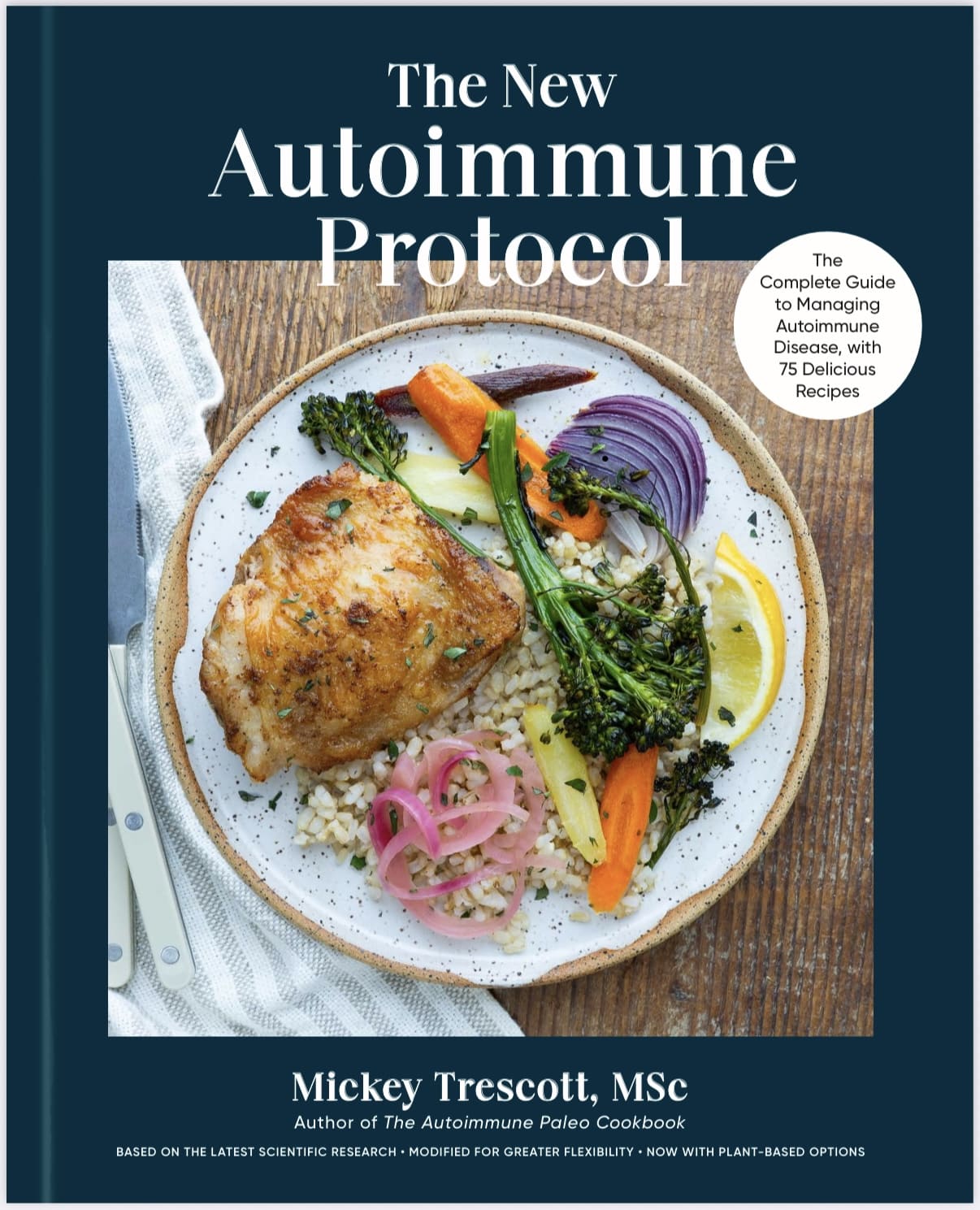
If you’re ready to go deeper with AIP—and want a clear, modern framework for how to approach Transition, Elimination, Reintroduction, and long-term maintenance—my new book, The New Autoimmune Protocol, is available for pre-order now.
This book brings together updated guidance, practical tools, and a more flexible, sustainable approach to implementing AIP in real life.
Pre-orders play a meaningful role in helping this work reach more people. If this podcast has supported you, pre-ordering the book is one way to support the continued development of these resources.
👉 Pre-order The New Autoimmune Protocol
.
Episode Timeline
00:00 – Why AIP meals can feel repetitive
01:54 – Flavor Booster #1: Acid
04:18 – Flavor Booster #2: Fresh herbs
07:36 – Flavor Booster #3: Fermented foods & brine
10:30 – Flavor Booster #4: Aromatics
12:39 – Flavor Booster #5: Umami
14:15 – Recap & practical next steps
.
Episode Transcript
Below is the full transcript of this episode of the Autoimmune Wellness Podcast.This transcript is provided for accessibility and reference.
Title: Kitchen Confidence: 5 AIP Flavor Boosters That Make Everything Taste Better | Small Bite (Ep 078)
Mickey: If you’ve ever started AIP and thought, why does everything taste kind of the same? You’re definitely not alone. This is one of the most common challenges people run into, especially in the early days. You’re learning this new way of cooking, often simplifying your meals a lot, and working with a different set of ingredients than you might be used to.
And even when you’re following the rules, you’re doing everything right, meals can start to feel repetitive or just a little bit flat, and that can make it harder to stay consistent because food isn’t just about nourishment. It’s also about enjoyment, satisfaction, and feeling like what you’re eating is actually appealing.
Welcome back to the Autoimmune Wellness Podcast. I’m Mickey Trescott, and this is a Small Bite episode focused on kitchen confidence. Today we’re going to talk about flavor, specifically, how to build it in a very simple, practical way while you’re on AIP.
If you guys have been following my work or making my recipes, hopefully by now you know that I am super into finding the most practical way to get something done. It’s not about following the most complicated recipes or spending all of this time in the kitchen, it’s about understanding a few key elements that enhance flavor and knowing how to use them easily and consistently.
So today I’m going to walk you through five of my favorite AIP friendly flavor boosters. These are ingredients and techniques that you can layer into the meals that you are already making, whether that’s something as simple as roasted vegetables, a piece of protein or a basic soup or stew. Once you start using these regularly, you’ll notice your food feels more interesting, balanced, and a lot more satisfying.
[00:01:54] Flavor Booster 1: Acid
Mickey: The first flavor booster we’re going to talk about today is acid. This is probably the most underrated tool in AIP cooking, and honestly, one of the fastest ways to improve how your food actually tastes.
And when I say acid, I’m talking about things like lemon juice, lime juice, vinegars. Specifically on AIP, apple cider vinegar, coconut vinegar, and there are even some Core and Modified fancier options like champagne vinegar, if that sounds fun. Now, what acid does is it brightens flavor. It just wakes everything up, especially in meals that are heavier or richer, like roasted meats, slow cooked dishes, anything with a lot of fat, adding a little bit of acid at the end of cooking can make the whole dish feel more balanced and taste more vibrant.
You’ll notice that many of my recipes finish with a little acid added at the end. This is because I don’t want you to miss that opportunity. You can have a perfectly cooked meal, but if it tastes a little flat, it often just needs a small hit of acid to bring it all together.
Some really simple ways to use this. You can squeeze lemon over roasted vegetables or greens right before serving. You can add a splash of vinegar into soups or stews at the end. My favorite for this is apple cider vinegar ’cause it has a pretty neutral flavor. You can also use citrus juice in salad dressings to give them a little bit more brightness.
And you can also play with some less common options. Things like champagne vinegar, like I mentioned before, a fig balsamic can add a really interesting layer of flavor. Now, with that balsamic, just make sure you’re checking that it’s gluten-free. And some traditional versions are made in barrels that are sealed with wheat paste, so they’re not gluten-free. But most of the products you’re going to find in the store, read the labels, but they should be gluten-free.
Now, timing also matters here. In most cases, you want to add that acid towards the end of cooking or right before serving. That’s when you get the most impact and have less of a risk of messing with the texture of the vegetables. It keeps the flavor really fresh and noticeable.
And be sure to start with a small amount and work up because like salt, it’s easy to go overboard. Once you start getting into the habit of finishing your meals with a little bit of acid, it becomes second nature.
[00:04:18] Flavor Booster 2: Fresh Herbs
Mickey: Now the second flavor booster here is fresh herbs. Fresh herbs are one of your best tools on AIP, especially if you’re on Core AIP, when your ingredient list can feel a little bit more limited. Dried herbs absolutely have their place, but fresh herbs bring a completely different level of flavor. If you can get your hands on them, they’re amazing.
They’re also an easy way to incorporate raw plant foods into your meals, even in the middle of winter when everything else you’re eating might be well cooked, you can sprinkle some fresh herbs right on the top.
Some of my favorites are parsley, cilantro, basil, dill, mint, and if you’ve tried any of my recipes, you know I tend to be pretty heavy handed in the fresh herbs because I love the flavor. I really believe that these are never basic.
I was actually recently in DC for the Autoimmune Association Advocacy fly-in. I was having dinner with my friend Marie Noelle from Urban AIP. We went to Old Ebbitt Grill. We ordered these incredible steaks, and Marie had the idea to ask for them to be served with this chimichurri that they had on the menu instead of a sauce that had dairy. And the steaks came with these generous buckets of chimichurri sauce just packed with fresh herbs, and it completely made the dish. Added so much flavor, balance, and it’s a perfect example of how herbs can transform something really simple into something memorable.
And that’s really how I think about using herbs in everyday cooking. You don’t need to go to a fancy restaurant to have this whole experience. You can use them generously by chopping and sprinkling into roasted vegetables, stirring them into soups and stews. You can mince them into that thick sauce like a chimmi. You can throw ’em in a blender and blend into a smooth dressing. I almost always have some sort of green sauce in my fridge at all times. I have so many variations in my books across the years, including two coming up in the New Autoimmune Protocol.
Herbs are also great in salads. I love a really herb heavy chopped salad, like an almost ridiculous amount of dill, parsley, cilantro and mint. Apologies to anybody who can’t taste cilantro. Just make some substitutions, it’s not essential.
From a nutrient density perspective, herbs are actually some of the most concentrated sources of vitamins and phytonutrients you can eat, when we compare them ounce for ounce. So for example, parsley is incredibly high in vitamin C. Along with a range of antioxidants that support immune health. So even though we think of herbs as just a garnish, something you throw on the top at the end, they actually can meaningfully contribute to the overall nutrient density of your meals, especially when you’re including them every single one that you cook.
So one practical tip. Now, if you’re converting a recipe from dried herbs to fresh, a general rule is about three times the amount of fresh herbs compared to dried. And I will say herbs can be one of the more expensive ingredients, ounce for ounce. So if you have any space, even just a sunny window sill, growing a few of your own in little pots can be very worthwhile. And once you get into the habit of using herbs generously, your meals start to feel a lot more vibrant, both in flavor and what they’re providing nutritionally.
[00:07:36] Flavor Booster 3: Fermented Foods & Brine
Mickey: The third flavor booster is fermented foods, and specifically using both the vegetables and the brine. This is a pretty underutilized tool I see in AIP kitchens. When we talk about fermented foods, we’re usually thinking of things like sauerkraut or other fermented vegetables, can include things like carrots, beets, things like that, that are AIP friendly already.
These are different from pickled vegetables, which are typically made with vinegar. Fermented foods go through a natural fermentation process, which creates beneficial bacteria along with that signature tangy flavor. You’re going to be looking for a product that isn’t treated with heat, isn’t pasteurized, so it has all of those live cultures.
From a flavor perspective, they bring two things at once, acidity and umami. So you’re getting that brightness we talked about earlier from the acid, but also a deeper, more savory complexity that can really round out a dish. And the key here is that you don’t need a lot, even a small amount can completely change how something tastes.
So here are some simple ways to use fermented foods. First, you can add a fork full of sauerkraut or fermented vegetables to a bowl of soup or stew right before serving. You can mix them into a savory bowl with protein and vegetables. This is something that I do all the time for lunch, mixed roasted root vegetables, throw in some leftover ground beef, chicken, and a big scoop of fermented veggies. You can also add them to salads for a little contrast and texture. I like doing this with fermented carrots.
But my favorite tip and something I learned from my friend Julie over at Firefly Kitchens in Seattle is to use the brine. That liquid in the jar is packed with flavor. You can stir a little into salad dressings, drizzle it over cooked vegetables, or even add a splash into soups to give them more depth. And if you’re in the Pacific Northwest, definitely check out her fermented products that are in lots of stores, they are truly some of the best.
It’s one of those small additions that makes people say, what is that? This tastes so good and you actually didn’t do anything complicated. And if you’re somebody who thinks you don’t like fermented foods, I always encourage experimenting with different types. The flavor can vary a lot depending on what’s used and how it’s made. Most people are pretty familiar with sauerkraut, maybe cabbage isn’t really their thing. Definitely try fermented carrots.
I also have a recipe in The Nutrient-Dense Kitchen, my cabbage and kraut soup that uses a really generous amount of sauerkraut in the soup and the flavor is just incredible. It’s a great example of how these ingredients can go from being a small side to something that really anchors a dish.
So whether you’re just using a small spoonful or building a whole recipe around it, fermented foods are really a powerful way to add both flavor and complexity to your meals.
[00:10:30] Flavor Booster 4: Aromatics
Mickey: The fourth flavor booster is aromatics, and there’s a reason why so many traditional recipes start with these ingredients. They create the foundation for savory flavor. So when I say aromatics, I’m talking about things like garlic, ginger, onions, scallions. These ingredients build that first layer of flavor that everything else that you’re about to cook sits on and how you cook them really matters.
One of the simplest ways to level up your cooking is just getting comfortable sauteing those aromatics properly. Now, when you heat them up in fat, whether that is olive oil, coconut oil, animal fat, they release these really complex savory compounds that add depth to whatever you’re making. Soups, stews, stir fries, roasted dishes, it all starts here.
A really easy shortcut, especially if you’re cooking a lot, is to make a garlic and ginger paste. You can blend them together, keep it in the fridge, and then just scoop out a spoonful when you’re starting a meal. It saves you some of that chopping time and makes it easier to build a flavor base consistently.
Now, one of the biggest mistakes I see when I’m teaching cooking classes is around this step. People tend to add aromatics to a pan that isn’t really hot yet. Or they cook them on too low of heat or they don’t use enough fat in the pan to really cook everything and keep it greased up. And then what happens is those vegetables kind of steam instead of saute, you actually want the pan and the fat to be hot enough that you hear that sizzle when the aromatics hit the pan.
That’s when it starts developing flavor, and you’re going to smell it almost immediately. That really rich, savory aroma, that’s your cue that you’re on the right track. You don’t need to rush it, but you do want a little bit of browning. That’s where the depth comes from.
So when someone walks in the room and literally all you’re doing is sauteing onions, they go, wow, that smells so good. That’s how you know you’re on the right track. So taking an extra minute or two at the beginning of cooking to properly saute your aromatics can completely change the end result of your dish.
[00:12:39] Flavor Booster 5: Umami (Oils, Sauces & Ingredients)
Mickey: The fifth flavor booster is umami. Umami is often described as a deep, savory, almost meaty flavor. It’s what makes food feel really satisfying and complete. And while this can feel like a tricky category on AIP, there are actually quite a few ways to bring umami into your cooking.
Some AIP friendly sources of umami include things like mushrooms, fish sauce, coconut aminos, even things like nutritional yeast and truffle salt, if you have those on hand, and what all of them have in common is that they add that depth. They make food taste a little bit more complex, even when the dish itself is very simple. And similar to fermented foods, a little goes a long way here, you don’t need to build an entire recipe around umami. You can just layer it in.
For example, you can saute mushrooms until they’re really well browned, and you can add them to a dish for richer flavor, even a small splash of fish sauce to soups or sauces. I promise it won’t taste fishy, it just deepens that flavor of everything. Use some coconut aminos in marinades or to finish a dish for a little bit of that savory sweet balance. Or even just finishing a meal with a pinch of really good truffle salt can add something extra.
And this is one of those categories where you can experiment a bit. Find what you like, because these different ingredients bring slightly different qualities. But once you start intentionally adding umami into your meals, you’ll notice that things feel more satisfying and complete even without a lot of extra effort.
[00:14:15] Wrap-Up
Mickey: So just to bring this all together, flavorful AIP cooking really comes down to a few simple things that you can layer into almost any meal. Adding a little bit of acid to brighten flavors and balance richness, using fresh herbs generously, both for flavor and nutrient density, incorporating fermented foods and even a splash of the brine for complexity, taking the time to build a strong foundation with aromatics and finishing with a bit of umami to make everything feel more complete.
So if you take anything from this episode, try picking just one of these and adding it to your meals this week. It’s a simple way to build confidence in the kitchen and start enjoying your food more.
And if you’re ready to go deeper with all of this, I want to share a little bit about what’s happening right now to prep for the launch of the New Autoimmune Protocol. If you haven’t already, make sure to pre-order the book and submit your receipt at theautoimmuneprotocol.com/preorder. We have an exclusive community that is now open, I have been loving connecting with all of you there. It’s been really special to have that private space where we can connect and support each other .
Inside the community you’ll find extra recipes, live Q and A sessions, and I just shared an exclusive Core AIP strawberry shortcake bar recipe that has been a really big hit. We also have another Q and A session coming up in just a few days.
All of this is leading to a guided experience where we will be walking through the transition phase together in May, followed by the elimination phase in June. So if you’re thinking about starting AIP or restarting with more structure and support, this is a really great time to join.
Make sure to get your pre-order in and submit your receipt so you can be a part of the group and not miss out on everything we have planned. I’ll give you that link again in the show notes.
Thank you so much for listening to the Autoimmune Wellness Podcast. Take good care of yourself and I will see you in the next episode.
.







0 comments