

If you’ve ever found yourself wondering whether you’re doing AIP “right,” you’re not alone.
From early symptom changes to reintroductions, troubleshooting, and long-term sustainability, there are many questions that come up when you’re navigating the Autoimmune Protocol in real life.
In this episode of the Autoimmune Wellness Podcast, I answer listener-submitted questions from across the community—covering both the practical and emotional sides of AIP.
This episode is designed to help you think through your own experience, identify what might be missing, and move forward with more clarity and confidence.
.
Watch the Episode
.
Questions Answered in This Episode
- Is it normal for inflammation or symptoms to increase in the first weeks of AIP?
- What should you do if you’ve been on AIP for two months with no improvement?
- How do you troubleshoot when AIP doesn’t seem to be working?
- What are common mistakes people make in the elimination phase?
- How do you manage AIP when you don’t have the energy to cook?
- What are realistic strategies for eating out on AIP?
- Are meal delivery services or convenience foods an option?
- How should you think about supplements and non-AIP ingredients?
- What should you watch for in supplement fillers and formulas?
- How do you move through reintroductions without fear?
- What if reintroductions feel overwhelming or trigger anxiety?
- How do you handle failed reintroductions and continue making progress?
- How long should you stay in elimination before trying again?
- Should you return to AIP after life changes like pregnancy or stress?
- How do you make AIP sustainable long term without over-restricting?
- How do structure and bio-individuality work together in AIP?
- What are the most common trigger foods people don’t reintroduce?
- Can AIP help you reduce or eliminate medication?
- How do you troubleshoot setbacks during elimination?
- How can you get involved in autoimmune research and advocacy?
.
Resources
- Episode 58: The 3 Meal Safety Net
- Urban AIP Meal Delivery
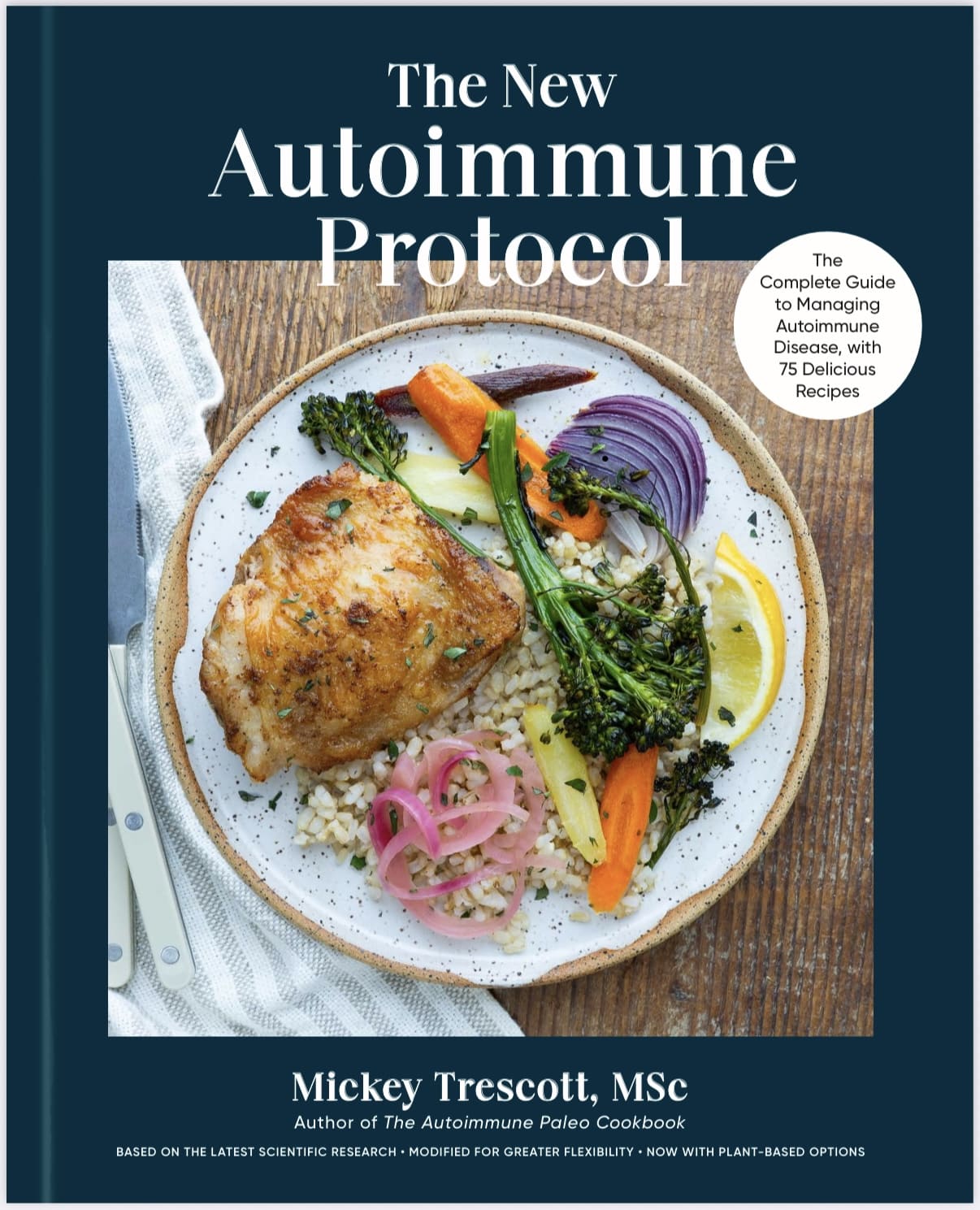
- The New Autoimmune Protocol (Preorder + Community)
- Autoimmune Association
- AIP BIPOC Network
.
Episode Timeline
00:00 – Introduction to the Q&A episode
01:22 – Is it normal for symptoms to worsen early on AIP?
05:02 – Two months on AIP with no improvement
11:04 – Real-life barriers: energy, cooking, and access
17:36 – Supplements and AIP compatibility
22:43 – Fear of reintroductions
27:43 – Reintroduction strategy and failed attempts
32:53 – Getting back to AIP after life changes
38:17 – Personalization vs protocol structure
41:33 – Common trigger foods and medication expectations
46:20 – Troubleshooting setbacks and research advocacy
51:21 – Wrap-up and closing
.
Listen to the Episode
.
Episode Transcript
Below is the full transcript of Episode 79 of the Autoimmune Wellness Podcast.
This transcript is provided for accessibility and reference.
Title: Ask Mickey Anything: Your Biggest AIP Questions, Answered (Ep 079)
Mickey: Today’s episode is a special one . We are doing a listener Q and A. A little while back I put out a call for questions and I received so many thoughtful, honest, and nuanced responses. Questions came in from across social media, and I also included some from the new Autoimmune Protocol pre-order community.
I’ve pulled together a set that really reflects what so many of you are navigating right now. We’re going to talk about everything from getting started with AIP to troubleshooting when things don’t go as expected with some personal scenarios in there to the emotional side of reintroduction and what it looks like to make AIP sustainable long term.
I also sprinkled in a few big picture questions about research and the future of autoimmune care, which I am really excited to dig into.
Mickey: Welcome back to the Autoimmune Wellness Podcast. I’m your host, Mickey Trescott. And before we get started, just a quick reminder that this podcast is for educational and informational use only. It’s not intended as medical advice. As always, consult with your healthcare provider before making any changes to your treatment plan.
All right, we’re going to get started by just diving right into the questions, ’cause I’ve got a lot of them lined up for today.
[00:01:22] Is it Normal for Inflammation to Increase Early on AIP?
Mickey: This first question comes from Instagram. Is it normal for inflammation to initially increase a little bit right after starting AIP? This person is on day eight.
This can happen for some people, and it doesn’t necessarily mean that AIP isn’t working for you. So remember, in the very first couple of weeks of AIP, your body is still transitioning to this new way of eating. You haven’t reached that full therapeutic effect yet.
I have a list here of some common reasons why your symptoms might be flaring up early. The first is withdrawal from common foods. When we do the elimination phase, a lot of times we’re cutting out things like caffeine, sugar, processed foods. It really depends on the diet that you were eating before you come to AIP. But cutting out these foods can cause headaches, they can cause fatigue, irritability, sometimes even body aches. So just be aware if you were heavily reliant on any of those foods before, sometimes that takes a little bit of time to work out.
The second one is blood sugar shifts, and this can happen especially if you drop carbs too quickly. So AIP is not a low carb diet. We’re not specifically cutting carbs, but a lot of people do this accidentally, so sometimes this can cause an increase in stress hormones, so adding back a little bit of sweet potato or winter squash or plantains, just making sure to eat fruit, that you’re not cutting out any additional food groups to make sure that your blood sugar stays stable.
The third thing is it just simply increased awareness. So you’re going to be paying a lot more attention to your body when you’re doing the elimination phase. This is because we are tracking symptoms, we are really looking into how do I feel compared to how I felt before. And symptoms that were always there before, you might have been a minimizer, I know I was before I started on my healing journey, they might actually be more noticeable just because you’re paying attention. So I want to throw that out there, that sometimes increased awareness is a factor here. You’re actually paying attention to these subtle signals in your body.
The fourth is digestive adjustment. This is so common and actually probably the most common reason for people needing some time to adjust when they are in the elimination phase. Things like more fiber, eating foods that you just haven’t eaten before, more vegetables, perhaps even some more fat. All of this can lead to bloating and discomfort depending on who you are. So your microbiome is shifting when you shift to AIP and sometimes that leads to a little bit worse before better feeling.
And then the last thing that I want to acknowledge as a possibility here is just not eating enough food. So when we transition to AIP, there’s a long list of things that are eliminated. Some people apply that in a way that just means that they’re not eating enough food. It’s a very common, easy mistake. And undereating leads to more stress on the body and worsened symptoms, in some cases. So I just want to acknowledge that if you’re feeling like your meals are really not incorporating enough food, you might actually find that just increasing the volume is going to help you feel a little bit better.
Remember that a mild fluctuation or temporary worsening, this is week one or two, like some of those digestive changes, this is all completely normal, but you should not feel meaningfully or severely worse when in the elimination phase, you should not feel like you have progressively worsening or new symptoms. Those are all signs that you need to investigate or troubleshoot, which we’re actually going to talk about a little bit later in this episode with some of the other questions.
[00:05:02] Two Months on AIP with No Improvements
Mickey: The second question in this category is from TikTok. This user is two months strong into AIP with no improvements of their symptoms. They want to know if this means that it’s something besides their autoimmune disorder that is causing their pain, fatigue, brain fog, and post exertional malaise, specifically to them.
Two months with no improvement. Of course when you’ve done the elimination phase it’s very frustrating and discouraging, but it doesn’t automatically mean that you have failed or that AIP isn’t working for you. Instead of thinking, what if this is something else, I want you to be honing in on which variables might be missing or interfering.
So here are some common reasons that people might not see improvement in the elimination phase.
So the first one, you know I have to mention this, is that you might not actually be in true elimination. And I know if you’re somebody who’s been diligent and you have been very compliant, this message is not for you. But I have worked one-on-one with a lot of people, and I have found that they thought they were in elimination, but there were hidden ingredients. So I mention it first.
There are spices, additives, supplements, eating out, cross-contamination from having a household of family, people that don’t eat the way that you eat. The first thing is really to truly consider if your elimination has been compliant. The reality is that you do need to be perfectly compliant in order for the immune system to reset and forget some of those stimulating triggers.
And so that’s the first place that I would look is just make sure that you are actually not experiencing any cross-contamination, that you’re not having any supplements with some weird ingredients. Sometimes supplements can even have immune stimulating ingredients. Sometimes even personal care products, you can be ingesting them. This is especially important for Celiacs. So really examining if you’re truly in elimination is the first step.
The second is undereating. And I know I mentioned this in the last question, but sometimes people are not eating enough or they’re eating poor macronutrient balance. So again, that not enough calories leads to a stress response. Maybe too low carb can lead to fatigue and brain fog, especially with this person is experiencing post exertional malaise, which is like a fatigue that comes on, exercise intolerance. I have definitely experienced this myself. You need to make sure that you are actually truly fueling your body and your energy needs. So I would want to make sure that they are eating enough food and enough carbs specifically.
The third thing is some nervous system dysregulation. So we know that there is such a big link between autoimmune disease and chronic stress and burnout. And this is why managing stress is a key pillar of the Autoimmune Protocol. Of course, we can’t implement that as clearly as we can an elimination diet, but I think especially with somebody who is experiencing fatigue, exercise intolerance, brain fog, making sure that you are addressing your stress. You know, food is not just going to resolve this if this is a core issue for you. So make sure that you’re paying attention there.
The fourth is underlying infection or other conditions. So some examples here. Mold exposure, chronic infections, gut dysbiosis. AIP supports healing in a very specific way in lowering inflammation, in helping you discover your triggers and increasing nutrient density. It’s not going to directly treat any of these things. So if that’s something that you are trying to manage and maybe even layer with AIP, you need to handle those first before you progress to the elimination phase, ’cause sometimes it’s just really not going to be possible to see results while there is some underlying infection or another health condition that needs treatment.
The fifth is an expectations and timeline mismatch. So again, we recommend that the elimination phase be done for a minimum of one month and no more than three months, but the two month mark is kind of in that middle. So I’m pushing back against this if you do it longer, maybe something will change approach. I actually think that usually around the two month mark, you’re starting to see something positive. But I will say that especially with people who have longstanding or complex illness, maybe you came from a very nutrient poor diet. Like when I came to AIP, I had been vegan for almost 10 years. I really needed a lot of time for that nutrient density to like nourish and stabilize me. So I will say that it wouldn’t be a bad idea to continue for another month, especially if you don’t think that any of these other things apply to you.
And then the last thing that I want to say is just not everything is autoimmune. Sometimes people can misattribute symptoms from other illnesses as autoimmune, and sometimes it could be things like sleep disorders or anemia. In the realm of thyroid disorder, because there’s a lot of fatigue here. I always think, is there enough thyroid hormone? Is there thyroid hormone deficiency, conditions like POTS, ME, CFS, these are often conditions that are very related to autoimmune conditions. But sometimes with treatment, they can actually expand your healing on the autoimmune side. So I just want to make sure that you’re not using the Autoimmune Protocol to affect a health condition that maybe isn’t going to be responsive to it.
So if this is you, I definitely want you to be curious, not judgmental, don’t write off your time on AIP as a waste. It is a tool, and even if it’s not helping your specific situation, that’s information and your next step should be refining your approach and not abandoning hope. So I wish you the best of luck.
[00:11:04] Real Life Barriers: Energy, Cooking, and Access
Mickey: These next two questions fall under the category of real life barriers. So energy, cooking and access.
Kimberly in the New Autoimmune Protocol community says, sometimes I just don’t have the energy to cook. What are some strategies for eating out?
And Gabriela from Reddit says that she has myalgic encephalomyelitis, ME, which is a neuro immune disorder. She has POTS with orthostatic intolerance. She’s housebound, she’s seated or lying down all of the time. She’s been in a crash for two weeks and she doesn’t have the stamina required to meal prep. She needs suggestions on meal services or meals from the grocery store that are oven ready or just reheatable.
So the first thing I want to say to both Kimberly and Gabriela, these are really real and very common challenges. AIP can feel like it assumes you have this unlimited well of time and energy. And the reality is that most of us with autoimmune disease are not those people, right? And especially, I just want to acknowledge with Gabriela that is a really challenging situation with ME, CFS, POTS, anybody who’s really going through a flare where cooking is really challenging for them. So I just want to give you guys lots of ideas of how to navigate in this situation.
So the first thing is just to normalize we have lower capacity seasons with autoimmune disease. There is going to be times when cooking isn’t realistic. Meal prep is really not possible, and this isn’t a failure. It’s part of living with autoimmune disease, which is why I really want you guys to plan for low capacity meals.
And if you want to revisit, I did a whole episode on this. It’s episode number 58, my three meal safety net. I talk about how to reduce effort and not abandon AIP, when you have basically these three different buckets of days where you have low capacity, like Gabriella is describing, she’s in a flare right now, she’s housebound, she can’t get up and stand on her feet and cook. What are you going to feed yourself on those days?
The second are kind of those medium capacity meals, so maybe minimal prep. Get on the table 15 to 30 minutes, not a lot of dishes. And then the third is like high capacity batch cooking, filling your freezer. If that sounds like something you’re interested in, definitely revisit that episode for some really detailed guidance.
So cooking doesn’t have to mean full recipes. You can rely on grocery store shortcuts to make things work when you’re in a flare. So leaning heavily on like rotisserie style meats if you have some compliant options available. Some frozen meals with simple ingredients, I think like smoked salmon, pre-cut vegetables, already like spiralized, zucchini and butternut squash, or even pre-chopped squash or kale, bone broth in cartons. Think of ingredient meals instead of full dishes.
And then to address Kimberly’s question directly on eating out, my advice is to keep it simple and flexible. So I like to call a restaurant or look at the menu ahead of time. I like to prioritize restaurants that already serve gluten-free. Maybe the whole restaurant is gluten-free, ideally. These restaurants are usually much more accommodating with substitutions and food sensitivities, and you can always reach out to them ahead of time.
But my go-tos are always grilled protein and some plain vegetables. I usually modify, so sometimes I will ask for like no sauce or no seasoning blends. I will ask sometimes if they can prepare my food in a separate pan. If they’re familiar, or they can accommodate cooking for celiacs, usually this is something that they do. But be sure to ask lots of questions. And some cuisines are easier than others, like steakhouse, seafood type restaurants, especially seafood restaurants where they’re doing a lot of steaming, they’re serving with, lemon and butter. I would just take it with some lemon and hold the butter. Steakhouses are great for getting like grilled chicken or grilled steak on a salad.
And accept that it might not be perfect. It might not be the most flavorful, exciting thing, but it is really fun to eat out when you don’t have to do the dishes. You don’t have to do all of that cooking and you are getting a meal that is going to keep you on your plan.
So the next thing I want to talk about is meal delivery, specifically with Gabriela’s situation. I’ve partnered with Marie Noelle at Urban AIP, which is a frozen, nationwide meal delivery company where she creates these beautiful and nutrient dense AIP meals. Marie is actually an AIP Certified Coach nutritionist herself, so she knows everything about the protocol. She delivers really tasty meals that are super nutrient dense, lots of broth, slow cooked meats, and she’s even making my recipes.
You guys can order from her website, it’s UrbanAIP.com. They are definitely my number one recommendation for anybody who wants to have frozen meals delivered straight to their door. Honestly, you couldn’t do any better.
To add on to that, if frozen to your door isn’t accessible to you, there are local meal delivery services that service like gluten-free, dairy-free in a lot of the major metro areas. So I would do a search in your local areas to see. If you get lucky, you have a service like, here, I live in Portland, there are a couple that do really easily gluten, dairy free. A lot of times they’re fresh, so you go somewhere, you pick up your fresh meals for the week, maybe you get five or eight different meals, and those are prepared with ingredients according to your specifications. So if that is something that you need, I would definitely look into that.
So to wrap up these questions, the goal really isn’t perfection. The goal is nourishment, consistency, reducing your stress. If you are in a crash, a flare, or a low energy state, I really hope that you can figure out how to support your body and conserve your energy. That might mean eating out. That might mean relying on some of these convenient options from the grocery store. It might mean doing some meal delivery, but I’m really hoping that you can find some options that help support you and not become another stressor.
[00:17:36] Supplements and The Autoimmune Protocol
Mickey: Next, I’m going to address this question from Deoni in the new Autoimmune Protocol pre-order community.
I was also wondering when it comes to taking supplements and so many might contain extra fillers and byproducts, could you possibly touch on that as well?
So this is a really important question. Supplements can absolutely contain ingredients that aren’t AIP friendly, but they also are sometimes necessary and helpful. So the first thing that I want to say is supplements are not required or foundational to AIP. Food and lifestyle always come first, and I think of supplements as supportive tools and not replacements.
Now you may be on medications or supplements prescribed by a healthcare provider, and you absolutely should continue taking those until you work with your provider to find a suitable replacement if they contain an ingredient that is not allowed on AIP. So this is something like gluten in thyroid medication.
Please don’t just stop taking your medication, go to your provider, have a list of the ingredients that you’re worried about. In many cases, that medication or sometimes even supplements that you really need and your healthcare provider wants you to continue taking, they might actually have fillers that are not perfectly compliant with AIP, but it is important to continue them if that benefit to you is worth that tiny risk of exposure to the filler.
So I just want to say that because there’s a difference in supplements that you’re taking on the recommendation of a healthcare provider and the things that we all add to our Amazon cart because we’re scrolling online and somebody says that this might help X, Y, or Z issue. Now that category is where I really want you to be suspicious, because adding in a lot of those fillers, and actually even sometimes the primary ingredient can be problematic for people with autoimmune disease.
So many supplements contain binders, fillers, anti-caking materials. They can also include the ingredients that we’re avoiding, grains, soy, gluten, dairy, gums, starches. So I just want to leave you guys with a little bit of this gray area. Not all fillers are equally problematic because the dose in supplements is usually very small. Something like rice flour, like I’m not talking about gluten here, gluten is going to be problematic for people who are sensitive even in the tiniest dose. But sometimes some of these things are just not a big deal. And if you need that ingredient, you might continue taking it during the elimination phase.
Now, there are other things that I want you to be especially careful about. These are formulas like multivitamins or stress formulas or sleep formulas or herbs. There are lots of ingredients that are immune stimulating. Things like medicinal mushrooms and different herbs. Some things are nightshades, like ashwagandha is commonly in stress blends, and this is a nightshade. So you really want to read those labels carefully, see what’s in there. Many of these things, especially if they’re in the category of, I’m just taking them because I heard about it online, I’m going to want you to hold that during the elimination phase just to make sure that that’s not impacting your progress.
And then if you are going to continue taking some supplements, the things that I recommend layering are nutrient support for nutrients that you know you need. This is your vitamin D, perhaps your magnesium, perhaps your iron. Again, I prefer if you are working with a healthcare provider, you have a low vitamin D on your blood test, you have low ferritin, you know you need to take iron. Those are the people that should be taking those supplements. Not everyone, just because they think that it’s something they need. Right.
And then lastly, the company that you work with is very important. There’s a lot of troubling research out there showing that many times the ingredients are not what they say on the label and the dose in the label. A lot of times they’re cross-contaminated because the facilities are not clean. So I would really make sure that you work with a company that is transparent, that does third party testing.
A lot of practitioner lines, so these are not, influencer special supplements. These are lines that are made specifically for healthcare providers. Companies that manufacture in allergen-free facilities and have transparency like third party testing. This is the only type of supplement that I allow into my body because this is something that we’re taking every single day and it absolutely can support your healing or hinder your progress if you’re not careful.
So that is my whole thing on supplements. Personally I am a minimalist when it comes to supplements. I really like to use it as an additive and supportive approach, but not the foundation of my nutrition. I’m really looking to food for that, I’m looking to my lifestyle to manage my stress. If I start to have issues there, I don’t just jump into adding another supplement because I know that that potential to cause me harm by adding that little thing every day. Not to mention they’re very expensive, can be a problem.
[00:22:43] Fear of Reintroductions
Mickey: Next we have two questions about reintroductions. The first is from Brenda in the new AIP pre-order community. She’s just 90 days in with Core AIP and doing amazing. No pain, no need for her drugs, but she’s terrified to start reintroductions. She doesn’t want the pain or inflammation to come back, and she’s hoping to get some guidance on this. So first, high five to Brenda. We are all cheering you on and so happy that you have had so much success.
Now the second question is from Kate In the pre-order community. She saw symptom improvement on AIP before, but the elimination and reintroduction process became mentally draining and led to intense food fear. Managing her diet took over her life and emotions for years. Working with a nutritionist helped her find balance again. She currently has reintroduced everything and only has known problem with gluten and dried fruit. She still has some minor symptoms that she’d like to address. She’s nervous about the lifestyle impact and her emotional response. How does she decide if it’s worth going through AIP again?
I wanted to pair these questions together because both of these experiences are really valid. They’re basically the two sides of the same experience. Brenda has a fear of losing her progress, and Kate has a fear of losing her balance.
So fears around reintroduction are very common, especially when you finally feel better. It makes sense to protect it at all costs, right? We spend so much time of our life being sick. We find something that helps us manage the symptoms. Why would we do anything to disrupt that?
But reintroduction really isn’t about risking everything. It is a data gathering phase, not this free for all, and it’s not permanent. So you’re going to be testing food one at a time in very small amounts with the ability to stop and reassess at any point.
So for Brenda, I just want to reassure you reactions that you have are temporary and they don’t undo all of your healing. You can always return to your baseline if you start to experience new symptoms. Reintroductions is important and it is essential. And since you’ve been on AIP for 90 days, you really need to start the next phase of the process.
To transition to Kate’s experience, I definitely want to acknowledge that AIP can be mentally consuming and that these food fears are real and serious. So there is a distinction between healing and control. Control has a little bit more of a disordered flavor. So if AIP becomes too restrictive, anxiety producing, all consuming, it is no longer serving you. This is not an approach that is going to be productive in achieving balance.
So if I were Kate, I would be answering a few questions to see if it’s worth doing AIP again, or if you want to try a different personalized approach. The first question would be, what’s your goal right now? So she said she’s still having minimal symptoms. Most of the time. AIP might be a little too restrictive for people who have mild symptoms. So I would ask her, what is your goal right now? Symptom reduction, fine tuning, maintaining that balance?
Number two, what is your current capacity? Including areas like emotional, practical, and lifestyle. If it feels like doing AIP would just be easy because you’ve done it before, that’s very different than you think you’re just going to be white knuckling through another month or two.
And then number three, what worked last time and what didn’t? You might have actually been carrying with you all of these things that helped, like the nutrient density, the approach to your sleep. Or you could actually discover that the lifestyle factors are the big piece for you and the food wasn’t really that big of a deal.
So I really want you to think about Kate, flexibility. It doesn’t have to be all or nothing because you’re having minimal symptoms because you have experience doing the process, and you’re worried about finding balance. Maybe there is a flexible approach that is shorter and modified and targeted with some of that information that you learned from the first time.
To tie both of these reintroduction questions together. Brenda, I think you just need permission to move forward safely. And Kate, I think you need permission to be flexible and adapt to not over restrict. I want both of you to know that AIP is a tool. You’re allowed to adjust it, pause it, personalize it, and decide when it is supporting you or not.
The practical tips for reintroductions definitely apply here. Go slowly, keep it structured, track your symptoms, but don’t obsess and build that confidence with each test. The goal is not to stay in elimination forever, it’s to expand your life, not shrink it.
[00:27:43] Core and Modified AIP Reintrodution Differences and Failed Reintroductions
Mickey: I have another reintroduction question from a user on Reddit. If I’m on Core AIP, then my logical reintroduction would be to start with foods that are in Modified AIP. Why is that not the case? Also, I try to reintroduce some foods after 30 days, but I failed with all of them. How long should I be symptom free on Core AIP before I try reintroductions again? Can a failed reintroduction make damage and slow the healing of my gut?
So I love this set of reintroduction questions ’cause I think it encompasses a lot of challenges that people have in this phase. So the first question about going from Core AIP and then just reintroducing foods first that are in Modified AIP.
You can absolutely do that. But I recommend using the stage reintroduction charts. So for Core AIP we have four reintroduction stages for Modified AIP, there are two. The Modified foods are not automatically stage one on those Core AIP reintroduction charts, but some of them are. So things like gee is going to be stage one for Core. I really recommend moving through those charts ’cause those have been developed out of personal and clinical experience. Those are going to be the foods that are least likely to cause a reaction and most likely to bring you extra nutrients and success.
When you reintroduce foods, you always need to do it one at a time. You’re not simply going from Core AIP to Modified AIP. That would mean that you are reintroducing rice and legumes and seeds and ghee all at once, which we don’t do that. We need to reintroduce one food at a time, give it three to seven days, start with another food. It’s a long and pretty drawn out process to identify each food sensitivity.
And so I wonder if this person said that they tried to reintroduce some foods after 30 days, but they failed with all of them. I’m wondering if that reintroduction procedure was actually followed because I would say that it is extremely uncommon to get to reintroductions and fail every single food reintroduction.
So if you are in the reintroduction phase, you are following the procedure. You are reintroducing one food at a time. You are having a negative reaction. You don’t need to go back to the elimination phase, but you do need to go back to your baseline where you last felt good.
So an example of this might be you’re doing Core AIP, you experience your measurable improvement, you reintroduce ghee, which is a stage one reintroduction. It goes well. You move on to butter, that goes well. You move on to cheese, you have a reaction. So now you just have to wait until you feel as well as you did before. You reintroduce cheese. You can still include butter, you can still include ghee, but you’re just going to wait until that reaction subsides, and then you can start with a different food.
Now, you’re not going to pass cheese with dairy because you know that that doesn’t work for you. But you might pick something else on that stage one chart. You might pick egg yolks and move from there. So that’s how it works. If you have those negative reactions, once you’ve already successfully reintroduced some foods, you keep those in your diet as you are navigating reintroductions going forward, so that your diet is constantly expanding, if that makes sense.
To the question of can a failed reintroduction make damage and slow the healing of the gut? I would say in very rare, in specific situations, yes. But for most people, when they have a failed reintroduction, it’s usually a week, sometimes up to two weeks that it takes for them to rebalance and go back to that baseline where they need to start again.
So I wouldn’t really worry too much about a failed reintroduction being a setback, because guess what? Now you have this valuable information about how that food affects you and you know to avoid it going forward. And something that I want to add here is that sometimes people find that when they retry something after a longer period of time with a lot more gut healing, they find that their reactions to food can actually change. Sometimes you can reintroduce things at a later date that are not working for you right now.
So for this person, I think it might mean that they need just a little bit longer in elimination, that 30 days is kind of the minimum. I might bump that up to two months. I would make sure that there is a measurable improvement. I would make sure that I am following the reintroduction procedure exactly how it’s outlined. I would start with those stage one foods. I would move very slowly and methodically through reintroductions and I would have the goal of reintroducing foods.
We don’t want to have this outlook, like everything that is not AIP is harmful for me. A lot of these foods are very helpful and supportive and nutrient dense, and we want to get them back into our diet. So that process of trial and error in doing reintroductions and expanding our diet is very important and powerful. So hopefully that helps.
The next question is also from Reddit.
[00:32:53] Getting Back to AIP After Life Happened and Sustainability
Mickey: What advice do you have for someone who’s done elimination twice, saw lots of benefits, but then life happened, many life changes, pregnancy kids, and is now trying to get back on track. How do you make these restrictions long-term sustainable for you? How long did it take for you to find your stable diet? I love food and cooking. Doing AIP has really forced me to improve my cooking skills, but now it makes me sad to have to give up so much good food.
So this is a really great question because I think it really accentuates the goal of AIP. This person has an extensive history with AIP. They saw lots of benefits and they’re wanting to get back or feeling like they should get back. And my first question would be, what are the symptoms that are motivating you to get back to AIP or think that you need to do AIP again?
I’ve explained this a few times, but AIP is really a template that you use to identify what is working for you right now. And when you have a history of doing AIP, going through the process, doing the reintroductions, you have all of this valuable information about how food affects your body. You know what foods trigger you. You know what nutrient dense foods support your health, but it’s not necessarily something that you need to be coming back to time and time again.
Now, I will say, for this person, they’re saying that they had so many changes in their life. They’ve had pregnancies, they’ve had kids. Now they’re trying to focus on self-care for a time. And this is absolutely a time when you can think about revisiting a dietary protocol, but I might approach it in a different way.
Instead of needing to go hard on AIP, I might actually implement the things that you already learned and know make you feel good. So if you’re somebody who hasn’t been avoiding your triggers that you discovered in your original AIP elimination, you haven’t been implementing the nutrient-dense pieces that, you know make you feel good. You haven’t been doing any of the lifestyle changes that you did maybe back in the day when you did AIP when you saw success.
I would actually start there. I wouldn’t necessarily start at going for full AIP. And I might actually see if that just helps you get back to feeling the way that you did before. Now, of course, you’ve been through a lot of change, so there could be some new triggers. You might actually want to do another elimination, and in that case I would consider Modified, but that’s where I would start.
And then the next question, how do you make these restrictions long-term sustainable for you? So for me personally, I am not eating AIP all the time. And I don’t advise that anybody do that. Right? I advise that we go through the elimination phase, we identify the foods that we’re sensitive to, and then we only avoid those foods long-term.
So for me, that means avoiding a small list of foods. I avoid gluten, most dairy and some nightshades. And then I have a lot of gray area foods like eggs and soy and nightshades, alcohol, depending on my situation, I might have a little bit here and there, but really they’re not in my diet long term.
Throughout the years, I have reintroduced many more foods, and so now 15 years later. My diet approach is very flexible, it’s very stable. And when I’m in a period of flare, like recently last year with psoriatic arthritis, I kind of batten down the hatches. I pare down my diet to really only the things that I know are very nourishing and supportive, but still not elimination phase AIP more expanded than that. And then when I’m feeling great, I expand it a little bit. And that’s my long-term approach.
And then to the last question about being sad to have to give up so much good food. There is so much grief that comes with having a food sensitivity that is serious and lifelong. I mean, I have celiac disease. I am sad that I can’t have a croissant when I’m traveling in France, things like that. There are replacements, but they’re never really going to be the same thing.
But when I feel sad about those things, I allow myself to feel that way. And then I also allow myself to be grateful for the information that I have, that like eating that croissant would make me so sick and ruin my vacation. And I’m just so happy now that I know that and I’m able to travel and I’m able to experience good health because of that information.
you know, I know it doesn’t fix the fact that we have to be vigilant and we have to manage some of these things for the rest of our life. But hopefully that reframe and that perspective helps you feel like you can navigate that a little bit better. And spoiler alert, there is some really incredible food that can be made that is compliant with lots of food sensitivities, and I hope that you are able to, if it’s going out to eat to like a fantastic restaurant. One of my favorite restaurants that I have ever been to in my life here in Portland is called Kann, and it’s all gluten, all dairy free, but it’s a complete, incredible, beautiful foodie experience and I just love that there are places like that that can accommodate food sensitivities and allergen-free dining at the highest level. And so if you look for it, it is definitely out there.
[00:38:17] The Autoimmune Protocol, Personalization and Bio-Individuality
Mickey: The next question is from Heba via email.
The Autoimmune Protocol is a structured, evidence-informed framework with clear phases and guidelines. At the same time, bio individuality tells us that no two bodies respond to foods, stressors or healing inputs in the same way.
How do these two concepts work together? In other words, how does AIP maintain its integrity as a protocol while still allowing for personalization based on somebody’s unique physiology, history, lifestyle, and healing capacity?
Thank you, Heba. This is such a thoughtful question. It really gets at the heart of how AIP is designed. So at first, this can seem like a contradiction. Structure versus individuality, but I really want you to think about AIP as a framework, not this rigid prescription.
The structure exists to remove the most common dietary triggers, create this consistent starting point where you are just clearing the slate. This is what is giving it integrity. And it also on the other side, gives it the capability to be researched. Because if it was just this choose your own adventure for everyone, we would never be able to apply it to medical research and learn more about how other people can use it.
So without that structured elimination, it’s really hard to know what’s affecting somebody’s symptoms. It’s hard to develop a clear baseline, and so the protocol creates a controlled environment for healing and observation.
Now where bioindividuality shows up is in how quickly somebody responds, which foods they tolerate, how long they might need in elimination, and then especially what their final diet looks like after reintroductions. So I want you to think about that structure and personalization as not opposing, but sequential.
First,. We build the structure, then we personalize in reintroductions. So elimination that is that standardized starting point. Reintroduction, that is that personalization process. And then when we’re on maintenance, when we’re after reintroductions, that is fully individualized. Everybody is going to have a different approach.
So nobody is meant to stay in the exact same version of AIP long term. That’s actually why I love AIP because it is not prescriptive, it is not just the same thing for everyone. The goal is to build your own diet from the framework. And the personalization piece isn’t just about diet, it includes lifestyle, stress, load access to food, your cooking ability. So two people can follow AIP correctly, still do it very, very differently.
Thank you so much Heba for asking this question. AIP is not this perfect way of eating forever, it’s a tool to help you discover what works for you. And think of it this way. I love a good road trip analogy, and when you guys get your hands on the New Autoimmune Protocol, you will definitely see how I have woven that through the protocol instructions throughout the book.
But I like to think of AIP as the map, but you are the person who has to figure out the exact route that works for your body and for your life.
Next, we have two more questions from Reddit.
[00:41:33] The Most Common Trigger Foods and Medication Expectations
Mickey: First, what foods are the most common triggers that most people don’t get back in rotation? And second, what percentage of people end up medication free if they change their diet and lifestyle long term?
These are good ones. So first I’m going to address the most common trigger foods, and we actually have some data on this from the AIP IBD reintroduction survey. Participants identified the most common trigger foods as gluten, 58%. Processed foods, 52%. Nightshades, 46%. Dairy 42%, and non-gluten grains, 29%.
So what’s important here isn’t just the specific foods, it’s that there is a lot of variability. So even the most common trigger, gluten wasn’t reported as a trigger for everyone. This really reinforces the importance of the reintroduction phase as an individualized process. Again, we were just talking about this in the last question. There is no universal never food list that applies to everyone forever.
The goal is to figure out what your body tolerates, what supports your symptoms long term. So I think this is a really great question. This is just a tiny study in people using IBD, so it definitely can’t be translated to the entire AIP community as a whole. But what I can say is the foods that are on those stage one and stage two reintroduction charts are often foods that many people can reintroduce. Those stage four reintroduction foods are things that a lot of people tend to have problems with.
So you really don’t know in the beginning of the process what results you’re going to get. You have to go through the process for yourself, but hopefully that helps you anticipate what foods might be problematic.
And then to transition to the medication question, the goal of AIP is not to become medication free, and AIP is not an alternative to conventional care. It does not discourage medication or surgery or anything that you might need to manage your autoimmune disease.
The context from the research is actually that AIP was used together with conventional medical care. So the IBD study, some participants were on medication, some of them were not. In the Hashimoto’s studies, the participants, many of them were on medication. Again, some of them were not. The goal was not to see what happened with medications, it was to see how effectively symptoms were managed, and in both cases they were managed extremely well.
So I just want to set the expectation that there isn’t really a reliable percentage of people who become medication free. That isn’t really a success metric that we’re looking for. Specifically in the IBD study, participants were told not to change their medications, but some of them did reduce their steroid use. In the Hashimoto study, their medications were actually being titrated by a functional medicine doctor who was trying to keep their thyroid level stable. Some patients, their hormones actually went too far down, so their thyroid hormone was reduced. So there was a reduction overall.
But those two experiences are really not enough to say that AIP reduces medication need. That is a possibility. That is something that you might see as an individual, but I would definitely not make that my primary goal. I would encourage you to reframe success as reduced symptoms, improved quality of life, better disease management. And for some people, that includes an approach to diet and lifestyle and an approach to conventional management, which may or may not include medication. That is the approach that I take in my own life, and I think that using all of the tools in the toolbox to live well with autoimmune disease is very much what I am after.
And one more note of caution also, framing AIP as a way to get off medication can create this pressure and lead to a lot of disappointment or maybe even unsafe decisions. So the goal isn’t to prove that you can manage your condition without medication. It’s to find the combination of tools that helps you feel and function your best. We are all individuals. We all have different visions for our health. We all have different access and approaches to healthcare.
But I just want to dispel any thoughts that AIP requires you to reduce your medication or you can’t do it with medications. There are so many people who are using this approach and integrating it into quality medical care to achieve the best outcome for them.
[00:46:20] Troubleshooting Elimination, Advocacy, and Future Research
Mickey: Okay, so we’re going to finish with this series of thoughtful questions from Maria from Reddit.
First is how to troubleshoot issues in the elimination phase. She’s in the elimination phase and was feeling much better during the first two weeks, but got regressed in symptoms during week three. How does she find out what went wrong?
Number two, how can we contribute to scientific research and medical protocol updates? I see that autoimmune diseases are under researched, protocols are outdated, diagnosis are delayed for years, this must change. I agree with you, Maria.
And number three, what is the status of AIP research for Lupus and UCTD? These are not listed in autoimmune conditions which were scientifically researched with AIP.
First I just want to acknowledge that these are such thoughtful questions. I love that they span both the personal experience of doing AIP and the bigger picture of research and advocacy. Because this episode is going so long, I do want to give you a heads up that for the troubleshooting question, this is such a specific situation, feeling better, and then regressing. It’s actually really common. It can feel so confusing.
And I am actually going to be doing a full troubleshooting series here on the podcast starting in May. I’m going to walk through this and all of the other scenarios in very detailed step-by-step ways because there are just so many possible variables and I really want to give it the depth that it deserves. So if you’re in this situation, definitely stay tuned for that. I will give you very specific guidance on how to identify what might be going on and what to do next.
For the second question, I really want to speak on the advocacy and research because this is something that I care deeply about. Absolutely, autoimmune disease is under researched, diagnosis is absolutely delayed. I experienced this myself, having been diagnosed with an autoimmune condition, psoriatic arthritis after experiencing symptoms for 15 years, which is not unusual, and nutrition is still not a central part of most medical protocols.
And so the way that you can get involved, one of the most impactful things that you can do is to get connected with organizations that are doing this work. Some examples are the Autoimmune Association, which serve the worldwide community of over 100 autoimmune diseases. They are who I partnered with to go to DC last month for the fly in and do advocacy on Capitol Hill.
The AIP BIPOC Network, who I know you guys are very familiar at this point, with Jamie Nicole Martin, and the work that she is doing to advance autoimmune advocacy. And then third, your disease specific organization. So if you have lupus, it’s going to be the Lupus Foundation. There’s actually multiple lupus foundations.
If you have psoriasis, if you have myositis or myasthenia gravis, there are tons of disease specific organizations. And this matters because these organizations fund research, they advocate for policy changes and they help shape the direction of care for those specific conditions. And what I want you to do is to encourage specific action. You can advocate directly by asking these organizations to prioritize research on diet and lifestyle, to support their fundraising efforts and to participate in their advocacy campaigns.
I would also recommend that you get plugged in with the Office of Autoimmune Disease Research at the National Institutes of Health and follow their updates. They have a website where you can put in your email, they do quarterly webinars with updates about autoimmune research and different opportunities to get involved. Just last week, they presented the winners of their Nourish Challenge, which funded a number of really promising proposals looking at diet and autoimmune disease, including AIP related research.
And on your point about the lupus and connective tissue research gap, you’re right. We do not have any published AIP studies specifically for lupus, and that is a gap. And the first step to changing that is patient advocacy. So I recommend connecting with your disease specific organization and ask them directly for some AIP research. They know that people want this. I’ve heard from other organizations, this is actually where some of the AIP research is coming from. These organizations, hearing from their patients and finding out that this is something that they’re really interested in.
And my personal involvement. Of course this is something that I am actively trying to help facilitate. So if this is something that you are passionate about and you have a connection at an organization, you’re absolutely welcome to reach out to me. Change in this space happens when patients, practitioners, and organizations all push in the same direction, and your voice is a really important part of that.
So thank you so much, Maria, for these amazing questions and for caring about this.
[00:51:21] Wrap-Up and Closing
Mickey: So that’s all for today’s Q and A, and truly, thank you for everybody who took the time to send in a question. One of the things that I’m always reminded of when I read your questions is just how much effort and care that you are putting into your health, whether you’re just getting started or navigating setbacks, or trying to find that long-term balance. All of it counts, and it’s okay for this process to evolve over time.
And before we close, I want to share that things are really starting to ramp up inside the New Autoimmune Protocol community. All you need to do to gain access is pre-order a copy of the New Autoimmune Protocol and submit your receipt at theautoimmuneprotocol.com/preorder.
We’ve already had one live Q and A with another coming up later this month, I’ve released two exclusive recipes and we have a guided transition phase starting in May, followed by elimination in June. So if you’ve been thinking about starting AIP or you want some personal support as you go through it, this is really the time to join us.
And if you enjoyed this Q and A format, let me know. I’d love to do more of these in the future. I’ll be back next time with another episode of the Autoimmune Wellness Podcast. Until then, take care of yourself and I’ll see you next time.
.






0 comments