

If you’ve spent any time researching the Autoimmune Protocol (AIP), you’ve probably encountered a lot of conflicting information. Some descriptions are outdated, some are overly rigid, and others miss the science entirely. That confusion can make AIP feel overwhelming—especially if you’re already navigating life with autoimmune disease.
In Episode 51 of the Autoimmune Wellness Podcast, I break down what the Autoimmune Protocol actually is, where it came from, how it works, and how it has evolved into the research-backed framework used today. This post expands on that conversation and serves as a foundational resource you can return to whenever questions about AIP come up.
.
Watch the Episode
.
What Is the Autoimmune Protocol?
The Autoimmune Protocol, often called AIP, is an evidence-informed framework designed to help people with autoimmune disease understand how food and lifestyle choices affect their symptoms.
AIP is not a one-size-fits-all diet, and it is not meant to be followed forever. Instead, it’s a structured learning process that helps you identify what supports your health and what may be contributing to inflammation or immune activation.
At its core, the Autoimmune Protocol focuses on temporarily reducing common immune triggers, prioritizing nutrient-dense foods, supporting gut health and immune regulation, and then carefully reintroducing foods to build a personalized, sustainable way of eating and living.
.
Where Did the Autoimmune Protocol Come From?
What we now call the Autoimmune Protocol began around 2011 as a small, patient-led experiment. A group of people with autoimmune disease—including myself—were sharing experiences online and experimenting with food and lifestyle changes after running out of conventional options.
There was no official protocol in the beginning. Just food lists, shared notes, spreadsheets, and a lot of trial and error.
As the community grew, researchers began connecting these experiences to emerging science around gut health, immune activation, and inflammation. Over time, what started as grassroots experimentation evolved into a structured framework—and eventually into clinical research.
Today, AIP is one of the most widely recognized dietary and lifestyle frameworks designed specifically for people living with autoimmune disease.
.
How the Autoimmune Protocol Works
The Autoimmune Protocol works by addressing several interconnected systems that play a role in autoimmune disease.
Supporting Gut Health
A large portion of the immune system is housed in the gut. By temporarily removing foods that commonly irritate the digestive tract and emphasizing nourishing, easy-to-digest meals, AIP helps reduce immune overactivation associated with gut dysfunction.
Increasing Nutrient Density
AIP prioritizes foods rich in vitamins, minerals, and fatty acids that support tissue repair, hormone balance, and immune function. These include seafood, vegetables, fruits, quality proteins, and healthy fats.
Regulating Hormones and Blood Sugar
Stable blood sugar, adequate sleep, and stress management are core components of AIP. These factors influence hormones such as cortisol and insulin, which play a significant role in inflammation and immune regulation.
Reducing Systemic Inflammation
As digestion improves, nutrients are replenished, and lifestyle stressors are addressed, systemic inflammation often begins to calm. This is when many people notice improvements in energy, symptom stability, and flare frequency.
.
The Three Phases of the Autoimmune Protocol
The Autoimmune Protocol is designed to be followed in three distinct phases, each with a specific purpose.
Transition Phase
The Transition Phase is about preparation. Instead of jumping straight into elimination, this phase focuses on mindset, planning, kitchen setup, symptom tracking, and lifestyle support. It lays the foundation that determines whether AIP feels manageable or overwhelming.
Elimination Phase
The Elimination Phase is where foods most commonly associated with immune reactivity are temporarily removed while nutrient-dense foods are emphasized. This phase typically lasts 30 to 90 days—long enough to observe meaningful changes, but short enough to remain practical.
Reintroduction Phase
Reintroduction is where the real learning happens. Foods are tested one at a time in a structured way to determine what you tolerate well and what still triggers symptoms. The goal is always to arrive at the least restrictive diet that supports your best health.
.
Core AIP vs. Modified AIP
In 2024, the Autoimmune Protocol was officially updated for the first time in over a decade, introducing two elimination pathways.
Core AIP is the original version of the protocol and is the version used in published medical research. It is more restrictive and ideal for those who want to follow the studied framework exactly.
Modified AIP is a newer, less restrictive option developed after years of clinical experience and practitioner feedback. It allows certain foods that many people with autoimmune disease tolerate well and is designed to improve accessibility, sustainability, and long-term success.
Both approaches share the same foundation and goals. Choosing between them is not about doing AIP “right” or “wrong”—it’s about selecting the version that fits your life and supports consistency.
.
What the Research Says About the Autoimmune Protocol
Clinical research now supports what patients have reported for years. Multiple peer-reviewed studies have examined the Autoimmune Protocol across several autoimmune conditions, including inflammatory bowel disease and Hashimoto’s thyroiditis.
These studies have shown improvements in clinical remission, quality of life, inflammatory markers, symptom burden, and markers of gut healing.
.
Research References
- Efficacy of the Autoimmune Protocol Diet for Inflammatory Bowel Disease
- An Autoimmune Protocol Diet Improves Patient-Reported Quality of Life in Inflammatory Bowel Disease
- The Autoimmune Protocol Diet Modifies Intestinal RNA Expression in Inflammatory Bowel Disease
- Efficacy of the Autoimmune Protocol Diet as Part of a Multi-Disciplinary Supported Lifestyle Intervention for Hashimoto’s Thyroiditis
- Personalized Autoimmune Protocol Diet in Hashimoto’s Thyroiditis
- Autoimmune Protocol Diet: A Personalized Elimination Diet for Patients with Autoimmune Conditions
.
Episode Timeline
00:00 – Introduction: The Autoimmune Protocol
02:45 – Autoimmune diagnosis and personal story
05:06 – The origins of the Autoimmune Protocol
07:06 – What AIP is and how it works
08:01 – Phase 1: Transition
10:32 – Phase 2: Elimination (Core vs. Modified)
16:45 – Phase 3: Reintroduction
19:49 – How AIP supports immune regulation
22:29 – Recovery stories and medical research
25:10 – The 2024 update to AIP
27:32 – Myths and controversies
29:51 – Is AIP right for you?
30:15 – Wrap-up
.
Episode Transcript
Below is the full transcript of Episode 51 of the Autoimmune Wellness Podcast.
This transcript is provided for accessibility and reference.
Title: The Autoimmune Protocol in 2026 | Deep Dive (Ep 051)
[00:00:00] Introduction: The Autoimmune Protocol
Let’s be honest. There is a ton of conflicting information about The Autoimmune Protocol, otherwise known as AIP. Some of it’s old, some of it is overly complicated, and some of it even gets the science or the details wrong.
Over the past 15 years, AIP has gone viral in autoimmune and wellness communities. It’s been shared in forums, on social media, and by practitioners all over the world.
I’ve been a part of this movement since the very beginning, and I’ve watched AIP grow from this very small grassroots experiment to a research-backed framework that has helped thousands of people. But even with all of that visibility, there’s still a lot of confusion and controversy about what AIP is and how it works.
So in this episode, I’m going to cut through all that noise. I’m going to give you the real story about where AIP came from, how it’s evolved, what the latest science says, and how to know if it’s the right fit for you.
Welcome to the Autoimmune Wellness Podcast. I’m your host, Mickey Trescott, and before we begin, a quick note that this podcast is for informational and educational purposes only. You should always consult your qualified healthcare providers before making any changes to your diet or treatment plan.
So a little bit about me. I am a functional nutritionist, I’m the author of four books about living well with autoimmune disease, and I’ve been a part of the AIP movement since the very beginning. I’m an autoimmune patient myself, living with Hashimoto’s thyroiditis, celiac disease, and most recently psoriatic arthritis.
I discovered AIP when it was just a theoretical framework and a handful of us were experimenting and sharing our results online, trying to get well when we ran out of options. After experiencing my own success recovering my health using AIP, I went back to school to study nutrition and transitioned my previous career as a personal chef to writing recipes and creating resources for people who wanted to implement the Autoimmune Protocol.
As interest in AIP exploded, I’ve been lucky to play a role in facilitating medical research into using AIP for different autoimmune conditions, and in training over a thousand healthcare providers through the AIP Certified Coach practitioner training program.
Now I’m telling you all of this to demonstrate that I have seen AIP from every angle, both personally as an autoimmune patient and professionally as a teacher. I have been here since the very beginning of the movement. I’ve seen how powerful this approach can be, and I’ve also seen how confusing it can get when incorrect or outdated information spreads. So, that’s why I’m starting this AIP Deep Dive series to give you the real story grounded in science and lived experience from those who have been here since the beginning.
[00:02:45] Autoimmune Diagnosis and My Story
So let’s start with some background. Autoimmune disease affects tens of millions of people, most commonly women, and includes conditions like Hashimoto’s thyroiditis, rheumatoid arthritis, lupus, psoriasis, multiple sclerosis, and inflammatory bowel disease, along with many dozens of others. Seriously, there are over 100 confirmed autoimmune conditions.
They are now among the leading causes of chronic illness worldwide. And for many of us, the road to an autoimmune diagnosis is long and discouraging. We’re told that our labs look normal, that our symptoms are perhaps just caused by stress, and we’re often stuck managing with medications that are often not completely effective, maybe they have scary side effects. And if you are currently navigating this new diagnosis process, just know that I see you. I have certainly been there too. Back in my twenties, I was dealing with unexplained fatigue, anxiety, hair loss, and pain.
And when I finally got my first diagnosis of Hashimoto’s and celiac disease, after years of struggling, I was told that I just needed to wait and see while my condition continued to get worse. So I started to search for something that I could implement on my own, and that search is what led me to The Autoimmune Protocol.
Now using AIP, it gave me a sense of direction that I hadn’t felt in years. I began with the Elimination Phase, which we’ll talk about in a little bit, focusing on foods that were simple and nourishing, and also paying closer attention to how my lifestyle habits affected my symptoms. Now, my progress came really slowly. At first, there were ups and downs. Plenty of times where I doubted if it was even going to be helpful to me at all. But over time things started to shift.
Now to be clear, AIP didn’t cure my autoimmune disease, and I actually take issue with people who use that word in terms of managing autoimmune conditions. But AIP definitely helped me rebuild stability and hope at a time where I felt really lost. It marked a major turning point in my healing journey, and one that taught me that I could rely on myself to dig deep and find out what supported my best health.
[00:05:06] The Origin of the Autoimmune Protocol
What we know of as AIP today took shape around 2011 when a small community of autoimmune patients connected online. I was one of them. We were sharing our stories, comparing notes, and experimenting with food and lifestyle changes to see what helped us best manage our conditions.
Back then, there was no official plan to The Autoimmune Protocol. There were just some rough lists of foods to remove, spreadsheets of experiments and a lot of curiosity and hope. I was working as a personal chef at the time and I began developing recipes that fit what people were finding helpful. Those recipes became my first book, the Autoimmune Paleo Cookbook, which was the very first book fully dedicated to AIP recipes and meal plans, and it helped thousands of people get started.
As the AIP community grew, the science really caught up and researchers like Dr. Sarah Ballantyne began writing about the connections between gut health, immune activation, dietary triggers, helping to define that very first theoretical version of AIP that served as a roadmap for many early adopters.
Within a few years, AIP exploded in popularity. The website that I started to share my story and recipes was reaching millions of people every year. Healthcare providers even began using the protocol under supervision with their patients. And by 2015, research teams at places like Scripps in San Diego were putting together clinical studies to look into how AIP might be helpful for managing specific autoimmune conditions, which was amazing.
What began as a grassroots experiment became this global movement, one that continues to shape how autoimmune disease is understood and supported across both conventional and functional medicine. Today, AIP stands as one of the most widely recognized patient-led frameworks for improving autoimmune wellness, grounded in both community experience and growing scientific evidence.
[00:07:06] Autoimmune Protocol Overview
So what is The Autoimmune Protocol really? In a nutshell, AIP is an evidence-based framework that helps people with autoimmune disease identify which foods and lifestyle factors support or hinder their health. It’s built around the idea that by temporarily removing the most common immune triggers and then carefully reintroducing them, you can learn how your body responds.
Now AIP is not a one-size-fits-all protocol, and it’s not a diet to follow forever. It’s a structured learning process that unfolds in three main phases, the Transition Phase, the Elimination Phase, and the Reintroduction Phase. Now, when you take your time through each of these phases, the full process typically spans about six months, but it is flexible and there could be some variation in there. Some people move a little faster, others a little slower, and that is completely normal.
[00:08:01] AIP Phase 1: Transition
First, we’ll discuss the Transition Phase where you’ll be preparing for change. This is where everything begins, and you set up a foundation for success before you even remove one single food. Instead of diving straight into elimination, you’re going to spend a few weeks preparing, getting your mindset, your kitchen, and your routines ready for making a change.
There are five key steps that you’re going to focus on during transition. The first thing you’re going to do is track your baseline symptoms. So this is going to be just taking a simple accounting of how you’re feeling right now, your energy, your sleep, digestion, pain, mood and skin health, any symptoms related to your condition.
This is going to help you measure progress later. The second thing you’re going to do is clarify your motivation. So you’re going to want to define “why” you’re doing this. It might be to reduce fatigue, improve digestion, or finally get some answers about how your diet and your lifestyle connect to your symptoms.
And this “why” is really important to keep you grounded when things get hard. The third thing you’re going to do is assess your readiness. Many people come to AIP with different barriers to implementing the Elimination Phase. So you’re going to want to look at your schedule, your budget, your cooking skills, and your support system. And it’s not about perfection. We’re not going to want to eliminate every single thing and make sure that we’re ready in every way, but it’s about planning ahead for what’s realistic in your life right now.
And then next you’re going to be practicing anything that is going to help you modify any of those areas where you don’t feel ready. So it might be stocking your kitchen, practicing recipes, gathering support, adding in some nutrient-dense AIP foods and experimenting before you’re actually officially committing to start, which, speaking of that, your next step is to actually set your start date.
So you’re going to choose a time when life feels pretty stable. You’re going to give yourself at least two or three weeks for preparation, and sometimes it could even take you a couple months to prepare and start AIP. But if that’s what it you need, I would encourage you to take the time to do it.
The Transition Phase is essential to AIP as it builds confidence and reduces overwhelm. It’s what turns the protocol from something that is an intimidating plan into a step-by-step process that you can actually sustain and you should expect to spend about two to four weeks, sometimes even more in this process.
[00:10:32] AIP Phase 2: Elimination (Core or Modified)
So after you complete the Transition Phase, you’re going to be in the Elimination Phase, and this is the heart of The Autoimmune Protocol. This is what most people think of when they think of AIP. The Elimination Phase is the period when you temporarily remove foods known to commonly cause inflammation or immune reactivity and those with autoimmune conditions while focusing on adding in nutrient-dense, deeply healing foods. For most people, the Elimination Phase lasts about 30 to 90 days. This is long enough to calm the immune system and start noticing changes in your symptoms, but short enough to be practical.
Now you’re probably curious about which foods are eliminated, and there is a lot of incorrect information and food lists floating around out there. In 2024, The Autoimmune Protocol was revised to include two pathways to the Elimination Phase. Core AIP and Modified AIP.
Core AIP is the original version of the protocol. This is the same one used in all of the published medical research. It is ideal for those who want to follow the studied framework exactly as it’s been studied or who have the skill, the support and the resources to implement it. Now, Modified AIP is the newer, less restrictive version created to make AIP more accessible, affordable, and sustainable.
It reflects everything we’ve learned from research and years of practitioner experience and it includes a few foods eliminated in Core AIP that many people in the autoimmune community actually tolerate very well. Both versions of this Elimination Phase share the same foundation and goals; to reduce inflammation, identify triggers, and build a personalized long-term way of eating that supports your best health. So the choice between Core AIP or Modified AIP isn’t about doing it right or wrong, it’s about choosing the version that fits your life and helps you stay consistent enough to see results. And we’ll talk about that a little bit later in this episode.
Let’s move on to the food lists. What exactly are we eliminating during this phase? For Modified AIP, we temporarily avoid grains with the exception of rice. This is going to include things like wheat, rye, barley, oats, corn, and all gluten or grain-based foods.
We avoid dairy with the exception of ghee. So that’s going to include milk, cheese, butter, yogurt, and any foods containing milk proteins. We avoid eggs, both yolks and whites. We avoid peanuts and soybeans including all of the derivatives from those foods. We avoid nuts including their oils and their flours.
We avoid night shades, which include tomatoes, peppers, eggplants, potatoes, and spices derived from them. We avoid refined sugars, alcohol and food additives, including artificial colors, flavors and preservatives.
And then for Core AIP, which is the more restricted version of the protocol, we avoid grains. All grains, so wheat, rye, barley, oats, rice, corn, and all gluten containing or grain-based foods. Legumes, including beans, lentils, soy and peanuts. Dairy, milk, cheese, butter, yogurt, and any food containing milk proteins. Eggs, both the yolks and the whites. Nuts and seeds, including oils and flours. Nightshades, so again, tomatoes, peppers, eggplants, potatoes, and spices derived from them. Processed vegetable oils like canola, soybean, corn, and sunflower. Refined sugars, alcohol and food additives, including artificial colors, flavors, and preservatives.
Now. Those lists seem pretty similar, and when you compare the foods to avoid between Core AIP and Modified AIP, you’ll notice a few key differences. The foods that remain included in Modified AIP are rice, ghee, certain legumes and seeds, or seed based spices.
To make it simple, I’ve put together printable versions of both Core and Modified AIP food lists all in one place. You can download them now at theautoimmuneprotocol.com/foundations, or just check the link in the show notes.
It’s important to remember that the Elimination Phase isn’t only about what we’re avoiding, but it is also about adding in foods that are nutrient-dense and known to be deeply nourishing.
On both Core and Modified AIP eliminations, we include the following: high quality proteins, including grass-fed meats, poultry, wild caught fish and organ meat. We include colorful vegetables, especially leafy greens, root vegetables, and cruciferous plants. We include healthy fats like olive oil, coconut oil, and avocado oil. Colorful fruits like berries and citrus. We include bone broth, collagen and fermented foods for gut health support, and then seafood and sea vegetables for ample sources of minerals like iodine, zinc, and selenium, as well as anti-inflammatory fats.
With AIP, the emphasis is always on abundance and nourishment, not deprivation. Our goal is to give our bodies more of what supports healing instead of having a negative outlook on eating.
And it’s worth emphasizing that for the Elimination Phase to work as intended, it needs to be followed as fully and consistently as possible. Even small exposures to foods that you’re testing can make it harder to see clear results or identify true triggers. This is why taking the time to move through a careful, intentional Transition Phase is so important. It gives you the systems, the confidence, and the mindset you need to be successful once elimination begins. The goal isn’t perfection, but preparation. When you enter elimination ready and supported, you give yourself the best chance to see meaningful improvements and clear information about how your body responds.
[00:16:45] Elimination Phase 3: Reintroduction
Alright, next we get to move on to the final phase of The Autoimmune Protocol, the Reintroduction Phase. This is where the real learning happens. After that one to three months in elimination, when your symptoms have stabilized and you’re feeling improvements, it’s time to start thinking about reintroductions.
Now reintroduction isn’t about going back to normal. It’s about carefully testing foods one at a time to see what your body tolerates and what still triggers your symptoms. Each food is reintroduced slowly over several days while you track how you feel.
This process typically unfolds in stages depending on if you implemented a Core AIP Elimination or a Modified AIP Elimination, starting with the foods least likely to cause issues and then ending with the foods that are most likely to cause issues. Now, if you implemented a Core AIP Elimination, you’re going to reintroduce foods in four stages.
The four stages are as follows: Stage one, which are gentle nutrient-dense foods like egg yolks, ghee and legumes, and edible pods, including green beans and peas. Stage two are going to be nuts, seeds and whole eggs. Stage three are going to be nightshade vegetables like tomatoes and potatoes. Stage four are going to be grains, dairy, and more complex foods.
Now, if you implemented a Modified AIP Elimination, you’re going to reintroduce foods in two stages, and that’s because there are less foods initially excluded in the Modified AIP Elimination Phase. For both approaches, you’re going to use the same reintroduction procedure. You’ll reintroduce one food at a time in small amounts with three to seven days between tests.
If a food causes a reaction, either physical or emotional, you’re going to set it aside and revisit it later. If it feels fine, you’re going to keep it in your diet and move forward with the next reintroduction. This methodical process helps you identify your own unique triggers and tolerances and your own personalized version of AIP.
And again, if you are looking for printable lists of these stages as well as the full reintroduction procedure, I’ve included them in the AIP Foundation series, which you can download at theautoimmuneprotocol.com/foundations or linked in the show notes.
Okay, so it is so important to remember that AIP is not a diet that you follow indefinitely. It’s a framework designed to teach you about your body. For most people, the full process from transition to elimination to reintroduction takes about six months. Now, at the end of that process, you will have a sustainable, nutrient-rich way of eating and living that fits your life and supports your long-term health.
You won’t be on AIP forever, that’s not a thing. You’ll be living in alignment with what your body has taught you and hopefully eating the most expansive diet that supports your best health going forward.
[00:19:49] How the Autoimmune Protocol Works
Okay. So now that we know all about what AIP is in a nutshell, and if you’re still feeling like this isn’t enough detail, I will be doing a Deep Dive episode on each phase of The Autoimmune Protocol, including transition, elimination and reintroduction with all of the details. You can look forward to that.
But let’s talk about how it actually works, starting with the gut. A big part of AIP is giving your digestive system a break from foods that commonly cause irritation or sensitivity. So by removing these triggers and focusing on simple, nourishing meals, you allow your gut to calm down. This is where your immune system is, and this can help reduce things like bloating, discomfort, and the kind of immune overactivity that happens when your body is constantly reacting to food irritants.
Second, nutrient density. AIP encourages you to eat the most nutrient-rich foods possible. Again, these are things like seafood, organ meats, if you’re up to eating them, colorful fruits and vegetables, healthy fats. Of course, these foods are not absolutely required, but those who eat them tend to get a lot more results because of the nutrient density. They give your body, the raw materials it needs to rebuild tissue, support, energy, and keep your immune system working smoothly.
Third, hormone and blood sugar balance. So stable hormones and steady blood sugar are key for reducing inflammation and keeping the immune system calm. Eating enough, getting good sleep, managing stress, all help regulate hormones like cortisol and insulin, both of which have a major impact on how your immune system behaves day to day.
And then lastly, that immune regulation piece. When your body is well nourished and less inflamed, your immune system naturally becomes more balanced. And those of us with autoimmune disease have a very imbalanced immune system. Instead of constantly being reactive, it can focus on what it’s meant to do, protect and repair. So this is when people often start to notice that they’re having fewer flares, more energy and overall balance.
So finally we’re going to talk about systemic inflammation. All of these changes build on each other. As your digestion improves, your nutrients are replenished, your hormones stabilize, and inflammation begins to calm. This is when the real shift starts to happen and your body has the space to restore balance.
I’ve said it before, AIP isn’t a cure for autoimmune disease, but it definitely helps your body function from a steadier and more supported place. A lot of us notice meaningful improvements like better energy, fewer symptoms, and a greater sense of control over our health.
[00:22:29] Stories of Recovery and Medical Research
So we’re going to transition to talking about if AIP actually works, how we know. And if you spend any time in the autoimmune community, you’re going to find countless stories of people who have turned their health around using this framework.
On my site, autoimmunewellness.com you can read more than 75 of these recovery stories from people with Crohn’s, ulcerative colitis, multiple sclerosis, lupus, psoriasis, and many combinations of complex different health situations and autoimmune conditions.
And now we have medical research confirming what patients have known for years. To date, there have been seven published studies examining The Autoimmune Protocol, and the results have been consistently encouraging across multiple different autoimmune conditions. I’m going to take a quick walk through a few of them.
So the very first study was published in 2017 at Scripps San Diego, and they looked at people with inflammatory bowel disease. This includes both Crohn’s disease and ulcerative colitis. The researchers found that 73% of participants reached clinical remission within six weeks and maintained that remission through the end of the study using The Autoimmune Protocol. Now, a follow-up paper analyzed the same data and showed significant improvements in quality of life, confirming that the benefits to those patients extended beyond the symptom relief. A third companion study analyzed intestinal gene expression and found that AIP was linked to reduced inflammatory activity and increased tissue repair markers in the gut, which is pretty amazing.
Now in 2019, a team studied Hashimoto’s thyroiditis and found that participants experienced lower inflammation, better quality of life, and reduced symptom burden after 10 weeks on the protocol, that same year, additional studies explored AIP for rheumatoid arthritis and psoriasis, expanding the evidence to different autoimmune conditions.
And most recently, in 2023, researchers in Poland published a larger study on Hashimoto’s thyroiditis showing that a personalized AIP plan improved thyroid function, nutrient intake, and reduced thyroid gland volume as evidenced on ultrasound all while supporting healthy weight loss and symptom improvement, which are primary concerns for patients with Hashimotos.
So taken together, these studies suggest that AIP can be a safe and effective, complimentary approach for improving quality of life, reducing inflammation and supporting symptom management in autoimmune disease, especially when it’s personalized and implemented with professional guidance.
[00:25:10] The Updated Autoimmune Protocol (Core and Modified)
That brings us to the latest updates to AIP. In 2024, the first major update to The Autoimmune Protocol in more than a decade was introduced, officially creating two options for the elimination phase, Core AIP and Modified AIP. You already know the broad differences between them, but I want you to understand how this update came about and how to decide which version is right for you, so that we can put this into context. So after years of practitioner experience, data from thousands of patient outcomes and feedback from the AIP Certified Coach community, it became clear that while the original AIP framework worked very well, it wasn’t equally accessible to everyone. Some people thrived with it and others found it overwhelming or difficult to sustain long term.
The AIP Certified Coach program was developed in 2017 as a continuing education program for licensed healthcare providers. This includes nutritionists, doctors, health coaches, therapists, and others who wanted to integrate AIP into their clinical practice safely and effectively.
Over the years, feedback from these trained practitioners combined with patient data and new research provided a unique window into what was working best in real life for patients using AIP. From there, an extensive review process began bringing together researchers, clinicians, and community leaders to identify which foods and practices were truly essential and which could be safely broadened based on consistent clinical outcomes.
So the result of that process is what we now call Core AIP and Modified AIP. So by allowing these foods, Modified AIP creates a more flexible entry point, one that honors the science behind AIP, while making it easier for people to start, stay consistent, and nourish themselves fully. This evolution represents a much more mature evidence- informed and compassionate approach to The Autoimmune Protocol and one that meets people where they are and helps them build a foundation that can actually last.
And I hope that if you are considering AIP, that you’re going to start with the Modified protocol because I personally think that it is the best place to start today.
[00:27:32] Myths and Controversies About AIP
Now let’s talk about some of the myths and controversies that surround AIP because, as it’s grown in popularity, it’s also attracted criticism and confusion.
Here are some of the most common myths that I hear and my answer. First, “AIP is just a fad diet”, and in reality, AIP is a research-backed framework supported by peer-reviewed studies and more than a decade of clinical use. It’s not a trend. It is a tool that helps people understand their individual responses to food and lifestyle.
Number two, “AIP is a restrictive lifelong diet”. Now I love dispelling this myth. AIP was never meant to be followed forever. The Elimination Phase is temporary, and the goal is always to reintroduce foods and find your least restrictive, most nourishing diet that supports your best health.
Third, “there is no science behind AIP”. Now, you already know the answer to this one. We now have multiple published studies along with emerging mechanistic data showing how AIP affects gut health and gene expression. The science is real and it is continuing to grow.
Number four, “other protocols work better”. Now, every person is different and other frameworks can be helpful if you have a specific need or are under the care of a provider. But AIP remains the most researched, structured, and adaptable dietary and lifestyle frameworks specifically designed for people with autoimmune disease.
Last, “AIP is a cure-all that replaces medical care”. Absolutely not. AIP is a complimentary tool, not a replacement for professional medical treatment. The best outcomes using AIP happen when it is used alongside conventional care and individual guidance.
Now when AIP is practiced as intended: temporarily, thoughtfully, and in partnership with your healthcare providers, whether you choose to use natural or conventional medicine, it is neither extreme or experimental. AIP is a structured, evidence-informed approach to understanding your body and improving your quality of life.
[00:29:51] Is AIP Right for You?
So how do you know if AIP is right for you? Well, if you’re living with autoimmune disease or you have chronic symptoms that haven’t improved with standard care, AIP gives you a structured way to start learning what components of your diet and lifestyle help your body feel better. It’s a practical, evidence-based framework for uncovering patterns between what you eat, how you live, and how you feel.
[00:30:15] Wrap Up and AIP Foundation Series
So to recap, today we covered what autoimmune disease is, why AIP exists, where it came from, how it’s evolved, the science behind how it works, the medical research that validates it, and the updates that make it more accessible then ever, and how to know if it’s right for you. If this episode helped clear up some confusion about AIP, be sure to subscribe to the Autoimmune Wellness Podcast so that you don’t miss these future Deep Dive episodes.
Next, I’m going to be going into detail with a dedicated episode for each phase of the protocol: Transition, elimination and reintroduction, as well as each of the medical studies in depth.
If you’re ready to get started with AIP, download my free AIP Foundation Series, a five day email course packed with over 60 pages of resources, including printable food lists for both Core and Modified AIP, meal plans and reintroduction guides to help you begin with clarity and confidence. You can sign up at theautoimmuneprotocol.com/foundations or find the link in the show notes.
Next episode, we’re going to be talking about that first phase of The Autoimmune Protocol, the Transition Phase, how to prepare your mind, your kitchen, and your lifestyle for success. Thanks so much for joining me, and I’ll see you next time.
.
Prefer to Listen Instead of Watch?
Is the Autoimmune Protocol Right for You?
If you’re living with autoimmune disease—or chronic symptoms that haven’t improved with standard care—the Autoimmune Protocol can provide a structured, evidence-informed way to understand how your body responds to food and lifestyle choices.
AIP is not a cure and it is not a replacement for medical care. When used thoughtfully and alongside qualified healthcare providers, it can be a powerful complementary tool for improving quality of life and restoring a sense of agency over your health.
.
Ready to Get Started?
If you’d like step-by-step guidance, download the free AIP Foundation Series, a five-day email course with printable food lists, meal plans, and reintroduction guides.
.
.






2 comments
Request /preorder of new book.
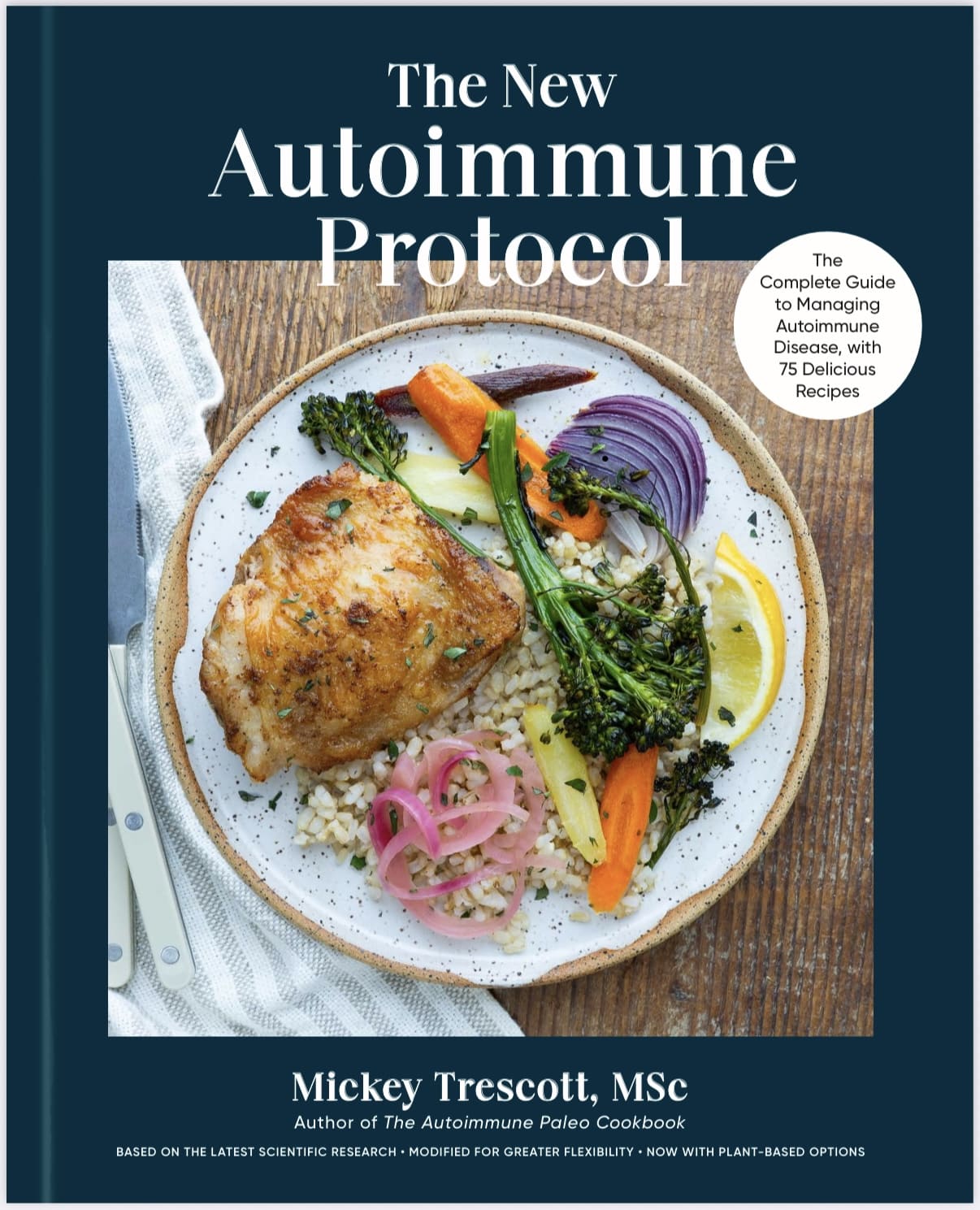
Hi Robin! You can pre-order here: The New Autoimmune Protocol