
If you’re learning about the Autoimmune Protocol for the first time—or revisiting it after trying it years ago—one question almost always comes up during the Elimination Phase:
Should I start with Core AIP or Modified AIP?
It sounds like a simple choice. But for many people, it doesn’t feel simple at all.
Some wonder which version “works better.” Others worry about whether they’ll be able to sustain the structure. And many people are trying to weigh real-life factors like budget, culture, access to food, energy, and stress.
In Episode 69 of the Autoimmune Wellness Podcast, I walk through the differences between Core and Modified AIP and help you decide which version is the right place for you to begin.
.
Watch the Episode
.
Why This Question Exists
For a long time, there was only one version of the Elimination Phase—what we now call Core AIP. That version formed the basis of all published AIP research and is likely what many people first encountered when learning about the protocol.
But over time, something became very clear.
Core AIP worked incredibly well for some people—especially those with high flexibility, strong support systems, and access to a wide variety of foods. For others, the level of restriction created barriers that made it difficult to sustain.
Modified AIP was developed not to weaken the protocol—but to make it more accessible, affordable, culturally adaptable, and realistic for more people.
Both versions share the same purpose:
- Calm inflammation
- Support immune balance
- Create a clear baseline for reintroductions
- The difference is how many foods are removed during elimination.
.
Core AIP: The Most Comprehensive Approach
Core AIP removes all grains, dairy, eggs, legumes, nuts, seeds, nightshades, alcohol, and processed foods.
It creates a highly controlled environment and is the version used in all published AIP research to date. For some people—especially those closely matching studied populations like inflammatory bowel disease or Hashimoto’s—it can be a powerful starting point.
But it is also the most demanding.
Core AIP tends to work best when someone has:
- Time and energy to cook most meals at home
- Strong planning capacity
- Financial and food access flexibility
- Adequate support
Choosing Core does not mean better results. It simply means a different context.
.
Modified AIP: A More Accessible Starting Point
Modified AIP keeps the same therapeutic framework but allows a small number of foods that many people tolerate well—such as rice, most legumes, pseudo-grains, ghee, whole seeds, and seed-based spices.
This can:
- Reduce cost barriers
- Increase cultural flexibility
- Improve sustainability
- Better support active individuals or weight restoration
- Make vegetarian approaches possible with careful planning
For most people today, Modified AIP is the version I recommend starting with—not because it is “easier,” but because it is more sustainable.
And sustainability is what makes the Elimination Phase actually work.
.
The Research Reality
All published AIP research to date has used Core AIP.
Modified AIP has not yet been studied as a separate intervention.
That doesn’t mean it’s ineffective. It simply means the research hasn’t been done yet. In clinical practice and real-world use, outcomes with Modified AIP have been strong—but we still need more formal data.
I look forward to the day we have head-to-head comparisons. Until then, we use the best available information and make individualized decisions.
.
The Most Important Difference: Nutrient Density
The biggest tradeoff between Core and Modified AIP isn’t about inflammation.
It’s about nutrient density.
Core AIP naturally pushes meals toward vegetables, seafood, and deeply nourishing foods because fewer fillers are available.
Modified AIP requires more intention.
Rice, legumes, and pseudo-grains can be supportive—but they should not replace the vegetable-forward, protein-centered foundation that makes AIP therapeutic in the first place.
Regardless of which version you choose, nourishment—not rules—is what drives healing.
.
AIP Foundation Series: Start With Clarity
If you want printable food lists for both Core and Modified AIP, reintroduction charts, and step-by-step guidance for navigating the Elimination Phase, the AIP Foundation Series is the best place to start.
It’s a free, 5-day email course designed to help you:
- Understand the structure of AIP
- Compare Core and Modified food lists side-by-side
- Build nutrient-dense meals
- Move into reintroduction with confidence
.
The New Autoimmune Protocol (Pre-Order)
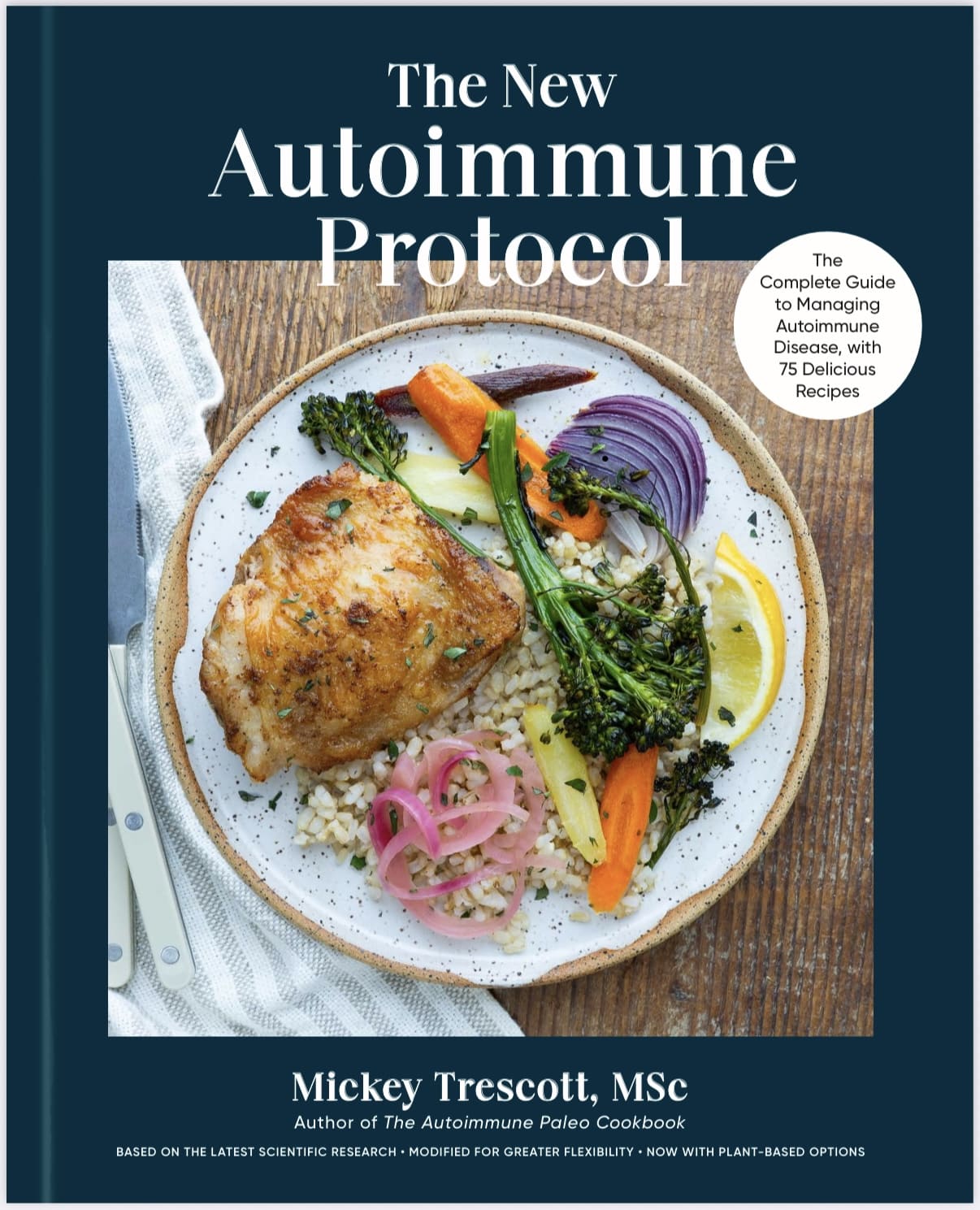
If you’re looking for practical recipes and meal guidance that reflect the updated Modified AIP framework—while still prioritizing nutrient density and therapeutic structure—this is exactly why I wrote The New Autoimmune Protocol.
It’s the first AIP resource designed specifically to bridge Core and Modified approaches in a flexible, real-life way.
Inside, you’ll find:
- Recipes designed for Modified AIP
- Guidance on maintaining nutrient density
- Practical strategies for sustainability
- A framework that meets you where you are
👉 Pre-order The New Autoimmune Protocol
.
Episode Timeline
00:00 – Core vs. Modified: why this question matters
02:16 – Elimination Phase overview
03:21 – What is removed on Core AIP
04:07 – What’s included on Modified AIP
05:09 – Timeline reminder
06:21 – Why Modified AIP was created
08:30 – Who Core AIP works best for
10:36 – Why Modified AIP is recommended for most
11:38 – Accessibility & affordability
12:27 – Modified AIP for vegetarians & active individuals
14:28 – The research reality
16:22 – The role of nutrient density
18:39 – Using Core resources with Modified AIP
20:47 – Known sensitivities
21:54 – Cultural relevance
23:40 – Transitioning from Modified to Core
25:33 – Recap & encouragement
.
Listen to the Episode
.
Transcript
Below is the full transcript of Episode 69 of the Autoimmune Wellness Podcast.
This transcript is provided for accessibility and reference.
Title: Core vs. Modified AIP Elimination Phase | Deep Dive (Ep 069)
Mickey: If you’re learning about the Autoimmune Protocol for the first time, or revisiting it after trying it years ago, there’s one question that almost always comes up when people reach the Elimination Phase. Should I start with Core AIP or Modified AIP?
And it sounds like a simple choice, but for a lot of people, they’re just not so sure. Some aren’t sure which version makes the most sense for their body or their lifestyle, and others have tried Core AIP in the past and are wondering whether there’s another way to approach elimination that feels more doable this time around.
What often gets lost in that question is this: both versions of the Elimination Phase exist for a reason, and choosing between them isn’t about willpower or commitment. It’s about fit.
Today’s episode is about helping you understand the differences between Core and Modified AIP, and more importantly, how to decide which one is the right place for you to start.
Mickey: Welcome back to the Autoimmune Wellness Podcast. I’m your host, Mickey Trescott, and this episode is a part of our ongoing AIP Deep Dive series, where we’re walking through the Autoimmune Protocol step-by-step, with updated guidance and real world context. Back in episode 53, we covered the Elimination Phase as a whole, in depth.
What it is, why it works, how long it lasts, and the comprehensive food lists for both Core and Modified AIP. We also talked about how it fits into the context of Transition and Reintroduction phases. So if you are here looking for a detailed overview of the Elimination Phase itself, definitely head back to episode 53 because that’s the best place to start.
Today we’re going to talk through how to choose between Core and Modified AIP, who each version tends to work best for and why the version that is “right” for you is the one that you can actually sustain.
And before we begin, a quick reminder that this podcast is for educational and informational purposes only. It is not intended as medical advice, and it’s not a substitute for care from your healthcare providers. So please make any dietary or lifestyle changes in partnership with your medical team.
[00:02:16] Elimination Phase Overview: Core vs. Modified at a Glance
Mickey: Before we talk about how to choose between Core and Modified AIP, I want to give you a short, big picture overview of what the Elimination Phase actually looks like and how these two versions differ.
The Elimination Phase, officially phase two of the Autoimmune Protocol, is a temporary, structured period where you remove foods that are more likely to contribute to inflammation, gut permeability or immune activation. While also emphasizing foods that are deeply nutrient dense and supportive of deep healing.
Across both versions of the Elimination Phase, the foundation is exactly the same. You are building meals around high quality proteins and seafood, a wide variety of vegetables, especially leafy greens and colorful plants, healthy fats like olive oil, avocado, coconut, colorful fruit, and supportive nutrient dense foods like bone broth, fermented foods, herbs and spices. And where Core and Modified approaches differ is in which foods are eliminated.
[00:03:21] Core AIP: What’s Removed During Elimination
Mickey: So on Core AIP, the Elimination Phase removes the full set of food categories that research and clinical experience suggest are most likely to cause inflammation or be triggers for people with autoimmune disease. This includes all grains and gluten containing foods, dairy, eggs, legumes, nuts and seeds, nightshades and all of the spices that are derived from them, alcohol and highly processed food and additives.
Core AIP is the most comprehensive version of elimination. It’s the version used in all of the published AIP research, and it creates a highly controlled environment for identifying food triggers. If you have come across the Autoimmune Protocol in the past, this is likely the protocol that you encountered.
[00:04:07] Modified AIP: What’s Different
Mickey: Modified AIP, the newest version of elimination, keeps that same framework and the same goal, but it allows for a small number of foods that many people actually tolerate very well. This makes elimination much more accessible and sustainable.
During Modified AIP, the following foods are included in contrast to Core AIP: Rice in all forms, most legumes with the exception of peanuts and soy, ghee, which is clarified butter with minimal dairy proteins, whole seeds and seed-based spices, and then pseudo-grains, like quinoa, buckwheat, and amaranth.
Everything else remains the same as Core AIP during elimination. So we’re taking out eggs, dairy other than ghee, grains other than rice, nuts, nightshades, alcohol, and processed foods. The difference isn’t about changing the purpose of the Elimination Phase, it’s about how many specific foods are removed during this phase.
[00:05:09] Timeline Reminder + Reference
Mickey: And a reminder, both Core and Modified AIP are designed to be temporary. For most people the Elimination Phase lasts 30 to 90 days. Long enough for inflammation to settle and symptoms to stabilize, but short enough to remain sustainable and purposeful.
And if you want the complete food lists for both Core and Modified AIP, along with printable guides and tools to help you actually use them in real life, you can download these for free as a part of the AIP Foundation Series.
You’ll find side-by-side food lists, reintroduction charts, and all of the other resources that make it easier to stay organized and confident as you move through each phase. You can get them at autoimmunewellness.com/foundations or find the link in the show notes.
And again, if you want that full breakdown of the Elimination Phase itself, including the detailed rationale behind each of those food categories and exact guidance on how to move through your Elimination Phase, go back to episode 53. I cover all of it there. Today’s episode builds on that foundation to help you decide which version of the Elimination Phase is the best for you to start right now.
[00:06:21] Why This Question Exists Now
Mickey: So why does this question Core AIP or Modified AIP even exist in the first place? For a long time, there was only one version of the AIP Elimination Phase. What we now call Core AIP was simply just the Autoimmune Protocol. That version formed the foundation of AIP as it was studied, taught, and shared, and it’s the version used in all of the published research to date. It’s also the version many people were introduced to when they first learned about AIP.
But over time, something important became very clear. With thousands of people using the Autoimmune Protocol while navigating busy schedules, limited food access, financial constraints, cultural food traditions, and then all of the very real energy limitations that come with chronic illness and autoimmune disease, practitioners and coaches, healthcare providers started seeing consistent patterns.
Some people did incredibly well on Core AIP spoiler alert– usually people who have a lot of support and resources to do it. Other people struggled. And not because they lacked commitment, but because the level of restriction created barriers that just made it really hard to sustain. And this is where the evolution of AIP began.
Modified AIP exists because we learned from real people using AIP in real life. We learned where the protocol was helping and where it was sometimes getting in the way. We learned that sustainability, accessibility, affordability, and cultural relevance are extremely important. And this update was not about weakening the Autoimmune Protocol or making it easier. It was about making it usable for more people without losing any of those core principles that make AIP so effective.
So the goal never changed: to reduce inflammation, support immune balance, and identify those food triggers in a structured and intentional way. What did change was how many paths are offered to people to get there. And that’s why this question exists now because AIP has grown and matured so much and it is now adapted to better meet people where they actually are.
[00:08:30] Core AIP: Who It Tends to Work Best For
Mickey: Now let’s talk about Core AIP and who this comprehensive version of the Elimination Phase tends to work best for. Core AIP, again, it’s that original version of the protocol. It’s the version used in all of the published research, and it creates the most controlled environment for calming inflammation and identifying food triggers.
Because of that, it can be very effective, but it is also the most demanding. Core AIP tends to work best for people who have a high degree of flexibility and support during the Elimination Phase. So this might look like having more control over your schedule, the ability to cook most of your meals at home and access to a wide variety of foods.
It often works best when someone has the time, the energy, or the resources to plan, shop, and prepare meals consistently for several weeks. It also can be a good fit if you’re in or closely resemble one of the populations that has been studied using Core AIP. For example, research using the Core AIP Elimination has shown a 73% clinical remission rate in people with inflammatory bowel disease after six weeks, and improvements in symptoms, weight, and inflammatory markers in people with Hashimoto’s thyroiditis over 10 to 12 weeks.
So if you are somebody with IBD or Hashimoto’s, those results might be a strong motivator to choose Core AIP, especially if you want to follow the same approach that was used in those studies.
That being said, it’s important to name something very clearly. Choosing Core AIP does not guarantee it might work better. Core AIP is simply one of two tools we have and it works best in specific contexts. For some, the level of restriction can increase stress, reduce consistency, or make it harder to get enough food and nutrients, especially if you do it for a long time.
So if you have tried Core AIP in the past and found it difficult to stick with, that’s not a personal failure. It’s just information that can help guide a better fit and choice moving forward.
[00:10:36] Modified AIP: Why It’s the Starting Point I Recommend for Most People
Mickey: Let’s talk about why today I recommend Modified AIP as the starting point for most people. Modified AIP keeps the same framework and the same goals– the intention definitely has not changed. We’re still aiming to calm inflammation, support immune regulation, and create that clear baseline so that you can learn how your body responds to food.
But the different thing is some of these barriers. Modified AIP was designed to reduce obstacles that often prevent people from starting or continuing the Elimination Phase in the first place. Those barriers can include cost, cultural food mismatch, the energy demands of preparing every meal from scratch and the social isolation that can come with a highly restrictive approach.
For many people, Modified AIP is the version that they can actually begin and more importantly, stick with long enough to see meaningful change. That is so important because the Elimination Phase only works if you can stay engaged with it.
[00:11:38] Accessibility & Affordability
Mickey: First, let’s talk about accessibility and affordability. One of the biggest advantages of Modified AIP is that this improves both. By allowing foods like rice, most legumes and pseudo-grains, Modified AIP makes it possible to rely on familiar budget friendly staples that are widely available.
It also reduces the need for specialty ingredients, which can be expensive or hard to find depending on where you live. Meal planning often becomes simpler also. Fewer restrictions, fewer substitutions and more flexibility in how your meals come together. This is so important because healing shouldn’t be just reserved for people with high resources, a lot of time, or really good access to food. Modified AIP helps meet people where they actually are.
[00:12:27] Modified AIP for Specific Populations
Mickey: Now there are certain groups of people for whom Modified AIP is often the most appropriate starting place, and I’m going to run through them right now.
First, let’s talk about vegetarians. Now, Core AIP is not appropriate for vegetarians or vegans. It removes too many protein sources and is just not possible to meet basic nutrient needs. Now, I know there are people out there that do it. I’m here as a nutritionist with a history of being vegan myself, telling you, please do not do this. There are not enough protein sources to meet minimum nutrient needs, and you can definitely be setting yourself up for some problems.
Now, Modified AIP, on the other hand, can work very well for vegetarians, but it does require intentional planning. When we exclude animal foods or we limit them, nutrient density becomes even more important. So vegetarians following Modified AIP need to pay close attention to getting enough protein intake, their iron levels, their B12 and zinc.
So this is definitely not a wing it and see what happens situation. I really recommend planning, tracking, and sometimes professional support that can be essential to ensuring that your nutritional needs are being met. But it is absolutely possible with the Modified protocol.
Now Modified AIP is also a better fit for people who are highly active, training regularly or working to restore weight. This version provides easy sources of starchy carbohydrates, better support for energy demands, training and recovery, and a sustainable approach to weight restoration. So for these populations, Core AIP can sometimes be too restrictive, increasing that physiological stress rather than reducing it. So in this case, Modified AIP allows the body to feel adequately fueled while still honoring the principles of the elimination process and healing.
[00:14:28] The Research Reality—and What We Hope Comes Next
Mickey: Now I want to talk honestly about the research because this is where a lot of reasonable questions come up. Core AIP has been studied and Modified AIP has not– yet! All of the published research on the Autoimmune Protocol to date has used what we now call Core AIP. This is where the clinical remission rates, the symptom improvements, the inflammatory marker changes come from.
Modified AIP is newer and hasn’t yet been studied as a distinct intervention in clinical studies. That being said, it’s important to understand what this does and does not mean. In practice outcomes with Modified AIP have been very strong. Practitioners, coaches, and people using AIP on their own have reported meaningful improvements in symptoms, energy, digestion, and quality of life when using this more flexible approach.
Of course, these are anecdotal reports, not controlled trials, but they are still important. What we don’t yet have and what I very much hope we will have soon, is head-to-head research comparing Core and Modified AIP in the same populations. I can’t wait to see that data. And if you are a researcher interested in partnering with me to make that happen, I am here for it.
This will absolutely help us better understand who benefits most from each approach, whether outcomes differ meaningfully, and how we can continue refining AIP to serve more people effectively.
And this is the key point I want to leave you with here. The absence of research is not the same thing as absence of effectiveness. It simply means the research hasn’t been done yet. Modified AIP exists because of what we’ve learned from real world use and because we always want more data and better data, it’s okay to use the best information we have right now to make a thoughtful and individualized decision.
[00:16:22] The Biggest Tradeoff: Nutrient Density
Mickey: One of the most important differences between Core and Modified AIP isn’t about inflammation or effectiveness. I actually think it’s about nutrient density. So Core AIP by design, it forces nutrient density. Because more foods are excluded, you are naturally pushed towards meals built around vegetables, high quality proteins, seafood and other deeply nourishing foods. There are fewer convenient fillers, so nutrient-dense foods tend to take up just more space on your plate.
Now with Modified AIP, that automatic push is just a little bit weaker. The inclusion of foods like rice, beans and pseudo-grains can be incredibly helpful for accessibility, affordability, energy, but they can also crowd out those more nutrient dense foods if you’re not paying attention.
So this doesn’t mean that Modified AIP is less effective. It means it requires more intention. So I just wanted to bring this up. No matter what version you choose, nutrient density is not optional. It’s foundational to healing, immune regulation and long-term progress.
And if you’re following Modified AIP, the goal isn’t to replace vegetables and proteins with rice and beans. It’s to add those foods alongside an already nutrient dense foundation. Think a plate still anchored by vegetables and protein with rice or legumes as a supportive side, not the main event. Seeds added for flavor and texture, not instead of whole foods. Ghee used as a flavor variation.
And these ideas are especially important if you are vegetarian, highly active, underweight, or managing multiple nutrient deficiencies. In those cases, planning becomes even more important, not less. Now, the Elimination Phase works best when it supplies your body with the raw materials it needs to repair and regulate. Food is information, but it’s also fuel and both matter.
So whether you choose Core or Modified AIP, keep asking yourself the same question. Is this way of eating nourishing me or just meeting the rules? Because the rules are not what’s producing healing, the nourishment does.
[00:18:39] What Happens to All the Existing Core AIP Resources?
Mickey: At this point, some of you might be wondering if Modified AIP is the starting point you recommend for most people then what happens to all of those existing Core AIP resources? The recipes, the meal plans, the cookbooks, the tools that so many people have relied on over the years.
The answer is simple: they are still useful. Modified AIP is not a replacement for Core AIP– think of it as an additive approach. Most Core AIP recipes and meals form an excellent foundation. Even if you choose the Modified protocol, what you change is how you build around them.
So, for example, you might take a Core AIP meal and then add a side of rice, quinoa, or lentils. You might sprinkle some seeds onto a salad or blend them into a dressing. You might use ghee as a flavor switch up alongside your olive oil or your coconut oil. So the structure of your meal is really staying the same. You’ve got your protein, your vegetables, your healthy fats. You’re just expanding it in thoughtful and sometimes more convenient ways.
And this is also why I wrote The New Autoimmune Protocol. When Modified AIP was introduced, there wasn’t a dedicated resource that showed people how to actually cook this way, how to use those newly included foods without drifting away from nutrient density or the Core principles of AIP.
So this book is the first AIP resource built specifically to include Modified AIP recipes and the focus, again, not on relaxing the protocol. It’s on showing how to integrate foods like rice, beans, seeds, and ghee intentionally while keeping meals vegetable forward, protein centered, and deeply nourishing.
So if you already have Core AIP cookbooks or recipes that you love, you don’t need to abandon them. Think of them as your base. And if you’re looking for guidance on how to cook for both Core and Modified in a flexible, accessible, but still therapeutic way, that is where The New Autoimmune Protocol fits in.
It bridges the gap between the original Core framework and the realities of how most people live and eat now, and you can pre-order it wherever books are sold.
[00:20:47] A Note on Known Sensitivities
Mickey: Before we wrap this up, I want to pause and talk about known sensitivities because this is one place where some people get tripped up. Whether you are following Core AIP or Modified AIP, there is one rule that always comes first. If you know a food doesn’t work for you, you don’t eat it. No version of AIP overrides your lived experience.
Just because a food is included on Modified AIP doesn’t mean it’s appropriate for everyone. And the same is true for Core AIP foods too. Even within the Elimination Phase, there are foods that some people just don’t tolerate well, dairy is a really common example here. Even though ghee is included on Modified AIP, if you know that you react to it or if you’ve had issues in the past, it’s definitely not something you need to push or test right now. The same goes for legumes and seeds. These foods work beautifully for a lot of people, but they can still cause symptoms for others.
So if you have had a clear reaction or even a suspicion in the past, it’s definitely okay to leave them out. Modified isn’t about forcing those foods back in. It’s about creating a starting point that’s flexible enough to adapt.
[00:21:54] Cultural Relevance and Making AIP Your Own
Mickey: One more piece I want to name before we wrap up is cultural relevance, because food is never just about nutrients. Food is culture, it’s family, it’s memory, tradition, and identity. And for a long time, one of the quiet barriers to AIP was that it didn’t always translate well across different cultures, food traditions, or lived experiences. This is another place where Modified AIP can be so helpful by allowing foods like rice, legumes, seeds, and certain traditional ingredients, Modified AIP really opens that door to meals that feel a little more familiar and connected while still honoring the principles of elimination.
So it might mean being able to adapt cultural dishes rather than abandoning them entirely. It might mean sharing more meals with your family easily, or it might mean finally seeing yourself, reflected in the way you eat while you heal. And beyond culture, this is also about making AIP your own. Again, AIP is a framework, not a rule book. Core and Modified AIP are starting points, not end points. They’re meant to be adapted based on your symptoms, your access to food, your values, and the season of life that you are in.
You are absolutely allowed to adjust within that structure, learn as you go or change your approach as your body changes. The goal of the Elimination Phase isn’t to follow a plan perfectly. It’s to gather information, build stability, and move forward with more clarity. When AIP fits into your life, rather than asking your life to completely reorganize around it, that is when it becomes sustainable, and sustainability is what allows healing to actually unfold.
[00:23:40] Transitioning from Modified to Core—If You Need To
Mickey: One last thing I want to touch on is what do you do if you start with Modified AIP and then you suspect that something still isn’t working? Starting with Modified doesn’t lock you into that version, and it doesn’t mean that you have chosen the wrong path. If you’re following Modified and you notice that your symptoms aren’t shifting the way that you had hoped, your inflammation still feels kind of high, or you suspect that one of those Modified inclusions might be getting in the way, you already have a really useful next step available to you.
You can transition from Modified to Core, and the good news is that you have already done most of the hard work. You’ve learned the structure of the Elimination Phase. You’ve built some new routines and you’ve adjusted your kitchen and your shopping habits. At that point, moving to Core AIP simply means removing those Modified additions, the foods like rice, legumes, seeds, ghee, and pseudo-grains, and then committing to a focused window of time.
I generally recommend trying this for at least three weeks. That gives your body enough time to fully respond, inflammation to settle and symptoms to show a clearer pattern. Without it turning into this open-ended restriction where you’re flip-flopping from one elimination to the next. It definitely does not need to feel like starting over. Again, it’s a structured experiment built on that work that you have already done, and if you notice that meaningful improvement during those three weeks, that’s valuable information.
You can then decide whether you’re going to continue Core AIP a bit longer or move forward with a more intentional reintroduction process. And if you don’t notice a change, that’s information too. It may point you towards other factors that need attention beyond food or some troubleshooting. Either way, you’re not going backwards, you are refining your approach.
[00:25:33] Closing Recap + Encouragement
Mickey: Let’s take a moment to pull everything together. The Elimination Phase is a powerful tool, but it’s just one phase of a three phased process, and there’s more than one way to approach it well. Core AIP and Modified AIP share the same purpose: to calm, inflammation, support, immune balance, and to help you learn how your body responds to food. The difference isn’t about commitment or discipline, it’s about fit.
Core AIP is the most comprehensive version. It can be incredibly effective in the right context, especially when you have flexibility, support, and resources to fully engage with it. Now, Modified AIP is designed to be accessible, affordable, and more sustainable while still honoring that therapeutic foundation.
You already know it’s the version I recommend most people start with today. Neither approach is better, but one might be better for you right now. Remember, the Elimination Phase is temporary. What you’re really building is understanding, confidence and a foundation that you can carry forward into reintroduction and long-term sustainability.
And if you want guidance for what AIP looks like today with recipes and meals designed specifically around Modified AIP while still prioritizing nutrient density and therapeutic principles, that is exactly why I wrote The New Autoimmune Protocol. It’s the very first AIP resource created to reflect this updated, more flexible approach, and it’s designed to help you put all of this into practice in a way that actually fits into your life.
You can pre-order The New Autoimmune Protocol now and you’ll find the link in the show notes. Thank you guys so much for being here, for listening and for doing this work with care and intention. I will see you next time.
.









0 comments