
Following the Autoimmune Protocol “by the book” doesn’t always guarantee that you’ll feel energized, satisfied, or well nourished—especially during the Elimination phase.
In this Small Bite episode of the Autoimmune Wellness Podcast, Mickey Trescott introduces a new practical series called Meal Plan Makeover, where she reviews real-life AIP meal plans and shows how small, strategic adjustments can significantly improve energy, satiety, and sustainability.
Using an anonymized three-day meal plan from someone living with Hashimoto’s thyroiditis and rheumatoid arthritis, this episode highlights a common challenge: meals that look compliant on paper, but don’t fully support the body’s needs. Rather than focusing on restriction, this episode explores how to build more balanced, satisfying meals—without cooking more or adding complexity.
.
Listen to the Episode
.
When “Following the Rules” Isn’t Enough
AIP provides a powerful framework—but it doesn’t automatically guarantee nourishment.
Especially during the Elimination phase, it’s common for people to:
- Undereat without realizing it
- Rely too heavily on vegetables without enough protein
- Avoid carbohydrates out of fear of doing AIP “wrong”
- Keep meals overly simple to reduce effort
Over time, this can lead to:
- Persistent fatigue
- Constant hunger
- Poor sleep
- Reduced resilience
- A sense that AIP is unsustainable
This episode isn’t about doing more or trying harder. It’s about applying AIP more strategically so it actually supports healing.
.
Introducing the Meal Plan Makeover Approach
The goal of the Meal Plan Makeover series isn’t to overhaul everything or add complexity.
Instead, we look for:
- Missing building blocks
- Patterns that drain energy
- Opportunities to improve satiety
- Small changes that make meals more supportive
In this episode, Mickey walks through a real three-day meal plan and asks: If this person were my client today, what would I adjust first—and why?
.
What the Meal Plan Looked Like
On the surface, the meal plan looked “perfectly AIP”:
- Smoothies for breakfast
- Salads and leftovers for lunch
- Simple protein-and-vegetable dinners
But when you zoom out, several issues appeared:
- Protein intake was inconsistent
- Starchy vegetables were largely missing
- Meals lacked enough fat and flavor to feel satisfying
- Calories were likely too low for someone in Elimination
These are not failures. They’re very common patterns, especially for people who are conscientious and want to do AIP correctly.
.
Why Low Energy and Hunger Are Important Signals
Fatigue and constant hunger aren’t signs of weakness or lack of willpower.
They’re feedback.
In this case, the body was likely asking for:
- More protein earlier in the day
- Adequate carbohydrates to support thyroid function, cortisol balance, and sleep
- Enough total energy to meet metabolic needs
- Meals that felt physically and emotionally satisfying
Ignoring these signals doesn’t build resilience—it erodes it.
.
Key Improvements That Make a Big Difference
Throughout the episode, Mickey outlines small adjustments that could dramatically shift how this meal plan feels in the body.
1. Prioritize Protein at Breakfast
Starting the day with adequate protein supports blood sugar stability and energy. Smoothies can work—but only when they’re truly balanced.
2. Bring Back Starchy Vegetables
Carbohydrates aren’t optional during Elimination. Foods like sweet potatoes, plantains, winter squash, and taro support energy, mood, and sleep—especially for people with thyroid conditions.
3. Improve Snack Structure
Snacks need protein, fat, and carbohydrates to actually bridge meals. Otherwise, they often leave you more depleted.
4. Increase Protein Variety
Rotating proteins—especially including seafood—improves nutrient density and reduces food fatigue.
5. Add Flavor and Satisfaction
Sauces, herbs, acids, and fats matter. When meals taste good, they’re more likely to be eaten consistently.
None of these changes require cooking more. They require being more responsive to what your body needs.
.
Why This Matters During Elimination
Elimination already places demands on the body.
Layering calorie restriction, carbohydrate avoidance, or undernourishment on top of that can:
- Slow progress
- Increase stress hormones
- Worsen fatigue
- Make AIP feel unnecessarily restrictive
AIP works best when it’s supportive, not punishing.
.
AIP Foundation Series: Support for Getting Started
If you’re earlier in your AIP journey—or want to revisit the basics—the AIP Foundation Series is a great place to start.
This free, 5-day email course includes:
- Printable food lists
- Beginner-friendly meal plans
- Clear explanations of each AIP phase
- Tools to reduce overwhelm
👉 Sign up for the AIP Foundation Series
.
The New Autoimmune Protocol (Coming Soon)
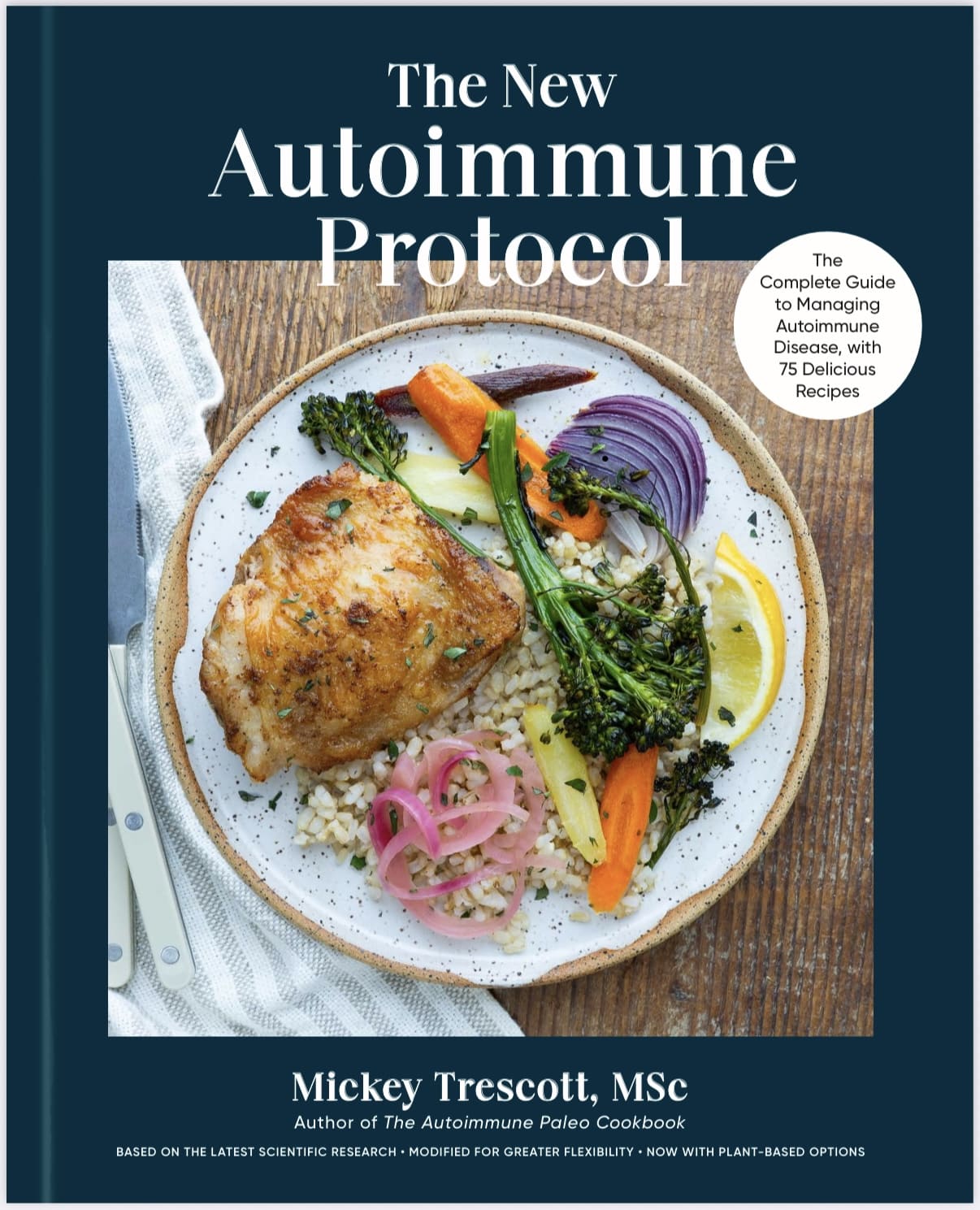
If this episode helped you see AIP through a more strategic, supportive lens, Mickey’s upcoming book, The New Autoimmune Protocol, expands on these ideas in depth.
Inside, you’ll find:
- Updated research on autoimmune nutrition
- Clear guidance on Core vs. Modified AIP
- Meal planning strategies for different energy levels
- Recipes designed for real life—not perfection
👉 Pre-order The New Autoimmune Protocol
Episode Timeline
00:00 – Why meal plans matter more than rules
02:18 – Introducing the Meal Plan Makeover series
04:10 – Background and context
05:36 – Reviewing the three-day meal plan
06:43 – Where strategy is missing
07:04 – Smoothies: strengths and gaps
08:31 – Building a protein-forward breakfast
09:10 – Why snacks need balance
09:55 – The missing piece: starchy vegetables
11:12 – Bringing in seafood
11:54 – Flavor and satisfaction
12:55 – Calories and Elimination
14:59 – Big-picture takeaways
15:43 – Simple experiments to try
16:57 – Wrap-up
.
Episode Transcript
Below is the full transcript of Episode 62 of the Autoimmune Wellness Podcast. This transcript is provided for accessibility and reference.
[00:00:00] Introduction: Meal Plan Makeover
Mickey: If you’ve spent any time with the Autoimmune Protocol, you probably already know the rules. You know which foods you are eating and which foods you are avoiding, depending on if you are on Core or Modified AIP. You understand the structure, the phases, and the intention behind the protocol, but when it comes to actually implementing AIP, that’s where things can look very different from person to person because there’s a wide range of ways to apply the protocol, and that’s not a bad thing.
We all bring different preferences, tastes, cultures, budgets, cooking skills, energy levels and levels of support into this process. Some people love to cook while other people don’t. Some people have additional sensitivities that go beyond what we are eliminating on AIP. Some of us are feeding families. Some are doing this mostly on our own. There is a lot of beauty in that diversity.
At the same time, what I see over and over again is that when people apply AIP in the most basic or minimal way, just following the rules, but not thinking strategically, they often miss one of the most powerful parts of the protocol, and that is nutrient density and variety. Sometimes the way that AIP gets implemented can unintentionally create new challenges. People end up under eating, they might get stuck in a food rut, meals lose flavor and satisfaction.
And then the autoimmune inevitability comes with those energy drops, maybe hunger increases, and suddenly the protocol feels much harder than it needs to be, and that’s where today’s Small Bite comes in.
Welcome back to the Autoimmune Wellness Podcast. I’m your host, Mickey Trescott, and if you’ve been listening to the recent Deep Dive and science-focused episodes, you know we’ve spent a lot of time unpacking the structure of AIP, the “why” behind each phase, the research that supports it, and how all of these pieces fit together.
Now we’re shifting gears. Alongside those longer research-driven conversations, I’m introducing a series of shorter episodes called Small Bites. These episodes are designed to focus on the practical side of living with AIP, how to take what you already know and apply it in a way that actually works in your real life.
Today’s Small Bite is a meal plan makeover episode, and in this series we’re going to look at real life examples of how people are eating on AIP and gently explore what is working, what might be getting in the way, and where small, strategic changes can make a big difference. I want to start by thanking today’s submission, which comes from a client I worked with many years ago.
We’re going to call her Debbie, which is not her real name, but she has given permission for her details to be shared for teaching purposes in this episode. In the future, I’m going to be inviting all of you to submit your own meal plans so that I can walk through them and offer suggestions just like Debbie’s.
But for this first episode, I asked Debbie if we could revisit her three-day diet journal that she submitted while we were working together, because it contains so many teachable moments that I think all of us can learn from. And I also want to be very clear about something before we begin. There is no such thing as a perfect meal plan.
The goal of these makeovers is not to point out what someone is doing wrong. It’s to strengthen what is already there. Increase curiosity, improve variety and satisfaction, and help you get more out of the foods that you are already eating. So if this sounds helpful to you, or if you’ve ever wondered why your AIP meals look right on paper, but don’t quite feel supportive in your body, you are in the right place.
And before we get started, just a quick reminder that this podcast is for informational and educational purposes and is not intended as medical advice. Please consult your qualified healthcare provider before making any changes to your diet or treatment plan.
[00:04:10] Debbie’s Background
Mickey: Before we get into the meal plan, let’s learn a little bit more about Debbie. She is 45 years old and lives with both Hashimoto’s and rheumatoid arthritis. Her most pressing symptoms are persistent joint pain and fatigue, which fluctuate day to day, but are always present to some degree. She works part-time in a fairly traditional schedule and describes herself as competent with basic cooking.
She’s well set up in her kitchen and she understands the basics of the Autoimmune Protocol. At the same time, her rheumatoid arthritis significantly affects her hands, and she finds chopping and repetitive prep work painful and fatiguing. This has a big influence on how she chooses meals and why she gravitates towards foods that feel simpler or quicker to assemble.
At the point when this diet journal was recorded, Debbie was feeling tired much of the time and very hungry between meals. She also felt that her food lacked flavor, she wasn’t feeling satisfied, and it made it harder to stay motivated. Alongside wanting to reduce autoimmune symptoms, she described herself as overweight and was intentionally trying to cut calories during the Core AIP Elimination phase, hoping to accelerate weight loss.
What I want you to keep in mind as we walk through her meals is that every choice here makes sense given her symptoms, her goals, and her capacity at the time. This isn’t about willpower or effort, it’s about strategy.
[00:05:36] Debbie’s Meal Plan
Mickey: So now let’s take a look at Debbie’s actual meal plan. On day one, for breakfast, she’s having a smoothie with coconut milk, frozen berries, spinach, and collagen powder. For lunch, she’s having a large mixed green salad with grilled chicken breast, cucumber, shredded carrots, olive oil, and a lemon dressing. Her snack is an apple. Her dinner is baked salmon, steamed broccoli, and sauteed zucchini.
Day two. Her breakfast is a similar smoothie, it’s got banana, blueberries, spinach, and coconut milk. For lunch, she’s having bone broth, shredded chicken, spinach, and a side salad with olive oil. Her snack is a handful of berries and her dinner is zucchini noodles with ground turkey and garlic and herbs.
And then on day three, she’s got turkey and breakfast patties with sauteed greens for breakfast. Her lunch is leftover ground turkey and zucchini noodles. Her snack is carrot sticks and her dinner is roasted chicken thighs with cauliflower rice and steamed spinach.
[00:06:43] What I’d Adjust and Why
Mickey: Now that you’ve heard what Debbie’s diet journal looks like, I want to walk through some of the key areas where I would make some suggestions. And I want to say this upfront. There’s a lot here that makes perfect sense given her symptoms, her goals, and her capacity. So none of these suggestions are about doing AIP perfectly. They are about making it more supportive of her goals.
[00:07:04] Breakfast Smoothies: A Strong Foundation That Needs More Support
Mickey: So let’s start with breakfast, because that’s actually where I see a smart choice. Debbie is using smoothies for breakfast, and given that she struggles with joint pain and fatigue, and especially with chopping, this makes a lot of sense. Blended meals can be a great way to get nutrients in without a lot of prep or strain on your hands. That said, what I’m missing here is protein. Right now her smoothies include fruit, greens, coconut milk, and some collagen.
Collagen is great, but on its own, it is not a complete protein. I’d like to see either a Core AIP compliant protein powder added, or a protein coming from another source. Now, I will be honest that personally, I don’t love the taste of most of the Core AIP compliant protein powders that are out there, and if that’s true for you too, there is another easy option.
Instead of forcing that protein into the smoothie, I would add protein alongside it. Something like a quick, reheated, AIP friendly sausage, or a couple of breakfast meatballs on the side. That way, the smoothie stays enjoyable and you still get the blood sugar stability that comes from starting the day with enough protein.
Another small tweak here would be swapping that coconut milk for coconut yogurt, occasionally, or even all the time if you like it. That’s what I do in my smoothies. It brings in some probiotics which can support digestion and immune balance, especially during elimination.
[00:08:31] A Protein-Forward Breakfast That’s Working
Mickey: Next, let’s talk about the protein forward breakfast that’s working. On day three Debbie has turkey breakfast patties with sauteed greens, and this is a wonderful example of a more stabilizing breakfast. Most people notice steadier energy when they start the day with protein, and given Debbie’s fatigue, this is something that I would want to reinforce not replace.
So to round this out, I would suggest adding two simple things, a small scoop of fermented vegetables for that gut support and a piece of fruit for carbohydrates and micronutrients. Those additions don’t require much extra prep, but they add a lot in terms of nutrient density and variety.
[00:09:10] Snacks: Balance Matters Most
Mickey: Next, let’s talk about snacks. And right now, Debbie’s snacks are mostly fruit or raw vegetables on their own. This is really common, especially when somebody is trying to cut calories, but it is rarely satisfying. Snacks need to be balanced and not just sources of carbohydrates, adding some protein or fat so that they actually can do their job in keeping your energy steady between meals.
Some examples might include apple slices with coconut butter, berries with coconut yogurt, leftover meatballs with a piece of fruit, veggies with a simple dip made from avocado or olive oil. And these balanced snacks reduce hunger cravings and that constant feeling of needing to eat again shortly after you just had a meal.
[00:09:55] The Missing Piece: Starchy Vegetables
Mickey: Next I think the missing piece in this diet plan is starchy vegetables. This is huge, especially when fatigue is a primary symptom. When people remove starches during AIP, intentionally or unintentionally, and I will say this is something that happens to a lot of people unintentionally. They often start to experience even lower energy, they might have a new onset of headaches, start sleeping even worse, and feel that increased stress on their body.
Starchy vegetables like plantains, sweet potatoes, winter squash, taro, cassava. These are not optional extras. They are actually an important source of energy, especially for people with autoimmune disease. So I would love to see Debbie add starch to at least one, ideally two of her meals per day. For example, adding some sweet potato or a winter squash to her lunch soup, serving some roasted chicken thighs with a starchy vegetable at dinner, or including plantains alongside breakfast or lunch.
You can even get AIP compliant cassava or tarro or plantain chips to eat as a snack with a dip. This alone can make a dramatic difference in energy and satiety.
[00:11:12] Bringing in More Seafood
Mickey: The next area I would encourage her to make a little change in is adding some seafood. So I know that not everyone loves seafood and that is totally okay, but it is one of the most nutrient dense and often easiest proteins to work with. A tin of fish makes an amazing salad protein with zero cooking, and a salmon steak can be roasted in under 15 minutes with very minimal prep. Seafood also brings in Omega-3 fats, which are anti-inflammatory, minerals like selenium, iodine, and other nutrients that are particularly supportive for autoimmune conditions, especially Hashimoto’s. Even once or twice can make a difference.
[00:11:54] Flavor Matters: Simple Sauces Change Everything
Mickey: The next thing I’d like her to think about is adding some sauces. One reason that Debbie reports her meals don’t taste great is that they’re missing flavor. A quick sauce or a dressing can completely transform simple meals and dramatically increase both enjoyment and nutrient density. One of my favorites is a simple green sauce made with avocado fresh herbs like cilantro, basil or mint, garlic, lemon, olive oil, and salt. If you don’t like avocado, you can swap that out for coconut yogurt, and you’ve also got some probiotics.
Another option is a turmeric sauce made from sweet potato, cooked in broth and blended with turmeric, ginger, and garlic. I will definitely pop links to recipes for both of these in the show notes. And to make these easier on the hands and joints, I recommend making sauces once and freezing them in ice cube trays, then you can defrost a cube and add it to meals as they’re reheated. This one strategy goes a long way towards improving the classic chicken breasts and vegetables meal.
[00:12:55] Protein Variety and Satiety
Mickey: I also want Debbie to bring in more protein variety. So not everyone eats red meat and nobody has to, but adding in a beef patty or some meatballs occasionally can really help with satiety and nutrient density. And also the additional fat from cuts of meat like beef or pork can be especially helpful for feeling full and satisfied, which matters a lot when somebody is trying to reduce their hunger.
[00:13:21] Addressing Calories and Weight Loss on AIP
Mickey: Finally we need to talk about calories. So this meal plan doesn’t have exact quantities, but given Debbie’s goal of weight loss and noticing some of the things like just having carrot sticks for a snack, it’s not surprising that this diet is trending low calorie and low carb, and this all comes straight from diet culture, and it’s something that we need to truly let go of while we are doing the Elimination phase of AIP.
I absolutely do not recommend trying to cut calories or carbohydrates during the Elimination phase. And if you’re someone like Debbie who has Hashimoto’s, which comes with a primary symptom of unexplained weight gain, and you are feeling frustrated that you are not able to lose weight, we actually have data from the Polish study in patients with Hashimoto’s who used AIP for 12 weeks. They found that even though these participants ate the exact same number of calories before and after the AIP intervention, which was about 2000 calories a day, their thyroid levels stayed stable, so there was no increase in medication, there was no change in thyroid hormones, but they lost an average of eight pounds and 10% of body fat.
That is huge, and it shows us that calorie restriction is not necessary for the body to rebalance, to reduce inflammation and release weight naturally when the diet is supportive. So during Elimination, the goal is definitely not weight loss, it is nourishment. And when nourishment is consistent, sometimes those weight changes will follow without force.
[00:14:59] Debbie’s Meal Plan: The Big Picture
Mickey: So when we take a step back and look at Debbie’s Diet Journal as a whole, what stands out to me is that she was doing AIP very carefully, but not yet strategically. And with a few targeted shifts, more protein at breakfast, some more balanced snacks, adding some starchy vegetables, bringing in a sauce or two, and some fermented foods, increasing a little bit of variety and letting go of that caloric restriction, her meals could support her energy that much more effectively.
None of these changes require perfection. None of them require cooking more, and none of them take away from what she was already doing really well. They simply help her get more out of her time on AIP.
[00:15:43] Simple Things to Try This Week
Mickey: So before we wrap up, I want to leave you with a few simple things you can experiment with this week. You don’t need to do all of them, even one is enough.
First, take a look at your breakfast. Ask yourself, am I starting the day with enough protein to feel steady for the next few hours? Second, look at your snacks. Try pairing your fruit or vegetables with a source of fat or protein and see how that changes your hunger and energy. And trust me, if you have meatballs, eat one or two meatballs as a snack, it’s one of my favorite things to pair with a piece of fruit, just to have some protein and fat in the middle of the day.
Third, add one starchy vegetable to your day. Just one, maybe sweet potato, plantain, winter squash. Notice how your body responds, especially with your energy and your sleep. Fourth, try one sauce or dressing. Make it once. Keep it in the fridge to use all week or freeze parts of it for later. See how much more enjoyable your meals feel with that addition.
And finally, notice whether you’re eating enough. If you are feeling constantly hungry, tired, or unsatisfied, that is information and not a failure, but definitely up your nourishment if you are feeling hungry.
[00:16:57] Share Your Meal Plan & Wrap-Up
Mickey: If you’d like to be a part of a future meal plan makeover episode, I would love to hear from you. You can email me your plan or diet journal to [email protected]. Please include a little context about what you’re working on and what you’d like support with. Your submission might help someone else listening feel a lot less alone and more confident about making changes that work for them.
And if this episode was helpful and you’d like to go deeper, I invite you to pre-order The New Autoimmune Protocol, which is my completely updated, science-backed guide to AIP, including a full library of recipes and meal plans for both Core and Modified AIP.
Pre-orders are incredibly helpful for authors like me. They directly support the launch and help get this work into the hands of more people who need it. My book brings together the updated science, but also the practical application, how to eat in a way that is nourishing, flexible, and sustainable in real life.
Thank you so much for spending this Small Bite with me. I’ll see you in the next episode.
.







0 comments