
If you’ve heard that nutrient density is one of the foundations of healing on the Autoimmune Protocol, you may still be wondering what that actually looks like in daily life.
It’s one thing to understand that nutrient density matters. It’s another to build meals that consistently support healing, energy, and long-term health.
In Episode 77 of the Autoimmune Wellness Podcast, I break down how to build a nutrient-dense plate in a way that is practical, flexible, and sustainable.
.
Watch the Episode
.
What a Nutrient-Dense Plate Really Means
Nutrient density is one of the core therapeutic principles behind AIP. If you’re newer to this approach, it can help to first read What is the Autoimmune Protocol to understand the bigger picture.
AIP is not just about removing foods during the elimination phase. It is also about intentionally adding foods that provide the vitamins, minerals, amino acids, fats, fiber, and phytonutrients your body needs to heal.
That is why nutrient density matters so much.
If you want to go deeper into the evidence, you can also look at a summary of the AIP Medical Research.
.
AIP Is Not Just About Elimination
One of the key ideas in this episode is that AIP is not a macronutrient diet. It is not inherently low carb, high fat, or built around strict ratios.
But macronutrients still matter.
Protein, carbohydrates, and fat all play important roles in energy, hormone production, immune function, recovery, and satiety. The goal is not perfection. The goal is to build meals that actually support your body.
.
Start With Protein
When building a nutrient-dense plate, protein is often the best place to start.
Protein provides the amino acids your body needs to repair tissue, maintain muscle mass, support bone health, and regulate immune function. In practical terms, it often becomes the anchor for the rest of the meal.
That might include salmon, chicken, beef, shellfish, or other protein-rich foods that fit your body and your current phase of healing.
.
Add Variety With Plants
After protein, the next layer is variety.
Different vegetables, fruits, herbs, and plant foods provide different vitamins, minerals, fiber, and phytonutrients. In this episode, I talk about the importance of building meals with a wider range of plant foods across the week rather than trying to make every single plate perfect.
That might include:
- Leafy greens
- Root vegetables
- Berries
- Mushrooms
- Fresh herbs
- Sea vegetables
- Seasonal fruit
This is one of the simplest ways to support both nutrient intake and the microbiome.
.
Don’t Forget Microbiome-Supporting Foods
This episode also covers a few food categories that can make a big difference when it comes to nutrient density and gut health.
That includes fermented foods, omega-3 rich seafood, and traditional nutrient-dense foods like liver and bone broth.
These foods can help support microbial diversity, reduce inflammation, and provide concentrated nutrition in a practical way.
.
Make It Practical
One of the most important takeaways from this episode is that nutrient density does not require complicated meal plans or perfectly balanced plates.
Instead, I recommend thinking about it over the course of a week.
In the episode, I share a simple framework:
- Start with protein
- Plan vegetables and fruit
- Add fermented foods regularly
- Use smoothies strategically
- Rely on simple meal templates
This makes nutrient-dense eating much easier to apply in real life.
.
Nutrient Density and Sustainability Go Together
Healing diets work best when they are both nutrient-dense and sustainable.
Meals should support your body, but they also need to fit your real life. They should be flexible, satisfying, and realistic enough to maintain over time.
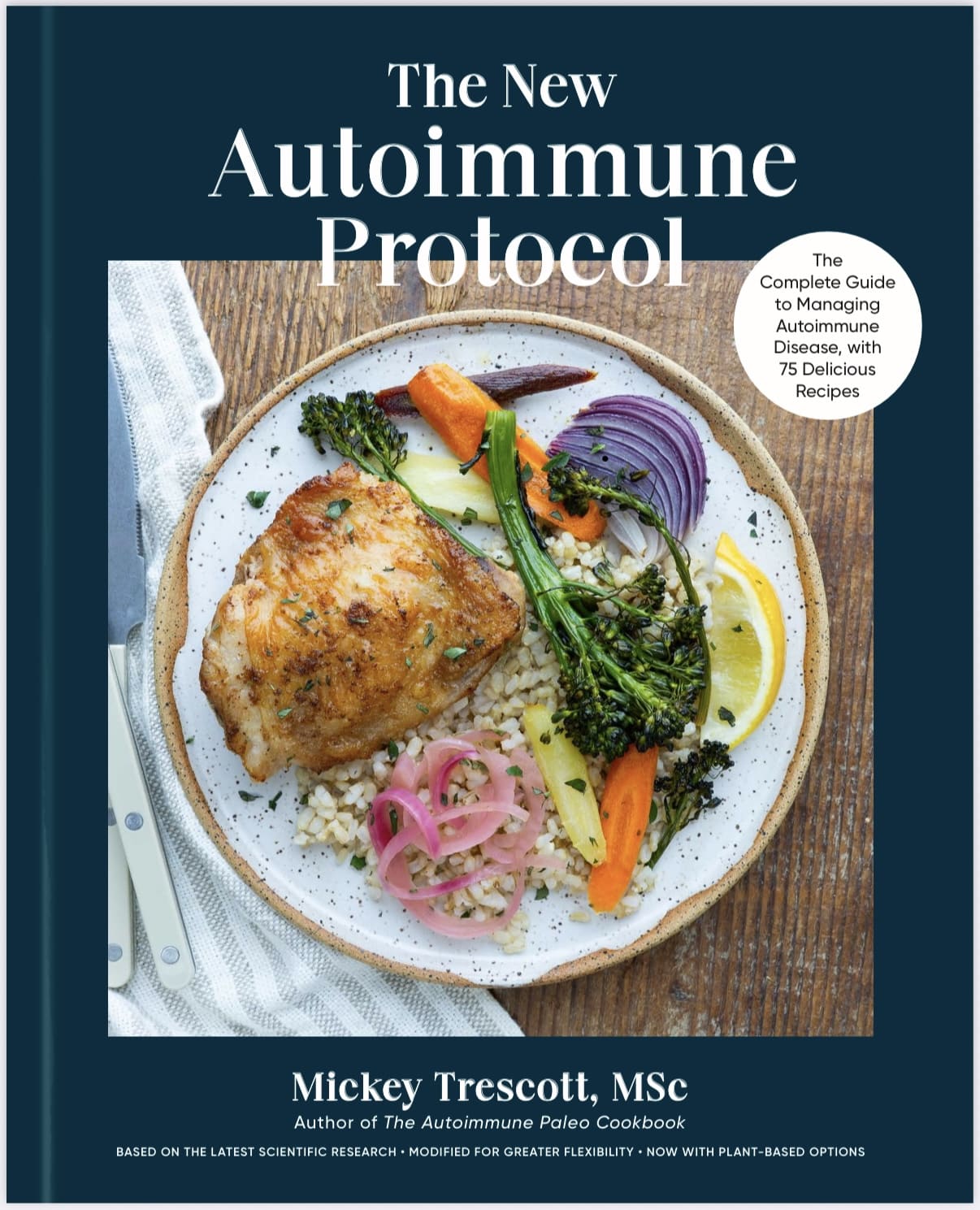
This book reflects everything we’ve learned about implementing AIP today, including:
- Transition and preparation strategies
- Nutrient-dense meal planning
- Personalization and sustainability
- A framework designed for real life
👉 Pre-order The New Autoimmune Protocol
.
Episode Timeline
00:00 – Why nutrient density matters in real life
02:17 – Macronutrients overview
03:02 – Protein: needs and role in healing
05:55 – Carbohydrates: energy and thyroid connection
07:48 – Fat: hormones and absorption
09:23 – Micronutrients and healing
11:20 – Phytonutrients and plant diversity
13:05 – Fiber and the microbiome
15:08 – Microbiome-supporting foods overview
15:36 – Fermented foods and gut diversity
17:37 – Omega-3 seafood and inflammation
19:43 – Organ meats and nutrient density myths
22:00 – Bone broth and traditional foods
24:30 – Putting it into practice
25:09 – Step 1: Start with protein
26:02 – Step 2: Plan vegetables and fruits
26:48 – Step 3: Add fermented foods
27:43 – Step 4: High-polyphenol smoothies
28:56 – Step 5: Simple meal templates
30:49 – Optional nutrient boosters
31:18 – Key takeaways and sustainability
.
Listen to the Episode
.
Transcript
Below is the full transcript of Episode 77 of the Autoimmune Wellness Podcast. This transcript is provided for accessibility and reference.
Title: How to Build a Nutrient-Dense Plate | Deep Dive (Ep 077)
Mickey: Today I want to talk about something that sits at the heart of sustainable healing and beyond, and more importantly, how to make it practical. If you’ve listened to this podcast for a while, you’ve probably heard me talk about nutrient density many times. It’s one of the core principles behind the Autoimmune Protocol and really behind any healing oriented way of eating.
I’ve talked about why nutrient density matters, how those specific nutrients help regulate the immune system, repair tissues, produce energy and support the microbiome. But knowing that nutrient density is important and actually putting it into practice are two very different things.
Because when you’re standing in your kitchen, planning meals, staring into your fridge, wondering what to cook, the question isn’t what is nutrient density? It’s what does a nutrient dense plate actually look like? How do you build meals that consistently provide the nutrients your body needs without making things overly complicated?
That’s what I want to focus on today.
Mickey: Welcome back to the Autoimmune Wellness Podcast. I’m your host, Mickey Trescott. Today’s episode is another deep dive where we take one topic related to the Autoimmune Protocol and really unpack it so that you can understand both the science and the practical application.
In this episode, we’re going to talk about how to craft a nutrient-dense plate. We’ll start by briefly looking at macronutrients. That means protein, carbohydrates, and fats, and a few considerations that can be especially important for people with autoimmune disease.
Then we’ll move on to micronutrients and the foods that provide the most nutritional value, including fiber rich plants, phytonutrients, fermented foods, seafood, and some of the most nutrient-dense traditional foods. And finally, I’m going to share how I actually apply this in my own kitchen, how I think about planning my meals and building plates that are nourishing, varied, and sustainable over time.
And before we get started, just a quick reminder. This podcast is for informational and educational purposes only and is not intended as medical advice. Make sure to consult your qualified healthcare provider before making any changes to your diet or treatment plan.
All right, let’s get into it.
[00:02:17] Part 1: Macronutrients
Mickey: So let’s start with macronutrients. When we talk about building a nutrient-dense plate, a good place to begin is with the big categories of nutrients that make up most of our calories. Those are going to be protein, carbohydrates, and fat.
Now here’s something important to understand right away. The Autoimmune Protocol isn’t really a macronutrient diet. It doesn’t prescribe a specific ratio of protein, carbs, and fat the way that a lot of other ways of eating do. So it’s not inherently high carb, low carb, high fat, or ketogenic, but that doesn’t mean that macronutrients don’t matter. They actually matter a lot. And understanding them helps you build meals that actually support your healing, your energy, and your long-term health.
[00:03:02] Protein
Mickey: So let’s start with protein. Protein is probably the macronutrient that I think about the most when I’m planning my meals. The official recommended dietary allowance, or RDA for protein is 0.8 grams per kilogram of body weight per day. So to figure that out for yourself, you’re going to take your weight, convert it to kilograms if you use pounds, and then you’re going to multiply it by 0.8. But most researchers agree that this number is really just the minimum amount needed to prevent deficiency, not the amount that supports optimal health.
A better, and this is really, we can get in the weeds here about the research, but just about everybody agrees that that better baseline for most adults is closer to 1.2 grams per kilogram of body weight. And in certain situations, protein needs can be even higher. For example, during periods of deep healing, illness, recovery, or when you’re doing a lot of strength training, trying to maintain muscle mass as you age. I have personally seen this play out over the years in my own journey, when I was in my deepest phase of healing, I naturally gravitated towards a higher protein intake.
My body seemed to really need those building blocks as I repaired from all of that damage of celiac disease, I had been vegetarian for a long time, and then later on as my health stabilized, I stopped paying as much attention to protein for a few years. But more recently, as I’ve started strength training more regularly and I’m heading into perimenopause, protein has become a priority again, because maintaining muscle mass and supporting bone density becomes more important as we age, and protein plays a really big role in that.
So in general, why is protein so important? It comes down to amino acids. Amino acids are the building blocks that your body uses to construct and repair tissues. They’re used to build muscles, make enzymes, hormones, neurotransmitters, and even those immune system molecules.
Your immune system in particular relies heavily on protein; antibodies, signaling molecules, and many aspects of immune regulation depend on having enough amino acids available. Protein also plays a critical role in maintaining muscle mass, which becomes especially important as we get older. Muscle is metabolically active tissue and maintaining it supports our metabolism, blood sugar balance, and bone health.
So when you’re building a nutrient-dense plate, protein is often the anchor that everything else is built around. And I want to make one quick note here for people following Modified AIP who are vegetarian, it is absolutely possible to meet your protein needs without eating meat, but it can take a little more intentional planning. In those cases. I sometimes recommend tracking protein intake for a short period of time just to make sure that you are consistently meeting your body’s needs.
[00:05:55] Carbohydrates
Mickey: Next, let’s talk about carbohydrates. One misconception that comes up frequently is the idea that AIP is a low carbohydrate diet. That is absolutely not true. AIP doesn’t prescribe a specific carbohydrate intake, and in practice there’s a very wide spectrum of what people feel best on. Some people thrive on a moderate carbohydrate intake, while others do better with a little bit more.
Carbohydrate rich foods like fruit, root vegetables and certain starches can be incredibly nourishing. Many of them are also high in fiber and phytonutrients, which play a major role in supporting the microbiome and reducing inflammation.
There are also certain populations that often do better with a higher carbohydrate intake. Athletes, for example, rely on carbohydrates to fuel their performance and recovery. Anyone who is pregnant or breastfeeding typically have higher energy needs overall. Children need carbohydrates to support growth and development, and people who are underweight or recovering from illness often benefit from additional carbohydrates as well.
There’s also an important thyroid connection here. Insulin plays a role in the conversion of thyroid hormones from that storage form of T4 into the more active form T3. So for some people, particularly those who trend towards hypothyroidism, very low carbohydrate diets can actually make those symptoms worse. If someone notices that they feel more fatigued, colder, or more sluggish, when they dramatically cut their carbohydrates, that can sometimes be a sign that their body does better with a little bit more.
I have personally observed over the years that most people tend to go a little too low when it comes to carbohydrates, and this is often accidentally, just because of all the foods that are cut out during the elimination phase. So if you’re feeling more tired on AIP, it might be something for you to think about.
[00:07:48] Fat
Mickey: And finally, let’s talk about fat. When I think about fat in the diet, the concern is more about meeting those minimum needs rather than maximum targets.
Humans need a certain amount of fat to support basic physiological functions, and in general, about 20% of your calories is considered a reasonable minimum for most people. Many of us are going to be getting much more than that.
Fat plays several critical roles in the body. It’s required for hormone production. It’s a major component of cell membranes, and it helps your body absorb fat-soluble vitamins like A, D, E, and K, which are absolutely critical. Fat also slows gastric emptying, which helps regulate blood sugar and keeps you feeling satisfied after meals. And honestly, fat makes food taste good. It adds richness and flavor that makes meals more enjoyable and sustainable.
That said, people can vary quite a bit in how they tolerate different types of fats and amounts of fat. Some people digest olive oil and avocado really well. Others feel better including more animal fats like tallow lard or duck fat. And some people with digestive challenges find that high fat meals just don’t sit well for them. So this is one of those areas where paying attention to your own digestion and energy levels can help guide what works best for you.
So those are the big macronutrient categories. They provide the structural foundation of a meal, and like you learned, there isn’t really specific guidance for what you’re looking for in each of those categories, but there’s a pretty big range of what you might use to construct your plate.
[00:09:23] Part 2: Micronutrient Density
Mickey: So now that macronutrients are covered, micronutrients are actually where the real magic of healing diets begin. Micronutrients include vitamins, minerals, fiber, and phytonutrients. These are the nutrients that your body needs in smaller amounts, but they are absolutely essential for your body to function properly.
Every cell in your body relies on vitamins and minerals to carry out basic processes like producing energy, repairing tissues, regulating hormones, and managing immune activity. Nutrients like vitamin A, vitamin D, zinc, selenium, iron, magnesium all play direct roles in immune regulation and inflammation control.
And this is one area specifically where the Autoimmune Protocol really shines. We have research showing that when people switch to an AIP style diet, their intake of vitamins and minerals increases dramatically. In one study conducted by researchers in Poland, participants following an AIP diet saw large increases in nutrient density, including a fivefold increase in betacarotene, more than a 50% increase in fiber intake and significant increases in vitamin and mineral consumption, including big jumps in vitamins A and C.
If you want to revisit my analysis of that study, be sure to check out episode 65, which aired not too long ago. So when we say that AIP is a nutrient dense approach, that’s not just theoretical, we actually see it reflected in the data.
Instead of getting lost in long lists of individual nutrients, I find it much more helpful to think about micronutrients in terms of food categories. Because when you consistently include the right types of foods, you naturally get those vitamins, minerals, and plant compounds your body needs. And one of the most important categories here is colorful plant foods.
[00:11:20] Phytonutrients and Colorful Plants
Mickey: Plants contain thousands of compounds called phytonutrients or plant chemicals. These aren’t technically vitamins or minerals, but they play incredibly important roles in human health. Many phytonutrients act as antioxidants. Others influence immune signaling, help regulate inflammation, support detoxification pathways, and feed beneficial gut bacteria. And one of the easiest ways to think about phytonutrients is through color. Different colors and plants represent different families of these beneficial compounds.
For example, deep red and purple foods like berries are rich and polyphenols that help support the microbiome and protect against oxidative stress. Dark leafy greens like spinach, kale, and chard, provide folate, magnesium, calcium, and carotinoids that support immune health and cellular repair. Turmeric contains curcumin, which has been widely studied for its anti-inflammatory effects.
Bitter greens like arugula and dandelion greens contain compounds that support digestion and liver detoxification. Fresh herbs like parsley, cilantro, basil, and dill are also surprisingly rich in antioxidants and micronutrients, even though we tend to use them in smaller amounts as garnishes in food.
And foods like sprouts and microgreens are really incredibly nutrient dense because they represent the earliest stage of plant growth, when nutrient concentrations are naturally high.
So one simple strategy for improving micronutrient intake is to aim for color and variety in your plant foods. Eat the rainbow, not as this rigid rule, but as a guiding principle. The more variety you include, the broader the range of beneficial compounds you provide in your body.
[00:13:05] Fiber
Mickey: Another incredibly important category here is fiber. Fiber is technically a carbohydrate that our bodies can’t even digest, but it plays a huge role in digestive health and microbiome balance. There are two main types of fiber that we talk about. The first is soluble fiber, and the second is insoluble fiber.
Soluble fiber dissolves in water and forms this gel-like substance in the digestive tract. It helps regulate blood sugar, support cholesterol balance, and feed beneficial gut bacteria. Now insoluble fiber, it doesn’t dissolve in water, it adds bulk to stool and helps keep things moving through the digestive system. Most whole plant foods contain a mix of both types of fiber, which is why a variety in fruits, vegetables, and plant foods is so important.
For most adults, a good general target for fiber intake is somewhere around 25 to 35 grams per day. And fiber plays a huge role in supporting that microbiome. When beneficial bacteria ferment certain types of fiber, they produce compounds called short chain fatty acids, including butyrate. These compounds nourish the cells of the gut lining, regulate immune activity, and help maintain the integrity of the intestinal barrier. So when we talk about feeding the microbiome, fiber is really the primary fuel source.
Now, I also want to address a misconception that comes up sometimes when people start focusing on fiber. There’s also this assumption that raw vegetables are automatically better or contain more fiber, but that isn’t necessarily true. In many cases, cooking vegetables can actually make the fiber a little bit different and nutrients more accessible. Cooking helps break down tough plant cell walls, which allows both your body and your gut microbes to access the nutrients inside more easily.
So if you’re somebody that finds large amounts of raw vegetables difficult to digest, it doesn’t mean that you’re doing anything wrong. Lightly cooking vegetables like roasting, steaming, sauteing, can often make them much easier to tolerate while still providing plenty of fiber and micronutrients.
[00:15:08] Part 3: Microbiome-Supporting Foods
Mickey: So colorful plant foods, vitamins and minerals, phytonutrients and fiber, all play major roles in building a nutrient dense plate. But there are a few additional food categories that are also incredibly powerful when it comes to supporting immune health and the microbiome. Things like fermented foods, Omega-3 rich seafood, and some traditional foods that are exceptionally nutrient dense. So next, let’s talk about those foods and how they fit into the bigger picture.
[00:15:36] Fermented Foods
Mickey: The first group of foods that can actually play a very powerful role in building a nutrient-dense plate are fermented foods. These are foods that have been transformed by beneficial microbes through the process of fermentation, and when we eat them, we’re not just getting nutrients from the food itself.
We’re also getting live microbes and microbial metabolites that interact with our gut ecosystem. Examples include things like sauerkraut, fermented carrots or beets, coconut yogurt, kombucha, water keffir, and kvass. These are all foods that can fit easily into an AIP style diet.
Now, one practical tip I always like to share with fermented foods is to think of them less like a side dish and more like a condiment. You don’t need these huge amounts to get benefits. A small scoop alongside a meal can go a long way.
For example, I might add a spoonful of sauerkraut to a bowl of soup, fermented carrots to a salad or coconut yogurt to a smoothie or a dressing. Those little additions introduce beneficial microbes and compounds that help support the gut ecosystem.
And interestingly, we actually have some very compelling research on fermented foods and the microbiome. A clinical trial published in Cell compared two different diet interventions, one that significantly increased dietary fiber from food and one that significantly increased fermented food intake.
What researchers found was that the group eating more fermented foods experienced significant increases in gut microbial diversity and reductions in inflammatory markers, while the high fiber group didn’t see the same increase in diversity during the study period. I’ll link to the study in the show notes if you want to check it out.
Now, this result doesn’t mean that fiber isn’t important. We already talked about how essential it is for feeding gut bacteria, but it does highlight that fermented foods can play a unique role in expanding the diversity of the microbiome. And microbial diversity is one of the strongest indicators that we have of a resilient, healthy gut ecosystem.
[00:17:37] Omega-3 Seafood
Mickey: Another category of foods that deserves special attention when we’re talking about nutrient density and gut health is Omega-3 rich seafood. Omega-3 fatty acids, particularly EPA and DHA, are well known for their anti-inflammatory effects.
But researchers are also discovering that they influence the microbiome in several interesting ways. Omega-3s appear to help shape composition of gut bacteria, support beneficial species, and increase the production of compounds like short chain fatty acids, which again help nourish that gut lining and regulate immune activity. They also help maintain the integrity of the intestinal barrier and reduce inflammatory signaling in the gut environment, which creates conditions that allow beneficial microbes to thrive.
The best food sources of Omega-3s are fatty fish, especially salmon, sardines, and mackerel. These fish are incredibly nutrient dense. They provide not only omega-3s, but also vitamin D, selenium, and high quality protein. And one of the things I always like to remind people is that this doesn’t have to be expensive. Tinned fish like sardines or mackerel, are actually one of the more affordable nutrient dense foods you can buy. They’re shelf stable, they’re easy to keep on hand and incredibly rich in nutrients.
And for people who don’t eat seafood, there are also algae based Omega-3 supplements, which provide that DHA and EPA derived directly from marine algae, the original source of these fats in the ocean food chain.
So fermented foods help introduce beneficial microbes and support microbial diversity, omega-3 rich foods help create anti-inflammatory gut environment and support beneficial bacteria, and together with fiber and phytonutrient rich plants, these foods create the foundation for a microbiome that is resilient, diverse and supportive of immune health.
But there are a couple of other traditional foods that are also worth mentioning when we talk about nutrient density. Foods that pack an extraordinary amount of vitamins and minerals into a very small serving.
[00:19:43] Part 4: Nutrient Powerhouses
Mickey: The next group of foods are organ meats, sometimes called offal. And if you’ve been around the AIP community for a long time, you probably know exactly where I’m going with this.
In the early days of AIP, organ meats, especially liver, almost took on this mythical status. There was a sense in the community that if you were really serious about your healing, you had to be eating liver regularly. And I want to reassure everybody listening, that is absolutely not required. You can build a nutrient dense diet without ever eating organ meats if you truly don’t enjoy them.
But there is a reason that liver has gotten so much attention in the nutrition world, and that’s because it just is incredibly nutrient dense. It contains very high levels of vitamin A, which is critical for immune regulation, maintaining healthy skin and mucosal barriers, and supporting vision. It’s also rich in B vitamins, especially B12 and folate, which are essential for energy production and nervous system function. And it provides a highly bioavailable form of iron and copper, which are important for oxygen transport, immune function, and cellular metabolism.
So nutritionally speaking, liver really is one of the most concentrated sources of vitamins and minerals that you can eat. Now, personally, my relationship with organ meats has evolved quite a bit over time. Before I started AIP I was actually vegan for several years, so the idea of eating liver was a pretty big leap for me.
But over time I experimented with it and I found that when I included it occasionally, I genuinely felt really good. These days, I still make a batch of liver pate about once a month, portion it into small jars, and I keep it in the freezer so I can thaw it when I want it. And if you’re curious to give it a try, I will link my favorite recipe in the show notes. It’s been on my website now for over a decade, and it has hundreds of comments from readers who were genuinely surprised about how much they actually liked the flavor.
Another interesting thing about liver is the cost comparison, and this is kind of where I put on my super nerd hat. Liver is actually one of the most affordable nutrient dense foods you can buy. In many places you can find raw liver for about $5 per pound, and that’s even organic and grassfed from the farmer’s market. Sometimes you can find it even less.
Now compare that to desiccated liver supplements, which are very popular right now. They’re just dehydrated liver in capsule form. Now, a typical bottle might provide about one gram of desiccated liver per day for 30 days, and those bottles often cost around $25. But when you do the math, one pound of fresh liver, which is about 454 grams, which is going to become roughly 110, 130 of desiccated liver once all of that water is removed.
That means a single pound of liver is roughly equivalent to four or five bottles of those supplements. So if each bottle costs about 25 bucks, that would be somewhere around a hundred to $125 worth of supplements. Compared to about $5 for the whole food.
So supplements can absolutely be convenient and for some people they may be a good option, but pound for pound preparing liver as food is dramatically more economical and provides that same incredible nutrient density. Again, this is completely optional, but if you are open to experimenting with it, liver can be a very powerful addition to your nutrient dense diet.
Another traditional food that often comes up in conversations about nutrient density is bone broth. Bone broth has been used in traditional cuisines all over the world, and it provides a combination of minerals and amino acids that support connective tissue and gut health. When you simmer bones slowly over time, minerals like calcium, magnesium, and phosphorus are released into that broth, along with lots of amino acids, predominantly glycine, proline, and glutamine. These compounds are involved in things like collagen production, tissue repair, and maintaining the integrity of the gut lining.
But one of the things I like most about bone broth is it’s very easy to integrate into your daily cooking. You can use it as the base for soups and stews. Add it to sauces, cook vegetables in it, or even just sip it as a warm drink. I like to make a big batch every couple weeks using leftover bones and vegetable scraps, and then I freeze it in jars or silicone trays, so it’s easy to pull out when I need it.
You can also purchase bone broth if making it yourself doesn’t fit your schedule. Either option works. The key point is that it’s a simple, traditional food that adds additional minerals, amino acids, and collagen supporting nutrients into meals that you might already be cooking.
[00:24:30] Putting It Into Practice
Mickey: We talked about macronutrients, micronutrients, fiber, phytonutrients, fermented foods, omega-3s, and some of the most nutrient dense traditional foods.
But now you’re probably thinking, how do you put this all into practice? Because nutrient density can sound complicated when you’re just listing all of these nutrients in food categories like I have just done. But in reality, it doesn’t require exotic ingredients, complicated meal plans or perfectly engineered plates. For me, the way this becomes practical is by thinking about it over the course of a week rather than trying to perfect every individual meal. And the way I do that is by following a few simple steps.
[00:25:09] Step 1: Start With Protein
Mickey: Step one is to start with protein. The first thing that I am ever thinking about when I am planning my meals for the week is going to be protein.
Protein is going to anchor the meal. And once I know what my protein sources are, the rest of the plate tends to fall into place. Most weeks I will plan a rotation of proteins that might include things like. Chicken, beef, salmon, and often some tinned fish like sardines or mackerel sprinkled in. Those shelf stable options are incredibly convenient and very nutrient dense.
And then batch cooking protein makes things a lot easier, so I might roast a whole chicken, cook a batch of beef patties, or bake a few pieces of salmon that can be used in different meals throughout the week. When my protein is already cooked, it’s much easier to assemble quick meals that still meet nutrient needs.
[00:26:02] Step 2: Plan Vegetables and Fruits
Mickey: Step two, plan vegetables and fruits. Next, I think about variety in plant foods. Earlier we talked about the different categories of fruits and vegetables that provide different micronutrients and phytonutrients.
So across the week I try to rotate through categories like leafy greens, root vegetables, berries and other fruits, sometimes tropical fruits, mushrooms, and other fungi, and occasionally sea vegetables. The goal isn’t to eat every category every day, it’s just to create variety across the week, so you’re naturally getting a wider spectrum of nutrients. That might look like roasted root vegetables with dinner one night, berries on your breakfast, leafy greens in a salad, mushrooms in a soup, or citrus or tropical fruit as a snack.
[00:26:48] Step 3: Add Fermented Foods
Mickey: Step three, add fermented foods. Another simple habit I try to maintain is including fermented foods at least once per day. Again, doesn’t need to be complicated. I usually think of fermented foods as a condiment. Like I said before, a scoop of sauerkraut or fermented carrots can go a long way. I might add this to a tuna or a chicken salad, stir them into a soup or a stew, or serve them alongside roasted vegetables or meat.
Another really useful trick is using the juice from fermented vegetables. That brine is full of flavor and beneficial microbes, and it can be used to make a quick salad dressing. You can also use things like coconut yogurt to make creamy dressings or sauces that add both probiotics and richness to a meal. Those little additions are a really easy way to support that microbiome diversity without adding a ton of extra work.
[00:27:43] Step 4: High-Polyphenol Smoothies
Mickey: Step four, high polyphenol smoothies. Another place that I like to incorporate nutrient-dense foods is smoothies. And I’ll be honest, for a long time I actually discouraged smoothies. I was concerned that they could turn into basically this fruity sugar bomb without enough protein or fat to balance them out. But over time, I’ve started to see how helpful they can be when you build them with the right macronutrient balance.
For me, that means a few key elements. First at least 30 grams of protein. This is a lot easier now with modified AIP because plant proteins like pea or hemp work well in smoothies. Next, I like to add coconut yogurt, which brings both probiotics and creaminess, a little bit of fat.
Then I like to start with a base of polyphenol-rich juices. I usually use cranberry or pomegranate juice, and then I’ll add a little bit of fruit, like banana and blueberries. And if you’re on modified AIP, adding a scoop of sunflower seed butter is a great way to add healthy fat and improve satiety. When you build smoothies this way, with enough protein, fat, and fiber, they can actually be a very effective way to deliver a lot of nutrients in one meal.
[00:28:56] Step 5: Simple Meal Templates
Mickey: Step five, simple meal templates. Another thing that makes nutrient-dense eating easier is having a few simple meal templates that you return to regularly. For example, breakfast for me is often protein oats. Now this includes gluten-free oats, which are a reintroduction for me, along with pea protein, seeds like flax and walnuts. If you’re in the elimination phase and can’t do oats, I actually have a recipe for a buckwheat protein oats in my upcoming book that can be batch cooked ahead for those who are on modified AIP.
Then I like to add some seasonal fruit, so the toppings rotate through the year. For lunch or dinner I very often eat a large salad. Salads are one of the easiest ways to create a lot of variety on one plate. The base might be something like romaine or baby greens, spinach, arugula, or massaged kale. Then I add vegetables like onions, leeks or roasted root vegetables.
And if you’re somebody who doesn’t tolerate a lot of raw vegetables, you can absolutely build salads with mostly cooked vegetables. Roasted squash, sauteed mushrooms, roasted carrots, cooked greens, these all work beautifully in salads. The protein is usually something that I’ve batch cooked, like I said before, roasted a chicken, some beef patty, meatballs, maybe salmon or a tin of sardines or mackerel.
And if I have them, I’ll add things like fresh herbs, microgreens or avocado, or even some seeds to the top. My other meal is often something brothy and nourishing, like a soup or a stew made with meat broth and vegetables. This is a great place to use warming spices and herbs like turmeric, ginger, garlic, all which bring additional phytonutrients and anti-inflammatory compounds. And this is also where I often stir in that scoop of fermented vegetables, coconut yogurt, or microgreens, right before serving.
[00:30:49] Occasional Nutrient Boosters
Mickey: Next, there are a few foods that I think of as occasional nutrient boosters. These aren’t necessarily things that I eat every day, but they help round out the nutrient density of my diet over time. Things like liver, kombucha, shellfish like oysters or mussels, or extremely seasonal fruits that are only available for a short period, I’m thinking things like figs. These foods can add unique vitamins, minerals, beneficial compounds that further diversify the diet.
[00:31:18] Wrap-Up and Closing
Mickey: So as we wrap up, I want to zoom out for a moment. When we talk about crafting a nutrient-dense plate, it can sound like a lot of information that you’re processing. We’ve covered macronutrients, micronutrients, fiber, phytonutrients, fermented foods, Omega-3s, and some of the most nutrient-dense traditional foods.
But the goal isn’t to track all of those nutrients or build these perfect meals. You guys have already heard me say this is so not about perfection. A nutrient-dense plate is really about consistently giving your body the building blocks it needs. And if you remember, just a few core ideas from this episode, let it be these.
First, prioritize protein. That protein provides the amino acids your body needs to repair tissue, maintain muscle mass, and support immune function. Second, eat a wide variety of plant foods. Different fruits, vegetables, herbs, and spices, provide different vitamins, minerals, fiber, and phytonutrients that support everything from the microbiome to cellular repair. And third, include microbiome supportive foods regularly. That means fiber rich plants, fermented foods, and omega-3 rich seafood. When possible, those three principles alone will get you very far.
And the most important thing to remember is that healing diets work best when they are both nutrient dense and sustainable. They need to fit into your real life. Meals should be satisfying, flexible, and enjoyable, not something that feels rigid or overwhelming.
If you’re looking for more ideas on how to build meals this way, my newest cookbook, the New Autoimmune Protocol, was designed specifically to help make this easier. It includes a wide range of recipes that focus on nutrient density, flexible AIP approaches and meals that are practical for everyday life.
And right now, the pre-order community is open and I am gathering with everybody ahead of the book release. We’re about to have our very first live Q and A where I’m going to answer all of your questions just for people in the community.
So if you’d like to join us, you can head over to theautoimmuneprotocol.com/preorder to get all of the details and the exclusive goodies that I have for you there.
And with that, thank you so much for listening. If you enjoyed this deep dive episode, please consider sharing it with someone who might find it helpful, and I will see you next time on the Autoimmune Wellness Podcast.
.






0 comments