
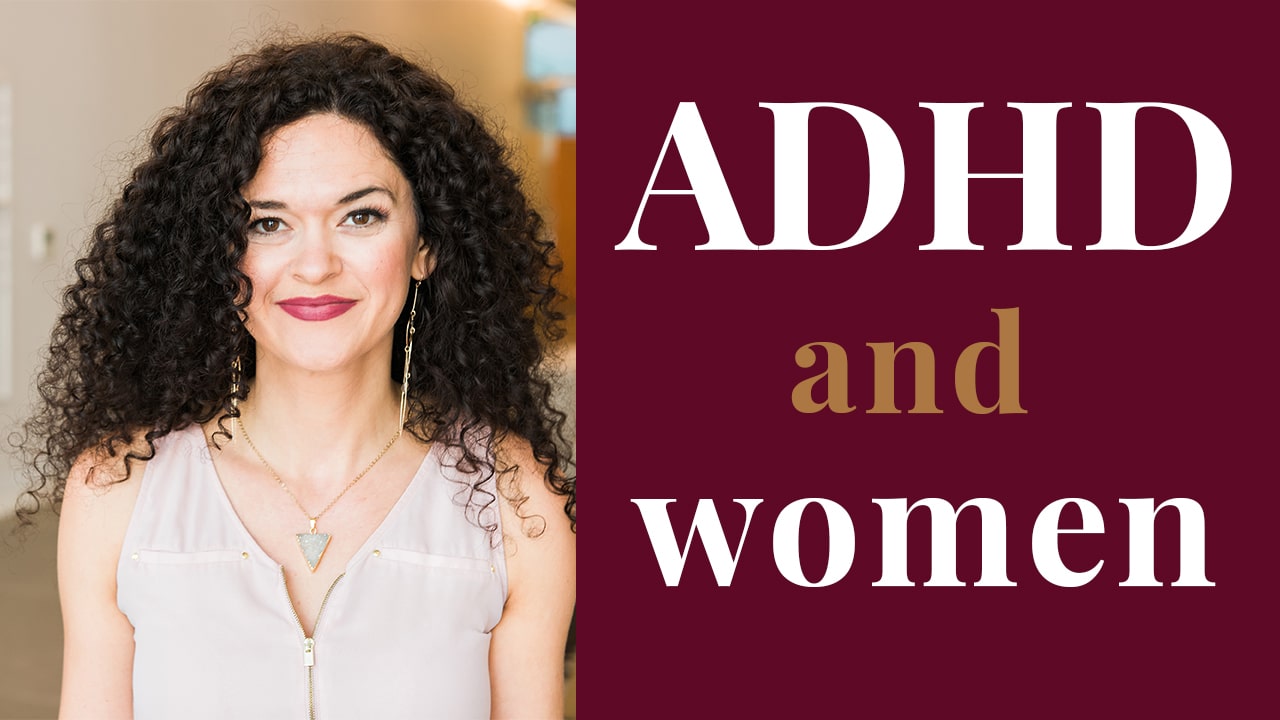
ADHD in women doesn’t always look like the stereotype. It can look like being highly capable while constantly overwhelmed, struggling with focus, working memory, emotional regulation, or executive function—and developing elaborate strategies to keep everything together.
In this episode of the Autoimmune Wellness Podcast, I’m joined by hormone expert, nutrition scientist, and bestselling author Dr. Jolene Brighten to explore ADHD through the lens of women’s hormones, brain health, and autoimmune disease.
.
Watch the Episode
.
Why ADHD Can Look Different in Women
Women with ADHD may spend years masking or compensating for their symptoms, which can contribute to diagnoses being missed until adulthood.
Dr. Brighten explains what’s happening in the ADHD brain beyond attention and why challenges with executive function, working memory, emotional regulation, and overwhelm can be important parts of the picture.
.
ADHD, Hormones, and Perimenopause
ADHD symptoms can change throughout the menstrual cycle as hormones fluctuate, and perimenopause can add another layer.
We discuss why perimenopause may reveal ADHD that was previously well-compensated, how hormonal changes can affect the brain, and some of the considerations around hormone replacement therapy for women with ADHD.
.
The Autoimmune and Gut Health Connection
We also explore what we know about the relationship between ADHD, inflammation, and autoimmune disease, as well as the potential roles of gut health and food sensitivities.
Dr. Brighten shares practical strategies for supporting the ADHD brain without creating even more overwhelm, including protein-forward meals, enjoyable movement, reducing friction in your environment, and her approach to “microdosing your microbiome.”
.
Resources
- Dr. Jolene Brighten
- ADHD and Women
- The Dr. Brighten Show
- Follow Dr. Jolene Brighten: @drjolenebrighten
.
Prefer to Listen Instead?
.
Episode Timeline
00:00 – ADHD, hormones, and autoimmune disease
01:59 – Introducing Dr. Jolene Brighten
04:10 – How ADHD presents in women
06:48 – What is going on in an ADHD brain?
11:19 – How ADHD symptoms change throughout the menstrual cycle
16:42 – How perimenopause affects ADHD
24:57 – How HRT can affect the ADHD brain
33:44 – The relationship between autoimmune disease and ADHD
37:58 – How to “microdose your microbiome”
43:12 – Food sensitivities and ADHD
45:54 – How to tackle overwhelm with ADHD
49:40 – Wrap-up and closing
.
Transcript
Below is the full transcript of Episode 99 of the Autoimmune Wellness Podcast. This transcript is provided for accessibility and reference.
Title: ADHD, Women’s Health, and Autoimmune Disease with Dr. Jolene Brighten (Ep 99)
Mickey: What if brain fog, overwhelm, forgetfulness, trouble focusing, or emotional intensity you’ve been blaming on hormones or maybe even your autoimmune disease has another layer to it?
For many women, ADHD doesn’t look like the stereotype. It can look like being highly capable but constantly overwhelmed, holding everything together on the outside while working incredibly hard behind the scenes, struggling with your focus, motivation, sleep, maybe anxiety or emotional regulation, and assuming it’s just simply the way you are.
And for some women, those coping strategies work surprisingly well for decades until their hormones begin to change. And you guys are sensing a theme here, right? The hormonal shifts of the menstrual cycle, pregnancy, postpartum, and especially perimenopause can influence how ADHD symptoms show up. And that means a woman who has spent her entire life compensating for or masking ADHD symptoms might suddenly find the strategies that she has always relied on just stop working.
And then add autoimmune disease to the picture with the potential for fatigue and brain fog, sleep disruption, inflammation, and all of these things can get more complicated. So today, I’ve brought in an expert so that we can untangle some of these connections.
Mickey: Welcome back to the Autoimmune Wellness Podcast. I’m your host, Mickey Trescott, and today we’re exploring ADHD through a lens that I think is going to be especially relevant to this community: women’s hormones, brain health, and autoimmune disease. As always, this conversation is for educational purposes only, and is not intended to diagnose or treat any medical condition. So make sure that you’re getting individualized care from your healthcare provider.
[00:01:59] Introducing Dr. Jolene Brighten
Mickey: My guest today is Dr. Jolene Brighten, an internationally recognized hormone expert, nutrition scientist, and founder of Dr. Brighten Essentials, a supplement company creating science-backed solutions for women’s health.
She’s board certified in naturopathic endocrinology, a certified menopause specialist, and a sex counselor. She’s also the best-selling author of Beyond the Pill, Is This Normal?, and ADHD and Women, which is a book that is coming out this week. I’ve got it right here in my hands, and you guys can see how much I’m enjoying this. Look at all these flags, right?
Jolene is a passionate advocate for uncovering the root causes of hormonal imbalances, and combines her clinical expertise with evidence-based education to help women better understand their bodies and optimize their hormones, brain health, and sexual wellness. Through her writing, speaking, and educational platforms, she’s reached millions of women around the world, and her newest book, ADHD and Women, explores the connection between ADHD and hormones throughout a woman’s life, and I really appreciated how comprehensive and nuanced it is.
It’s not just a conversation about focus or attention. We’re going to talk about what ADHD can actually look like in women, what’s happening in the ADHD brain, and how symptoms can change throughout the menstrual cycle and then, most importantly, during perimenopause.
So Jolene, thank you so much for being here, and welcome to the Autoimmune Wellness Podcast.
Dr. Jolene Brighten: Thanks so much for having me. I do love that you have so many tags in the book. I’m like, I wish I was there right now. I could see like what did you flag? But also I’m like, it’s not color-coded, so how do you know what every one of those means?
Mickey: Okay, so I do have a system. So the ones on top mean something a little bit different from the ones on the side. So the ones on top were the things that I really wanted to address during the podcast, so those are going to be the questions. And then the things on the side are new things that I learned from my clinical library that’s in here with working with people, so things that you taught me.
So that’s how it works.
Dr. Jolene Brighten: a system. There’s a
Mickey: There, there is, there is a system, for sure.
[00:04:10] How ADHD Presents in Women
Mickey: So let’s start with the basics. I think a lot of women really have an outdated picture of what ADHD is or what it looks like. Can you start by just telling us about how it presents in women and why so many women are becoming diagnosed later in life?
I can’t tell you how many of my friends in the last 5 or 10 years have been diagnosed. And lastly, how it can get missed.
Dr. Jolene Brighten: Mm-hmm. Sometimes the diagnosis is hiding in the effort, the outcome of what you can see in someone’s life. I’m going to explain what that means, but just to acknowledge all of your friends getting diagnosed, I’m one of those friends. In the last handful of years, we’ve seen the diagnosis of ADHD nearly double among women. Now, often when we think about ADHD, we think of that little boy who can’t sit still, right?
And that’s what medicine has really done. It studied the male archetype, decided that’s the criteria, and then made all the solutions for the male brain, and then treated women like they were somehow the failure when these things didn’t work for them.
So what I mean by, like, sometimes the diagnosis is hiding in the effort, not the actual outcome, its that many ADHD women, they look like they have their life together. They are the women who are holding everyone else’s life together, right? So they’re like the mom who looks like she’s on top of everything, the wife who can schedule all of her husband’s appointments.
But quietly, as she’s doing all of that, she’s falling apart internally, and she’s the one that when you ask her, “When was your last pap smear?” She has a great deal of shame around it. She’s like, “Oh my God, I can’t, I can’t remember that.” And so that’s a big reason why ADHD has been missed in women, because in women it can look like perfectionism, chronic overwhelm, procrastinating until the panic gives you enough adrenaline and cortisol to really perform.
These might be the women who are staying up at midnight to finish really what should have taken an hour, but nobody sees that, right? In perimenopause, as you mentioned, this might be the woman who loses her phone while she’s holding it in her hand. And so I think it’s important for women to understand that your ADHD looks different, but your experience of ADHD is different because your hormones are different
Mickey: That’s a really great explanation, holding it all together because especially, like, women are just taught to just seem normal no matter what is going on in here, right? And so I think a lot of times we get very, very good at doing whatever society expects us to do even though the internal process can be quite abnormal. So thank you for describing that.
[00:06:48] What is Going on in an ADHD Brain
Mickey: In your book, you describe ADHD as much more than just a problem with attention, which I think at the base level is kinda what most people think it is. Can you give us an overview of what might be happening in an ADHD brain, especially when it comes to neurotransmitters, executive function, sleep, stress regulation, and even something like glucose regulation, which I think a lot of people wouldn’t really connect to it, but you have some great teaching points in here.
Dr. Jolene Brighten: Yeah. ADHD is kind of a bad name when you start to understand what’s really going on. So attention deficit hyperactivity disorder, except that there’s not really a deficit in attention. There’s more of an inability to regulate attention. The incredibly boring things, like doing the dishes, don’t get the same dopamine hit. Dopamine’s saying, “Hey, is this relevant or not?” And I think one big myth that we see is that ADHD’s just a dopamine deficiency. Social media has really done women a disservice by reducing this incredibly complex brain that they’re living with as you’re just dopamine-seeking, right? So dopamine and norepinephrine matter here, absolutely, okay?
So hands down, they are two really important neurotransmitters. But when we look at ADHD, what’s going on is that there is this dysregulation of executive functions. And so one of those can be emotional regulation. So when we think executive functions, it’s like attention, motivation, planning, organizing, working memory, and emotional regulation is in there as well.
So when we think about that, you mentioned glucose, and what we’ve come to understand in the research is that the ADHD brain may not utilize glucose efficiently. It may actually get hungry faster than a neurotypical brain, a neurotypical meaning someone who doesn’t fall under the umbrella of neurodivergent conditions, for which ADHD is one of many.
Now, this matters for women because emotional regulation can also be tied into progesterone and GABA. So in the luteal phase, as progesterone rises, it should stimulate the GABA receptors to respond better. And GABA’s like a stop brake. GABA helps us filter what we’re going to say. As my good friend Dr. Gary Jones says, it’s the mouth filter that many women in their 40s end up losing, but it also helps with our emotions.
And so we can also see that during the luteal phase, glucose metabolism can shift for women. Some women are less insulin sensitive, some women are hungrier, and that can impact the ADHD brain as well.
You mentioned sleep in there. That also ties into this GABA conversation, talking about progesterone. GABA is part of why we stay asleep at night. It helps us feel calm. Yet when we have dysregulation of hormones, the GABA system, or we’re having poor sleep, we can see worsening ADHD symptoms. And when you consider that roughly 70% of those with ADHD have some kind of sleep struggle, you know, whether that is delayed sleep phase onset, that means your melatonin is rising later, so maybe like 12:00 AM, 1:00 AM in the morning, or whether that is because, like, maybe you have restless leg syndrome.
If a woman says to me, “I have worsening ADHD symptoms, and I’m having trouble sleeping,” I’m going to check her iron, specifically ferritin. Ferritin is the storage form of iron, and when that gets low, below 75 in your blood, you can start to have restless leg syndrome, you can start to have trouble sleeping, but it’s also very necessary for making neurotransmitters.
Now, if you add on to that this woman has heavy periods, maybe she has endometriosis, for which, you know, ADHD women are twice as likely to have, maybe she has fibroids, perimenopause, like, playing with your periods. If she has heavy periods, then that’s even more reason to suspect there could be iron deficiency.
Mickey: Oh, that’s such a good clinical pearl, and we’ve talked about low ferritin here on the podcast a lot. But you guys, like, this is something that is so missed in midlife, is just having a really low ferritin. I mean, I can’t even tell you how life-changing it is to get your level up. And you just taught us something, Jolene, about creating neurotransmitters, which is something that I didn’t know.
I’m pretty well-versed in the hair loss, ’cause that’s what happens to me when my ferritin gets below 50. But I didn’t know that it was helping us regulate our mood and our brain health, so that’s great to know.
[00:11:19] How ADHD Symptoms Change Througout The Cycle
Mickey: One of the central themes of your book is that ADHD symptoms aren’t necessarily static. You’ve already mentioned this a little bit, talking about the luteal phase and how progesterone can bring in some different moods and feelings based on the hormonal transition that we’re just going through month to month. Talk to us more about how ADHD symptoms can change throughout the menstrual cycle, and then what role specifically is estrogen playing in brain health?
Dr. Jolene Brighten: Mm-hmm. I’m glad you brought up estrogen, ’cause we already talked about progesterone, so we’ll definitely get into estrogen. If someone’s listening to this right now and they’re like, “My ADHD medication is working beautifully, like one to two weeks out of every single month, and then suddenly it barely works, and oop, here comes my period,” you’re not imagining that.
As our hormones change, our neurotransmitters change, our immune system changes, mitochondrial function changes. So when it comes to the estrogen component of this, estrogen is so much more than reproduction, and Medicine ever saying, like, you get your period and you have babies, and that’s just estrogen’s role” has been such a disservice, because estrogen is a mitochondrial hormone.
So it helps with how we utilize our glucose. It also helps with reactive oxygen species, so it’s an antioxidant in some ways, and it helps with immune system regulation, and it interacts specifically with key neurotransmitters. So dopamine and norepinephrine we discussed. That’s about focus, motivation, very, very typical ADHD neurotransmitters, but it also interacts with serotonin.
And when we think about serotonin for mood, serotonin’s also about neuroplasticity, our ability to learn. And we often see when serotonin gets low following estrogen, as I call her the “It Girl” in the book, around your luteal phase. Now, that’s not because there’s no estrogen, it’s because estrogen is now low relative to progesterone. Women will have more cravings. They want to eat more chocolate, more sweets, more carbohydrates. That’s often about, like, what’s happening with progesterone, your insulin, hunger, and that that helps with serotonin. So we should never shame or blame ourselves for that.
And then there’s acetylcholine, and acetylcholine is about memory. So if you walk into a room and you’re like, “I don’t know why I’m here,” or you were just in the middle of doing something and you got distracted and you’re like, ” I can’t get back to that,” or you’re losing words mid-sentence, that could be related to an estrogen-acetylcholine connection.
And then there’s one that barely gets talked about, but I think is so important, and I go into detail in the book, which is histamine. So while all the other ones are going low when estrogen goes low and going up when estrogen’s going up, and histamine’s doing the same, histamine also has the ability to stimulate the ovaries to make more estrogen as long as you’re still in your reproductive years, as long as they’re still able to do so. And why this matters is because when we see higher levels of histamine, women can feel aggravated, anxious, irritable. We can have flu-like symptoms.
So women call this the period flu cyclically. They just don’t feel well before their period comes or maybe even around ovulation as estrogen goes high. As estrogen goes up, it causes mast cells to release histamine. Histamine then hits the ovary, says, “Make more estrogen,” and all that estrogen says, “Downregulate the DAO enzyme within your gut.” Now you can’t clear the histamine in the same way. And then this is where women are like, “Well, now I have to eat a low-histamine diet. Ugh.” You start cutting out all these nutrient-dense foods.
You’re not eating things that are good for your gut, and you’re miserable, right? And so it’s easy to get into that loop, and really the answer to that is coming back to: We need to help the gut, support the gut. You may need a DAO enzyme in the meantime while you heal that, but we also have to support those estrogen levels.
So estrogen is really great for helping neurotransmitters, but too much of a good thing can flip the switch, and then you can feel more enraged, more angry. You’re waking up, like, 2:00, 3:00, 4:00 AM. And so, what I really want women to walk away understanding is that you shouldn’t have to choose between it’s your hormones or it’s your ADHD.
Sometimes it’s the interaction between your hormones and ADHD, and that matters in this conversation. And so if you’re listening to this right now and you’re like, “Okay, well, what would I do with it, that information?” Track it, because if you can come up with a pattern, your doctor pays attention to patterns more than they pay attention to one-off symptoms.
And if you’re having cyclical patterns, and you notice there’s a vulnerable window for you, that’s worth communicating, whether you are or are not on medication.
Mickey: That’s such a important message, and I love that you brought up histamine because this is especially relevant for our community because of food sensitivities, and more histamine is going to be more food sensitivities. So for anybody listening that’s like, “Certain times of the month, my gray area foods are ‘nos’, and other times of the month my gray area foods are fine. Why is this happening to me?”
Ding, ding, ding. Tracking and paying attention to how that’s happening with your cycle is so important. And so kind of in that same area, let’s talk about perimenopause because we just covered how, in, like, a normal menstrual cycle how all of these things can be at play.
[00:16:42] How Perimenopause Affects ADHD
Mickey: In perimenopause, our hormones, some of them are declining, like progesterone. Some of them are kind of on this rollercoaster ride, like estrogen. Talk to us about how this affects women with ADHD and how some women are actually recognizing that they have ADHD. Tell us a little bit more about that.
Dr. Jolene Brighten: Mm-hmm. I think it’s so important for women, if you are, like, 35 or older, really lean in and listen to this. We now understand, research in the last year has shown us that perimenopause can come a decade earlier with twice the symptom severity for ADHD women. That means the perimenopausal symptoms are twice as severe.
Now, every woman in perimenopause can experience what I call ADHD light. It’s like, “I kinda have ADHD symptoms, but it’s the first time in my life I’ve ever experienced this.” That’s not ADHD. ADHD is a lifelong pattern, so usually when you’re out talking to women, you go back into their childhood history, and the clues start to come out in that.
But for the woman who reaches mid-life, maybe her 30s, her 40s and has ADHD, what she often feels is like, “I’m completely falling apart. I’m failing in every way. All the systems that I had are breaking. Nothing is working, and it must be me. I’m the one that’s broken.” But the reality of it is, is that for the first time in her life, she’s really having a crystal clear mirror hung up to her face, showing her just how much she’s been doing, and she’s often been doing more than other women.
And this is very concerning when we hear that, okay, perimenopause comes about a decade earlier, twice the symptom severity, and then we couple that with other research that that roughly 25% of women will enter their post-menopausal years with the most severe ADHD for the rest of their life. Now, that’s with no intervention, which is why I wrote this book because, no, we will intervene. I will not allow this to be the reality for so many women.
For the non-ADHD woman in perimenopause, maybe, you know, she has an autoimmune condition compounding on top of all that, the book can help her, too. And the good news is, is about two years post-menopausal, her brain’s going to come back, and she’s going to recognize herself again.
And so I think it’s important that we understand this nuance because perimenopause does not cause ADHD. Perimenopause exposes ADHD that was previously compensated for. And when estrogen begins its decline… So we talked about what progesterone can do to our sleep, to our mood. I mean, if you want to ruin someone’s entire cognitive performance for the next day, sleep deprive them, and that is a lot of what women are living through in perimenopause.
But as we make this transition in perimenopause, our brain is losing estrogen. Not just our bones, not just our heart, but our brain as well. And as it does, we are shifting our glucose metabolism. So the brain is making less energy. The mitochondria, as cool as they are, and they make energy for the cells, they also can start making reactive oxygen species in the brain. We can see inflammation rises. If you already have an autoimmune disease, this becomes so much worse.
And I would say, you know, we need a lot more research on this, but what I’ve seen clinically is women with autoimmune disease, their ADHD is completely unmanageable anytime they’re in a flare, which makes sense because if you have inflammatory cytokines, the chemical messengers of the immune system floating around your system, they can hit the blood-brain barrier, they can tell the immune cells in the brain, get upregulated, or they can even make the blood-brain barrier leaky, and now things are getting in that shouldn’t get in.
The other thing that happens, and why there’s two chapters dedicated to gut health in the book, is that in perimenopause, as estrogen declines, so does microbial diversity. New onset of food sensitivities, new diagnosis of IBS, worsening leaky gut or onset of leaky gut. Now we’ve got more inflammation. We’ve got less things like short-chain fatty acids to really help with our gut health and our brain health.
Now add on to the fact that many women with ADHD have dysbiosis or poor gut microbial diversity, and that becomes really concerning about what is happening in perimenopause. And then the last component that I would add into all of this, which is, this sounds like bad news, but, like, the book is not thick because it’s nothing but bad news.
The book is thick because it’s primarily solutions. But the other thing that can happen is that our insulin sensitivity begins to decline as estrogen declines, and we start to accumulate what’s called visceral adiposity. I wrote extensively about visceral adiposity and what to do about it, and I don’t think we talk about it enough of how it can actually impact our brain and how it is a metabolically active organ that can lend itself to more inflammation. And so with the estrogen decline, we have the shift in estrogen, we have changes in visceral adiposity, and now the brain is struggling to work even more.
Mickey: Yeah, and one of the things that I think of on that topic, Jolene, is this is an era where women start dieting chronically because they’re trying to manage that adiposity, but not eating enough calories is really going to be damaging to the brain and probably really feeds into those symptoms, right?
Dr. Jolene Brighten: Yeah. I love that you say that because I was actually on a podcast where they asked me, like, “Oh, rate exercise, sleep, and diet, and, like, in what order, would you prioritize them and you think that they’re most valuable?” And I’m like, “Well, they’re all arguably valuable.” Like, they all have their own like, winning attributes.
But I was like, when I address someone with ADHD, rather than addressing nutrition first of like how do we get you to, like, eat this picture-perfect meal, which I do put a picture in the book because ADHDers are very visual, so that they can just, like, snap, look at it, make it, be done with it.
But often with ADHDers, especially women middle-aged, they lack interoception, and then there’s this gaining of visceral adiposity, so they start restricting food. Your brain can’t work without energy. So the first thing that I often do is just say, “How do we automate and repeat meals? I just need you to get calories in.” Because I see this so often, where women are under-eating and they’re like, “My brain doesn’t work. I don’t have energy to work out.” Like, because if I can get you working out, then I know you’re going to sleep better, right?
And if you’re sleeping better, then that’s going to help with your brain energy, metabolites being cleared out. You’re going to have less brain fog. But we’ve gotta get you eating enough before we can really dial in, “Okay, let’s start tweaking the foods that you’re working with.” So often the approach is like, “Just eat, and eat three times a day. So important. Let’s just start there.”
And then after that, it’s like, “Let’s look at what you’re eating, and then let’s modify what you’re already doing,” rather than having you come in and be like, “Just overhaul your entire diet.” Now, I did give a 14-day meal plan in the book, but I also gave what I call the “Chill Girl Meals”, which is you on autopilot on your worst day.
And I have used this, not with just ADHDers, my endometriosis patients, Hashimoto’s patients for sure when that fatigue is hitting. When you’re like, “I don’t have the executive function or the energy to make myself food, let alone think about how to prepare a meal,” it’s like, “Okay, let’s just grab what’s, like, in the fridge.”
Like, there is no shame in grabbing four hard-boiled eggs and eating half a can of chickpeas if that’s what you want to do, and a handful of raspberries, and then maybe you, like, have some white rice that you had in the fridge left over, which is great in resistant starch. But we often tell women, like, “These meals have to be perfect, and they have to always be so, nutrient-dense.”
And so then people get it in their head that, like, that means a production. I want to remove that for women, and I want them to just be able to be like, “How do I save all my brain energy for everything else I have to do in the day and put these meals on autopilot so I can just nourish myself?”
Mickey: I love that. I love that you call it “chill girl meals”. In our community, we call them low capacity meals, and it’s basically something for, like, I’m having a flare, I’m in pain, I can’t cook, having the availability, the stuff in your pantry, the stuff in your freezer, a couple things in your fridge to basically add hot water and go, reheat and go, like, we’re all about that.
[00:24:57] How HRT Can Affect The ADHD Brain
Mickey: So we talked a little bit about perimenopause, and I actually recently had our mutual friend, Dr. Mariza Snyder, on to talk perimenopause 101. So we’ve already had the pitch and, the dos and don’ts about HRT. But I would love for you to add some nuance and perspective about HRT for perimenopause and menopause as it applies to ADHD, because I know it’s not as cut and dry.
What should women with ADHD know about HRT, and is there anything that they should consider if that’s something they’re looking into?
Dr. Jolene Brighten: Absolutely. So the first thing is we have to get your progesterone figured out. So many ADHD women, in fact, estimates say as many as three times increased risk of PMDD-like symptoms, so premenstrual dysphoric disorder. So we see this very common with ADHD. When you do survey ADHDers, around 50% say they have PMDD symptoms, and in over 90% of those with autism that they have PMDD-like symptoms. So this is important because this could be histamine, this could be inflammation, or it could be a progesterone sensitivity and an inability for the GABA system to actually adapt to you taking progesterone.
Now, it’s the oral progesterone that can be problematic more so than other routes, but that doesn’t mean you might not be sensitive. So the ADHD brain tends to fall into the hormonally sensitive category to make just perimenopause so much funner for us, but here’s what you need to know. Progesterone becomes allopregnanolone. Especially when you take it orally, you’ll have a huge bolus of that, and if you’re sensitive, you might actually not feel that, like, I fall asleep easily, I’m not raging. Like, you may be raging, unable to sleep, feeling really anxious.
And so sometimes we have to go a different route. Vaginally, some women go rectally. I never start there, just for everybody listening, ’cause I don’t think anyone really enjoys that. But vaginally might not have as steep of a slope. And then I often talk when I’m teaching providers, ’cause I’m the gal they bring in to teach about neurodivergent brains and endometriosis and, like, these complicated cases of HRT.
Sometimes you have to go really low. So sometimes we have to compound progesterone, start at 25 milligrams, hold, let the brain adapt, then gradually increase, and we’re figuring that out so that we can bring on estrogen in the future. And why does that matter? Well, if you have a uterus, I can’t give you estrogen without progesterone because that would put you at risk for endometrial cancer. We don’t want to do that. All right? We’re not trading one bad thing for another here. All right? We want you to be as safe as possible.
The other thing is sometimes women actually need more progesterone. So sometimes they’re a rapid metabolizer of progesterone into that allopregnanolone, and so they get all of this allopregnanolone, and then the GABA receptors all come in, and they’re like, “We’re ready for it,” and then it drops. they’re like, “Oh my God,” like, “I’m freaking out. My brain is freaking out,” ’cause their GABA receptors are freaking out. They’re like, “We’re here. We’re ready. There’s nothing. What’s going on?”
So sometimes with those women, we have to use a slow-release oral progesterone, or other times we have to use, like, 300 milligrams. So that’s much higher. Typically, oral micronized progesterone is 100 to 200 milligrams. So it really just depends. In the book, I give tables and charts on hormone therapy prescribing. This is really for providers to understand, and I say to providers, “Go, go low and go slow.” Like, we’re going to start lower. We’re going to go slower with these women.
In more nuance when I can talk with a provider, I might be like, “Go higher,” but also be really careful because if she has a history of PMDD and suicidal ideation, you have to make sure that somebody’s on speed dial for her because if she takes that dose and she decides, like, “I don’t want to be here with anybody anymore,” like, that’s big scary. So we really have to know the patient that we’re working with. So thats always the first piece.
Now, some ADHDers do totally fine on progesterone. I’m someone who can take oral micronized progesterone. I don’t have any problem with it, but I have a friend who I was just talking to last night, also has ADHD, and she’s like, “Why is it I take progesterone, I lose my mind? My doctor doesn’t know.” I’m like, “Oh, girl, let me talk to you about what’s going on.” Sometimes we have to change things.
So we want to also have progesterone online, even if you don’t have a uterus. So if you have a history of endometriosis, absolutely have to have that coming in. But also, if you’re someone who’s histamine sensitive or you have a propensity towards histamine, giving you estrogen alone could aggravate you in that way. So these are the women that are like, “Everyone told me that I would take estrogen, it would be sunshine, rainbows, unicorns, and all I got was, like, a heavy metal concert playing out in my mind. It was, like, thrashing around. It was horrible.” Well, that might be because you took estrogen, mast cells responded, DAO enzyme goes down. Now we’ve got all this histamine going on. Well, progesterone helps with stabilizing mast cells and regulating that histamine. That’s why they go together.
And then there is the testosterone component. And just for everyone listening, there’s an entire chapter covering all of this in the book. So I’m trying to do it justice in, like, this short period of time, but when it comes to testosterone therapy, I really highlighted how much it can help women with pain in that section. ADHDers tend to have chronic pain, but they also tend to have co-occurring conditions that have chronic pain, like fibromyalgia. Hashimoto’s, as you know, can have chronic pain. There’s a lot of, Ehlers-Danlos patients, connective tissue disorders that also have ADHD.
And testosterone, it’s been interesting in studies because testosterone’s always been this story of, like, libido for women. So it’s about mood. If you’re the person who’s like, “I don’t have the mental energy to get started, and if I happen to get started, then I can’t see it through. I just don’t have the mental energy. I feel flat all the time. I’m losing muscle,” like, that’s a testosterone story as well.
But they did this study and found that women that were on hormone therapy, they added testosterone, and they were able to come off their pain meds because it helped so much. And testosterone is helping modulate the immune system as well. And so with testosterone, that one tends to be easier with ADHD women compared to, like, the nuance of progesterone, and estrogen can even be easier than progesterone for some women. But with testosterone, I always tell my patients, “Hide your credit card for two weeks,” because when your brain gets that testosterone, that impulsivity can rise up significantly, even if it’s, like, the right dose, and we start at a really small dose.
But even if it’s the right dose, you might still find that, like, “I’m super impulsive for a couple weeks.” It’s almost as if, like, the brain got what it needed, and it’s like, “Oh, yeah,” like, all, like, all systems go. But it becomes kind of that ADHD presentation that we see more of typical in men. We also see it really common in PMOS, polyendocrine metabolic ovarian syndrome, formerly PCOS women.
And so that doesn’t mean testosterone’s bad. I just always say that to women because I’m like, you know, you, you’ll start it, and you’ll be like, “Oh, my God, maybe this is bad.” With testosterone, we need, like, a good three months of you being on it to, like, work things out and to know, like, what’s the right dose.
But if you experience that initially, that’s not that abnormal for the ADHD brain.
Mickey: Yeah. So much knowledge there in, like, five minutes. That’s actually what all these flags are, are a lot of these clinical pearls that, that you just talked about. But I could definitely co-sign. I actually started testosterone this summer, super low dose, and I’m not an ADHD-er, but I can say that my psoriatic arthritis pain, my tendon pain really improved, and you are the first person who has really publicly been making that connection, ’cause I’ve asked even my doctor, my rheumatologist, and they’re like, “We don’t know why it’s working for you,” but I have the tracking to know that it is really working for pain for me.
And so funny about hide your credit card. I saw you say that on Instagram.
Dr. Jolene Brighten: Saw me almost get a puppy? Oh my God.
Mickey: Well, and what’s funny is, so I wasn’t feeling impulsive about buying things when I started it, but I did start, like, leaving my house without my shoes on, and the only thing I could think of is, It helped me bypass whatever the 5,000 mental checks of, like, do I have my wallet? Do I literally have shoes on?
Whatever, and I just kept on, like, I’m going to go do this thing now. I would just go do it without anything in between, and it settled, but it was really funny. When I saw that, I was like, oh, I, I can see if you’re a shopper, that could be a problem.
Dr. Jolene Brighten: because like, when it comes to testosterone in women, again, the FDA is like, “You can only have it if you have low libido, and then the low libido’s so bad it’s like stressing you out, like it’s causing you major mental duress.” And I’m like, to women. Talk to women about testosterone and being on it, because they all have such different experiences.
[00:33:44] The Relationship Between Autoimmune Disease and ADHD
Mickey: Let’s bring autoimmune disease into the conversation. Of course, this audience is really interested in the interplay of autoimmune disease and anything.
What do we know about the relationship between ADHD, autoimmune conditions, and are there particular connections that you find interesting, like thyroid inflammation or PMDD, which we’ve talked a little bit about already?
Dr. Jolene Brighten: Yeah. One of the biggest mistakes we make with women who have ADHD is we stop the investigation the moment we find ADHD. And this is a problem in medicine where the second you get a label, that’s all providers will see. And so when it comes to the autoimmune conversation, we see a high co-occurrence between autoimmunity and ADHD.
So things like Hashimoto’s, multiple sclerosis, can be common. There are reports of inflammatory bowel disease. And so, you know, as we started this conversation talking about ADHD being like a dysregulation of attention, really dysregulation is the word that I use to describe ADHD, because it is dysregulation of the immune system, of the gut.
Heck, it’s even dysregulation of the formation of the myelin sheath that is around your neurons. That’s the insulation around your neurons. So when it comes to autoimmune disease, something I talk about, which specifically go into detail in chapter three of the book, is the brain hormone-immune triad, and the benefactor of those in balance are the mitochondria, and the collateral damage hits those mitochondria when these systems are thrown off.
So this is all to say that your brain and your hormones are not separate from your immune system. They influence the immune system and are influenced by the immune system. And this is why I see so many women, they’re struggling with their brain, and then it turns out they have an autoimmune disease. And then, you know, we start digging deeper, and then there’s endometriosis.
We just finally got a pre-published paper, it’s going through peer review right now, validating what women have been saying for decades. I have heard this in my practice for so long, and it is that I have endometriosis and I have PMDD. So PMDD, premenstrual dysphoric disorder, is, like, the worst form of PMS you could ever imagine because these women try to self-harm. They don’t want to be here anymore. They’re losing two weeks out of every month, which equates to six months out of every year of their life. And doctors forever have been like, “There’s no correlation.” I’m like, “Of course there is. Listen to women.” And we just had the first study that is, again, going through peer review that’s like, “Yep, lo and behold.”
So we also see more PMDD among autoimmune patients. What’s going on? Inflammation, lots and lots of inflammation. when you have inflammation, that’s going to disrupt how your brain functions, not only your ability to make neurotransmitters and dock them on the receptors so that you can actually use them, but also you can take your metabolites and the pathways that you are running, so let’s say the serotonin-melatonin pathway, you can actually take that tryptophan metabolite and push it into more neurotoxin metabolites.
Now we’ve got brain fog. We’re not getting to sleep. We’re feeling really sad. So this comes to the cytokine theory of depression. But it’s not just serotonin that gets impacted. Every single neurotransmitter gets impacted. And then the other layer to all of that is that when we are having autoimmune flares, we’re often having gut dysbiosis, leaky gut. There’s gut issues going on. Well the gut should be making short-chain fatty acids that help calm the brain. That’s not happening in this ADHD meets autoimmune model.
And so, this is why I often tell patients, like, one of the best things, if you tolerate dairy, you could be eating is ghee, and eating ghee as often as possible. It’s rich in butyrate. We want to get your gut to build the butyrate for you, but if it can’t, then we can bring in butyrate. It’s very healing for the gut. It’s very healing for the brain, and it can help with all of this inflammation.
Mickey: I love that. And, ghee is included in the new Modified protocol, one of the reasons why we included it, is because it’s such a nutrient-dense food, and that butyrate is so important to health. So everybody who can tolerate dairy, go eat your ghee. It’s really good for you.
[00:37:58] How to Microdose Your Microbiome
Mickey: So on that theme, one of the things that I love in your book is “microdosing your microbiome”.
Talk to us about this. I love approachable ways to affect dietary change, and then especially the women that you are working with that are struggling with executive function. Talk to us about this concept, how people can put it into practice, and when we’re talking about feeding the microbiome, what are some of your favorite ways that you like to do this?
Dr. Jolene Brighten: Can someone tell me why the person not living with chronic disease that’s perfectly healthy is dictating the 15-step morning routine that we’re all supposed to do to have optimal health? Like, it drives me nuts. So the concept of “microdose your microbiome” came out of two parts. One is ADHDers do have a lot of food aversions, and I’m someone during my luteal phase that like, I mean, I gag at the thought of eggplant.
I think it’s disgusting. I suck it up and I eat it in front of my children because I’m like, “We can always just try something once.” And yet during my luteal phase, I’m like, it is the most disgusting, slimy… I’m not going to eat a slug, okay? That’s what it’s like, right? But I’ll eat escargot. Make that make sense.
But the whole concept is that you can have these food aversions. Can you just give me one bite? And it doesn’t even have to be a bite. Oh, I know chia seeds are great in fiber, they’re slimy. I don’t like them. Can we grind them up and sprinkle just a little bit? Even if it’s a quarter teaspoon. “Microdose your microbiome” is also the concept that can take in a small amount, and it’s still going to positively signal the gut.
People are just given this all or nothing all the time. If you are not someone who can hit 25 to 35 grams of fiber every day, can I get you to go three to five grams every day? That’s great. That’s a win. Now, the next week, can we increase a little bit more? And we are always talking to people about diversity, and in fact, we’re always talking to people about all of these great things they should do for their nutrition and exercise and lifestyle, and yet nobody’s making it ADHD accessible.
And that’s what I really aimed to do. It’s a mantra in our house with my children. So my oldest is like, oh, fall all day, every day. Like, the kid is begging me, “Buy bone marrow, Mom, buy all this stuff.” And my youngest is like, “I will eat a peanut butter and jelly every day for the next year.” And I say to him, “Okay, that’s great. We’re going to do peanut butter and jelly. I’m going to put protein powder in there.” Today, he did not want me to put the hemp seed sprinkles. Oh, I’ve been winning with the hemp seed sprinkles, but he rejected it. And I just said, “Okay, can we just “microdose the microbiome?” Am I allowed to put a pinch ‘in?”
“Okay, I’ll get a pinch in.” That’s a win. That’s a win right there, and I want more people to approach themselves in the way that they would with a child. A win is a win, and you can be gentle with yourself, but also understanding it doesn’t take a whole lot of one food item to start to shift your microbiome. You can do little amounts of a variety of different things, and that can be positive to signaling the microbiome.
Mickey: I love that. And I think of, like, fermented foods. I mean, fermented foods, they, there’s so much flavor there. That’s like a lot for somebody who’s not used to it. But what’s one little scoop in a bowl of soup? Stir it up. I mean, you naturally add a little bit of acidity and some salt. It’s, it’s going to add to the flavor of whatever’s there.
And so I love the way that you say “microdose the microbiome”. That’s the way that I do it every day, is just throwing a little ferment in everything, in a little salad dressing or in a little soup or a stew, because a little bit adds up when you do it all the time instead of just having to sit down to a whole plate of something that maybe isn’t your your favorite, you know, like eggplant.
Dr. Jolene Brighten: Well, so and we just want to say to that point, too, is that, you know, in the autoimmune community, people are restricting so many foods just trying so desperately to get out of pain and feel better. And then they’ll say to you, like, “Oh, I can’t eat sauerkraut at all.” They sometimes think it’s a histamine issue.
That’s something where I’ll approach people. We actually do this in my Endometriosis Reset course. It’s so much more focused about bringing in a variety of foods than more restricting, and I’ll have them just like dunk their little teaspoon into the liquid of sauerkraut and just start with a sip.
And we’re doing that. Sometimes I have patients where it’s like we do that twice a week, and then we’re working up to once a week, and over time, then they’re like, “I can actually eat this sauerkraut. Like, it’s totally fine.” Yes, because your body didn’t have enough of it, and we were restricting so much and having such a narrow palate that food started to become the enemy, and we have to retrain the body, and that’s the beauty of the body is that you can do that.
Mickey: Yeah, beans come to mind with another one where, where people don’t eat beans for a long time. That was actually me. For, like, 10 years I didn’t eat beans, and even now digestively they’re not my best friend, but a little bit here and there, seem to do okay with them. So, you know, you don’t have to avoid things just because at one point in the past they were a problem.
Sometimes, of course, we’re not talking things that people are allergic to, people.
Dr. Jolene Brighten: No. If it’s
Mickey: But
Dr. Jolene Brighten: allergy, please no.
Mickey: yeah, yeah, yeah, no, no.
Dr. Jolene Brighten: And I
Mickey: But
Dr. Jolene Brighten: clearly in the book. I’m
Mickey: yeah
Dr. Jolene Brighten: If it’s an allergy, that’s a different
Mickey: Yeah.
Dr. Jolene Brighten: eat it.”
Mickey: On the topic of food sensitivity, you know, this is a group where we’ve got a lot of food sensitivities and we’ve already talked a little bit about how that can change depending on your cycle and histamine and estrogen.
[00:43:12] Food Sensitivities and ADHD
Mickey: Tell us a little bit more about food sensitivities and how that might amplify symptoms that somebody experiences as ADHD. I would love your take on that as it applies to ADHDers.
Dr. Jolene Brighten: Yeah. Well any time the gut is leaky, we’ve got inflammatory cytokines cycling through, and as I already explained, those can hit the brain. They can change how your brain performs. They can make the brain leaky. And when it comes to food sensitivities, we can certainly have that heightening experience.
Now, one thing that comes to mind in the book that you might be referencing is food dyes. And what is so interesting to me is that for the longest time, moms were mocked. They were made fun of if they said, like, “No, my child is having a reaction to food dyes.” And it’s something that’s really easily dismissed all over the internet, in doctor’s offices, but as it turns out, there are some people who have a genetic susceptibility, and it comes back to histamine again.
So close to 10% of ADHDers may have this genetic susceptibility that food dye actually aggravates histamine levels. And so they do have these pronounced ADHD symptoms when they eat food dyes. Now, that doesn’t make it universally true, and I think that’s, like, one of the takeaways I talk about in the food chapter is that no food rules are universally true as of right now with ADHDers, except that we do need more protein most likely because our protein metabolism compromise.
We do need more omega-3 fatty acids, and we do better on diets that are lower in ultra-processed foods. But when you are having food sensitivities because of how the cytokines can disrupt the brain, I mean, even, like, if anyone has ever been bloated or had food poisoning and you see how your brain changes. Well, you probably don’t in the moment. You’re like, “I’m just sick.”
But you get irritable. You get cranky. You can’t focus. You’re distracted. The brain is going to be like, “This is not immediate,” right? This, this prefrontal cortex running these executive functions, planning out what you’re supposed to do for the rest of your week. not immediate. What is actually immediate is what we’re experiencing right now. And that’s a bit of, like, how the body prioritizes things.
And it doesn’t mean that these foods are going to be bad forever for you. I gave a very short gut protocol in the book, and I’m very clear this will help a lot of people, but if this is not enough for you, that means we need to have testing done. We need to explore things. Like, it could be more. Like, it could be celiac disease. It could be inflammatory bowel disease. I never want someone to just be like, “It’s just leaky gut. It’s just food sensitivity.”
So if you’re doing the basics and you’re like, “Things are not getting better,” okay, it’s, it’s time to reassess and see what else is going on.
[00:45:54] How To Tackle Overwhelm with ADHD
Mickey: All right, Jolene, there is so much in this book, you guys, nutrition, hormones, movement, sleep, nervous system support, gut health. There’s a reason why if you’re watching on YouTube, you can see there are so many flags because you go down every rabbit trail. It’s not like a one-size-fits-all plan. It’s really nuanced and specific and so much information, so this is really a gift for us.
I can imagine somebody with ADHD looking at all of this and feeling immediately overwhelmed. If somebody is listening or somebody is starting, they recognize themselves in this conversation, where are you going to have her start? What are the highest impact first steps for supporting both her brain and her overall health? Where is she going to go first?
Dr. Jolene Brighten: Okay. The worst wellness advice I think you can give a woman with ADHD is a 37-step morning routine, because then that’s just another health plan where she feels like she’s failing. So I would give you three things to do first. So one eat protein forward meals. So first thing in the morning, have high protein, so, like, 30 grams of protein. Why? You cannot make neurotransmitters without your protein. Your brain is susceptible to blood sugar swings. You’ll feel like a failure your entire day if you don’t have that blood sugar stability, and I don’t want that for you.
The second thing is that I would say you need to exercise. So if the mitochondria is the powerhouse of the cell, then the exercise you do is like the hand-crank generator. You literally have to move to generate lactate so your brain can have this backup energy supply. There was a study that showed 20 minutes of moderate physical activity could get you two to three hours of peak cognitive performance, like focus, attention, dialed in.
Now, what movement is best? The one you actually enjoy and you’re going to repeat. That’s exactly where I would start. If that’s going for a walk, if that’s having a dance party, if that’s like, “I just do jumping jacks, like, in front of my fridge. Every time I go to my fridge, I do jumping jacks.” Great habit stack. Great way to cue things. Whatever it looks like for you.
And third is remove one piece of friction from your environment every week. I want you to actually do less. So whether that is, like, you have to buy two iPhone chargers, right? And you keep one in your bedroom and you keep one downstairs. That way you can always have your phone charged in your house, and you’re not wandering wasting your mental energy trying to find a charger.
Maybe that’s you pick and you buy pre-cut produce. I know people will have so many things to say about pre-cut produce, but, like, maybe that’s the easy thing that you remove that actually gets you to eat more vegetables during the week. Make your counters messy if you have to. Keep medication or supplements where you will take them. So my nightstand, for decades of my life, I have felt ashamed of what my nightstand looks like, and now I’m like, “No, I have to do this.” If my thyroid medication isn’t on my nightstand, I don’t know if and when I’ve taken it. Sometimes I won’t even know where it is. Just put stuff out, because you can externalize your executive function, so when it’s outside of you, it’s visible, it takes way less energy.
And then maybe another thing is put a basket where things actually get dropped. So mine? By my front door, because my kids are going to come in, they’re going to drop stuff, I’m going to drop stuff. There’s going to be a doom pile at the front door, but when the doom pile becomes a basket, then that’s less friction in my environment, because I can assign my oldest kid, “Pick up the basket, take it to your room, unpack the stuff that’s yours. Okay, now pass it to the next person.”
And now we’ve got, like, a cooperative system in our house for clearing the downstairs. So it’s things like that that I want you to think about doing is, the nutrition. There is the exercise piece, but there’s also, how do you get your brain to do less? Because you deserve to use your brain on the things you actually enjoy.
[00:49:40] Wrap-Up and Closing
Mickey: Wow. Thank you so much for sharing all of your wisdom with us, Jolene. This has been a really great episode. I hope you guys will pick up Jolene’s book. It’s called ADHD and Women. It’s out this week, and, wishing you all the success on the release, Jolene. Can you tell our listeners where they can follow you and keep up with you, and anything that I missed about the book?
Dr. Jolene Brighten: Yeah. Well, support your local bookstore. Please, please, please. And if you do, in the first week the book is out, you can qualify for a bunch of bonuses. So you can get extra focused meal plans that are actually ADHD-friendly. You can get a PMDD workshop with me where I break down the different types of PMDD and understanding your type of PMDD, and there’s a whole lot more.
And then you can follow me. I’m on the Dr. Brighten Show, which is my weekly podcast. I am everywhere all over social media @drjolenebrighten, and then my main hub is drbrighten.com. And if you go there, drbrighten.com/adhdinwomen, you can grab those bonuses.
Mickey: Awesome. Well, thank you so much for being with us today, Jolene. Thank you to everybody for listening. If you guys know somebody with ADHD or any of the topics that we talked about today, perimenopause, hormones, autoimmunity, you think that would resonate with them, go ahead and send them this episode.
Leave me a review on Spotify or Apple. It really helps people discover the podcast, and I will see you next time on the Autoimmune Wellness Podcast!
.





0 comments