
Can the Autoimmune Protocol help people living with rheumatoid arthritis improve their symptoms and quality of life? And what happens when the structured elimination phase ends?
In this episode of the Autoimmune Wellness Podcast, I’m taking a closer look at two studies conducted by Julianne Taylor and her colleagues in New Zealand. The first is a clinical pilot study investigating the effects of eight weeks of Core AIP in adults with rheumatoid arthritis. The second is newly published qualitative research exploring participants’ experiences, including interviews conducted one year after the intervention.
Together, these studies offer an interesting look at both the potential benefits and practical challenges of following AIP, including improvements in patient-reported symptoms, the importance of support, and how participants navigated reintroductions and developed more personalized approaches to eating.
.
Watch the Episode
.
What the AIP Pilot Study Found
The first study, The Effect of an Autoimmune Protocol Diet in Adults with Rheumatoid Arthritis: A Single-Arm Crossover Pilot Feasibility Study, followed nine adults with rheumatoid arthritis through a four-week period eating their usual diets, followed by eight weeks of Core AIP. Participants continued their prescribed rheumatoid arthritis medications throughout the study.
Researchers documented promising improvements in patient-reported disease activity, fatigue, sleep, and quality of life. Seven of the nine participants experienced improvements in patient-reported outcomes, with particularly notable reductions in fatigue and sleep disturbance. However, two participants did not experience the same benefits, highlighting the importance of recognizing individual responses.
While these results are encouraging, this was a small feasibility study without a separate randomized control group. Larger, controlled trials are needed to determine whether the improvements were caused by the dietary intervention and whether AIP affects underlying inflammatory disease activity.
.
What Participants Experienced During AIP
The second study, Exploring Participant Experiences With the Autoimmune Protocol Diet and Rheumatoid Arthritis: A Longitudinal Qualitative Study, followed the same nine participants through interviews immediately after the intervention and again one year later.
These interviews revealed the work involved in following an elimination diet, including meal planning, finding appropriate ingredients, preparing food, and navigating social situations. Participants also described how family support, access to nutrition resources, and the structure of the research study helped them make these changes.
I found these insights especially meaningful because they reinforce something we’ve emphasized in the AIP community for years: successful dietary change involves much more than following a food list. Having the time, resources, systems, and support to make those changes manageable is essential.
.
One Year Later: Reintroductions and Personalization
Perhaps the most interesting finding came from the one-year follow-up. Most participants were no longer following strict AIP, but many had maintained meaningful dietary changes and developed more flexible, personalized approaches to eating. Six of the nine described their rheumatoid arthritis symptoms as stable or improved compared with their earlier experiences.
Participants experimented with reintroducing foods, navigated social situations, and worked toward balancing symptom management with greater dietary freedom. Most did not follow a formal reintroduction process, which highlights an important opportunity for future research into whether structured guidance could help people develop broader, more sustainable diets.
These findings align closely with how the Autoimmune Protocol has evolved. With both Core and Modified options, a greater emphasis on the Transition phase, and systematic Reintroduction, the goal is not to remain in elimination indefinitely. It’s to use the process to develop the broadest, most nutrient-dense diet that works for each individual.
.
Resources
- The Effect of an Autoimmune Protocol Diet in Adults with Rheumatoid Arthritis: A Single-Arm Crossover Pilot Feasibility Study — Julianne Taylor and colleagues
- Exploring Participant Experiences With the Autoimmune Protocol Diet and Rheumatoid Arthritis: A Longitudinal Qualitative Study — Journal of Nutritional Science (2026)
- Episode 88: The First AIP Pilot Trial in Rheumatoid Arthritis — Interview with Julianne Taylor
- Episode 59: AIP for IBD — The Scripps Pilot Study & Quality of Life
- Episode 61: AIP for Hashimoto’s — The Abbott Pilot Study
- Episode 63: AIP for IBD — Gene Expression & Patient Experiences
- Episode 65: AIP for Hashimoto’s — The Polish Study
- Free AIP Foundation Series
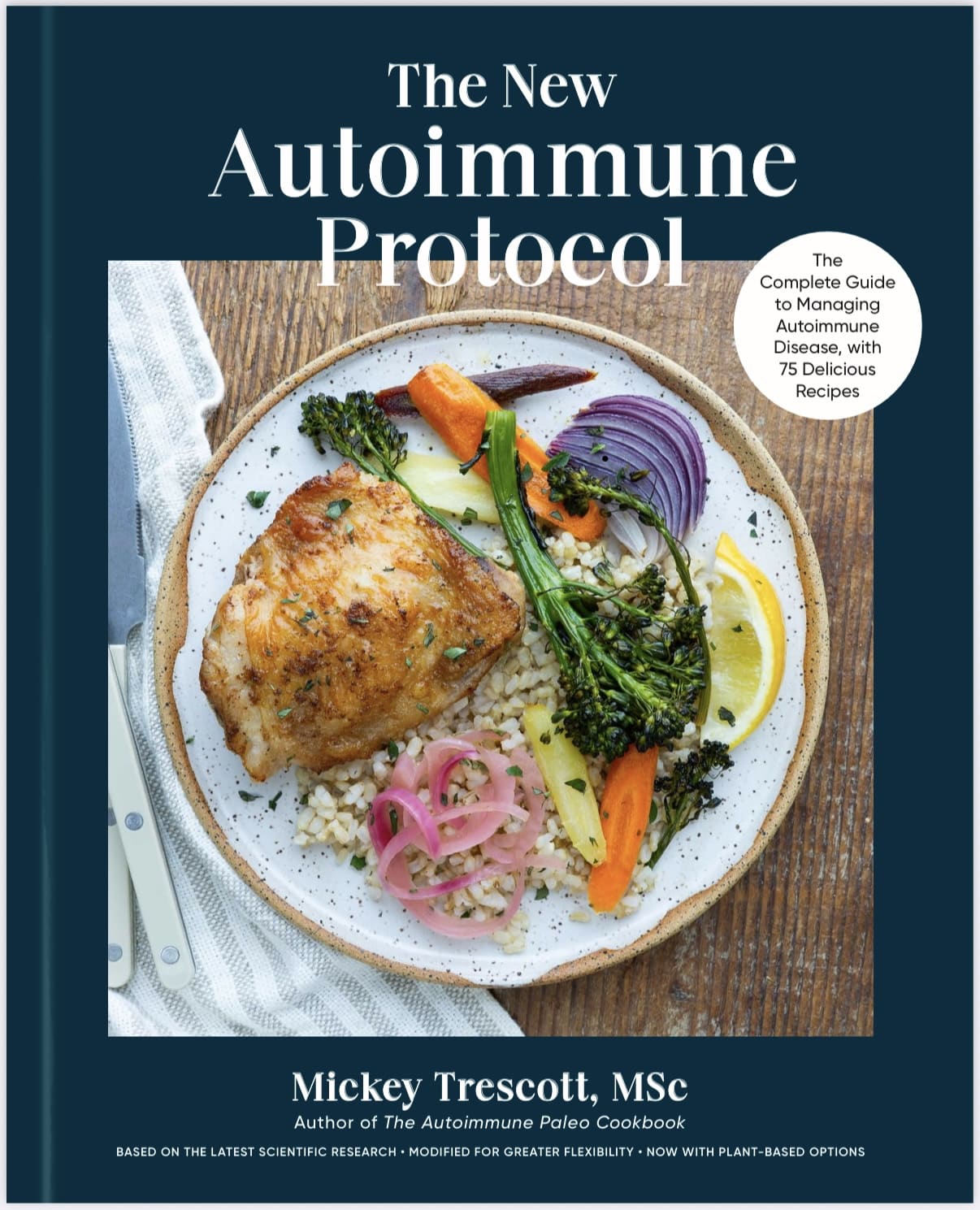
- The New Autoimmune Protocol by Mickey Trescott
.
Prefer to Listen Instead?
.
Episode Timeline
00:00 – What happens when people with rheumatoid arthritis follow AIP?
01:54 – A review of the AIP medical research series
04:16 – Why study rheumatoid arthritis?
08:10 – Understanding rheumatoid arthritis and conventional treatment
12:57 – AIP for rheumatoid arthritis: The pilot study design
17:43 – Results of the AIP rheumatoid arthritis pilot study
21:52 – The qualitative study: What was it like to follow AIP?
27:05 – One year later: Reintroductions, personalization, and sustainability
34:07 – What this research means for people with rheumatoid arthritis
38:48 – Wrap-up and closing
.
Transcript
Below is the full transcript of Episode 104 of the Autoimmune Wellness Podcast. This transcript is provided for accessibility and reference.
Title: AIP for Rheumatoid Arthritis: A Pilot Study & Qualitative Research Out of New Zealand (Ep 104)
Mickey Trescott: What happens when people living with rheumatoid arthritis follow the Autoimmune Protocol for eight weeks? In the first clinical pilot study investigating AIP for rheumatoid arthritis, researchers in New Zealand documented promising improvements in patient-reported disease activity, pain, fatigue, sleep, and quality of life.
But they didn’t stop there. They also interviewed the participants about what it was actually like to follow the protocol, what changes they noticed, how difficult it was, and what actually happened for the few people that didn’t improve. And perhaps most interestingly, what happened one year later when the structured intervention was long over.
Those follow-up interviews revealed a much more nuanced picture of what it means to use an elimination diet to manage a chronic autoimmune disease, including the importance of support, the challenges of maintaining dietary restrictions, and the role of reintroduction and personalization.
Today, we’re bringing these two studies together to explore what the research tells us about the Autoimmune Protocol for rheumatoid arthritis, what we still don’t know, and what these findings might mean for people looking to improve their symptoms and quality of life.
Mickey Trescott: Welcome back to the Autoimmune Wellness Podcast. I’m your host, Mickey Trescott, and today we’re continuing our AIP medical research review series with a deep dive into the first clinical pilot study of the Autoimmune Protocol for rheumatoid arthritis, along with some newly published qualitative research following the same group of participants.
Before we get started, a quick reminder that this podcast is for educational and informational purposes only, and is not intended to replace individualized medical advice, diagnosis, or treatment.
[00:01:54] A Review of the Medical Research Review Series
Mickey Trescott: If you’re new here, one of the things that we’ve been doing on the Autoimmune Wellness Podcast since its relaunch earlier this year is taking a deep dive into the published medical research on the Autoimmune Protocol.
And I want to spend a moment talking about that because this podcast audience has grown quite a bit since we released some of these earliest episodes. I know many of you are especially interested in the science behind AIP, and I wanted to let you know that I have dedicated several episodes already to walking through the studies, looking at how the research was conducted, what the researchers found, and just as importantly, what the results can and can’t tell us.
So in episode 59, we covered the groundbreaking Scripps pilot study and quality of life research on AIP for inflammatory bowel disease. That includes ulcerative colitis and Crohn’s disease. In episode 61, we explored the Abbott pilot study and case reports on AIP for Hashimoto’s thyroiditis. Then in episode 63, we return to inflammatory bowel disease to examine the gene expression study and patient experience surveys. Again, these were both by the same team at Scripps. And then in episode 65, we looked at the Polish study investigating nutrient density, symptoms, and thyroid health in people with Hashimoto’s.
So we’re all the way up now to episode 105. There have been a lot of episodes since then. But if you have not listened to those episodes yet, I really encourage you to go back, check them out, especially if you’re somebody who wants to understand the evidence behind AIP, especially as it pertains to these specific conditions.
Again, that is Crohn’s disease, ulcerative colitis, or Hashimoto’s. One of my goals with this series is to make the research accessible, so even if you don’t have a science background, I want you to understand not only what we’re learning, but how to think critically about the findings, recognize some of the limitations, and put that information into context.
And today, we’re turning our attention to another major autoimmune disease, which is rheumatoid arthritis.
[00:04:16] Why Study Rheumatoid Arthritis
Mickey Trescott: Rheumatoid arthritis, otherwise known as RA, is one of the most common autoimmune diseases affecting millions of people around the world. It is a chronic inflammatory condition that primarily affects the joints, but its impact can extend far beyond joint pain and stiffness.
People with RA may also experience debilitating fatigue, disrupted sleep, difficulty with everyday activities, and a significant reduction in quality of life. And while there have been tremendous advances in medical treatments for RA, including things like medications that help control inflammation and prevent permanent joint damage, many people continue to struggle with autoimmune symptoms or are interested in what they can do alongside their medical treatment to support their health.
So along this thread, researchers have been investigating dietary approaches for RA for decades, including various elimination diets like AIP. But until recently, we didn’t have any published clinical research specifically examining the Autoimmune Protocol in people in RA. That changed this year with the work of researcher Julianne Taylor and her colleagues in New Zealand. Now, if you’ve been following along, you might remember that I interviewed Julianne back in episode 88 about the very first AIP pilot study for rheumatoid arthritis.
That conversation was really meaningful because Julianne’s work has actually been a part of my own healing journey for a very long time. I actually discovered her writing more than a decade ago, actually, at this point, probably even more than 15 years ago, when I was navigating my own health challenges and learning about AIP for the first time.
So in episode 88, we talked about how Julianne became interested in researching AIP, how that pilot study was designed, and what some of her findings revealed. So if you’d like to hear directly from the researcher herself, I highly recommend that conversation. But there is more to this story. Julianne and her team have now published a qualitative study exploring the participants’ experiences with AIP, including interviews conducted after the intervention and again one year later.
And I think this is such an important addition to the research because clinical outcomes can tell us whether participants reported changes in things like pain or fatigue, sleep, disease activity. Of course, the things that we all want to know about, right? But those numbers don’t necessarily tell us what it was like for those people who actually went through and did that process and made those changes in everyday life.
How much time and effort did it take them to actually do it? What kind of support made a difference? And what happened when participants started bringing foods back into their diets, right? We don’t have a lot of research into reintroductions. So this qualitative research gives us an opportunity to explore some of these more open-ended questions, including the experiences of the participants who didn’t benefit from the protocol.
So in today’s episode, we are going to start with a closer look at RA itself, what it is, how it affects the body, and how it’s typically treated. Then we’re going to walk through the pilot study, including the intervention, the measures that were used, and the clinical findings. From there, we’re going to talk about all of this qualitative research and the one-year follow-up, and then finally, we’re going to talk about what this means for the AIP community today, especially in light of how the protocol has evolved to include both core and modified AIP.
So I’ll link to all five of the previous research episodes I mentioned in the show notes, along with the published studies we’re discussing today, so you can explore the research for yourself
[00:08:10] Understanding Rheumatoid Arthritis
Mickey Trescott: Let’s get started by talking about rheumatoid arthritis. Rheumatoid arthritis or RA is a chronic systemic autoimmune disease. It is estimated to affect around eighteen million people worldwide, and it’s about two to three times more common in women than men. And while we often think of RA as a disease that causes painful, swollen joints, there’s actually a lot more going on beneath the surface.
In RA, the immune system mistakenly targets tissues in the joints, particularly the synovium, which is the lining that surrounds and helps protect them. This triggers inflammation that can lead to swelling, warmth, pain, and stiffness. And over time, if that inflammation is not adequately controlled, it can damage cartilage and bone, potentially leading to permanent changes in joint structure and function.
RA often affects small joints first, especially those in the hands, in the wrists, in the feet. It frequently can also affect joints on both sides of the body. And one of the hallmark symptoms is morning stiffness that lasts much longer than just a few minutes of stiffness that you might experience from ordinary wear and tear.
But rheumatoid arthritis isn’t just a joint disease. Because it’s a systemic inflammatory condition, it can affect other parts of the body, including the eyes, the lungs, the heart, and the blood vessels. And even when those complications aren’t present, people with RA often experience symptoms that extend well beyond their joints.
Fatigue is a really important one. For some people, that exhaustion that is associated with RA can be just as disruptive as the pain itself. So sleep disturbances, reduced physical function, and difficulty participating in work, family life, or activities can all have a tremendous impact on a person’s quality of life.
Now, when it comes to treatment, rheumatoid arthritis is one of the autoimmune diseases where early diagnosis and effective medical management are really important. The goal isn’t just to make a person feel better, it’s also to control that inflammation and prevent the irreversible joint damage that can develop when the disease remains active.
So the standard approach involves some disease-modifying antirheumatic drugs, otherwise known as DMARDs. Methotrexate is one that is commonly prescribed, and there are also biologic medications and other targeted therapies that can be used depending on somebody’s disease activity and response. These medications have transformed RA care, and many people are now able to achieve remission or very low disease activity with appropriate treatment.
But even with these advances, not everybody achieves complete symptom control. Some people continue to experience some pain, fatigue, or reduced quality of life despite using all of the treatment. Other people might struggle with medication side effects or need time to find a treatment that works for them.
And for people living with RA, the question doesn’t have to be whether you should use medication or make changes to your diet and lifestyle. Those approaches can work together. While medical treatment plays a critical role in controlling the underlying disease process and protecting the joints, nutrition, physical activity, sleep, and stress management, other lifestyle factors might actually offer additional ways to support overall health and wellbeing.
So with all of that in mind, why study the Autoimmune Protocol specifically? Well, researchers have actually been interested in the relationship between diet and rheumatoid arthritis for decades. Different dietary approaches, including fasting, vegetarian diets, Mediterranean-style diets, elimination diets, have all been investigated for their potential effects on symptoms and disease activity.
And some of that research has produced encouraging findings, but the studies have often been small, used very differing dietary interventions, or have had some methodological limitations that make it difficult to draw firm conclusions.
Now, that brings us to Julianne Taylor’s work and her colleagues in New Zealand. Their research represents the first published clinical investigation specifically examining the Autoimmune Protocol in adults with RA. And I think what makes this really interesting is that they weren’t just asking whether the participants might experience improvements in symptoms. They were also investigating whether this type of dietary intervention was feasible, how they responded to it, and ultimately, what their experiences could teach us about using nutrition as a complementary approach to managing RA.
[00:12:57] AIP for Rheumatoid Arthritis: The Pilot Study Design
Mickey Trescott: So let’s take a closer look at how they designed the study. The first study is titled The Effect of an Autoimmune Protocol Diet in Adults with Rheumatoid Arthritis: A Single-Arm Crossover Pilot Feasibility Study, it was conducted by Julianne Taylor and her colleagues in New Zealand.
As I mentioned earlier, Julianne joined me in episode 88 to talk about this research, and we went into quite a bit of detail about her background, how the project came together. So today, I’m going to focus primarily on the study itself, what they measured, and what we can learn from the findings.
First, I want to explain something important about the design. This was a pilot feasibility study. That means this was designed to be a small, preliminary investigation to understand whether the intervention was practical for participants to follow, whether the research methods worked, and whether there were signals of potential benefit that would justify a larger, more rigorous clinical trial.
This is important because pilot studies are an important part of the research process. They aren’t designed to give us the same level of certainty as large, randomized controlled trials. So this study included nine adults with rheumatoid arthritis who completed the intervention. And the researchers used an interesting design.
Participants began with a four-week control period during which they continued eating their regular diets. This gave the researchers an opportunity to collect information about these people’s symptoms and disease activity before they made any dietary changes. After those four weeks, participants transitioned into an eight-week Autoimmune Protocol intervention.
So rather than comparing one group of people following AIP with a completely separate group of people who are continuing their usual diet, this team followed the same participants through both periods. This allowed them to compare each person’s experiences during the usual diet with their experiences during AIP.
Now let’s talk about what the participants actually ate. The intervention followed what we now refer to as Core AIP. Core AIP temporarily eliminates several food groups, including grains, legumes, dairy, eggs, nuts, seeds, and nightshade family vegetables, with a few other ingredients, while emphasizing nutrient-dense foods such as vegetables, fruits, quality proteins, seafood, and other foods that are specifically included.
The goal is to create a structured elimination, observe how symptoms respond, and then eventually use a systematic reintroduction to help identify which foods are well-tolerated and which might be contributing to symptoms. And I want to emphasize that last part because it’s especially relevant to the qualitative findings that we’re going to discuss in a little bit.
The elimination phase is not intended to be permanent. It’s temporary, designed to gather information that can help somebody move towards a more personalized, sustainable diet. For this particular study, though, the researchers were investigating the eight-week elimination intervention, not the full process of systematic food reintroduction.
One of the things I appreciate about this study is the attention that they paid to the actual experiences of the patients with RA. They didn’t just rely on one measure of symptoms. They used two different tools called the RAPID3 and the RAID. RAPID3 stands for Routine Assessment of Patient Index Data 3. It’s a validated patient-reported measure used in rheumatoid arthritis that looks at three areas: physical functioning, pain, and the patient’s overall assessment of their health.
The second tool, RAID, stands for Rheumatoid Arthritis Impact of Disease. This measure takes an even broader look at how RA affects a person’s life. It includes functional disability, fatigue, sleep, physical well-being, emotional well-being and coping.
And throughout the study, participants continued their prescribed rheumatoid arthritis medications. This is a super important point. The researchers were investigating AIP as a complementary intervention alongside conventional medical care, not as a replacement for disease-modifying treatment. That distinction is essential when we’re talking about a condition like RA, where controlling inflammation is critical for preventing permanent joint damage.
So to recap, we have nine adults with rheumatoid arthritis, a four-week period eating their normal diet, followed by eight weeks of Core AIP, with researchers measuring patient-reported disease activity, impact of RA on daily life, and dietary intake.
[00:17:43] Results of the AIP RA Pilot Study
Mickey Trescott: Let’s get into the results because there were some really interesting findings in this pilot study. Let’s start with disease activity. Again, the researchers used the Rapid 3 and the average Rapid 3 score was 2.73 out of 10 coming into the study. By the end of the AIP intervention, that average had dropped to 0.99.
Four participants achieved what researchers classified as a “good treatment response”, and three moved from low disease activity to the remission category according to that Rapid 3 scoring chart. The researchers also used the RAID questionnaire, which measures the broader impact of RA on daily life. Here, the average score decreased from 3.13 to 1.02 out of 10.
Six out of the nine participants experienced a reduction of more than 50% in their RAID scores, and by the end of the intervention, seven had scores indicating what researchers call a “patient acceptable symptom state”. In other words, most participants were reporting that the overall impact of rheumatoid arthritis on their lives had been substantially more manageable.
And when we look at specific symptoms, findings get even more interesting. Fatigue scores decreased from an average of 4.44 to 1.11 out of 10, a reduction of about 75%. Seven participants showed meaningful improvements in fatigue, and eight of the nine finished the study with fatigue scores of either 0 or 1, which is just incredible.
One participant who also had fibromyalgia reported that their fatigue dropped from a 10 out of 10, that is the max, right? To just one. And I think that’s a particularly compelling example because fatigue can be one of the most debilitating aspects of living with RA, and it’s also one of the symptoms that can be difficult to address with medication alone.
Sleep improved as well, with average scores decreasing from 3.77 to 1.22 out of 10, a reduction of about 68%. And here’s another interesting finding. Participants reported using fewer non-steroidal anti-inflammatory drugs or NSAIDs for pain relief. So during the usual diet period, that was that one month before, they averaged about two doses per week. By the end of the AIP intervention, that had dropped to approximately 0.1 doses per week. Now, this is a really small group. We’re talking about discretionary pain medication, not their prescribed disease-modifying treatments. But it is another potentially meaningful sign that deserves further investigation.
So taken together, we’re seeing improvements in patient-reported disease activity, overall quality of life, symptoms like fatigue, sleep, and use of the NSAID for pain relief. But I also want to highlight that two of the nine participants did not experience the same benefits as the rest of the group. One reported worsening fatigue and RA symptoms, along with reduced appetite and unintended weight loss.
Another experienced some digestive symptoms, including diarrhea, without improvement in their RA symptoms. And I think these experiences are just important to understand as the positive ones. AIP is a very substantial dietary change. It’s not necessarily appropriate or beneficial for everyone.
Maintaining adequate calories, nutritional balance, and a sustainable relationship with food matters, especially for people managing chronic illness. And what this study does is it gives us a reason to keep looking into it, and it raises another question that I think is just as important. What was it actually like for these participants to follow AIP, and what happened after that eight-week intervention ended?
That’s where the second study, the qualitative research, becomes really interesting.
[00:21:52] The Qualitative Study: What Was it Like to Follow AIP?
Mickey Trescott: Now that we’ve looked at the clinical results, I want to turn our attention to the second paper because I think it adds something valuable. The study is titled Exploring Participant Experiences With the Autoimmune Protocol Diet and Rheumatoid Arthritis: A Longitudinal Qualitative Study, and it was published in the Journal of Nutritional Science in 2026.
This research followed the same nine participants from that original pilot study that we just discussed. But instead of focusing on questionnaire scores and maybe more of those numerical outcomes, the research team conducted in-depth interviews. They interviewed participants right after the eight-week AIP intervention, and then again one year later.
And I just love that they took this approach because clinical measurements can tell us whether somebody’s symptoms improved, but they don’t necessarily tell us all the work on the other side that it took to make those changes happen. Was it actually hard for them to follow the diet? What motivated them to stick with it? Did they feel the benefits were worth the effort? And what happened when they were no longer participating in a structured study? The researchers analyzed these interviews and identified several themes, and I want to walk you through some of the most interesting findings.
The first theme was motivation and openness to change. These participants were willing to make some pretty substantial dietary changes because they were looking for ways to improve their health. And I think that’s something that most of us can relate to when you’re living with autoimmune disease, especially one that affects your ability to work, exercise, sleep, or maybe even just get through the day.
The possibility of feeling better can be a powerful motivator. The participants here entered the study with different expectations and experiences, but they shared a willingness to try something new. Of course, that also tells us something about the study group. They were motivated volunteers who had chosen to participate in dietary research, so their experiences might be different from those of somebody who’s less familiar with AIP or interested in changing their diet.
The second theme was navigating the transition to AIP, and this is where things get really practical. Participants described the work involved in changing how they ate, including planning meals, finding appropriate ingredients, preparing food, and figuring out how to navigate social situations. And one of the challenges was simply the mental load of following a restrictive diet. This should not come as a surprise to anyone who has tried this before. But when you’re used to eating a certain way, you don’t necessarily have to think about every ingredient or plan every meal in advance. But during an elimination diet, those decisions require a lot more attention.
So the researchers identified several factors that helped people follow the intervention after they interviewed them. Support from family members and other people in their households made a big difference. No surprise there, right? Having access to nutrition resources and guidance was helpful, and the structure and accountability of participating in a research study helped participants stay on track.
And so I’m just thinking about kind of what a, a group approach might look like. The intervention also took place during the COVID pandemic when some participants were spending more time at home. That created a little bit of a different circumstance that might have made certain aspects of meal prep a little bit easier while introducing other challenges.
And I think there’s an important lesson here. When we talk about whether a dietary intervention is feasible, we’re not just talking about whether somebody can technically follow a food list. We’re talking about whether they have the time, energy, resources, and support to make those changes in their actual lives, and that’s something we’ve emphasized in the AIP community for many years. It’s one of the reasons the transition phase is such an important part of the protocol, because building systems, finding support, and preparing for the practical challenges make such a big difference.
Now, there’s one more thing I want to clarify about qualitative research. These interviews tell us what participants experienced and how they interpreted those experiences. This kind of research helps answer questions that are often missing from clinical trials. So again, what does it take to actually implement what made it manageable or overwhelming, and what kind of support is actually helpful?
And that brings us to what I think is the most fascinating part of this entire research project. They didn’t just interview participants at the end of the eight weeks, right when they were fresh off of AIP. They circled back one year later, and we have no other study that has done this to this point.
At that point, participants were no longer following the structured research protocol. They were making their own decisions about what to eat, which foods to reintroduce, and how much of AIP they wanted to maintain. So what happened during that year gives us a particularly interesting window into the relationship between elimination diets, personalization, and long-term sustainability. So let’s talk about what they learned.
[00:27:05] One Year Later: Reintroductions, Personalization, and Sustainability
Mickey Trescott: So one of the biggest questions that I hear from people in the AIP community isn’t just whether the protocol can help me, right? It’s about what happens next. Because if you look at that food list, you can tell right away you cannot do this forever. What happens when the elimination phase ends? How do you figure out what foods you can bring back, and how do you find a balance between managing your autoimmune disease and enjoying your life?
These are questions I’ve spent years helping people navigate, and they’re exactly the kinds of issues that emerged in the one-year follow-up interviews. So remember, these are the same nine people who completed the original eight-week AIP intervention. The researchers returned a year later to find out how their diet and their health had changed.
And one of the most interesting findings was that most participants were no longer following strict AIP, but many had maintained some meaningful dietary changes. And what this means is that instead of remaining in the elimination phase, which we do not recommend, right? These participants developed more flexible, personalized approaches to eating.
Some had brought back some foods, so reintroduced foods like eggs, nuts, seeds, coffee, and gluten-free grains. Others continued avoiding certain foods because they believed that those foods contributed to their symptoms. And here’s something important. This was not a reintroduction study, so most participants didn’t follow a formal or systematic reintroduction process. There was no coaching, there was no guidance. They were not supported in that.
But instead, the interviews revealed that they experimented with foods in a less structured way, paying attention to how they felt and making decisions based on those experiences. Now, as somebody who has spent a long time teaching the reintroduction process, I find this interesting because ideally, we want people to approach reintroductions systematically.
We want them reintroducing one at a time, observing their symptoms, gathering information that helps them distinguish a genuine food reaction from the normal fluctuations that can happen with chronic illness. But what this research and this interview series really shows us is that in real life, people do not always follow that ideal process. Reintroductions can be complicated. They take planning, patience, and careful observation.
Now, participants described different experiences when bringing foods back. Some believed they noticed increased symptoms after consuming foods such as nightshade family foods, wheat, gluten, dairy. Others found that they could tolerate a wider variety of foods than they might have expected. But their experience influenced how they chose to eat going forward.
And I love this because it brings us to another major theme from the research: finding and sustaining balance. Participants described an ongoing negotiation between maintaining dietary changes they believed were helping them, and wanting more freedom in their everyday lives. Social situations were a particularly important part of that. Eating with family, going to restaurants, traveling, and participating in celebrations can all become more complicated when you’re following a restrictive diet. And over time, participants had to decide which restrictions felt worthwhile, and which ones they were comfortable relaxing.
Gosh, you guys, this is so important because the goal of AIP has never, ever been to follow the elimination phase forever. The goal is to use the elimination and reintroduction as tools to develop a personalized way of eating that supports your health without creating unnecessary restrictions. And I just loved seeing in these interviews that the participants were trying to find that balance for themselves.
Now, a big question you might have is what happened to those rheumatoid arthritis symptoms a year later? We know they were reintroducing foods, so did their symptoms come back? And I’m happy to report that the researchers wrote that six of the nine participants described their RA symptoms as stable or improved compared to their earliest experiences, which is so encouraging, right?
Again, not everybody maintained that better baseline, especially as those two participants from the original study did not respond to the initial intervention. But it looks like most of the people who originally responded were able to maintain that baseline of better health.
And I think the most important takeaway from the one-year follow-up is that sustainability did not necessarily mean that they just continued to follow the original elimination phase. For many participants, it meant taking what they’ve learned, experimenting with reintroductions, and finding an approach that fit their individual needs and circumstances.
To me, that aligns just perfectly with how I have worked to evolve the Autoimmune Protocol. With the updated AIP, we now have both Core and Modified options for elimination, a greater emphasis on prep and support during transition, and a continued focus on using reintroduction to build the broadest, most nutrient-dense diet that works for each person.
Now, Modified AIP was not tested in this study, so we can’t assume the participants would have experienced the same results with a less restrictive intervention. But the challenges they describe help explain why flexibility, accessibility, and personalization deserve more attention in future research.
And I think there’s another important lesson here. When somebody completes an elimination diet, the measure of success shouldn’t simply be, like, how many foods you continue to avoid, right? It should be whether you gain useful information about your health, whether you are meeting your nutritional needs, and whether you have developed an approach that’s just for you that you can realistically maintain.
And for some people, that might mean continuing to avoid a handful of foods that cause problems. For others, it might mean successfully reintroducing a lot of foods and moving towards a much less restrictive diet. And for somebody who doesn’t experience meaningful benefits, it might mean recognizing that this particular intervention isn’t the right tool for them, and all of those outcomes are worth acknowledging.
So when we put the clinical pilot study and the qualitative research together, I think we get a much richer picture of what AIP might offer for people with RA. We have preliminary evidence of improvements in patient-reported symptoms and quality of life. We have detailed accounts of the practical challenges involved in following the intervention, and now we have one-year follow-up showing how participants adapted their diets once the structured research period was over.
[00:34:07] What This Research Means for People with Rheumatoid Arthritis
Mickey Trescott: So now that we’ve explored both studies, I want to bring everything together and talk about what this research means for people living with RA. The first thing that stands out is that quality of life matters. When we talk about RA treatment, we understandably focus on controlling that inflammation, preventing joint damage, and achieving remission. Those are essential goals.
But for somebody living with RA, managing the disease also means being able to get out of bed in the morning without overwhelming stiffness, having enough energy to get through your day, sleeping well, and participating in the activities that make life enjoyable. And that’s why I find the improvements in all of these areas so interesting. In the small pilot study, seven of the nine participants experienced improvements in patient-reported outcomes, and several of those changes were substantial.
The second takeaway is that individual responses matter. So we saw participants who experienced substantial improvements, and we also saw people who struggled with the intervention or didn’t get very many benefits. That is important because there can be a tendency in the autoimmune community to assume that if it works for one person, it should work for everyone. But we are all so complex. People have different symptoms, nutritional needs, medical histories, circumstances, and this is one of the reasons I have become so focused on personalization in my work with AIP.
When we updated the protocol to include Core and Modified, the goal wasn’t to create a stricter version and an easier version, with one being better than the other. It was to actually recognize that people need different starting points. Now, I want to be clear again, this research was just on Core AIP. We don’t have any research yet on Modified, but I hope that that is coming soon.
The third takeaway is that the elimination phase is just one part of the process, and I love how beautifully the one-year follow-up illustrated that. Most people were not following strict AIP a year later, and they should not have been, right? They had reintroduced foods, experimented with their diets, and developed approaches that felt manageable for their everyday lives. That’s exactly what I want everybody doing.
The fourth takeaway is that nutrition needs to work alongside appropriate medical care. I want to emphasize this because rheumatoid arthritis is a disease, again, where that uncontrolled inflammation can cause irreversible joint damage. The participants in this research, as with previous AIP studies, including those in IBD and Hashimoto’s, continued their prescribed RA medications, and AIP was investigated as a complementary intervention.
So even if somebody experiences dramatic improvements in pain, fatigue, or other symptoms after changing their diet, it doesn’t mean their underlying disease activity is controlled. So if you have RA and you’re interested in trying AIP, I would encourage you to work with your rheumatologist and ideally a nutrition professional who understands both autoimmune disease and elimination diets.
Make sure you’re eating enough, meeting your nutritional needs, and continuing to monitor your disease activity. And don’t make changes to your disease-modifying medications based solely on improvements in how you feel. This should be a really important conversation that you have with your doctor who is monitoring and helping you manage that.
Now, what would I like to see researchers investigate next? Of course, we need larger controlled trials that compare AIP with appropriate control diets. This would help us really determine whether the improvements observed in this pilot study are actually attributable to the intervention. I would also love to see studies that include objective measures of RA disease activity, such as those swollen joint counts, inflammatory markers, and validated clinician assessments alongside some of these patient-reported outcomes.
We want to know whether people feel better, but we also want to know whether dietary changes have measurable effect on the underlying inflammatory disease process. And finally, we would love to see research examine the full AIP process, including that transition, elimination, and systematic reintroduction with long-term follow-up.
I know this is such a big wish list, but I’m just putting it out there. Could participants achieve similar results with Modified? Would more structured reintroduction support help people develop broader and more sustainable diets? These are all questions that I think are worth exploring.
[00:38:48] Wrap-Up and Closing
Mickey Trescott: That’s where we’re going to wrap up today’s deep dive into the research on the Autoimmune Protocol for rheumatoid arthritis. I hope this episode has given you a better understanding of both what these studies found and why they’re important. I also want to acknowledge Julianne Taylor and her colleagues for their work in this research.
Julianne has been a part of the AIP community for many years, and it has been really meaningful to watch her take her interest in nutrition and autoimmune disease into the world of clinical research. If you haven’t listened to my interview with Julianne, again, episode 88, I highly recommend going back to it. She shares a lot more about how the research came together and what it was like to conduct the first AIP pilot study in rheumatoid arthritis.
Now, if you’re listening and wondering how to get started with the Autoimmune Protocol, I have a couple resources for you. First, you can sign up for my free AIP Foundation Series at theautoimmuneprotocol.com/foundations. It’s a six-day email series with more than 60 pages of resources, including all of the food lists, the meal planning tools, guidance to help you understand the updated protocol.
And if you would like a more comprehensive guide, my book, The New Autoimmune Protocol, walks you through all three phases of AIP, including transition, elimination, and reintroduction with both Core and Modified options, practical strategies, and more than 70 recipes. Whether you’re brand new to AIP or revisiting it after years of managing autoimmune disease, my hope is that these resources help you approach the process with more confidence, flexibility, and support.
Thank you so much for joining me today. If you found this episode helpful, I’d love for you to share it with somebody living with RA or anybody interested in the research behind the Autoimmune Protocol. And if you’re enjoying these science-focused episodes, make sure you’re following the Autoimmune Wellness Podcast so you don’t miss what’s coming next.
Until next time, take care of yourself, and I will see you in the next episode.
.











0 comments