
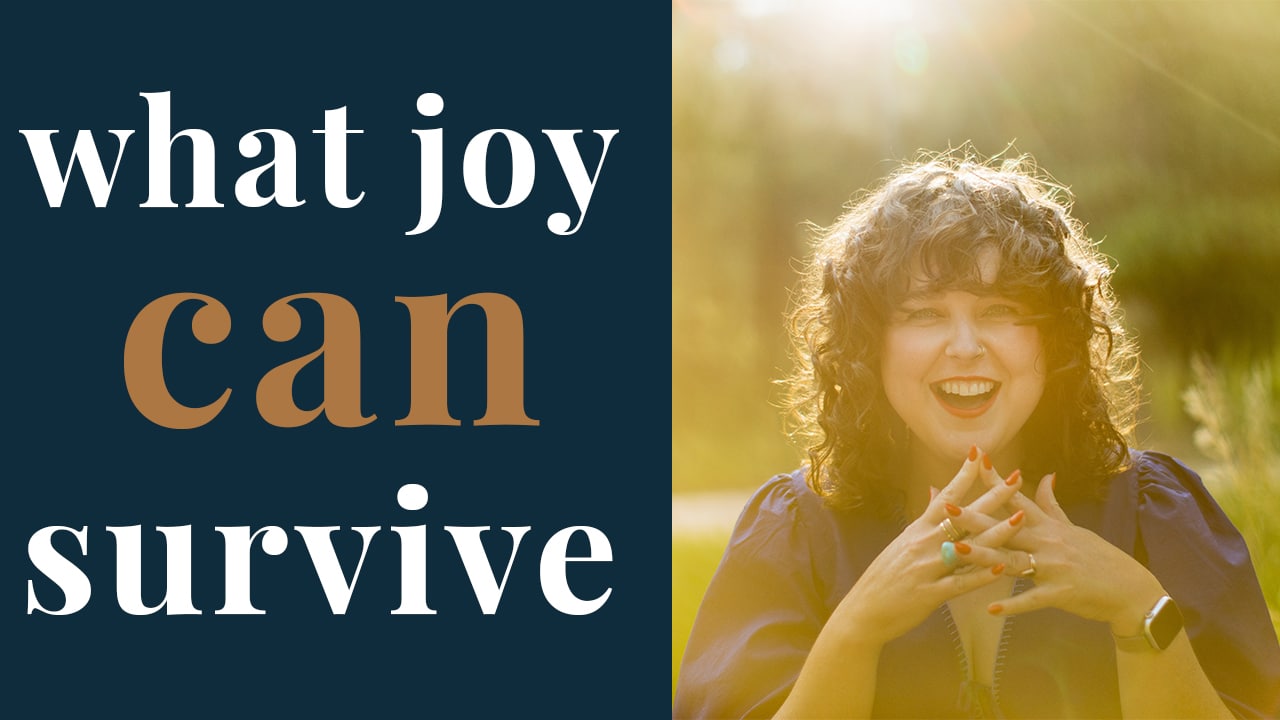
Living with chronic illness can change far more than your physical health. It can reshape your identity, your relationships, your sense of safety, and even the way you relate to your own body.
For many people with autoimmune disease, healing becomes tied to the hope of eventually becoming symptom-free. But what happens when symptoms persist? What does it mean to live fully—and even experience joy—while still navigating pain or uncertainty?
In this episode of the Autoimmune Wellness Podcast, I’m joined by K.J. Ramsey, trauma-informed therapist, author, and chronic illness advocate, to explore a different perspective on healing. Her new memoir, The Place Between Our Pains, examines the emotional and psychological realities of living with chronic illness, medical trauma, and invisible pain.
.
Watch the Episode
.
Redefining Healing Beyond Symptom Elimination
One of the most powerful themes in this conversation is the idea that healing is not always the same thing as becoming symptom-free.
K.J. shares how years of illness, delayed diagnoses, and medical gaslighting shaped her relationship with herself and her body—and how healing eventually became less about “fixing” herself and more about reconnecting with herself.
Together, we explore:
- The emotional impact of not being believed
- How chronic illness can lead to dissociation and disconnection from the body
- Why self-trust becomes essential in the healing process
- The complicated grief that can accompany chronic illness
.
The Relationship Between Joy and Grief
This episode also explores the idea that joy and pain are not opposites.
K.J. shares how creativity, journaling, and storytelling became ways to process suffering while still remaining connected to meaning, beauty, and aliveness.
Rather than waiting for perfect health before fully living, she offers a more compassionate framework—one where joy can coexist with uncertainty, limitation, and grief.
.
Creativity, Embodiment, and Chronic Illness
We also discuss how creative practices can help people reconnect with themselves during illness.
For many people living with autoimmune disease, the body can begin to feel unsafe or unpredictable. K.J. explains how practices like journaling, reflection, and creative expression can support embodiment, emotional processing, and nervous system regulation.
These practices aren’t about ignoring pain—they’re about learning how to remain present within it.
.
Resources
K.J. Ramsey
- Website: https://www.kjramsey.com
- Instagram: https://www.instagram.com/kjramseywrites
Book: The Place Between Our Pains
.
Prefer to Listen Instead?
.
Episode Timeline
00:00 – Introduction and trigger warning
01:04 – Introducing K.J. Ramsey and The Place Between Our Pains
04:33 – Identity and illness in early adulthood
09:20 – Medical gaslighting and self-trust
16:01 – Dissociation, embodiment, and learning to listen to the body
24:14 – Redefining healing and living fully with pain
32:19 – How illness changes us
40:15 – Journaling, creativity, and processing pain
52:08 – Wrap-up and closing reflections
.
Transcript
Below is the full transcript of Episode 86 of the Autoimmune Wellness Podcast.
This transcript is provided for accessibility and reference.
Title: What Joy Can Survive: Chronic Illness and Healing with K.J. Ramsey (Ep 86)
Mickey: What if healing isn’t about getting rid of pain, but about learning to live fully even when it’s still there? In her new memoir, KJ Ramsey writes about the space between suffering and meaning, and what it looks like to keep showing up for your life when it doesn’t go the way that you planned.
Mickey: Welcome to the Autoimmune Wellness Podcast. I’m your host, Mickey Trescott, and this is a space where we explore what it really looks like to live well with autoimmune disease through nourishment, lifestyle, mindset, and the stories that help us feel a little bit less alone. Before we dive in, just a quick note that this episode includes conversations about chronic illness, trauma, and experiences within the medical system that might feel very familiar to some of you, maybe even activating.
So as always, take care of yourself as you listen. You can pause, come back, skip ahead at any time. And a reminder that this podcast is not medical advice, so be sure to reach out to your own provider if you need specific support.
[00:01:04] Introducing KJ Ramsey, author of The Place Between Our Pains
Mickey: So today’s guest is somebody whose work I have been really looking forward to sharing with all of you, especially if you are navigating chronic illness, trauma, or in a season of life that just isn’t resolving as quickly as you had hoped. KJ Ramsey is a trauma-informed, body-centered licensed professional counselor. She’s an author, and by her own description, “An increasingly feral mystic who is deeply devoted to the joy of being alive.” I just love that.
She writes at the intersection of psychology, embodiment, and personal story, creating space for people to see every part of their experience, their bodies, their pain, their questions as meaningful and worth paying attention to. KJ is the author of This Too Shall Last, The Lord Is My Courage, and The Book of Common Courage.
And her newest book, The Place Between Our Pains, is out this week. It’s a memoir about living with chronic illness and learning to navigate the space between suffering and meaning in a way that feels honest and human. And as someone living with autoimmune disease herself, she brings a deeply personal perspective to conversations about pain, healing, and what it means to feel at home in your body again, something that I know so many of you listening are working towards in your own way.
This is a conversation that feels especially meaningful for this community because it invites us to think about healing a little bit differently, not as something that happens when symptoms just go away, but something that we can begin to experience right where we’re at.
So thank you so much, KJ, for being here. Welcome to the podcast.
KJ Ramsey: Thank you so much for having me. I have known about your work for a very long time, and so being able to connect with you feels, I don’t know, just really cool.
Mickey: Aw. Well, I actually had this amazing experience reading your book. I have to say, before we dive in, it felt really nostalgic in the best way. I haven’t shared you guys with KJ yet off camera, but there were so many little points of overlap that made me feel like, are we maybe the same person in a different timeline?
I went to college in Denver, I grew up in kind of a big unconventional family. We definitely had a RV, road tripped everywhere, because my parents were, like, not having it with five kids and, uh, plane flights and stuff. And then you mentioned Midlake, The Trials of Van Occupanther, which is basically the soundtrack of my college years.
So,
KJ Ramsey: Love.
Mickey: I loved all of that. Yeah.
KJ Ramsey: Yes.
Mickey: that’s, that’s the point when I, I turned to my husband and I was like, “This is weird.” Okay. And then even the illness experience, so I discovered Tetris as a way to cope, actually played last night, swimming as a way to kinda find myself back in my body. I just found myself, the whole time I read your book, like nodding along, and being excited about that.
So I’m just so familiar with, like, the locations and, you know, being sick in the same timeframe. I feel like we’re maybe a similar age. But it made the whole story feel very personal, and I just was delighted. So thank you. I wanted to say that.
KJ Ramsey: love I love also, I love especially the Van Occu Panther. like most people do not know about that album and Tetris. Mm. Such a great tool for dealing with pain.
Mickey: Yeah, like- Brings me right back, 2006. I had to look it up because I was like, “Okay, that was my junior year.” I remember it viscerally when it came out and, anyways, brought me back so I loved it.
[00:04:33] Identity and Illness
Mickey: So kind of on that note, you open your book describing what it was like to be in your 20s dealing with really debilitating pain but not being believed because your lab work wasn’t really showing anything. I had a really big reaction to that because I went through something pretty similar.
And alongside that, you were really active, suddenly being chronically ill, kind of starting your life. I also got married at 22, and I got sick at 25, so I kind of share that. Can you tell us a little bit about how being chronically ill as a young adult started to shape your sense of identity and how you navigated that?
KJ Ramsey: Yeah, that is such a good question. It’s a very painful thing, as you clearly know, to be beginning adulthood in bed while your friends are starting their careers and starting their families, and you’re, you feel like your life is on pause, and especially to have that experience while not receiving validation for why your life is stuck is, is traumatic.
You know, I’m, uh… I think mentioned that I’m a trauma therapist. I think to have that level of pain and illness and discomfort in your body at such a developmental time, and to not have the, the reasons for that illness, mm, validated and seen really the, creates the context for it to be traumatic, that, like, it feels like you can’t trust your own sense reality because you’re, you feel so sick, but you’re being told, “Well, your blood work doesn’t show X, Y, and Z, so I mean, shouldn’t actually be feeling as sick as you do.”
So I think having that happen in general is a extremely painful experience and very, very difficult to process mentally, emotionally, spiritually, in every way. And then to have it while you’re also still forming your sense of self and trying to make your way in the world is very defeating.
And so for me, that was when I started to really go to therapy and, and I began to really fall in love with writing even more because I couldn’t find anybody else. At the time. You know, this was at the beginning of, like, I was, I got sick in 2009. So Instagram started, I think, in 2011, that was when I started an account. We didn’t have as much access to one another, to other sick people, like, people who are dealing with illness. And so I didn’t know anybody else was young and as sick as me. And so writing was my attempt, it was really about surviving and trying to find other people that were experiencing this make sense of what was happening to me.
And it– that really, the creative act of writing, helped me hold on to a sense of self and to form a sense of self while it was extremely difficult to do so.
Mickey: Wow. Yeah, I can relate so much, and I, I just remember being like, “I don’t know how to find the people that this is happening to, but I know they’re out there.”
KJ Ramsey: Right. Yes, that’s how I felt
Mickey: You know?
KJ Ramsey: be, I can’t be the only one. That’s– surely that’s not true.” And now I think it is a little bit easier to find those people online. I still think it’s very difficult to experience that kind of solidarity in person for a lot of us. It’s harder to discover one another, but it is a little bit easier now to discover other people with even similar symptoms, symptom patterns, and diagnoses when you have a diagnosis, and I’m grateful for that.
Like, I’m really grateful for the way the internet has made the experience of being chronically ill somewhat less lonely.
Mickey: Yeah, 100, 100%. Yeah, ’cause it really matters to be able to plug in with somebody who has had the thing that you have, either in the past or currently. Like in the last year, I had uveitis, which affects my vision, and I actually have a close friend who experiences that too. And so being able to just text her and be like, “Am I gonna be able to see again?”
You know, and her telling me like, “Yeah, actually, you know, the drugs make you feel really weird, and your eye is gonna be, like, not seeing for a while, but like, you know, it came back for me.” So, it just that fear that I felt in that moment was just, like, so much less because of having a friend, you know?
[00:09:20] Medical Gaslighting
Mickey: I would love to chat about medical gaslighting, ’cause I know this is something that, you know, we’ve all experienced. You have this really amazing line in your book, “The world is missing out on so much goodness simply because many doctors aren’t willing to treat women as reliable observers of our own bodies.”
Like, yes. Can you just talk about that experience of, like, not being believed, and what you wish the medical system understood about patients, especially women who are living in these bodies every day, like the one moment in your book where I was just so, just beside myself in pain for you when you went to the emergency room, after being referred there by your immunologist, and they were like, “You need a psych consult and to go home.” I’ve had a similar thing happen to me, and it’s just, it’s awful.
Like, let’s talk about that.
KJ Ramsey: Oh my goodness, that moment was terrible, and like truly for, you know, people listening haven’t encountered this story in my book yet because the book’s, you know, about to be out. But it’s like, I was anaphylactic, and was sent there to help that stop. I was having recurrent severe anaphylactic shock.
And when they sent me home from the ER just saying, “All we can give you is a psych consult,” I, I went into anaphylaxis again less than 12 hours later and was brought back there in an ambulance, which they could have prevented happening. And then I was still the next day turned away again, which is so wrong on so many levels.
So that story itself is obviously extreme, but I know that you and I, and probably most people listening, have experienced this on every level of the spectrum of hard, it might not be in a life-threatening situation that we’re being completely dismissed and questioned as though we’re hysteric. But also in the every day of, you know, the first four years of me experiencing sickness, I didn’t have a diagnosis. And I left and right was told basically it’s all in your head, which is what most of us have experienced at some point.
Unless you got lucky and you had all the right blood work to start with, you probably have experienced this at some point. And even when people have the right blood work and get a diagnosis quickly, we often experience our symptoms or the severity of what we’re experiencing being minimized. So that’s been part and parcel of my illness experience for the last 17 years.
There’s this part in my acknowledgments. I’m just gonna read this. In the acknowledgments in my book, I thanked the doctors I said, “To all the doctors who ever dismissed me and my symptoms, thank you for giving me the gift of rage, to believe my body more than your prejudice, and to devote my gifts to the dignity of patients in pain.”
Because I have become who I am because of their dismissal. And I think that that’s the choice that patients like us have to face. Essentially, Do you want to live your life? And if you want to live your life and not feel utterly stuck
Mickey: and
KJ Ramsey: shrouded by a sense of shame or defeat, you have to decide to believe yourself even when no one else believes you.
And you have to become your biggest advocate and your own best friend, and your body’s best friend. Those of us who have to navigate medical gaslighting on an ongoing basis, we have to become fierce. I grieve that, and it’s like a sad thing, yes, and it’s, it’s exhausting. And I’m so, I’m proud of us, I’m so proud of us for believing ourselves anyway. And deciding a twenty-year-old shouldn’t be crawling to the bathroom. Like, to believe that or I’m thirty-seven now. You know, a thirty-seven-year-old’s knees should not be dead. Mine are.
But I am sure as hell gonna do everything in my power to be able to be as mobile as I can, as long as I can. And I, I think that there’s a lot that I would like doctors to know about what patients face when we are not adequately respected and heard. But I would first want fellow patients to know that believing yourself is the beginning of having a better life, and it is also fierce and holy to do so.
Mickey: I love that. I love it so much. And like, part of my journey, I was bedridden with debilitating musculoskeletal pain 15 years ago. Got diagnosed with Hashimoto’s and celiac, was like, “That doesn’t really fit the picture.” I knew there was something else. I fought for a couple years, and then I gave up.
But this last year, I got a diagnosis of psoriatic arthritis, and It was like, yeah Yeah. I, I know. I knew. You know?
KJ Ramsey: we
Mickey: and so I love how you…
KJ Ramsey: do, know, right? There is, I think, like,
Mickey: Yeah.
KJ Ramsey: in in, Western society in general, knowing, intuitive knowing of our own bodies
Mickey: Mm,
KJ Ramsey: our sensations and our, our inner red flags and yellow flags and all the things. Like, we are taught to not believe ourselves, women particularly. We’re taught
Mickey: mm-hmm.
KJ Ramsey: to silence our inner knowing. And being well, including owning that we have diseases and, like, trying to live well with them, it, it is actually a process of, like, choosing to believe ourselves and, reestablishing that relationship with our inner knowing and our knowing of our sensations. Its essential.
[00:16:01] The Boundary Between Feeling and Not Feeling
Mickey: Yeah, and actually it brings up a, a different question. So talk to me a little bit about, I know a lot of us with chronic illness spend a lot of time trying to dissociate from our experiences and not feel, because the feeling is so painful. But then we also have to have this practice like you’re describing of checking in and intuiting and using that to advocate for ourselves.
Like, how do you find that space?
KJ Ramsey: Yeah. So I… There’s this part in The Place Between Our Pains, in the book, I’ll read it because it’s better than whatever will come out of my mouth to begin to answer that question. Thinking about myself and early years of being sick and not having a name for why I was so sick, and all of that confusion, and feeling that depth of needing to dissociate and, like, my body not feeling like a safe place, I wrote this: “I feared my body was becoming a prison. The only way I found to part the bars of pain is to listen to my body like I would listen to my best friend.”
And I read that because when the body doesn’t feel like a safe place to exist, I think that a doorway into our bodies as safe and good homes is to consider your body as less of a problem to fix more of a person to love.
So, like, those who are listening, if you call to mind, like, your best friend or of a five-year-old
Mickey: version
KJ Ramsey: of you or a five-year-old that you know, just think of a little kid.
Mickey: Imagine
KJ Ramsey: maybe a little kid on a playground, and they are running around, having so much fun, and then fall and scrape their knee, and they are crying.
Like, how would you want to respond to that little kid? You’d probably want to be really kind. Be like, “It’s okay. It’s all right that you’re crying, we’re gonna take care of this. I’m here,” and, like, enfold them in a hug. That is how we have to learn to respond to our bodies.
And I realize, both as a fellow patient and as a trauma therapist, that that is paradoxical because for a lot of us, we feel like our bodies have betrayed us by being so sick, that our bodies are the barrier between illness and getting to be successful and getting to be what our society says is worthwhile. And at the very same time, your body, which is part of you, deserves to be treated as a friend, not an enemy.
And so moment by moment, we have an invitation to turn toward ourselves like we would turn toward our best friend. To speak to ourselves and to speak to our bodies, including the body in terrible, terrible pain, with kindness. If there’s something that I wouldn’t say to my best friend, I probably shouldn’t be saying it to my body. You know? I’m not going to speak to my best friend with contempt, so I shouldn’t speak to my body that way either.
It’s not a once-and-for-all thing. It’s a day-by-day, moment-by-moment choice to turn away from contempt and toward compassion.
Mickey: Yeah. Wow. That is like a masterclass in this issue because it really is central to anybody who is trying to heal and also not just shut off from what they’re experiencing. And if I’ve learned anything from reading your writing, it’s just how you have remained present but also kind to your body, which is really, really hard.
What we’re up against in terms of how our society trains us to talk to ourselves where we’re basically just machines that are capable of more and faster and better, and, you know, every imperfection just needs to be neutralized or even just not talked about or thought about. And so thank you so much for sharing that reframe because I think that’s really, really powerful.
KJ Ramsey: I, I share it, and I share it with passion because it works, and it works not in the sense that we can rid our bodies of disease, because it’s far more complicated than that, as you know. But it works in the sense that, we need to speak to our bodies like we would speak to our best friends, but also your body is speaking to you, and your body is telling you important things about the stress that you’re under, the inadequacies of the systems in which we live, of society around us.
Like, often we who have autoimmune diseases and others who are chronically ill, our bodies are like canaries in a coal mine. The symptoms of stress that we experience and the sickness that we experience in our bodies are sacred speech, doubting and begging us to be honest about the society around us is not built for interdependence and wholeness and love and equality, but is rather about efficiency and productivity and, you know, profit maximization and self-optimization, not necessarily the flourishing of every person and everything that lives.
And our bodies are actually bearing witness to how broken that is. Learning to listen and to talk back, it’s a dialogue, and I say that it works because learning to live this way, as though my body is good and my body is, is worthy of being heard and worthy of compassion always, always, gives me the ability to live with great joy, even in the middle miserable circumstances.
And I want people to know that that’s possible. Even when your life doesn’t get easier, you can be full of joy. It’s wild.
Mickey: Yeah, 100% cosign. I love that you make that a central part of your writing because I think if I’ve learned anything about being sick since I was so young, I thought being sick was a state that once I entered, especially chronic illness, you’re like, there’s no getting out of. You know, you’re just categorized as this sick person, especially with celiac disease, it’s like, now I can never eat X, Y, and Z again.
You really described how we can have it be a piece of us, but then also experience so many other things, like joy, that are not contingent on perfect health, you know?
KJ Ramsey: It’s true for everybody. I wouldn’t call it a privilege, but we, we who are chronically ill, we’re just confronted with the realities of being human a way that we can’t avoid. But this is actually just part of being human, like embracing pain, having a body, being part of systems that don’t lead to our flourishing, and being made to be interdependent.
These are all just facts of being human, and we just don’t get to avoid it as easily as most people around us do. So it’s also kind of equalizing in that sense. Like, we’re confronted with a task that everybody actually is confronted with, and by taking on that task of learning how to accept pain and to accept uncertainty, and that it takes work every single day, we’re actually being invited into being more fully human.
[00:24:14] Redefining Healing
Mickey: Actually the next thing I wanted to talk about was redefining healing, which what you’re saying leads into that perfectly. You talk a lot in your book about how hard it is to continue to experience illness, even despite working so hard to heal, and how remaining present in the middle of healing allows you to continue to receive love.
I love that so much. One line that I really like from the book is, “Maybe the hope of healing has never been about the removal of pain, but the recovery of full humanness, including our innate interdependence.” I love that, and it feels like it’s just a theme that’s woven throughout your book, something that really challenges a lot of what we’re told, especially in the chronic illness and wellness space.
So how has your understanding of the meaning of healing changed through all of this?
KJ Ramsey: Oof. yeah, my, my understanding of what healing might be, it continues to change, and I think I had to let my previous hope for what healing would be die, really. I think a lot of us really want healing to mean the removal of disease, the removal of challenges, the removal of obstacles and the return to a life that doesn’t have pain.
I also wanted that, because of course I did. Obviously we don’t want to hurt. Like, it doesn’t feel good, right? Disease is awful. In the memoir that I wrote, In the Place Between Our Pains, I came into this book having already been chronically ill for, at the time, 14 years. Now it’s been 17. And I still… It’s not that I had accepted that I have diagnoses that I will have for the rest of my life. I had already accepted that.
But I think that somewhere in my, in my heart, I still didn’t accept that pain would always be part of the picture, at least, like, in this bodily experience until I die. and I know that sounds really stupid, but there was, for me, in this story of coming really close to dying over and over and over again, and then, like, having to rebuild my life afterwards.
When I physically did not die, in all of those experiences of recurrent, severe anaphylactic shock, I think that my wish for a life without pain did die when, when I didn’t.
And I have come to accept now that pain is part of even healing, and healing is less about removing anything, more about being able accept that everything belongs. Everything belongs. And I, I’m saying that with tears in my eyes because, like, even… That healing can include me being able to accept and honor and learn from and inhabit the scream-level pain that happens in my dead distal femurs, like, one of the consequences of high-dose steroids that kept me alive.
So healing has changed for me. My old hope for what healing was, died, and my new experience of what healing really can be is being increasingly able to be present no matter what happens to me and increasingly and willing to be loved as I am, no matter who I become in pain.
Like, it’s hard to pin it down. I feel freed in a new way to claim that I have healed so much, even though technically I have more diseases now than when I first wrote this book. There’s a mystery there, and it’s I think, a really freeing one.
Mickey: Yeah. I’m just sitting with that and really thinking about how my difference of healing, the way that I approached it 15 years ago, it was very much editing everything. And now it’s actually very freeing and very open and more about experiencing life than it is the things on the piece of paper and the numbers or, you know, the symptoms.
So thank you for
KJ Ramsey: Yeah,
Mickey: sharing that. It’s really powerful.
KJ Ramsey: It’s, hard because… It’s hard on so many levels, but I think partly I would imagine people who are listening, it’s hard too in that, like, we want to reduce bad symptoms. Like, yeah, we want to be less sick than we are. To be clear, I’m not saying that that’s not good. I am always actively working to be less sick than I am. But yeah, there’s something so liberating when we get to just once and for all or maybe over and over, stop treating ourselves like problems to fix and start getting to just choose to be fully alive as we are.
I’m no longer waiting for my life to get easier to live my life. I’m no longer hoping that a disease will go into remission before I choose to still have a lot of incredible things that I try. Like, I think that, that just not really given a lot of room to imagine that for ourselves with the way that well-wellness culture and American culture, like, trains us to see any sickness or symptom as a failure of the self to trauma or to perhaps a failure of diligence or duty to eat cleaner or to work out enough.
Like, You can let all that go. We’re not failing by continuing to be sick. Healing is choosing to be fully alive where we are. And I do think that sometimes that leads to a massive reduction in symptoms, but it also leads to, even if symptoms stay, increase in the sense of aliveness that we carry with us every day.
And that’s the thing that’s more important than anything, getting to be alive and getting to love ourselves and others.
Mickey: Yeah. I really like how you noted on imagination. I think imagination is so powerful and something that when I’m coaching people,
KJ Ramsey: Mm-hmm.
Mickey: We work on a health vision. And a lot of things that come up for people isn’t like, “I don’t want symptoms,” it’s, “I want to live my life in this way with these people, experiencing joy through,” you know, whatever is on their list.
And there are so many things that I have been able to experience as a chronically sick person throughout the years with levels of illness on a spectrum that had nothing to do with my illness, but I was able to experience joy or connection or, like, the things that are at the top of my list. I just, I love how you said that.
[00:32:19] Illness Changing Us
Mickey: So you talk a little bit in your book, related to what we just talked about. You share a moment with one of your nurses, Sophia. She ended up having liver damage from cancer treatment. Part of your own story is being changed by some of the treatments that you received.
And Sophia told you that she wouldn’t unlive her experience because it changed how she lived. And I just, I love that, and I really relate to that. So talk a little bit about that and how chronic illness changes the way that you live through the world, but how maybe we feel attached to the, who we are now through that, you know?
KJ Ramsey: Yeah. Yeah. I’m, um, I’m tearing up with this question because, yeah, so much has changed in me. In the beginning of the book, I say, I was supposed to write a book about joy. It was supposed to be a completely different book by our publisher. We have the same publisher. Our publisher did not know that I was gonna write a memoir. Neither did I. But when I almost died, I was like, “All right. This is what this is becoming.”
But there’s this line where I’m like, “Both this book and I are among the main characters, and neither of us make it to the last page unchanged.” And what’s really cool is now from this vantage point, I get to see that it’s not only that I now have two dead bones, and a third that’s just gone. A story that’s not in the book. But it’s not just that. It’s not just that I now have lymphatic fluid on my legs that I have to manually massage. It’s not just that I’m still losing weight from all that I gained from high-dose steroids. It’s not just that.
It’s also that I am realizing now, as I face new health challenges that are really hard, that I, because of what I lived and because of the gift of creativity, to write my way through it, and to try to take what was given, take what I didn’t get to choose and have… I didn’t have a choice in at all, choose to make something from it, that now I have changed into a person who actually does trust that joy will find me no matter what happens to me.
And that can be easy to say, but, like, in the last month, you know, Mickey, I have a tumor, and I had to face the fear of like, is this cancer? And it isn’t. It’s still, it’s benign but aggressive, which I’m joking is like me I’m benign but aggressive.
And it’s serious, and it’s like I have to have part of my face reconstructed and have this thing removed. But as I faced this thing, this was my first like extremely scary thing since the stories that happened in this memoir. I got to experience new self inside of me rise up, and she was like, hey, we’re gonna be all right.
Like, we don’t know if our body’s gonna be all right, but our soul and spirit is gonna be all right. You know how to do this. You know how to get through this.” I was able to look at the future and go, “I don’t know the exact path. I don’t know what doctors I’ll see, what drugs I’ll take, how I will survive it like in the minutiae, but I do know how to move through this and feel alive and feel loved and feel supported. And therefore, no matter what happens to my body, my soul will be well.” And so I now get to read that part about what Sophia said, where we have this conversation.
I say, “Surviving sure has costly consequences.” She nods and she says, “I wouldn’t change it though. I wouldn’t unlive it because it changed how I live.” How I live has been changed, and I am so, so, grateful and glad that I get to live knowing joy will always hold me. That is the best thing in the world.
Mickey: Wow. Yeah. I mean you, wrote a book about joy, by the, by the way. I mean, I read it through every layer. I read it through every layer in you sharing your experience and the moments that are just… I think so many of us, if we were talking to a friend about our illness, it would be like, you know, the low light reel, right?
It’s like, “Here’s the bad thing. Here’s the bad thing. Here’s the bad thing.” But really in there is sprinkled in these small moments of love and kindness and joy and being seen. And, you know, you write about that rollercoaster of all the things in such a relatable and just a way that honestly helped me process so much of my own experience, which it’s, it’s really hard because on the outside people want you to say the worst part of it, at least for me in my, my life and kinda what I’m doing.
It’s like, “Well, what was it like when it was worse?” But really, the real experience is that there are parts of it that are just so human, and you really articulate that so well. So thank you.
KJ Ramsey: Thanks. Whenever I’ve gotten like reviews, from publications and stuff, I’m like waiting to see like, okay, did they notice that it’s also funny? Because it’s not just that terrible things happen to me. I kept getting reviews where there would be like harrowing account of one woman’s illness, and I’d be like, “It is harrowing, but it’s also hilarious.”
Like, there are so many moments in there where it’s like, where my nurse is like almost spilling a bedpan full of pee on herself, and we’re just like dying of laughter in the hospital. Like, funny things happen. We have hard things happen to us, and they’re terrible, but also there’s so much humor, and there’s so much love.
And its like when we learn to look those moments, when I’m watching for it, like even during this tumor situation, I’ve been like, “Well, KJ’s getting a face, a nose job.” Like, it’s helped me. It’s helped me to just make fun of it. And yes, it’s not light, and it is heavy, and it does suck, but also laughing…
I don’t know. I, in the intro, I talk about like we learned, my dad would tell us these stories around the campfire our national parks trips. And he would, they were Patrick F. McManus, these books that are like really silly and ridiculous stories, and he’d tell us these stories around the campfire that are just so funny, and we would laugh.
And we learned, and then we’d go the next day and like go on hikes and do our Junior Ranger stuff, get our Junior Ranger badges. But like we learned to love the land by laughing in the dark. And that is what I tried to– It’s not just what I tried. It’s like that’s just what I do. And I think we all can.
Like, it’s not laughter as a way to circumvent what’s real or to avoid feeling pain or grief. It’s like a laughter and a, a looking for goodness that comes right alongside the grief. And letting both belong at the same time changes us and changes the experience of being sick into a way more spacious place than it seems if you were just looking at one of us as we’re lying in bed in pain, you know?
Mickey: 100%. Yeah, I totally, I totally agree.
[00:40:15] Journaling & Processing Pain
Mickey: So a final thing I want to chat about, because this is actually something that I thought about as I was reading your book. You know, you talk about your journals, you talk about a way of using journaling as a way to process pain, reclaim your story. Specifically, I love this quote, “Choosing to count my worst days as worthy of documentation changed how I experienced them. Telling myself my own story changed how I lived it.”
Amazing. I am completely resistant to journaling, and I feel like I feel like if I write it down, it’s like like somehow permanent, I’m just, I’m I’ve always been resistant to journaling. But I’m curious. I will say I’m journaling curious after reading your book, and how you describe that process as just really supportive to the things that are important to you, which is finding joy and honoring, validating what you’ve been through.
So talk to us a little bit about journaling. Maybe even you could give us some tips about getting started for people who are maybe overwhelmed or stuck, and maybe how that could help them process what they’re going through?
KJ Ramsey: Yes. Okay, so the first thing I have to say about this is it doesn’t have to be journaling, but it does have to be something. We all need something to move our attention toward what is good and to allow ourselves to grieve what is hard, and to, to move it through because, like, that which we don’t face ends up stopping us from living, and a lot gets stagnated.
I talk about this in the book. We have to partner with pain as a creative force. If we don’t, mostly we’ll experience pain as, like, just punching us down and blocking us from what we want. This really weird thing happens when we choose to face pain, and we choose to let it fuel us, almost like prompt us to pay attention to the present moment. For me, that is journaling. But I do know that some people hate journaling. And and journaling is one of my ways. I have a couple, but…
Just as a caveat, it does not have to be journaling. But I think that we all need creative practices, even if you don’t think of yourself as somebody who is creative. We need creative practices to help us basically transform pain into life. There’s a really strange and incredible thing that happens as we do that, where pain almost holds this, like, energetic power, and when we choose to face it, we choose to write about it, but we also choose to, like, let it prompt us to do something creative to write things down, to look at our surroundings and be like, “Oh, like, the nurse was really kind to me today,” or, “I saw a Rocky Mountain bluebird, and it was beautiful.”
Like, pain can sometimes also prompt us to just keep paying attention, that power of pain ends up multiplying into aliveness, in my experience. It’s like a magic trick.
Knowing that it sounds wild, and it’s something that you have to experience for yourself. I will also say this: I also am resistant to journaling. The stack of journals that I used to write this book, that I turned into an actual manuscript. Like, it’s like this big. Like maybe 10 journals. It’s a lot. And still, most days, I feel resistant to actually stopping and writing things down.
I don’t want to feel it either. I don’t want to have to slow down in general, but I also don’t want to have to slow down and sit with how bad some things in my life feel. So I generally feel resistant to do the things that I need the most.
I name that because I think that most of us feel resistant the work that is involved in the creative practice that will liberate us, the creative practice that will actually give us more energy. It’s a paradox because most of these practices, like journaling, they take energy to do. And when you’re already sick and you’re already exhausted, you’re like, “Don’t. No, I just, like, really don’t want to.”
I also feel that, and I’m telling you it’s so helpful to take my resistance by the hand and be like, “We’re gonna sit down, though, and do this anyway.” Kind of like meal planning.
So yeah, my tips are don’t be afraid of your resistance. It’s, just human. We all feel it. And the resistance is probably a good sign that you need it. Your journals don’t have to be beautiful.
We have to choose have a place where we can say the things that we’re afraid to say, that we’re even afraid to hear ourselves say. And actually, I think those of us who are chronically ill, it’s even more important because it’s that which we suppress ends up showing up as symptoms. And I am not saying that we made ourselves sick, not saying that. I really actually do not believe that that’s true. I think it’s way more complicated than that.
I think that choosing to have a place where it’s safe to speak our fears is medicinal. It’s a way to allow the energy of stress and sickness to not get stuck, and to release, to not have to bear, keep carrying the heavy weight of what we’re living. Like, it just accumulates, and it becomes too much, and it actually physiologically becomes too much. The term for that is allostatic load.
And we who are chronically ill have a high allostatic load, like the accumulated burden of stress, and how that affects our nervous systems. So creative processes like journaling us a way to discharge stress. I find that, too, its a accessible way because, you know, so, so many of us maybe we’re too sick to be able to fully engage a movement practice day by day, maybe in certain seasons, but you can move your hand across the page, maybe, for a lot of us. There, of course,
Mickey: Or voice note.
KJ Ramsey: where you can’t, or a vo- a voice note. like, that movement
Mickey: Hmm.
KJ Ramsey: when I was in the hospital and unable to walk, and terrified, and, like, fighting to stay alive and after, stuck in bed for 10 months, barely seeing a soul. Not knowing, like, what was gonna happen to me and would, would I ever get well, being able to move my hand across a page actually had the power to day by day remind my body and soul that I wasn’t stuck. It matters. It doesn’t have to be journaling. Another thing that I do is collage. I take my discarded medical items, and so, like, I have a bag every other week from IVIG, and I take my bottles of IVIG, and I take the tubing, and I, I love the forest, which you’ll know when you read my book.
And I take, like, things from the forest and discarded medical objects, and I make a collage and then take a picture of it, and I throw it all away. Like, for me, it’s a way to honor the grief that I have to have so much treatment in my life and that grief, like, because it’s my normal to be in two 10-hour days of IVIG every other week, like, really sucks, but that’s my normal. Sometimes I don’t, like, actually… It becomes too normal. This actually holds a lot of grief. It sucks to have to live like this. My friends don’t have to live like this. And so by giving myself a creative practice like collage, I get to grieve and continuously let go of that weight of grief and make something beautiful from it anyway, and that changes how I live.
Hopefully within there, there’s tips.
Mickey: Oh yeah. No, that, that’s amazing, I’m going to think about how I can incorporate some visual… I love photography and visual documentation, and I know that that can be part of it, but also articulating the fears and the way that what’s going through my head. I’m gonna think about that.
KJ Ramsey: you
Mickey: Thank you, KJ.
KJ Ramsey: It absolutely can look a different way like that. It can be photographs. It could be like you take medical records and cut them up and, like, make a picture out of it. It
Mickey: Hmm.
KJ Ramsey: like that. But also, this therapist, you’ve probably… You’ve maybe even interviewed her at some point, Nicole Sachs, who talks about, like, journal speak, I think is how she terms it. She recommends, I think this would be a really good recommendation for you, that, like, you have a journal that you’re gonna throw away.
Mickey: Okay. Yeah.
KJ Ramsey: a
Mickey: Yeah. Yeah.
KJ Ramsey: Like, I just have
Mickey: Yeah. Okay.
KJ Ramsey: and poems, and so I’m not gonna throw
Mickey: That clicks. That clicks.
KJ Ramsey: are afraid of what this says, you literally can have a journal where you
Mickey: Okay. And
KJ Ramsey: and
Mickey: then gone.
KJ Ramsey: and
Mickey: Oh.
KJ Ramsey: then.
Mickey: Okay. Mm-hmm. Mm-hmm.
KJ Ramsey: writing it is what matters.
Mickey: Mm-hmm.
KJ Ramsey: doesn’t have to be a thing,
Mickey: You know what’s so funny? I’m a big anxiety puzzler, and I just love doing a puzzle whenever there’s, like, waiting for news, you know? Actually, I should be doing right now ’cause there’s a baby in the family, about to happen, and I’m anxious.
You know, I’m like, “When’s it gonna ha-,” you know, but you’re waiting, so I need to pull out a puzzle right now. That, this is me reminding myself. But in other high anxiety times in my life when I’m waiting for, you know, a week for news, whatever, bring out the puzzle. The second the puzzle is done, back in the box, like, there’s no, “I don’t want to see it as a picture,” you know?
KJ Ramsey: Mm-hmm.
Mickey: don’t know. And, my partner is just like, it drives him crazy. But I’m like, I don’t know. It’s a process, and then the puzzle’s done. It goes… The… It, it helps me and, and my favorite thing is the second the last piece goes in, it is deconstructed. Like,
KJ Ramsey: I love that.
Mickey: I don’t know. I’m weird. But, anyways, I really like the recommendation of throwing away the journal,
KJ Ramsey: It
Mickey: or the pages because I feel like that clicks for me.
I think it’s the forever tangible revisiting nature of it that I, I’m like, “I don’t really want that.”
KJ Ramsey: You don’t have
Mickey: but
KJ Ramsey: that’s too much, you don’t
Mickey: mm-hmm.
KJ Ramsey: to have it. But you can absolutely write it down, tear it out,
Mickey: Yeah. Yeah.
KJ Ramsey: feels, if you’re like, “I’m in a particularly terrible season or day,” burn that shit.
Mickey: Yeah, yeah, there could be a ceremony. I love that. I’m li- I’m like, there could be a ceremony. Okay. Okay. Okay.
KJ Ramsey: those rituals have so much power to help us release
Mickey: Mm-hmm. Mm-hmm. Mm-hmm.
KJ Ramsey: So
Mickey: Oh my gosh.
KJ Ramsey: Let it be whatever you need it to be.
Mickey: I love this so much, KJ.
[00:52:08] Wrap-Up and Closing
Mickey: I know we could talk forever, but I don’t want to keep you all day. Thank you so much. Like, for sure, this is one of the raddest conversations I’ve had for this podcast so far. I am
KJ Ramsey: Thank
Mickey: grateful that we connected. You guys, this book is just incredibly honest. It’s in a way that I think a lot of you are going to feel seen.
There are so many moments where KJ just puts into words things that I think we’ve all experienced that are just really hard to articulate, especially when it comes to living in bodies that just, like, don’t play by the rules, right?
KJ Ramsey: Yes.
Mickey: guys, this book, The Place Between Our Pains, if you’re not watching on YouTube, it’s out now. I truly recommend it to anybody who’s navigating chronic illness, recovery. Maybe you’re trying to make sense of a life when it doesn’t go the way that you planned. It’s raw, thoughtful, again, really, really funny. It’s the kind of book that stays with you. And KJ, I would love for you to just tell everybody where they can find the book and how they can connect with you.
KJ Ramsey: Yeah. Well, thank you so, so much for all of that. God, this conversation has been so much fun. You can find me and The Place Between Our Pains at kjramsey.com, then I’m on social media all over the place @kjramsaywrites.
Mickey: Awesome. Well, I will put all of those links in the show notes. Thanks to everybody for listening. If this episode resonated with you, I would love for you to share it with somebody who might need it, and maybe pick up two copies of KJ’s new book and hand it to your friend, ’cause it’s really important work.
I will see you next time. Bye, everybody.





0 comments