
When living with autoimmune disease, most of your focus naturally stays on what’s happening in your own body—symptoms, treatments, daily routines, and the choices that help you feel your best. But the reality is, autoimmune care is also shaped by forces far beyond the individual.
Research determines what treatments are explored (and which are overlooked). Advocacy influences funding, policy, and access to care. And community education shapes how information is shared, understood, and applied in real life.
In this Quarter 2 Community Update episode of the Autoimmune Wellness Podcast, we zoom out to explore what’s happening across the autoimmune landscape right now—through the lenses of research, advocacy, and community. This post expands on that conversation and highlights the key themes shaping autoimmune care today.
.
Watch the Episode
.
About the Guests
Each quarterly update follows a consistent format, bringing together three expert voices who help interpret what’s happening across the autoimmune space:
Jamie-Nicole Martin, chronic illness advocate and founder of the AIP BIPOC Network, shares updates on advocacy efforts, policy work, and community-based initiatives.
Sybil Cooper, PhD, immunologist and AIP Certified Coach, translates emerging research into clear, actionable insights.
Jaime Hartman, co-teacher of the AIP Certified Coach Program and host of the AIP Summit, shares trends across the AIP community, including education, practitioner support, and global growth.
Together, these perspectives help you stay connected to the bigger picture—without overwhelm.
.
Research: A New Era of Precision Treatment
In this quarter’s research segment, Sybil Cooper, PhD introduces CAR-T therapy—one of the most exciting emerging areas in autoimmune research.
Unlike traditional treatments that broadly suppress the immune system, CAR-T therapy works by reprogramming a person’s own T cells to specifically target the immune cells responsible for autoimmune activity. This level of precision could reduce side effects and potentially change how autoimmune disease is treated in the future.
Early research suggests that CAR-T may not only reduce symptoms but could lead to extended remission in certain conditions—something that represents a major shift from symptom management toward disease modification.
While still in clinical trials, this research highlights a growing movement toward more targeted, individualized therapies in autoimmune care.
.
Advocacy: Why Systems-Level Change Matters
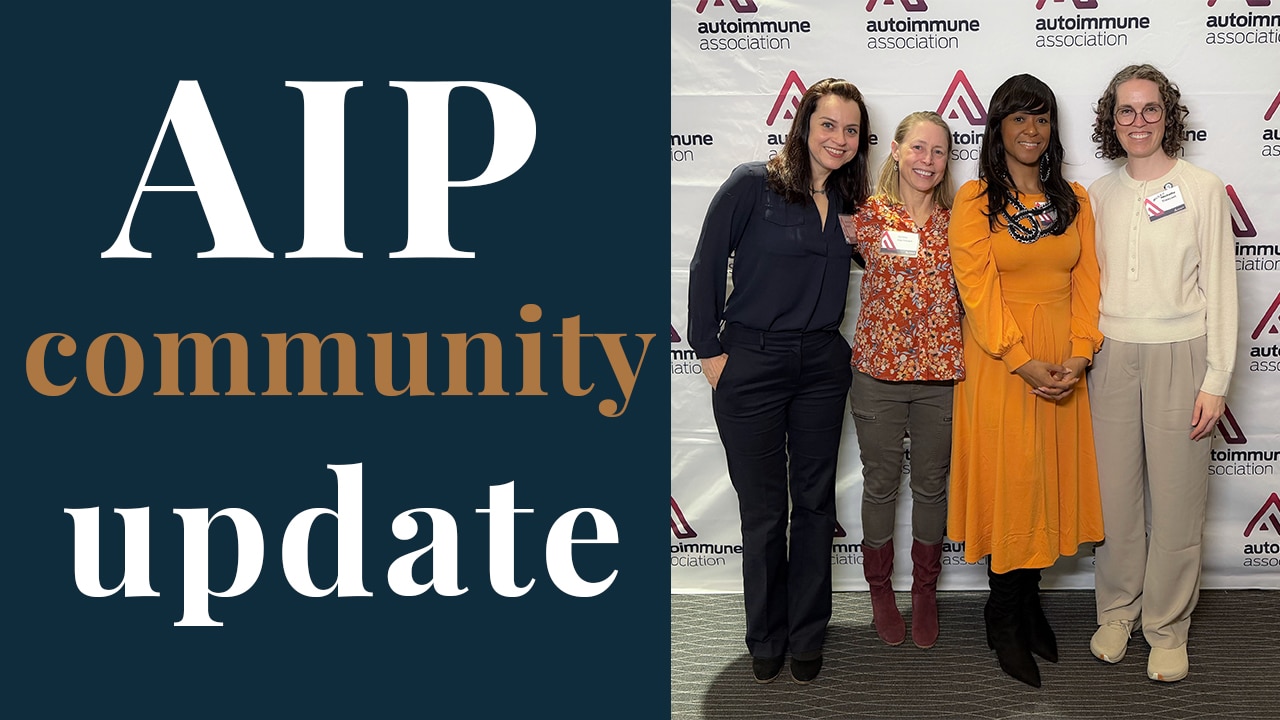
In the advocacy segment, Jamie-Nicole Martin shares insights from recent work in Washington, DC with the Autoimmune Association, where advocates gathered to push for systemic change in autoimmune research and healthcare policy.
Key priorities included:
- Increased funding for the Office of Autoimmune Disease Research at the NIH
- Creating a coordinated national research strategy across autoimmune conditions
- Addressing barriers like step therapy and insurance limitations
- Improving affordability through policy changes like the Help Copays Act
These efforts highlight an important reality: while healing happens at the individual level, access to care is shaped by systems.
Jamie also shares updates from community-driven initiatives like ROCK Wellness Weekend in Houston, including:
- ROCK Summit — bringing together practitioners, researchers, and advocates
- ROCK the Block — a free, community-facing health event connecting people with resources
These events demonstrate how advocacy can be both systemic and deeply local—creating real change in how people access care and information.
.
Community Education: How AIP Support Is Evolving
In the final segment, Jaime Hartman shares how the AIP community continues to expand and evolve.
Key trends include:
- A growing global community of AIP practitioners and coaches
- Increasing diversity in practitioner backgrounds (nutrition, fitness, mental health, medicine)
- More focus on personalized support, especially during reintroductions
- Expanded education beyond food to include lifestyle, hormones, and life-stage support
One major theme is the increasing role of AIP Certified Coaches in helping people navigate challenges that require individualized guidance.
Jaime also highlights how both the AIP Summit and practitioner training programs are evolving to meet the needs of a more connected, global community—making support more accessible than ever before.
.
Resources
- AIP BIPOC Network (events, advocacy, and community programs)
- AIP BIPOC Network (donation link)
- Autoimmune Association (advocacy resources)
- Office of Autoimmune Disease Research (NIH)
- AIP Summit (replays, community access, and seasonal encores)
- AIP Certified Coach Program & Practitioner Directory
.
Episode Timeline
00:00 – Introduction to the Quarterly Community Update series
01:10 – Meet the recurring contributors
02:31 – Research update with Sybil Cooper, PhD
03:07 – What is CAR-T therapy?
07:08 – Future of CAR-T for autoimmune disease
10:33 – Advocacy update with Jamie-Nicole Martin
11:25 – Autoimmune Association fly-in and policy efforts
16:25 – ROCK Summit & ROCK the Block recap
20:07 – What’s next for AIP BIPOC Network
21:49 – Community trends with Jaime Hartman
22:47 – How AIP Certified Coaches support clients
25:59 – Trends in the AIP coaching community
28:50 – How to find an AIP Certified Coach
32:02 – Wrap-up and closing reflections
.
Prefer to Listen Instead of Watch?
.
Episode Transcript
Below is the full transcript of this episode of the Autoimmune Wellness Podcast.This transcript is provided for accessibility and reference.
AIP Community Q2 Update: Events, Advocacy & Research (Ep 081)
Mickey Trescott: Autoimmune wellness doesn’t just happen in isolation. It’s shaped by a constantly evolving landscape of research, advocacy, and community. And while most of us are focused on what’s right in front of us, managing our symptoms, making daily decisions, cooking for ourselves, and figuring out what works, there are also bigger shifts happening in the background that directly impact the care that we receive and the options available to us.
That’s what this series is all about.
Mickey Trescott: Welcome back to the Autoimmune Wellness Podcast. I’m your host, Mickey Trescott. This is our quarter two community update, part of a series where we take a step back, zoom out, and look at what’s happening across the autoimmune space in a way that feels grounded, relevant, and accessible.
Each quarter we focus on three areas that are shaping autoimmune care in real time: research, advocacy, and community. The details might change, but these pillars and the voices guiding us through them remain consistent.
If you tuned into the quarter one update, these voices will be familiar, but if not, I’ll introduce them again right now.
[00:01:10] The Regular Contributors: Sybil Cooper, PhD, Jamie-Nicole Martin, and Jaime Hartman
Mickey Trescott: First, Sybil Cooper joins us to help break down what’s happening on the research side. Sybil is a PhD trained immunologist, an AIP Certified Coach and a functional medicine trained health coach. She brings together scientific expertise and lived experience to translate complex research into something that is relevant and actionable.
Next, Jamie-Nicole Martin joins us to talk about advocacy and autoimmune awareness. Jamie is a chronic illness advocate and the founder and CEO of the AIP BIPOC Network. Through her work, she focuses on building community, increasing access, and creating more equitable and inclusive support systems for people living with autoimmune disease.
And finally, Jamie Hartman joins us to share what’s happening across the broader AIP community. Jamie is a national board certified health and wellness coach and my partner and co-teacher in the AIP Certified Coach program. With a background in educational psychology and decades of experience in teaching and program development, she plays a key role in shaping how AIP education is delivered and how this community continues to grow.
Before we dive in, a quick reminder that this podcast is intended for educational and informational purposes only. These conversations are not meant to diagnose, treat, or replace medical care, and always consult with your healthcare provider before making changes to your diet, lifestyle, or treatment plan.
[00:02:31] Segment 1: Research Update with Sybil Cooper, PhD
Mickey Trescott: To start this update, I want to zoom out a bit and talk about something that’s happening on the research side that’s been getting a lot of attention. And that’s CAR-T therapy. Now, this is one of those topics that can sound really technical or even a little intimidating at first, but it’s also one of the most exciting areas of research right now, especially as scientists begin to explore how it might apply to autoimmune disease.
So to help us understand what this actually means and why it matters, we’re going to get immunologist Sybil Cooper on the line.
Sybil. Thank you so much for being here.
Sybil Cooper, PhD: Oh, thank you for having me.
[00:03:07] Introducting CAR-T Therapy for Autoimmune Disease
Mickey Trescott: So we’re going to jump in and just start with some basics. CAR-T therapy is something people are starting to hear about more, especially in the autoimmune community, but it can sound really complex. Can you explain what it is in a way that helps us understand what’s happening?
Sybil Cooper, PhD: So we have two types of lymphocytes. T cells and B cells. B cells are producing all the antibodies that we know and love that we’re often tracking when someone has an autoimmune disease. T cells are our soldiers that are going to go out and fight directly on the front line to kill tumor cells, virally infected cells.
They also provide help in the form of various growth factors for the B cells so that the B cells can do their job. So what we’re trying to do, instead of having our T cells go out and target a cancer cell or target a virally infected cell, we are going to change those GPS coordinates in our T cell and direct them to kill the B cells that are producing these rogue antibodies that are leading to autoimmune conditions such as lupus and myasthenia.
So think of it as now we’re not just giving them the city that we want them to go to. We’re giving them the precise coordinates, the exact house on the street, in the town, in the county, in the state, that we want those cells to target.
Mickey Trescott: When I learned about it, traditional medications that treat autoimmune disease are pretty systemic, and even with immunosuppression, its very broad. Right? And so I love how you described that as so targeted.
And the history of CAR-T is in the context of cancer. Can you talk a little bit about what makes this approach so interesting or promising for conditions like autoimmune disease where the immune system just has a little misdirection in that GPS coordinate?
Sybil Cooper, PhD: Yeah, it’s actually simpler with less complications to apply it to autoimmunity. Because with cancer you have a very large tumor burden. So in order to make space for the CAR-T cells that we’re injecting, and those T cells come from the person. They’re modified and then they’re put back into the person. So this is definitely precision medicine. We call that an autologous T-cell transfer.
So you have to make room for those lymphocytes in the cancer patient. So they have to go through a radiation, and that presents long-term health consequences. We don’t have to do that for autoimmunity because the number of cells that are misbehaving are very small. And so it’s actually done in an outpatient infusion center. The symptoms that most people report even in the controls are just some fever, fatigue, muscle aches for 24 hours. People felt well enough to go back to work.
So in that sense it’s much easier to implement CAR-T therapy for autoimmunity than it is for cancer. And as you pointed out, the drawbacks of our current therapies is that they’re systemic and it leaves the person often susceptible to other infections, right? And the more precise we can be, the less of those side effects are anticipated.
Mickey Trescott: Well, I’m just so grateful to hear about this research because we have so many people in the autoimmune community who are not experiencing a relief from their symptoms, sometimes very debilitating. I also want to clarify that this is a therapy that right now is really being studied, it’s not really something that everybody has access to, but if you have a certain condition, you might be able to get in a clinical trial.
[00:07:08] The Future of CAR-T for Autoimmune Disease
Mickey Trescott: Sybil, with somebody living with autoimmune disease, how should we think about CAR-T right now? Is this still really in the experimental category or something that could realistically change treatment options in the near future for us?
Sybil Cooper, PhD: So up until last year I think there were several phase two trials, and I think the one for myasthenia was moving into phase three, which means they’re actually getting pretty close. So the early studies are done with just a handful of patients, you know, 3, 5, 10, 15 people in order to show that it’s safe in the short term.
And then the next phase is to determine what is the best sequence of events. For a lot of these, it’s like weekly infusions for six weeks and then the next phase after that is doing the double blind placebo controlled trials where you actually get the scientific data to show that the response rate that you get with the CAR-T therapy is better than what you get with placebo.
And that way the people don’t know what they’re getting and their physicians don’t know what they’re getting. And so after that waiting, six months, a year, two years, three years to see what the outcomes are, how long is remission. But it’s really the first time that I think as a whole, anyone has ever dared to think of a cure for an autoimmune disease as opposed to management. And so the data has been pretty compelling so far that people are disease free up until 18 months to two years. I think for the lupus and the myasthenia trials. For myasthenia, I think they had to do a second infusion. And granted, we’re talking about two patients. So the key is to see how broadly this data applies to 75 or 85 or 90% of people with myasthenia or people with Lupus.
But it is extremely, extremely promising and that the side effects are very, very minor. And we would anticipate that the long-term effects are very minor as well compared to like using CAR-T and cancer treatments.
Mickey Trescott: Yeah. Thank you so much for breaking this down for us. I know there’s a segment of our community who really don’t experience help with a lot of medical interventions, and so this is really exciting new research coming down the pipeline. What it sounds like to me is that they’ve figured out a way to either temporarily or potentially long term, make the immune system forget that original mismatch, which is just such an interesting way to think about solving this problem long term.
I’m really excited about this research and I appreciate how you made something that feels really complex, understandable. You definitely have a gift for that. So thank you so much for being here.
Sybil Cooper, PhD: Thank you.
Mickey Trescott: and sharing with
Sybil Cooper, PhD: I enjoy it.
Mickey Trescott: I think that what stands out to me after that conversation is this, while research like this is incredibly promising, it also highlights how important that autoimmune disease continues to be a priority in research, funding, and policy.
Because the reality is progress doesn’t just happen in the lab, it also happens through advocacy.
[00:10:33] Segment 2: Jamie-Nicole Martin–Autoimmune Advocacy
Mickey Trescott: So for this next segment, I want to shift to that side of the conversation. I’m really excited to bring in Jamie Nicole Martin. Jamie is a chronic illness advocate and the founder and CEO of the AIP BIPOC Network.
She’s someone who is actively working to make autoimmune disease more visible, not just in our communities, but at the systems level. We were actually just together in Washington DC for the Autoimmune Association Advocacy fly-in, so this is all very fresh.
Alright, let’s get Jamie on the line.
Jamie, it is so good to have you here. How are you?
Jamie-Nicole Martin: Thank you for having me. I’m doing wonderful.
Mickey Trescott: And we were just together in DC and I think for a lot of people listening that’s might be something they’ve never even heard of before, a fly-in. Can you share a little bit about what that experience was and what the purpose of that kind of advocacy work is?
[00:11:25] Autoimmune Association Fly-In Recap
Jamie-Nicole Martin: Absolutely. So in general, we went with the Autoimmune Association, but in general, several advocacy organizations do what we call fly-ins, where they fly in advocates from across the country to come and advocate for a particular issue. And so, for this fly-in, we were advocating for all of those across the nation with autoimmune disease, I believe.
The Autoimmune Association says over 50 million people who have it in the United States.
Mickey Trescott: So Jamie, can you tell us just in brief a little bit about some of the legislation that we were advocating for on Capitol Hill?
Jamie-Nicole Martin: The primary one was advocating for more funding for the Office of Autoimmune Disease Research. And so we’re excited that we have that because we only had that established a couple of years ago. It sits under NIH. And so it’s basically about developing a national autoimmune research strategy, of identifying those gaps across the diseases because there’s over a hundred different types of autoimmune disease. So unlike, I guess diseases like cancer, there’s no defined strategy. There’s no defined database to coordinate all of those efforts, which really is a barrier to creating defined research that we can all use and benefit from, and supporting a shared data infrastructure.
Right now we have data that is basically siloed in different areas where we’re all doing our individual research, different organizations, different institutions, but it’s not centralized, so we can benefit from that research and move the needle forward.
Mickey Trescott: Jamie, I was shocked to find out that within the NIH, so cancer affects 30 million Americans and they get $7.5 billion every year in funding for research. You guys, autoimmune disease affects 50 million Americans. That Office of Autoimmune Disease Research that was just started in 2023, they only get $10 million dollars and I think they’re asking for $180, which is like a rounding error when we look at the NIH budget.
So I think, yeah, Jamie, you did a great job just talking about just how wild it is and some of the barriers, it’s not that people don’t want that research or they don’t know that it’s important. It’s just that autoimmune disease, ’cause our experiences as patients, we get diagnosed by all these different specialties. We know how frustrating it is with the medical system because they don’t understand us. Well it’s the same issue in the research side.
And so, yeah, that’s what we’re doing is doing some advocacy work to help collaborate between all of those specialties and help develop some more treatments and studies and like diet and lifestyle studies are very popular, so of course that’s the thing that we are all really excited about.
So, right, Jamie?
Jamie-Nicole Martin: Absolutely. And some of the other issues that we advocated for were step therapy. If you’ve never heard of that, it’s where even though you and your doctor agreed that there’s a certain medication that would work best for you for whatever reason, we all know the reason. Your insurance company wants you to start at the lowest level of medication and work your way up.
This can affect patients in many different ways. If you switch insurance companies and you’ve already gone through that process and you’re now on a medication that works for you, if you switch insurance companies, sometimes they make you start all over. So now you have to go through the process of going through flares medications not working just because you were forced for whatever reason to switch insurance companies.
Another one briefly was the Help Copays Act where we are able to receive rebates to go against our deductible for our, our medications. And the, for whatever reason, the insurance company is not applying that to our deductible. So we end up paying more out of pocket than we originally anticipated. And those rebates are are given to help us with the financial burden of those medications. And it’s not passed along to us in the, in the long run.
And then finally, 340B, its a program with community clinics, hospitals to provide reduced cost to prescription medication to patients, but not all the time are those companies or those community clinics or clinics in general passing that savings onto the patient.
And so that’s part of why Mickey and I went to this fly in. So we can advocate for those who are facing this issues on a different level than just the individual level through the Autoimmune Protocol.
Mickey Trescott: Thanks for explaining that. Jamie and I think anybody who has a medication that is very specialized to treat their autoimmune disease, you probably have come across some of these issues with rebates and step therapy, and these are things that really affect a lot of autoimmune patients and their ability to connect with the medication that helps them live their best lives in collaboration with their healthcare provider. There’s actually a lot of great options that people don’t access to these days. So we’re trying to help make that better.
So Jamie, alongside this systems level work, you’re also doing so much to bring advocacy into your community in a very tangible way.
[00:16:25] ROCK the Block and ROCK Summit Event Recaps
Mickey Trescott: We talked last time about the two ROCK events that you were about to have in Houston. Can you give us a little recap and tell us about how those went and what stood out to you?
Jamie-Nicole Martin: Absolutely. I’m so excited to talk about that as well. I’ll talk about Saturday first, which is Rock the Block, Reaching Our Communities and Kids, community facing. We had over 400 participants. We had over 50 vendors. And I say vendors, but they were access to resources that the community actually needs. And we had blood pressure checks, blood sugar checks, information on autoimmune disease, anything you can possibly want from maternal health to senior health. And we had a great time doing it.
So what I, don’t want to get emotional about it, love most about this event is the look on people’s eyes when I explain why, and they made that connection, oh, something may be wrong with me. Oh, I need to tell this to my doctor. They were going to the doctor, not even describing the symptoms because they felt as though, oh, it just runs in my family. Oh, it’s hereditary, not making that connection. So through that event, we were able to make that connection.
And so the day before, non-community facing, with other healthcare providers, practitioners, we had the ROCK Summit. The ROCK in that instance stands for Research, Opportunity, Collaboration and Knowledge. We had the new director of the Houston Health Department come out and give our keynote. What I loved most about that, it seems like, Mickey, that everybody is in alignment with the shift that we have been saying for a long time about community care and getting the community involved. There was a lot of talk about community assessment, addressing what the community needs are and also involving them in the process.
I’m so excited not only about the event, the collaboration part afterwards. But a lot of good things have come from that event alone. And I’m excited to share what we’ll be doing for the rest of the year.
Mickey Trescott: Wow, Jamie, I can tell just hearing you talk about it really lights you up. Being in your community and being around people and seeing those aha moments. So honestly, you are the person who really embodies that like advocacy isn’t just one thing, right?
Jamie-Nicole Martin: Absolutely.
Mickey Trescott: I think has been really incredible. So great work to you and really putting all of that together and bringing everybody together to really help people figure things out and live a healthier life. I love that.
Jamie-Nicole Martin: I just wanted to say one thing about that Mickey, because I always have to tie it back together, especially for this particular podcast, it’s again, important that we address the individual level and the systemic level by doing things, by going to the fly in. But we also can’t wait, right? And then that was my thing. We can’t wait for others to come and save us. That is part of it.
But how I got involved in this in the first place is because at the individual level, you were doing this work before I was. And so I just, I just want to highlight that. And if it had not been for you, we wouldn’t be doing this work.
So putting the power back in our hands, sometimes with chronic illness, we feel as though, especially autoimmune disease. We feel as though we don’t have any power. So empowering people at the individual level is what you have been doing for years before I was even thinking of going down this path. So I just wanted to tie it back to you and say thank you again for that.
Mickey Trescott: Oh, Jamie, you’re too sweet. This is really the ripple effect, right? Is talking about just our autoimmune disease with our friends. That’s how this started for me. And now we’re going to Capitol Hill, we’re working in our communities and everybody listening is a part of this.
So, I hope that everybody can get involved and be excited about this ’cause really we’re all just trying to make it better for the next person. But thanks for those kind words, Jamie.
[00:20:07] What is Next for the AIP BIPOC Network
Mickey Trescott: Can you tell us, I know you’re always up to something. Whenever, you guys, Jamie and I email a little bit back and forth about just what’s going on and Jamie’s emails about what she’s doing as a single person running this organization, she’s got helpers, but I will tell you, she’s got a lot on her plate. She’s always up to something.
What are you up to, Jamie? What’s coming soon?
Jamie-Nicole Martin: One of the things we had, at Rock the Block were breakout sessions and workshops. One of those sessions was called Worthy Beyond the Flare, because oftentimes, as I mentioned, the mental burden that comes with dealing with autoimmune disease is sometimes heavy and so we have started partnering with a organization here called Positive Express, with the certified counselor to do in-person live workshops here quarterly. Here in Houston, we have our first one coming. On the 18th, if you go to our website on our events page, the address is listed there.
Another collaboration that we have made is that we partnered with the with MD Anderson Cancer Center. We’ll be, partnering with them to create and collaborate on events, for the community. Advocating for better health and wellness through programs like fitness, wellness workshops, sleep health workshops, everything that we advocate here for, and, for autoimmune disease.
Mickey Trescott: Oh my gosh, Jamie, that’s so great and thank you so much for the work that you’re doing, for bringing this side of autoimmune wellness into the conversation. I think it’s something that can feel really far away to people, but you make it feel really tangible and accessible, and I hope that for everybody listening who’s not in Houston they are feeling inspired to look into organizations that are doing this type of work in their communities, or spoiler alert, like you might be able to be a part of bringing this to your community.
Jamie, just thank you so much for being here. It’s been great.
Jamie-Nicole Martin: Thank you so much for having me.
[00:21:49] Segment 3 : Jaime Hartman — AIP Certified Coaches & Community Trends
Mickey Trescott: And now I want to bring in somebody who always has such a unique perspective on what’s happening across the AIP community.
Jamie Hartman is the organizer of the AIP Summit, she’s also the lead instructor for the AIP Certified Coach Training Program. She works closely with both practitioners and individuals navigating AIP. So she really has a front row seat to what people are struggling with and what’s actually helping them move forward.
We’re going to talk a little bit about the role of coaching, what Jamie is seeing in the latest AIP Certified Coach cohort, and how you can find the right kind of support if you’re feeling stuck.
Alright, let’s bring Jamie on.
Jamie, I am so excited to have you back for this quarter two update. You always have such a unique perspective on what’s happening across the AIP community, both through your work in the AIP Summit and in training these AIP Certified Coaches. So let’s start with the role of coaching itself.
[00:22:47] How AIP Certified Coaches Are Offering Support Right Now
Mickey Trescott: From your perspective, running the AIP Summit and working directly with clients, how can AIP Certified Coaches really help people experience success? And what are some of the most common obstacles or situations where having a coach really makes a difference?
Jaime Hartman: Well, thanks for having me here, first of all, I’m excited to share and always good to talk to you.
The thing I see the most when I’m meeting people who are doing AIP and looking for support, whether it’s in the summit or my own practice or the by extension talking to AIP Certified Coaches, is that people benefit from an AIP Certified Coach when they get stuck. And they can get stuck in a lot of different places.
One of the places I see people getting stuck, I hear about people getting stuck a lot, is in the reintroduction phase. I’m always hearing about people who say, I can’t reintroduce anything. Like nothing is working for me. Or they don’t know how to go about doing it.
They’re just sort of deciding maybe I just have to keep eating the elimination way forever. And I can say with all of the experience that I’ve had, working with countless people and talking to countless people through the AIP Summit, working with my own clients that I’ve never had anyone who was not able to reintroduce something and usually many things, but they may need some support in figuring out how do they identify what’s actually going on.
They might need to reconsider how they’re doing their reintroductions. They may need something entirely unique to them. You know, we’re all really, really unique and this is where I think that people can really, really benefit from having an AIP Certified Coach support them in that. That getting stuck in the reintroduction phase in particular.
Another place I see people getting stuck is in a cycle of doing AIP over and over, kind of doing AIP and then not doing it, and then doing it again and not doing it. And we know that’s really not the best way to live your life. We really want people to be able to use AIP as a way to get to a long-term sustainable, enjoyable, supportive way of eating for the long run. And that’s another place where people can get stuck in that cycle. And an AIP Certified Coach can really help.
So yeah, I think those are the big areas where I’m seeing common threads that are really individual that really require unique, personalized support, but an AIP Certified Coach is prepared to help somebody with each of those areas and has probably seen somebody with something similar or can apply some common lessons that they’ve learned to those unique situations.
Mickey Trescott: Yeah, that’s such an important point, especially because I don’t think people realize how much support can change their experience. So not just getting through that elimination, I think that’s what people think is the hard part. But like you said, reintroductions I actually think are much more tricky navigating just because that’s where the nuance and the personalization and where your road is going to diverge from everybody you’ve heard about doing AIP or all of these resources, everybody’s doing more or less the same thing, but then in reintroductions it, it really gets personal really quickly. A coach can really help people troubleshoot and move forward with confidence.
[00:25:59] Trends From the Current AIP Certified Coach Cohort
Mickey Trescott: And actually, speaking of the coaching community, we have a spring class you and I are teaching right now in AIP Certified Coach, they’re just about to wrap up. Can you share a little bit about what you’re noticing in this current group?
Jaime Hartman: Yeah, and this current group and the one that preceded at one really cool thing I noticed when I was kinda tallying up where everybody was from and counting was that more than half of our current students and the cohort right behind them are joining us from outside of North America. We obviously still have a really strong contingent of coaches in the United States and in Canada, but we’re seeing people who are joining from all over the world. So the global reach of the AIP movement is really expanding.
It’s really exciting to see people coming from all different parts of the world and they’re coming to us with a variety of language backgrounds, which is super fascinating. We’ve seen the last couple cohorts, people who tell us, English is not something I’m super confident in speaking, but I know how to use some tools. I know how to use the technology to take the transcripts and translate them and know how to reach out for support. And they’re making it work, which is just so exciting. So seeing that marriage of people, like real people and then using the technology tools is just so cool and so exciting.
Also, we’re seeing a lot of variety in different types of practitioners that are taking the program and becoming AIP Certified Coaches. One thing your listeners should know is that to be an AIP Certified Coach, you have to already have some kind of a base training, something that you are qualified to do. A lot of us are health coaches or nutritionists or some kind of a nutrition professional, but we also have people become AIP Certified Coaches who are like therapists or fitness professionals or even doctors.
It’s really getting to be a diverse group of professionals who are learning this common protocol, and as we were talking about in the first part of this, learning how to help people make it their own. Doing that through their own lens of whatever their specialty is, where they’re coming from, applying their practice to it is so exciting to see in that wide range really like enlivens the learning environment too, to have people coming in who have got training in all kinds of different things and are doing all kinds of cool things in their practice already.
Mickey Trescott: Yeah, I completely agree. It really speaks to how this work that we’re doing is really spreading and evolving and how these different types of practitioners and language backgrounds and people around the world are really recognizing the value in the approach, which feels really special to be a part of that.
[00:28:50] How to Connect with the Best AIP Certified Coach for You
Mickey Trescott: For anybody listening who’s thinking, okay, I want this type of support, even if maybe they’re somewhere else in the world where they thought that all of the AIP universe is actually in the US. Now, it’s actually very spread around the world. Let’s make this really practical. Do you have any tips for how somebody can connect with an AIP Certified Coach who fits their specific needs?
Jaime Hartman: Yeah, I have two tips. So one is that they can go to the website, aipcertified.com, and there they can learn about what an AIP Certified Coach is and the program and stuff. But if they click on the directory, that’ll take them into an amazing resource there. You can browse on the directory. They can browse the directory by location or by base certification.
So maybe they’re specifically looking for like, a personal trainer and they want to see who’s got that background and exercise that can help me implement movement into my protocol or whatever the example might be. And they can go by location remembering that most of us or many of us work virtually. So that may or may not be really relevant to you.
You might also look broadly around the world as well. You can also search by keyword. What that means is that you can type in a word or a phrase and it will bring up the profiles of the coaches who used that keyword somewhere in their About Me section or in their credentials and their other certifications.
Like so for example, you have a specific condition and you’d really like to consider working with a coach who’s had some additional training or expertise with that condition, give it a try. Type your condition in. Maybe there’ll be somebody in there who has that in their profile that they talked about.
Or another example would be somebody who has interest in a specific stage of life that they’re at. I know a lot of us are dealing with perimenopause or menopause, so that might be a word you could search for, and perhaps other coaches who have had additional training in menopause certifications might be of interest to you. It narrows it down. You still have to probably do a little bit of work to read through the bios and learn about each person, but it would help you then just get a smaller list of folks to start with. So that’s one the directory.
And then the other place I would tell people to go is to AIPsummit.com. That’s the place where we house all of our resources. Each year we come together and do an annual summit where AIP Certified Coaches present a talk on a specific topic that they’re interested in. They’re all recorded, they’re all archived, and we do periodic encores of those for free. Or people can join the membership community for a small fee and they can look at all the recordings from all of the years in the past.
They can also post questions in the community there. So it’s a great way to kinda. In quotation marks meet, a bunch of AIP Certified Coaches, and you might meet one there that really speaks to you and suits your needs and would be somebody you want to investigate working with.
Mickey Trescott: Jamie, thank you so much for sharing this perspective. It’s really encouraging to see how much the AIP community continues to grow, how much support is actually available for people, and how personalized and dialed in that support can be for every single stage of their journey.
[00:32:02] Wrap Up and Closing
Mickey Trescott: Thanks everyone for listening to this second quarterly community update episode of the Autoimmune Wellness Podcast.
My hope is that conversations like these help you feel more connected, not just to information we know all that information is out there. You probably have it at this point, but to the people, the research and the advocacy efforts shaping autoimmune care right now. Whether you choose to get involved directly or simply feel just a little more oriented and supported, that connection really does matter.
As always, take what’s useful, leave what’s not, and move forward in a way that feels right for you. I’ll be back next week with a Kitchen Confidence episode where we’ll get practical and grounded in the day to day of autoimmune Wellness.
Until then, take good care. I’ll see you next time.
.






0 comments