
If you’ve ever felt like AIP requires too much thinking in the kitchen, you’re not wrong.
Between figuring out what to cook, how to combine ingredients, and whether you have what you need, relying on recipes for every meal can quickly become overwhelming.
If you’re newer to AIP or want a refresher on how the protocol works, start here: 👉 What is the Autoimmune Protocol (AIP)? A beginner-friendly overview
In this episode of the Autoimmune Wellness Podcast, we’re simplifying the process with flexible meal templates—so you can build nourishing, satisfying meals without overthinking every step.
.
Listen to the Episode
.
A Simpler Way to Approach AIP Meals
One of the biggest sources of friction on AIP isn’t the food itself—it’s the constant decision-making.
- What should I cook?
- Do I have the right ingredients?
- How do I put this together?
When every meal starts from scratch, it creates unnecessary mental load.
Meal templates solve this.
Instead of relying on recipes, you learn a repeatable structure that works with whatever you have on hand. This reduces decision fatigue and makes cooking feel more automatic—especially during busy or low-energy days.
If you’re in the elimination phase, this kind of simplicity can make a huge difference in consistency. Learn more here: 👉 AIP Elimination Phase: What to expect and how to succeed
.
The 4 AIP Meal Templates
1. Protein + Vegetables + Fat
This is the foundation of a balanced AIP meal.
Choose a protein, add one or more vegetables, and include a source of fat or a simple sauce to bring everything together.
It’s flexible, repeatable, and ideal for batch cooking and mixing meals throughout the week.
.
2. Skillet Meal (One-Pan Cooking)
Everything cooks in a single pan.
Start with protein, add aromatics, layer in vegetables based on cook time, and finish with simple flavor boosters.
This is one of the fastest, most practical ways to cook—especially when you want minimal cleanup and maximum flexibility.
.
3. Soup or Stew Formula
A forgiving, nourishing way to use what you already have.
Start with broth, add vegetables and aromatics, and finish with protein and a simple flavor boost.
This is perfect for leftovers, batch cooking, and low-capacity days.
.
4. The Big Salad
Not a side salad—a full, satisfying meal.
Start with greens, add protein, layer in vegetables, and finish with fat or dressing.
This is one of the easiest options when you don’t feel like cooking but still want something balanced and nourishing.
.
Structure Creates Freedom
You don’t need a long list of recipes to make AIP work.
You need a few reliable patterns you can return to again and again.
These templates give you structure—but also flexibility. You can adjust them based on what you have, what’s in season, and how much energy you have that day.
Start with one template this week and repeat it a few times. That’s how kitchen confidence is built.
.
The New Autoimmune Protocol (Pre-Order)
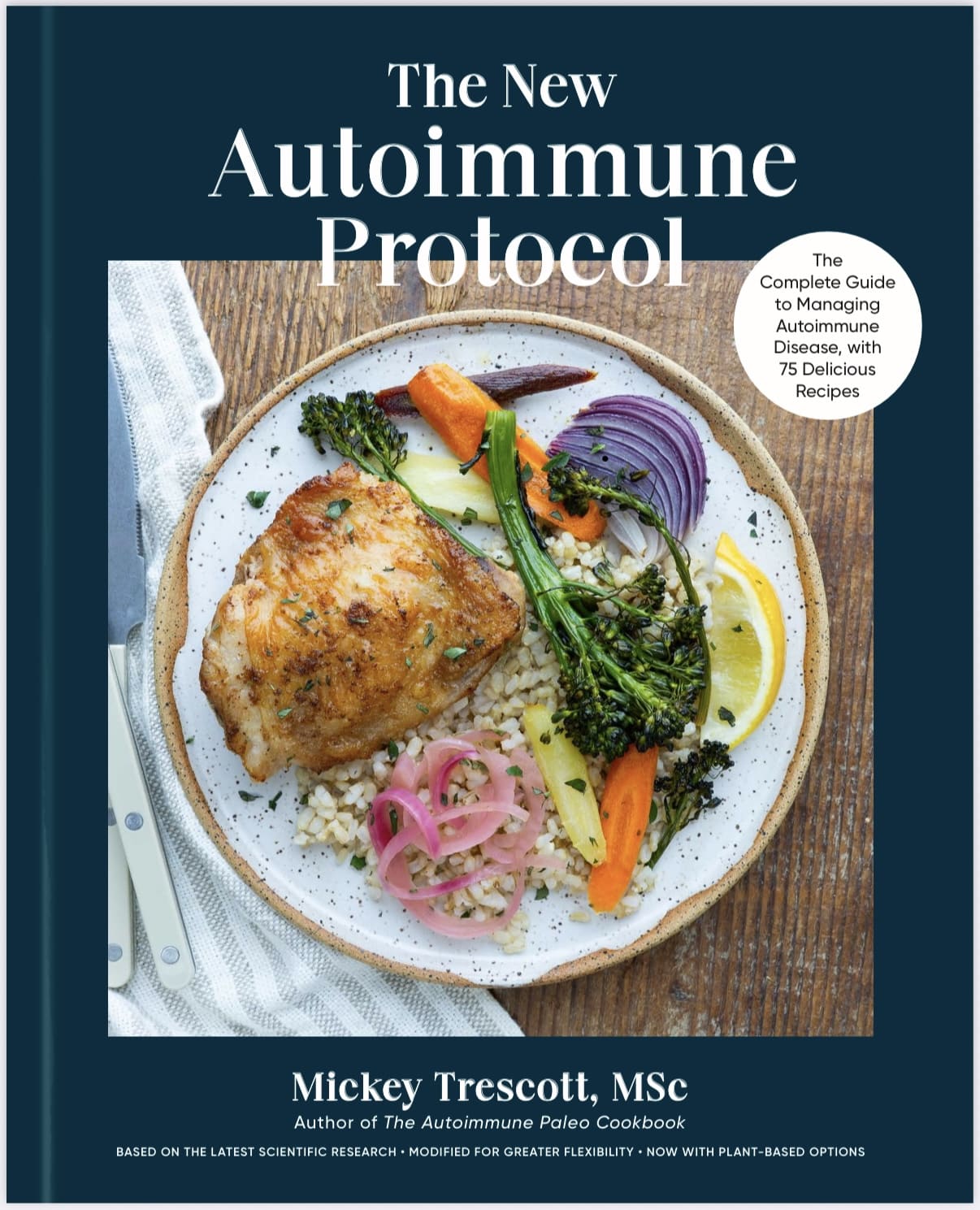
If you’re ready to take this a step further and want more structure, support, and clarity as you begin or return to AIP, my new book The New Autoimmune Protocol is available for pre-order now.
Inside, you’ll find an updated framework for moving through Transition, Elimination, Reintroduction, and long-term maintenance in a way that is more flexible and sustainable.
When you pre-order and submit your receipt, you’ll also get access to a private community with extra recipes, live Q&A sessions, and a guided experience through the Transition and Elimination phases.
👉 Pre-order The New Autoimmune Protocol and join the guided AIP experience
.
Episode Timeline
00:00 – Why AIP can feel like too much thinking
01:09 – Template 1: Protein + vegetables + fat
04:41 – Template 2: Skillet meal
08:16 – Template 3: Soup or stew
11:40 – Template 4: The big salad
14:00 – Recap & next steps
.
Episode Transcript
Below is the full transcript of this episode of the Autoimmune Wellness Podcast. This transcript is provided for accessibility and reference.
Title: Kitchen Confidence: The Lazy Person’s AIP Meal Template | Small Bite (Ep 082)
Mickey: If you’ve ever felt like AIP just takes a lot of thinking in the kitchen, you’re not wrong. There can be a lot of decisions like what to cook, how to put meals together, whether you have the right ingredients and if you’re just relying on recipes for everything, it can start to feel like a lot to keep up with.
Welcome to the Autoimmune Wellness Podcast. I’m Mickey Trescott, and this is a Small Bite episode focused on kitchen confidence. Today I want to simplify the process. Instead of thinking in terms of recipes, we are going to focus on simple meal templates.
These are flexible formulas that you can use over and over again with whatever ingredients you have on hand. This is one of the easiest ways to reduce decision fatigue, making cooking more efficient and still ending up with meals that are balanced, nourishing, and satisfying. So I’m going to walk you through a few of my go-to templates that I use all the time in my own kitchen.
[00:01:09] Template 1: Protein + Vegetables + Fat
Mickey: The first template is the simplest one, and honestly, it’s the one that I probably use the most. It’s just protein, some vegetables, and a source of fat or a sauce to bring it together.
This is the foundation of a balanced AIP meal. It works for lunch, for dinner, even breakfast, depending on what you like and how you put it together. And what I like about this template is that it is just so flexible, it’s literally the definition of flexibility. You don’t need specific ingredients, you just need to think in categories.
So your protein might be roasted salmon, chicken, steak, pork, or even something like meatballs or patties that you have prepped ahead of time. Your vegetables could be anything you have. Broccoli, cauliflower, sweet potato, Brussels sprouts, asparagus, greens. You can keep it super simple and just pick one vegetable, or you could mix a couple if you want some variety. And then your fat or sauce is what really brings the meal together. That could be something as simple as olive oil, some avocado, it could be a more flavorful sauce, like a green sauce, a vinegarette, something with herbs or citrus.
A few really simple examples of this: salmon with roasted broccoli and a drizzle of olive oil, chicken with sweet potato and half an avocado, steak with sauteed greens in a green sauce or chimichurri. And once you start thinking this way, meals become a lot easier to assemble because you’re not starting from scratch, you’re just plugging in what you have.
Where this template becomes very powerful is batch cooking. That’s how I think about it in a practical sense. I will often roast a tray of protein in the oven, usually around 375 to 400 degrees. This might be salmon, chicken thighs, pork, even a batch of beef or pork meatballs, sometimes I mix them.
At the same time, I will roast vegetables, things like sweet potatoes, broccoli, cauliflower, Brussels sprouts, or asparagus. If I’m doing multiple vegetables, I actually prefer to keep them on separate trays or baking dishes. That way I can control the cooking time for each one because they don’t all cook at the exact same rate. That makes everything turn out better without a lot of extra work. And you really don’t need more than one vegetable. But if you have the space and you want a little more variety, adding a second or third tray if you have that room, can make things a little more varied.
And while everything is in the oven, that’s when I’ll make some kind of sauce. It doesn’t have to be complicated, it could be as simple as blending some herbs with olive oil and lemon, stirring together a quick dressing with some coconut yogurt. If you’re on Modified AIP, you could make a tahini dressing.
And if your oven only fits one pan, you can always cook your vegetables on the stove top instead, something like sauteed kale, spinach, or shredded Brussels sprouts works really well and comes together quickly. Sometimes when my oven is really maxed out, I like to have something cooking on the stove top. Then when everything’s done, you can mix and match throughout the week.
And one small addition I always like to include here, you guys are going to get sick of me saying this, but a scoop of fermented vegetables. It adds that extra layer of flavor, it brings in the probiotics, which is a nice compliment to this kind of meal. So this template really becomes your go-to for building meals that are simple, balanced, and easy to repeat without getting bored.
[00:04:41] Template 2: Skillet Meal
Mickey: The second template is the skillet meal. This is one of the most practical ways to cook, especially when you want something quick, flexible, and easy to clean up, which is big in my book.
Everything happens in one pan, and it’s a great way to use leftovers or small amounts of ingredients that you might not otherwise know what to do with. The basic structure here is vegetables or greens a ground protein, a root vegetable or starch, some aromatics and herbs, and then some flavor boosters to bring it all together.
So let’s break that down a little bit. For protein, this is where ground meats really shine. Ground chicken, turkey, beef, pork, or a mix all work well here. They’re generally more affordable than other cuts, so we go through a lot of ground meat in our house.
I usually start by cooking the protein first. This gives you a chance to build some flavor and render some fat depending on what you’re using. So if you’re working with a fattier meat like pork, you might not actually need to add much additional fat to the pan after you’ve browned that pork. But if you’re using something leaner like turkey or chicken, you actually might need to add some fat before moving on so that everything cooks properly.
And one trick that I love for leaner meats is starting with a little bacon. You cook the bacon first. You use that rendered fat to cook the rest of the dish. It adds a ton of flavor and gives you a really nice base to work from. Once your protein is cooked, your fat situation is sorted. This is where you add your aromatics. Things like onion, garlic, ginger go in next. Let them cook for a minute, maybe two until they’re fragrant. This step is really important where you start building that next layer of flavor.
After that, you’re going to add your vegetables, and I like to start with the firmest vegetables first, especially if I’m using a root vegetable. Sweet potatoes take the longest to cook, so they should be cut into pretty small cubes to saute, added early so that they have lots of time to soften. Carrots are another favorite, they cook a little bit faster, they also tend to stay a little bit more moist. I also love winter squash, but it does cook more quickly, so you’re not going to need as much time.
From there you can add some quicker cooking vegetables, things like zucchini, mushrooms, maybe some shredded Brussels sprouts, greens like kale, spinach, or chard. So you’re basically layering things based on how long they take to cook, which helps everything finish at the same time without overcooking.
And then at the end you finish with your flavor boosters. This could be something like coconut aminos, a squeeze of lemon or lime, a splash of fish sauce or fresh herbs. And you definitely don’t need all of them. Just one or two can round out that dish. And this template is really forgiving. You can swap ingredients in and out depending on what you have. It’s a great way to combine leftovers.
So something that I actually did yesterday was I sauteed a sweet potato. I threw in some chard from my garden, and then I threw in leftover chicken at the end before adding a little leftover sauce. It’s also ideal for meal prep. You can make a big batch, portion it out and keep it in the fridge then reheat as needed.
And just like that first template, you can always add a little fermented food on the top at the end for extra flavor and a probiotic boost. Once you get comfortable with this style of cooking it becomes one of the easiest ways to put together a really satisfying meal without needing a major plan ahead of time.
[00:08:16] Template 3: Soup or Stew Formula
Mickey: The third template is a soup or a stew. This is a forgiving and nourishing way to cook on AIP, and it’s especially helpful when you want to use up leftovers or make something that will last for multiple meals. The basic structure here is a broth, a protein, often leftovers, some vegetables, aromatics and herbs and a source of fat. And if you’re on Modified AIP, you can also include something like rice for more substance.
What makes this template a little different from the others is how you think about the protein. When you’re making a soup from scratch with raw meat, like a whole chicken or maybe some beef stew meat. You usually want a dedicated recipe because the cooking time and method really matter for getting the best texture and flavor out of that meat.
But when you’re working with leftovers, this becomes really simple. What I want you to do is pick out your protein. You’re going to grab some leftover roast chicken, that could even be like a rotisserie chicken. It could be meatballs that you’ve cooked, even burger patties that are chopped up. And this is going to be added at the end.
And first you’re going to add a little bit of fat, you’re going to saute some aromatics, whatever you have on hand, maybe it’s onion, maybe you’ve got some garlic, maybe you’ve got some ginger. You’re going to add some bone broth. Maybe this bone broth came from your freezer, which is where it usually comes from in my house.
And then you’re going to add vegetables. Now, like with our skillet meal, you’re going to add hard vegetables first. So if you’re thinking beets, turnips, carrots. You know those are going to take about 40 minutes to cook. You’re going to put the hard veggies in, you’re going to let ’em cook for a little while. If you are using softer vegetables, things like squash or zucchini or mushrooms, those are going to be added a little bit towards the end.
If you’re starting with those softer vegetables, your cooking time is just going to be shortened, right? And then at the end, you’re going to add the soft stuff like spinach, kale, chard, and along with those soft vegetables, you’re going to add in that protein so that it has like a little bit of time to develop some flavor with that broth.
And the last thing you’re going to do is add a flavor booster at the end. So that could be a little coconut milk, could be some coconut aminos, could be a little fish sauce. Could be a little lemon. Now don’t go crazy and add all of those things, just go with what you like and experiment a little bit.
What this is going to yield is something like a classic chicken soup with maybe some leftover chicken, vegetables and herbs. You might end up with a vegetable stew with some beef meatballs and root vegetables. You might end up with a coconut milk and bone broth based soup with some chicken, greens and ginger for a little bit more of that warming and comforting flavor.
This template is ideal for batch cooking. You can make a large pot. You can eat it for a few days and freeze the rest. It reheats really well, and it’s one of those meals that often taste even better the next day once the flavors have had more time to develop.
In our house, we call this fridge dump soup. We love to just throw everything out, see what we have leftover, chop it up and put it together in a way that is delicious and experimental and probably will never happen exactly that way in the future.
So anytime you have leftovers, you’re not sure what to do with them, turning them into a soup or stew is almost always a great option.
[00:11:40] Template 4: The Big Salad
Mickey: The fourth template is what I like to call the big salad, and this is not a side salad. This is a full meal salad, something that is substantial, satisfying and balanced. This is one of the easiest templates to pull together, especially when you don’t feel like cooking, or you just have some of these components prepared. The basic structure here is a bed of greens, a protein, ideally something already cooked or very low prep, some vegetables for texture and variety and a dressing or fat to bring it all together.
For your greens, you can use things like romaine, spinach, arugula, or any mix that you like. Then for protein, this is where leftovers come really in handy. Things like a rotisserie or roasted chicken, leftover salmon, even cold steak work really well. You can slice or shred them and add them right to the top.
From there, you can layer in additional vegetables. This could be something crunchy like cucumber or carrots, something a little sharper, like red onion or scallions, some leftover roasted root vegetables if you have them.
And one small tip here. Onion can really make a difference in a salad. I like to switch between red onion and scallions because they change the flavor profile a little bit, even if everything else stays the same.
Then you finish with fat, usually in the form of a dressing. This could be a simple vinegarette with olive oil and lemon or vinegar, something a little more substantial, like a creamy dressing made with coconut yogurt. You can also add avocado for extra fat and richness. And just like with the other templates, this is a great place to layer in flavor boosters, fresh herbs, a squeeze of citrus, even a little fermented vegetable on the side or mixed in.
What I love about this template is how quickly it comes together. I have a big bowl and I love to toss my salads. I know some people are team tossed salads, some people like their dressing drizzled on the top, I’m a tosser. If you have a cooked protein in the fridge, you can assemble a meal like this in just a few minutes. It’s also really adaptable. You can change it with the seasons, with what you have on hand or just based on what sounds good to you that day.
So this is one that I come back to a lot, especially when I want something simple, fresh and satisfying without even turning on the stove.
[00:14:00] Wrap-Up
Mickey: So just to bring this all together, you really don’t need this massive collection of recipes to make AIP work day to day. Having a few simple templates that you can rely on like that protein with vegetables and fat, a skillet meal, a soup or stew or a big nourishing salad can make cooking feel a lot more manageable.
These templates give you structure, but they’re also flexible. You can adjust them based on what you have, what’s in season, how much time and energy you have that day. And I will just say, this is what I do most often in my post AIP life. I’m not over here following recipes or making elaborate meals every day. I do that for fun maybe once or twice a week, but most of the time I’m using these kinds of templates because they’re very reliable, they’re low effort, and they’re a way for me to keep myself fed with nutrient dense meals. And once you start thinking this way, it really reduces that mental load in the kitchen and makes it easier to stay consistent.
So if you take anything from this episode, try choosing just one of these templates and using it a few times this week. You don’t need to overhaul everything, just start building that rhythm.
And if you’re ready to take this a step further, now is a really important moment to join us inside the new Autoimmune Protocol community. We’re just about to start our guided transition phase, and I will be walking everyone through it week by week. This is the final week to get in before we begin, and it’s really designed to give you structure, support, and clarity as you get started.
So if you haven’t already, make sure to pre-order the book. Submit your receipt at theautoimmuneprotocol.com/preorder. Inside the community, you will get access to extra recipes live Q and A sessions, and a private space where we’ll be going through all of this together.
I have been loving connecting with all of you there. It has been such a supportive and engaged group. This guided transition phase in May leads directly into elimination in June. So this is really the best time to join if you want to follow along in real time.
Thank you so much for listening to the Autoimmune Wellness Podcast. Take good care of yourself and I’ll see you in the next episode.
.





0 comments