
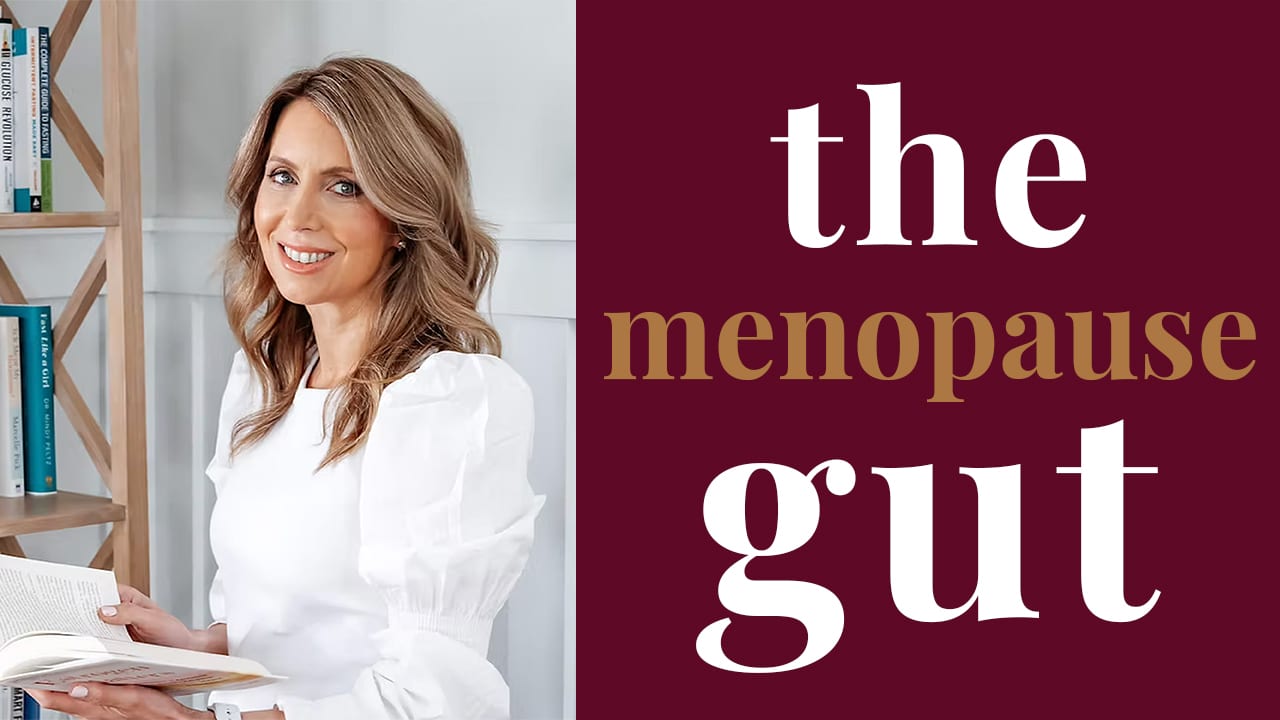
If you’ve had your autoimmune condition well-managed for years—only to find new symptoms appearing in your 40s—you’re not alone.
Perimenopause and menopause can change far more than your cycle. They can reshape your sleep, your metabolism, your gut health, and even your immune system. And for many women, that shift can feel confusing—especially when symptoms you thought were resolved begin to reappear.
In this episode of the Autoimmune Wellness Podcast, I’m joined by Cynthia Thurlow, nurse practitioner, bestselling author, and expert in perimenopause and metabolic health. Her new book, The Menopause Gut, explores how hormonal changes in midlife influence the microbiome, immune function, and inflammation—and what women can do to adapt with clarity and intention.
This conversation is especially important for the autoimmune community. Many women experience stable health for years, only to encounter new food sensitivities, sleep disruption, anxiety, or flares during perimenopause. Understanding why this happens is key to moving forward with confidence.
.
Watch the Episode
.
A Gut-Centered View of Perimenopause
One of the most important takeaways from this episode is that perimenopause is not just a hormonal transition—it’s an immune and microbiome transition as well.
As estrogen and progesterone fluctuate and eventually decline, they influence everything from gut barrier integrity to microbial diversity. Estrogen, in particular, plays a role in immune modulation and maintaining the gut lining. As levels shift, many women experience increased inflammation, changes in digestion, and new sensitivities to foods they previously tolerated.
This helps explain why symptoms can feel unpredictable during this phase. Foods that were once “safe” may suddenly become reactive. Sleep may become more fragile. And autoimmune symptoms may flare—often in cyclical patterns tied to hormonal changes.
.
Why Symptoms Can Resurface in Midlife
For many women, perimenopause introduces a new layer of complexity to their health.
Hormonal fluctuations can influence histamine levels, mast cell activity, and immune signaling. This can lead to new or intensified reactions—such as skin issues, digestive symptoms, or heightened anxiety.
At the same time, changes in the microbiome can reduce diversity and increase inflammatory species. Combined with increased gut permeability, this creates a more reactive internal environment—one where the immune system is more easily triggered.
Research also suggests that women are significantly more likely to develop autoimmune conditions during this transition, highlighting just how important this phase is for proactive support.
.
The Gut–Immune–Hormone Connection
This episode highlights the deep interconnectedness of the gut, immune system, and hormones.
As the microbiome shifts, it influences immune tolerance, inflammation, and even how the body processes hormones like estrogen. In turn, hormonal changes impact gut integrity, microbial balance, and immune resilience.
This is why focusing on gut health during midlife isn’t just about digestion—it’s about supporting the entire system.
We also explore how gut health connects to other areas often affected in midlife, including bone density, stress resilience, and metabolic health.
.
Foundations for Supporting Gut Health in Midlife
While the changes of perimenopause can feel overwhelming, Cynthia emphasizes that there are clear, practical strategies that can make a meaningful difference.
Two of the most important foundations are often overlooked: sleep and stress management. As hormone levels shift, the body becomes less resilient to stress, making nervous system support essential for both gut and immune health.
From there, nutrition and lifestyle become key:
- Prioritizing nutrient-dense, minimally processed foods
- Supporting adequate protein and fiber intake (with individual tolerance in mind)
- Incorporating appropriate movement without overtraining
- Creating space for rest, recovery, and nervous system regulation
These foundational practices help support microbiome diversity, reduce inflammation, and improve overall resilience during this transition.
.
A More Nuanced Approach to Midlife Health
One of the most empowering messages in this conversation is that perimenopause is not something to fear—it’s a phase that calls for a more personalized approach.
What worked in your 20s or 30s may no longer work in your 40s and beyond. And that’s not a failure—it’s a signal that your body’s needs have changed.
We also discuss the role of hormone replacement therapy (HRT), including how it can support sleep, mood, and immune balance when used appropriately and in partnership with a knowledgeable provider.
The goal is not perfection, but awareness—understanding your body’s signals and responding with curiosity rather than frustration.
.
Resources
Cynthia Thurlow, NP
Website: https://www.cynthiathurlow.com
Instagram: https://www.instagram.com/cynthia_thurlow_
Facebook: https://www.facebook.com/cynthia.thurlow
Podcast: Everyday Wellness
Book: The Menopause Gut
.
Prefer to Listen Instead?
.
Episode Timeline
00:00 – Why midlife symptoms aren’t a failure of your protocol
02:25 – Introducing Cynthia Thurlow
04:20 – What perimenopause and menopause actually are
13:02 – How the microbiome changes in midlife
17:01 – Microbiome diversity and immune tolerance
22:47 – Estrogen, histamine, and new food sensitivities
30:57 – Bone density, inflammation, and gut health
37:37 – Practical strategies for gut and immune support
44:57 – Hormone replacement therapy and autoimmunity
50:31 – Wrap-up and closing
.
Transcript
Below is the full transcript of Episode 83 of the Autoimmune Wellness Podcast.
This transcript is provided for accessibility and reference.
Title: The Menopause Gut with Cynthia Thurlow, NP (Ep 083)
Mickey Trescott: Perimenopause and menopause change more than your cycle. They change your sleep, your metabolism, they even change your brain. And for many women, they change the immune system. And if you’ve had an autoimmune disease, well-managed for years, and suddenly symptoms begin shifting again, maybe you’ve got some new food sensitivities, some joint pain, histamine reactions, fragile sleep, it can feel extremely confusing and discouraging.
But what if this isn’t a failure of your protocol? What if it’s a hormonal transition reshaping your gut and your immune response? Today we’re diving into the powerful connection between midlife hormones, the microbiome and autoimmune disease, and what women can do practically and intelligently to adapt.
Mickey Trescott: Welcome back to the Autoimmune Wellness Podcast. I’m Mickey Trescott, and today’s conversation feels especially timely and deeply personal.
Over the past year, as I’ve moved further into perimenopause, I began experiencing shift that I did not expect, my autoimmune conditions that had been stable for well over a decade, truly stable. And then I started noticing these breakthrough symptoms, psoriasis during the luteal phase of my cycle, I developed uveitis. And around the same time, my sleep started to become more fragile. I noticed an increase in anxiety that felt hormonally driven rather than situational, and it led me to ask a bigger question.
How do hormonal changes in midlife interact with immune regulation, gut health and autoimmune disease? Because for many of us in this community, we have spent so many years learning how to regulate our immune systems. We have rebuilt that gut health. We’ve personalized our nutrition, but we may not have been taught how perimenopause reshapes that terrain, how fluctuating estrogen, declining progesterone and changes in the microbiome can shift immune tolerance and inflammatory signaling.
So today we’re diving into a gut centric approach to perimenopause and menopause. Not from a fear-based lens, but from a thoughtful, evidence informed and deeply practical one. We’re going to explore the microbiome, immune modulation, histamine, gut permeability, bone density, thyroid crosstalk, sleep, and yes hormone replacement therapy, all through the lens of individuality and intelligent self experimentation.
[00:02:25] Introducing Cynthia Thurlow, NP
Mickey Trescott: I am so honored to be joined today by somebody whose voice has become such an important part of that evolving conversation around women’s health and midlife, and somebody that I have personally learned a great deal from over the years. Cynthia Thurlow is a nurse practitioner, a bestselling author, international speaker, and host of the Everyday Wellness Podcast. With more than 25 years of experience in health and wellness, she is a globally recognized expert in perimenopause, menopause, and intermittent fasting. Her second TEDx talk, intermittent fasting transformational technique has garnered over 15 million views worldwide. Cynthia has been featured on ABC, Fox5 KTLA, CW, Medium, Entrepreneur, and the Megan Kelly show.
Through her clinical work, speaking and writing, her mission is to empower women to navigate midlife with confidence and live their most optimal lives in perimenopause and beyond. I’ve been a listener of Cynthia’s podcast for years and deeply admire her thoughtful, evidence-based approach to women’s health. She has a unique ability to translate complex physiology into practical, actionable strategies without fear mongering or oversimplifying the science. Her newest book, the Menopause Gut, takes that same grounded, research informed lens and implies it to the powerful connection between hormonal shifts, the microbiome in immune health during perimenopause and menopause.
So Cynthia, welcome. I am so grateful to have you here today for this conversation.
Cynthia Thurlow: Well, thank you for your kind words and it’s so nice to be here, Mickey.
Mickey Trescott: Let’s jump right into it. I just was fascinated reading your book. Everybody knows that I love the intersection of the microbiome and just about any health condition, but this health condition, perimenopause and menopause, which is the focus of your book, is just such a current interest of mine, and I know a lot of our listeners.
[00:04:20] MiddlePause–a Brief Primer of Perimenopause and Menopause
Mickey Trescott: Let’s talk about the term “middlepause”. This is kind of the term that you use for both peri and menopause. Can you give us a clear overview of what perimenopause and menopause actually are and what’s happening hormonally during this time, and then why those symptoms are so inconsistent and cyclical.
Cynthia Thurlow: Yeah, so “middlepause” was born out of me being tired writing perimenopause and menopause so many times in the book. So that became the coined phrase just because I had writer’s fatigue. It really is representing this dynamic time in a woman’s life where we are getting changes in not just our hormones, but also neurotransmitters, which translates into completely changing the way we view the world and how we experience our bodies.
I think the best thing to start with is that every single woman listening, your perimenopause, menopause journey is as unique as you are. So although I will bring up common symptoms. This does not mean that you have to experience all of these. I think what has been my clinical experience is the women that are typically taking care of themselves, and I say when I use the word the best way, people that prioritize sleep and manage their stress and eat nutrient-dense food and move their bodies are going to have less symptoms than someone who is 45 years old and still living like they did at 18.
And I think that is said non pejoratively, that has just been my experience. And I do occasionally meet women who are still living like they did at 18, as like rock stars, but it’s no longer working for them. But when we’re talking about the advent of perimenopause, we’re really speaking about this shift in terms of progesterone in particular.
So our ovaries are as old as we are and they set the pacemaker of aging. So for women listening. You can experience perimenopause symptoms as early as your mid thirties. I think most women are probably starting to do some hints of symptoms by late thirties, early forties, but it can start seemingly benignly. If we have less circulating progesterone, which is the predominant hormone in the latter half of our cycle. So during our luteal phase, it may show up subtly as not sleeping well the week or two before your menstrual cycle starts having more anxiety or depression.
And for a lot of women, it is so subtle that they start to doubt themselves. They’re like, what is happening? Like, I’m just more irritable. So as progesterone is faltering, our adrenal glands actually have to step in. And I always say they’re a backup quarterback. They’re not designed to bolster the bulk of our stress. But it’s important for people to know that with the advent of perimenopause we become a little bit less stress resilient.
And this doesn’t mean that you’re incapable, it just means your body, hormonally and physiologically is not as stress adaptive as it once was. I can certainly give examples. I always use the example that when I was in my twenties, I was an ER nurse in inner city Baltimore, and I loved and am a total adrenaline junkie. Now I’m reformed, but I could handle the shift work. The amount of stress, like the, not the unpredictability of being in such a high acuity environment, much better than I did in my early forties because I was still seeing patients in the ER.
So perimenopause starts with this reduction in progesterone. What you get on the other side of that is a relative estrogen dominance. Now, traditional allopathic medicine hates the words or the phrase estrogen dominance, but it’s really speaking to throughout your menstrual cycle up until perimenopause, your body is constantly, it’s this delicate symphony between progesterone and estradiol, which is your predominant form of estrogen.
As you navigate perimenopause, you have a little more estradiol relative to progesterone, so that can show up as heavier menstrual cycles, brain fog, breast tenderness, weight loss resistance, and a slew of constellation of other symptoms that you can experience. But most women kind of live in this nebulous time of what’s starting to happen, they’re starting to see other underlying symptoms. They may notice that foods they’ve always eaten, that they’ve had no problems with suddenly start becoming more reactive. They may see hives, rashes, psoriasis, eczema. They may experience more digestive distress, and by that I mean maybe they’re having alternating between constipation and diarrhea and they’re told it’s IBS.
They may find that they are diagnosed with an autoimmune condition and we know that women are four to five times more likely to develop an autoimmune condition in perimenopause and menopause because there are specific changes to the immune system and how it imprints.
Our immune system ages right along with us, just like our ovaries do. And I think for a lot of people, they don’t realize that because the immune system is frankly complicated, you can’t poke a finger at it like you can the hearts, the lungs, the bladder, et cetera. And so a lot of people, clinicians included, don’t have a great understanding of the immune system because it is quite honestly, it is complicated.
And so as the immune system is aging, you’re starting to see more provocation. You become a little bit, I use the term TH1, which means, we’re looking specifically at how the immune system ages, and so we start to be a little more inflamed. We start to be more likely to develop opportunistic infections.
I talk about this in the book, when I went to Morocco on this romantic vacation, how I got sick and my husband didn’t. We also tend to be, and this is not political, based on the research, we’re a little less responsive to vaccines. So if we were to get a booster at this time in our lives, we probably wouldn’t be able to amount the same immune response we did when we were younger.
And then on the other side of that, it’s like as we get farther into perimenopause, ’cause there’s really this early, mid and late phase, our menstrual cycles would start to shift again. And so I think for many women, they start off being heavier. They have more symptoms, then things quiet down a bit, then they become a little less regular.
And so, as I stated earlier, not every woman follows this exact pattern, but I have found over the past 10 years working with women at this stage of life exclusively that I always say perimenopause is predictably unpredictable. No one likes to hear that, but I think perimenopause is the storm before the calm. Like menopause should be when things kind of quiet down. I think the word pause is important for your listeners, that it’s a time to determine is my lifestyle working for me and my physiology, or is it working against it?
Because a lot of women, especially I’m sure if they’re your listeners, they are intelligent. They are people that exercise, they’re people that take care of themselves, and you start to find that you have to be a little more gentle with your body. You have to be a little more conscientious about how you go about navigating food choices, exercise, stress management, et cetera. So kind of in a nutshell, that’s perimenopause.
And then the interesting menopause is that it’s one day where you’ve gone 12 months without a menstrual cycle. And we’re not even talking about long, long-acting reproductive contraceptives where women may go an entire year without a menstrual cycle, or women that have had ablations or even hysterectomies. 12 months without a menstrual cycle, and then you are technically post menopause.
So I use the word menopause and post menopause interchangeably, but when I talk about menopause in the book and with our conversation today, it’ll be with the assumption that we’re talking about women who have gone 12 months without a menstrual cycle and are now no longer menstruating at all. But that is kind of a gestalt over what a lot of women experience.
What I can tell you is, is that consistently things that I see with patients, sleep disruption, mood changes, feeling less able to deal with stress. So that could be irritability, that could be more anxiety, more depression, food sensitivities, inability to exercise as intensely as they once did.
Not to mention the fact we have this whole slew of other things with the gut with preexisting trauma, all of which can influence how we view ourselves and how we navigate this middle age transition.
Mickey Trescott: Yeah. Thank you for that. That was a perfect explanation and I think the thing that I have really been learning recently is I am so grateful to you for explaining the difference between perimenopause and menopause because I am 41. I’ve been really immersed in perimenopause menopause content for the last few years ’cause I know that this is a transition that I thought I was heading towards, turns out I’m right in the middle of it.
But I had just been hearing about menopause and what happens when you lack hormones, and I had no idea about the wild fluctuation of hormones that happens before and during perimenopause. I hope a lot of people listening are getting really interested and curious just about what this change means. And you have so many interesting ways for people to actually do things that can help them.
[00:13:02] The Microbiome at 40: What Actually Changes?
Mickey Trescott: So let’s start by talking about the microbiome. This is the focus of your book. It’s not specifically just about perimenopause and menopause, but how that dovetails with the microbiome, which is this incredible area of research in health and wellness.
When we talk about microbiome diversity, this is something you talk a lot about in your book. What does that actually mean? What does the research show about how that diversity changes as women move through this middle pause? And specifically, how does declining estrogen influence the composition and resilience of the gut?
Cynthia Thurlow: Yeah, that’s such an important question. So when we’re talking about the gut microbiome, we’re talking about 40 trillion with a “T” bacteria, viruses, fungi, protozoa. That are located in the large intestine or colon, and they interface with every single cell in the body and every single organ. So there is a gut ovarian axis, a gut bone axis, a gut brain axis, et cetera, et cetera. It is imprinted at birth.
So depending on whether or not we were we, we were a vaginal delivery or a C-section, whether we were formula fed or breastfed. That’s kind of our initial imprinting of life, and for anyone listening, sometimes we don’t have any control over those two things, so do not let that concern you in terms of the choices that we make from that point on.
Not surprisingly, we have three key times in a woman’s life where we get significant differentiation from our male counterparts. Number one is puberty, not surprisingly. Estrogen and progesterone, as well as testosterone influence the microbiome in terms of diversity, which we’re speaking specifically to types of species, hopefully, beneficial bacteria and viruses and fungi and protozoa, pregnancy if we choose to become pregnant, and then perimenopause.
What happens in perimenopause is with the decline in estradiol, so that’s not the beginning, we’re really talking about mid to late perimenopause with the decline in estrogen was a potent immune modulatory hormone, which is a fancy way of saying it works right alongside the immune system, and you have to think about it that way.
With the decline in estrogen, we start seeing more inflammatory species. We see changes in diversity where we’ll see more inflammatory, pathogenic bacteria, viruses, fungi, et cetera. We’ll start seeing more inflammation overall in the body. This is, sometimes women will say to me, well I don’t need hormone replacement therapy ’cause I don’t feel bad. And I’m like, but there’s a lot going on underneath the hood.
We start to see changes in short chain fatty acid production. We also start to see shifts in immune system functioning that I kind of alluded to earlier. And so with all these changes, some of it’s very subtle. It doesn’t necessarily have to be large and symptomatically driven, but it is going on in the absence of estrogen.
And so life kind of comes full circle. In menopause, the microbiome starts to resemble a males again. But unlike for men, for women, it’s a diverse shift from where they once were. We kind of come full circle in life, but it’s helpful to know there’s a lot of things we can do to offset these changes that I’ve mentioned.
Some of it’s lifestyle nutrition mediated, supplements, plus or minus HRT, but for a lot of women, it’s finding out that that lifestyle piece becomes absolutely critically important. You really do have to change your lifestyle. Maybe you didn’t when you were in your twenties or your thirties, but by the time you get to your forties and fifties. I can tell you with absolute certainty that if people still live like they did at 18, they’re not going to fare quite as well as the individuals that are willing to start making some of those concerted changes.
Mickey Trescott: Yeah, that is so helpful. And you know, here on the podcast, we love to get into a little immunology just because our audience is so familiar with autoimmune disease, and that’s kind of what most of us are navigating.
[00:17:01] Microbiome Diversity and T Regulatory Cells
Mickey Trescott: Can you talk about how a loss of microbiome diversity affects immune tolerance especially including those T regulatory cells, which I’ve already explained. Everybody knows what they are, but I’d love for you to bring that together for us.
Cynthia Thurlow: So the first thing that I think about is we’re more prone to leaky gut, and that is because the small intestinal lining is one cell layer thick, which means estradiol kind of creates the mortar in between the bricks, if we’re going to make that analogy. And so as estrogen’s declining, plus or minus the types of foods we eat, like if we’re eating a standard American diet, the emulsifiers, additives, preservatives, artificial sugars can damage that very delicate lining.
Chronic antibiotic use, and let me be clear, if someone listening needs to be on antibiotics, this is not a shame and blame thing. Some of us need to be on antibiotics at some points in our lives. Chronic stress, which is really important. This is the one thing that I don’t see enough individuals talking about.
We know if we look at adverse childhood events, and there was a joint venture between Kaiser Permanente and the CDC many years ago. You can go online and look up this quiz, it’s short, the higher your adverse childhood events score, and we’re talking about in many instances, a little bit of Big T trauma, a little bit of little T trauma. It can rewire your autonomic nervous system. So people that have experienced significant adverse childhood events are at greater risk for poor metabolic health disorder relationships with food obesity. And I would make the argument they’re going to have a bumpier time navigating perimenopause and a menopause, and we’ll talk about why.
But it’s important to kind of interject that because there are many things that can damage that small intestinal layer, which again, is one cell layer thick. So as estrogen’s declining, it’s important to note that on the other side of that small intestinal lining is the immune system. So it’s very easy to provoke it. It’s very easy to trigger underlying food sensitivities. We know that we get vast changes in not just our less sophisticated part of the immune system, which is our innate immune system versus our acquired immune system. We get diverse changes in the acquired immune system.
And your listeners know that treg cells, which are a specialized form of CD4 cells, which are part of that army that is trained to go out and look for surveilling for opportunistic infections and be able to identify them. And in my past life, I worked on an HIV and AIDS floor, so we were very well versed in CD4 counts.
What starts to happen is that we’re just much more susceptible to our body attacking itself. We are just much more susceptible to that inflammation, that kind of complicated interplay between the immune system in the setting of declining hormones, it’s a more provoked immune system.
It just makes us much more likely to develop autoimmune conditions. And so the statistics I read while writing the book, we were four to five times more likely to develop autoimmune conditions. During the perimenopause to menopause transition, when I did my medical training, they were identified maybe 20 to 30. Now there’s over a hundred, including things like long haul COVID and chronic Lyme, not to mention a myriad of other diagnoses.
And so in this setting of more autoimmunity, more provocation, declining hormones. And changes to the food supply and chronic stress, it creates the perfect storm in which we are much more likely to be diagnosed. And I remind women, once you’ve diagnosed with one, you’re more likely to have others. And so I think if you’ve had one diagnosis, you have to be mindful because you are just that much more primed, especially in this kind of middle aged timeframe.
To see more of these things. I transparently mention, you know, when I was in my twenties, I got treated appropriately for Lyme. Guess what happened? After I developed Lyme, or I was treated for Lyme, I developed psoriasis. But at that time, in my twenties, no one was talking to me about how that antibiotic, which saved my trajectory of my life, because I had a very astute clinician that that noticed my bullseye rash also made me much more likely to develop leaky gut.
So sometimes there’s this kind of complex interplay of transient leaky gut versus this chronic leaky gut syndrome. And so I think that for so many women they might have missed that opportunity to have that education upfront. But I always remind people that our microbiome is incredibly malleable. Meaning just because you’ve been diagnosed with one or two or three autoimmune conditions doesn’t mean that’s your destiny. I think I’ve had four official diagnoses. Mine are all in remission, but that is because I do a lot of work to keep my immune system and my stress levels managed really, really well.
The biggest takeaway about immunosenescence and aging of the immune system is number one, more baseline inflammation, even if you don’t feel it, number two, more likelihood to have this provocation of the immune response that once it unwinds, it’s harder to quiet it down.
And just knowing that you are much more likely to be susceptible to opportunistic infections, four to five times more likely to develop autoimmune conditions. And again, not political. I always feel like I have to say that, based on the research, if you get a booster vaccine or if someone encourages you to get a vaccination, knowing that your body’s immune response is going to be bolstered.
There are things we can absolutely do that will help support the immune system as we are aging. It’s just, it’s a little more subtle because the immune system is a lot less tangible than solid organs that we have in our bodies.
Mickey Trescott: Yeah, I really appreciate that description, and I actually really like how you likened estrogen to just filling the mortar between the, those tight junctions in leaky gut situation. That makes so much sense.
[00:22:47] Estrogen, Histamine & New Food Sensitivities
Mickey Trescott: I want to turn the conversation a little bit because at the beginning of the episode you talked about how fluctuating estrogen is a problem in perimenopause, especially early perimenopause, and how estrogen can actually be significantly higher, sometimes even 20 to 30%, and what that actually means to mast cells and histamine release.
We talk a lot about food sensitivity here on the podcast, and as we know, people with autoimmune disease, regardless of perimenopause and menopause, have a lot of food sensitivities because of that gut microbiome disruption and all the stuff that comes with that.
Can you talk a little bit about how that hormonal pattern might contribute to any new histamine intolerance or food sensitivities, even some sleep disruption or anxiety in midlife?
Cynthia Thurlow: So I think that it’s important for women to understand that during perimenopause there are cycles where we may see estradiol levels 20 to 30% higher. That’s technically called a loop cycle. Now, thankfully, that doesn’t necessarily happen every single cycle, but what that can mean is that in the setting of higher estrogen, you can also experience high histamine and so otherwise benign foods that would not have provoked an immune response before, remember I mentioned leaky gut, immune systems right there, you trigger the immune system.
You leak food particles into the bloodstream and that can provoke that immune system, helping them understand the setting of high histamine and think about histamine like stuffy nose, you may cough, you may have some digestive upset. I always think about histamine and I think about mucus like because when I’ve triggered mast cell degranulation in my body, that’s typically how it shows up.
But what then happens is you get high histamine, high estrogen, mast cell degranulation, and this is when women will tell me, I develop new hives, I’m developing new skin issues. During my last book launch, which was four years ago, I was eating a lot of high histamine foods. I wasn’t still having a menstrual cycle, so this is what’s most bizarre, and I was provoking based on what I was eating, high histamine and mast cell de granulation.
So I was doing a podcast like this covered in hives, and my host was like, are you okay? I was like, yeah, I can feel it, it’s itchy, but I’m okay. Having said that this can be beyond just cyclical. Like for me, it happened a few times and it never happened again. But if we can’t properly regulate our estrogen.
If we’re not properly breaking it down, and there’s a special place in the microbiome called the Estrobolome. I did not name it, that is the technical name, where through detoxification in the liver, then to the gut, then we package it up and poop it out. If you’re not doing that effectively and your beta glucuronidase, which is an enzyme, isn’t properly breaking down your estrogen.
You can kind of recycle it. It can be recirculated, which can magnify all these symptoms. So there’s multiple things that are ongoing. It is never just one thing. When women have this provoked histamine response, it is usually multiple things. It is higher estradiol levels, it is a provoked immune response, it is also very likely that you are not properly breaking down your estrogen, because if you are, you should be able to bind it to fiber and poop it out.
But not every woman is doing that for a variety of different reasons. There’s certainly genetic reasons why this can happen, and then there’s a lot of lifestyle pieces as well, but it can be very bothersome and annoying. It does not per se, need to be something that’s persistent. I can tell you right now that I went through about eight years where I could not have any dairy. I can now have a little bit of dairy, like when I say a little bit, like a small portion of cheese, but it can’t even be just any cheese. It has to be like a very specific kind, because I can still provoke that histamine response.
Now, there are patients separately who are histamine intolerant, and I think for a lot of these patients it is also just a predominantly gut related issue. So I remind women that when you’re seeing consistent patterns, those are the things you want to make sure you’re discussing with your licensed medical provider, so they can help you tease it out.
Unfortunately, right now, I would say most of the people that are treating these kinds of patients are functional, integrative trained. A lot of the allopathic medicine crew, unless you’ve got a true overt allergy, they may not be looking a little more deeply, but there is clearly a causal reason why this is happening, it is not in your head, it is not construed. You are genuinely experiencing this tripped off immune system.
Mickey Trescott: Yeah, I appreciate that. And I think a lot of us, what we discuss here is gray area foods. So we do a lot of elimination and then reintroduction to really identify food triggers. But what happens when a food is sometimes okay, or as you’re describing with your dairy, a certain type of dairy and in a certain quantity and maybe in a certain mental state, those gray area foods, at least my experience in perimenopause has just been fluctuating.
Sometimes those gray area foods are totally fine. Sometimes they’re like 10 times worse than they normally would be. And it makes sense that the hormonal environment would shift our microbiome in a way that sets our immune system off in different ways, for better or for worse.
And why really focusing on these foundational strategies that we’re going to get to some in a little bit, but that you mention in your book can help us with that. So thank you for that.
Cynthia Thurlow: I feel like my clinical experience has been, we tend to have higher estradiol levels in our follicular phase. It’s after ovulation when I see faltering estradiol levels that I will sometimes see women at a very vulnerable state where they may have more provocation of their immune system. And so I just interject that to say that has been my anecdotal evidence that women seem to be a little bit more susceptible to these kinds of things in the latter stages of their menstrual cycle.
Also in the setting, like progesterone is an anti-inflammatory hormone too, and so when you’re getting closer and closer to like mid to late perimenopause. You may just notice it’s happening with greater frequency. All the more reason to have conversations with your medical provider about when to initiate HRT.
Mickey Trescott: Yeah. Thank you so much for that. And do you feel like that translates to autoimmune symptoms or do you know anything about maybe autoimmune symptoms flaring in a cyclical fashion?
Cynthia Thurlow: I mean, it definitely can. I’ve had patients report that, I’d be the first person to say, I’m not an immunologist, I’m not a rheumatologist. But I would imagine if I talked to my kind of immunology, rheumatology friends, they would probably say there are times in a woman’s cycle, like think about it, when estrogen’s really high during a pregnancy, almost everyone’s autoimmune stuff goes away, and it’s because you’re in this high estrogen state, which also has some anti-inflammatory components.
So it would make sense to me logically that in that luteal phase when estrogen is declining after ovulation. Preceding when you go into your menstrual cycle that it would probably be a time where we might see more provocation. Progesterone also mediates the immune system, but I really think of estrogen as this predominant player and when your listeners hear me say estrogen, I’m really speaking to estradiol in particular because that is the most potent form of estrogen our bodies make prior to menopause.
Mickey Trescott: Oh, that is so interesting. And my n=1 is just that in this last year and a half of perimenopause, my autoimmune symptoms have cropped up always in the luteal phase. Psoriasis, my eye inflammation, and even when I don’t get a full blown uveitis attack, my eyes just get really dry and itchy and I just feel vulnerable.
So I am really interested to see if we’re going to get some research for people with autoimmune disease to see how that interplay, that dovetailing, because if I’ve learned anything from you and other people in this space, it’s just that we are so unique and we can have reactions that are literally on opposite ends of the spectrum, which a lot of us in the autoimmune community are very used to that nuance.
And what works for one person doesn’t work for another. Or we can have completely different reactions to things, but I think perimenopause and menopause really add another whole layer that just, teaching people that that’s okay to be open and be curious to see how we can best support our bodies through this. I really appreciate that take.
[00:30:57] Bone Density & the Immune System
Mickey Trescott: I would love to transition to talking a little bit about bone loss. I think this is one of the most important things that women need to worry about as we get older. And I know we often think of it as purely hormonal, but I’m curious to hear you speak a little bit about how much of that is inflammatory driven and what that microbiome diversity can do to influence bone density.
Cynthia Thurlow: It’s such an important question. I would say number one, there’s a gut bone axis and it doesn’t just interplay in middle age. It’s important for every single woman listening to get a baseline DEXA scan in your thirties. Period. Full stop. Because we know if you choose to breastfeed your baby, we know that you get some decline in bone mass as a as a direct side effect of lactation. So four to 5% bone loss, within the first six months of lactation.
So don’t wait until 65, which is what the current screening guidelines are. I think it’s criminal, and I’ve started like speaking out against this more often because I think there are so few people being properly screened in their thirties like I was.
Number one. There’s this complex interplay between the gut and the bone. It is not just a middle age thing, it is also a younger woman’s issue. So the healthier your gut microbiome, the healthier your bones will be. Let me explain how there’s this interplay. So I think everyone knows or may be aware that as we are going through perimenopause and menopause, we get this upregulation in osteoclastic activity, which is a fancy way of saying bone build breakdown as opposed to osteoblastic activity. That’s the bone buildup and osteoblastic activity is a function of estrogen and osteoclastic activity is a function of progesterone. What happens in middle age is that we speed up the bone build, breakdown and we slow down the bone buildup.
So you get this relative. Again, remember we talked about this interplay? Everything’s designed to be a symphony, but the symphony starts to play off tune a bit in perimenopause and menopause. So what can happen is that you have these two hormones that are impacting bone.
Secondarily to that, you also have this complex interplay between short chain fatty acids and whether or not this bone intersection between activity that’s building up and breaking down is better balanced. In the setting of less short chain fatty acid production, which happens in the setting of less hormones you get, again, this second interplay of osteoclastic activity, which less short chain fatty acids, you can get more bone breakdown.
There’s also this interplay, I always say leaky gut, leaky bone. Leaky gut, leaky brain. So if you think it’s irrelevant that you have an autoimmune condition, I’m here to tell you it is not. What goes on in the gut does not stay in the gut. It is not Las Vegas. I hate to make that connection, but it, I think everyone listening thinks whatever goes on in Las Vegas stays in Las Vegas. It is not that way with the gut.
And so it’s important to know that your autoimmune disease can impact the quality of your bones. It’ll also speed up this osteoclastic activity. You layer in chronic stress. I already mentioned chronic stress will lead to leaky gut. Guess what it does to your bones? It breaks your bones down.
Cortisol in the right amount is a potent lifesaving hormone. Cortisol that is unrelenting and is chronically high can break anything down in the body, bone, muscle, brain, can create a lot of inflammation. And so I remind women that there is no organ in our body that lives in a vacuum or that is siloed off like that is traditional allopathic medicine. I worked in it for 20 years. I can say this without question.
However, I can tell you that we have to think more thoughtfully about these interplays. So bone health begets gut health begets stress management begets leaky gut begets hormone changes, et cetera. Now, the big thing and most encouraging piece is that the health of your gut is very malleable. So just because you’ve been had an autoimmune condition does not mean that your bone per se, is going to be poor quality.
Another contributor to bone health is our choice of contraception. Now, I am pro contraception. I am pro women being able to choose when they want and if they choose to become pregnant. But we know the effects of oral contraceptives and things like Depo-Provera. And there’s a black box warning on Depo-Provera, and it is still prescribed. The effects on young women can be catastrophic, let me explain. So when we’re looking at peak bone and muscle mass, we’re talking about women 25 to 30. What’s really important is what you do as a six to 12-year-old for bone.
But if you are put on oral contraceptives at 15, 16, 17 or Depo-Provera because it’s a set it and forget it type of contraceptive. That can keep your bones in a low estrogen state, which can mean you can miss out on peak bone and muscle mass building. And this is something that my generation, because I was obviously born in the seventies, grew up in the eighties and nineties. My generation is really hitting its stride, seeing a lot of women, a lot of patients that are already osteopenic, and it is not because they don’t eat enough, it is not because they didn’t play sports. It’s because for many of them, they were on oral contraceptives for 10, 15 plus years, or they were taking Depro Provera.
Now, if you look at the research on Depo-Provera, that bone loss is reversible within two years, but I don’t think there’s any studies looking at the use of it for five, 10, or 15 years. I also mentioned that just to kind of keep in people’s background, I was on oral contraceptives for irregular cycles from 16 until I got married at 32. So I had 16 years of being in a low estrogen state. I don’t know if my osteopenia is predominantly because of that contributory, but it’s something that you have to consider.
So when your listeners are thinking about their own trajectory of their teens, twenties, and thirties, just understanding there are things beyond just the hormones that are declining in our forties and fifties that can impact bone health quite significantly.
Mickey Trescott: Thank you for that and honestly, your urging for a baseline DEXA, it stimulated me to go ask my provider for that in the
Cynthia Thurlow: It’s like a hundred dollars. Don’t let anyone tell you that they’re expensive. They’re like a hundred dollars. Even if your insurance doesn’t cover it, that’s like a dinner out. Like go take care of your bones and get a baseline DEXA. It’s so important.
Mickey Trescott: Yeah, it’s worth it to know ’cause reversing that once it’s gone is so much harder than the preventative measures that you can implement right now. So thank you so much for that.
[00:37:37] Practical Gut Strategy for Midlife Autoimmune Women
Mickey Trescott: And I would love to move on to preventative strategies or supportive strategies. So for women in midlife, especially those like me with autoimmune disease, who want a clear and actionable starting point, what does an evidence-informed gut and immune support plan actually look like? And how can we implement this intelligently without over restricting or overcorrecting?
Cynthia Thurlow: I think the two most important things as a starting point is sleep. Sleep is so important and I think so many of my generation was like, I’ll sleep when I’m dead, sleep’s not important. So many of us got away with like sleep deprivation for years and years and years working shifts. The other thing is stress management because perimenopause and menopause is, can be when the wheels fall off the bus.
What does that mean? That means it’s not just about hormones, ladies. It is also about neurotransmitters. So progesterone upregulates GABA. GABA is our main inhibitory neurotransmitter, estradiol upregulates, serotonin, which is one of our very important hormones that then goes on to create melatonin. I think many, many people assume it is just a hormone piece.
I’m like, no, it’s hormones and neurotransmitters. It is anxiety, depression, irritability, on top of all the hormonal changes that can also provoke other symptoms. So when I think about the things that are tangible and that are critically important. Absolutely must manage your stress. Now, that’s easier said than done, especially for those of us that are super type A have been very successful. The strategies that got us to become super successful suddenly aren’t working quite as well.
You need to have a stress reduction practice that is not five minutes of meditation once a week. It needs to be something you do daily. It can be connection to nature in the morning, getting sunlight on your retinas. It can be grounding work, it can be breath work, it can be meditation, it’s vagal nerve training. We didn’t talk about the autonomic nervous system, but we have the sympathetic, which is you’re being chased by a wild animal, and is fight, flight, flee, or fawn. I was really big into dissociating, that was like my main way of surviving my childhood.
Parasympathetic is rest and repose. That’s when you can digest, detoxify, absorb nutrients, et cetera. We need more time in the parasympathetic, which means we need to do more to get ourselves there. It could be gargling, could be singing, humming, like sometimes people at events will hear me humming, and I’m humming because I’m stimulating my vagus nerve, which is a nerve that runs from your brain through your digestive organs.
It is really important for innervation and sending information from your brain to your gut. You know that gut brain axis is really important. Those are simple things that people can do, but I would say you need to have a stress reduction strategy because remember I mentioned at the very beginning, what does chronic stress do to our immune system? What does it do to our muscles? What does it do to our gut?
If you can’t manage your stress, you are never going to be able to manage your autoimmune condition. You’re not going to be able to work on your gut. So sleep and stress management become really, really important. And I’m not saying this as someone that has not had to diligently work on these two things.
I sleep like a champ, but I work very hard at my sleep. It is not just legs up a wall, getting off electronics, cold, dark room. I have specific strategies that I need to do for myself and I I always say the n=1 experimentation is great. Each one of us needs to figure out. I can run a little sympathetic dominant, probably not surprisingly, it’s what’s allowed me to be incredibly successful as a person. It can also be my greatest detriment.
Other than that, when I think about things that are very important for gut health, it’s eating less processed foods. It is being really mindful of your protein intake. It is being really conscientious about fiber intake. Fiber in particular, has become the new F word. Now everyone listening may tolerate a little more or a little less fiber. The research definitely demonstrates that as short chain fatty acid production is declining, short chain fatty acids are important for reducing inflammation. They’re important for communication between the gut and the brain.
Butyrate is an example that’s an example of a short chain fatty acid. It can diffuse across the blood-brain barrier, and the brain is designed not to be leaky. They’re also important for endogenous GLP one regulation. So our own satiety mechanisms are supported by the short chain fatty acid. They’re also important for the lining of the gut.
Remember we mentioned earlier, one cell layer thick. So fiber becomes important. Research suggests exercise is important, but it’s the Goldilocks, right amount, right time, not too much. That doesn’t mean that you do Orange Theory Fitness or CrossFits seven days a week with no recovery. We know you can get transient leaky gut if you actually push yourself hard enough with exercise.
So I think it’s this Goldilocks effect, strength training, zone two training, flexibility work. I don’t work out as intensely as I did 15 years ago, even 10 years ago. And that’s because my physiology has changed. I also think for those that need it, if you’ve had a lot of trauma in your history, you have to be properly addressing that because the wheels will fall off the bus. It will eventually happen. And I see a lot of women in middle age that are getting divorced. They’re changing jobs, they’re making drastic changes because they’re not happy.
With that loss of estrogen, you lose your filter. And I remember my grandmother used to have a shirt that said, outrageous older woman. And my grandmother was an amazing woman. But I understand now as a middle aged woman why she wore that shirt at family reunions. It’s because you care a lot less. It’s not that you don’t care. You care less about what other people think. You start doing things intrinsically because it’s what you want to do as opposed to what’s expected of you.
That is really important for gut health. I’m going to just make sure I make this point really clear. I’m not suggesting that you not focus on your key priorities and for each one of us it might be different. Like, I will always say, with all the success I’ve had, the most important thing in the world to me are my husband and my boys. Without question, full stop.
But if you are living a life for someone else, if you are living a lie, if you are not being honest about the toxic thoughts that you have or the toxic people you’re surrounded by, middle age has a way of ripping that all away. And so I think for a lot of women, they find their voices in middle age and that in and of itself helps to calm that autonomic nervous system because they’re fully living authentically for themselves and not for someone else.
I say this from experience as someone who made a lot of decisions throughout my lifetime because of what my parents wanted me to do. I don’t live that way anymore. It’s changed a lot of things in a good way in my personal and professional life because I’m living my life based on what I need to do for me and for my loved ones.
Mickey Trescott: Oh, so good. Cynthia, thank you so much for sharing that and I hope that everybody listening feels empowered by that message. I think a lot of us can relate to just feeling this time of hormonal transition. I love that you mention it as a very powerful time and a time for us to really dig in and know ourselves.
And love ourselves instead of something to be afraid of and to be worried about. So I really appreciate that take.
[00:44:57] HRT & the Immune System—Nuance, Not Fear
Mickey Trescott: Before we wrap up, I just want to talk about one more topic, and that’s HRT. So I chose to start HRT at 40, and I know that many women in our community are wondering whether it could help or harm people with autoimmune disease and I would love for you to just give us any specific or informed tips for anyone having a conversation with their provider about supplementing some estrogen, progesterone, or testosterone as they navigate this.
Cynthia Thurlow: Yeah, I love that you are already advocating for yourself, it’s so important, and the research is showing that women do best if they start HRT and perimenopause. Full stop. Now, 14 years ago, that was not the thought process. We were still stuck in the fear mongering around HRT. I can tell you that I waited and I wish I had not. I think I would’ve suffered less in perimenopause.
So I think most of us will start with oral progesterone. So oral micronized, progesterone. Remember I mentioned earlier that both progesterone and estradiol and also testosterone have some degree of immune modulatory properties. So do I think that women with autoimmune disease probably need a little more support? Absolutely.
Generally we start with oral micronized progesterone, which tends to be very inexpensive. If you have a peanut allergy, that’s not the medicine for you, they can compound it. Now, when you’re using the generic, it usually comes in two dosages, a hundred milligrams or 200. If you compound it, you can compound it in any amount, 50 milligrams, 100 milligrams, 150, 200. They can customize that dose for you. But I think starting with oral progesterone, usually one to two weeks prior to your menstrual cycle starting can be life changing. A lot of my patients will tell me. I have less anxiety, I have less depression, I’m sleeping better. I just feel less irritable.
An estrogen patch started at like 0.025 milligrams is so low. I wouldn’t use that low on a menopausal woman, but I think it can be very, very helpful. Now, not every person needs testosterone replaced. I think that about 25% of women in menopause don’t need testosterone replacement.
But it is not just a sex hormone or libido hormone. It is an executive function, it is a get your ass off the couch and go to the gym hormone. So I think when women start saying things like, I’m just not motivated, I feel like I’m struggling to think properly, then I start thinking more about the mental effects of these hormones.
The other thing that I would just interject here is that it’s kind of controversial to test with labs in perimenopause. Menopause we know your hormones aren’t fluctuating as much. We treat based on symptoms in perimenopause, so if you are suffering, absolutely. The other thing that I will mention is some women in perimenopause will also develop genito- urinary symptoms. I’ve had women think they have lichen sclerosis, which is an autoimmune thing. It’s not lichen sclerosis, it is because they have a low estrogen state in the vagina.
When the estrogen levels are low enough, you will stop making as much mucus. You will actually change the pH. The pH will kill off the healthy lactobacilli that were there, and it just perpetuates sometimes pain with urination, sometimes nocturia, which is when you get up at night to pee, painful sex, friability, all sorts of unpleasant things.
You do not need to be in menopause to have vaginal estrogen. Full stop. I’ve had women just need it during certain parts of their cycle. Usually that week before their menstrual cycle, they’ll just feel itchy. They’ll feel like they have to pee a lot. They’re like, they don’t have a urinary tract infection.
But I think HRT is a really important part of the conversation. You do not have to wait for menopause. I have a free guide, which I don’t gate keep for anyone. I just share this that you can send to my admin team. We just send it off as people send in their email [email protected] that lists providers in the United States that are hormone savvy.
Now, has every single person been vetted by me personally? No. It’s been recommended to me by other providers or other patients that have said, I live in this state where there’s no one. It’s like I live in the middle of nowhere and there’s no one near me. There’s also lots of telemed companies now, a few of them work with insurance, so that’s another option.
You do not have to suffer, but if you already have autoimmune conditions and you’re having a lot of vaginal symptoms, just make sure your GYN sees you just to make sure it’s not for another reason. Sometimes it can just be, sometimes you can get an underlying bacteria infection. Sometimes you might just have irritability. Like I went through a whole six month period of time. I thought I, they kept telling me I had interstitial cystitis. It was that I was drinking something that was irritating my bladder until I figured it out, and I just, it wasn’t on my frame of reference.
So for anyone listening, just knowing there’s lots of options and you don’t have to wait until you’re not getting a cycle anymore to ask for hormones.
Mickey Trescott: Awesome. Thank you for that, and thank you for sharing that resource. I hope that anybody listening who’s looking for that looks for resources, because I can definitely say that finding a provider who was extremely familiar in perimenopause and was ready to play ball right at my first appointment was just so refreshing and so they’re out there.
I would encourage you guys to find someone great to work with. Even if your experience so far with just maybe your regular primary care hasn’t been great. There are lots of providers who are educating themselves in this and taking the lead there, which is amazing.
[00:50:31] Wrap-Up and Closing
Mickey Trescott: So Cynthia. Thank you so much. This has just been a really important and layered conversation. I’m not surprised because of how familiar I am with you and your work, but thank you so much for being here with us today. What I’m really taking away both from this discussion and from reading your new book, the Menopause Gut, is that perimenopause and menopause are not just hormonal transitions.
They are immune transitions and the shifts in all of the hormones influence microbiome, immune tolerance, inflammation, our bone density, sleep, metabolic resistance, and reading the book really helped me connect so many dots, especially around the microbiome, hormone, immune connection in midlife, and I learned so much from it.
I truly think it’s essential resource for women who are navigating this phase, particularly those in the autoimmune community who are trying to understand why their terrain just feels different right now. So I would encourage everybody listening to pick up a copy of the Menopause Gut. It’s really thoughtful, evidence-informed and incredibly practical.
And Cynthia, thank you so much for joining me today. For bringing so much clarity and nuance to this conversation. Before we close, I would love for you to share where everybody can find you, follow your work, and learn more about the book.
Cynthia Thurlow: Thank you so much for having me, Mickey. It’s been a pleasure getting to know you. Probably easiest to go to my website, www.cynthiathurlow.com. At the very top, there are links. You can go to your favorite retailer to purchase the Menopause Gut. You can also access my podcast Everyday Wellness, which is my favorite thing I do within my business without question.
And then my links to social media. I would say right now I’m really actively growing substack. It’s been kind of a passion project of mine. I had forgotten how much I enjoy writing. When you write a book, it’s a different kind of writing. And so I’ve been enjoying connecting with my community there as well.
But I’m active across Instagram, I have a free Facebook group called The Midlife Pause Back slash my name. Fun fact. Initially that’s what the working book title was, but as we got closer to submitting my manuscript, my editor said, I think we need something really specific. And so I’m glad that she suggested to me that we change the title.
But if anyone’s wondering, I also have a supplement line. These are supplements that are formulated specifically for middle aged women. As I got frustrated trying to find what I wanted, I was like, forget it. I’m just going to make my own line. But I would love for you to let me know. If you listen to Mickey and I’s conversation, please feel free to message me on Instagram.
I do still respond to messages. I tell people all the time, I have not a hundred percent. It may not happen quickly, but I do endeavor to try to respond to people, if they reach out.
Mickey Trescott: As always, you guys, we will include links to everything, all the books and resources in the show notes. I highly recommend Cynthia’s podcast. There’s not a lot of podcasters that put as much thought and intention into the work that they do like she does, and so it’s just really well done. So thank you for that Cynthia.
And if you guys enjoyed this episode, consider sharing it with a friend who might need it, especially somebody navigating perimenopause or menopause with autoimmune disease. These are conversations that we definitely deserve to be having. Thank you so much for being here, for doing this work and continuing to approach your health with curiosity and compassion.
We’ll see in the next episode. Bye.
Cynthia Thurlow: Thank you.
.






0 comments