
What happens when hundreds of people follow the Autoimmune Protocol—not in a clinical trial, but in everyday life?
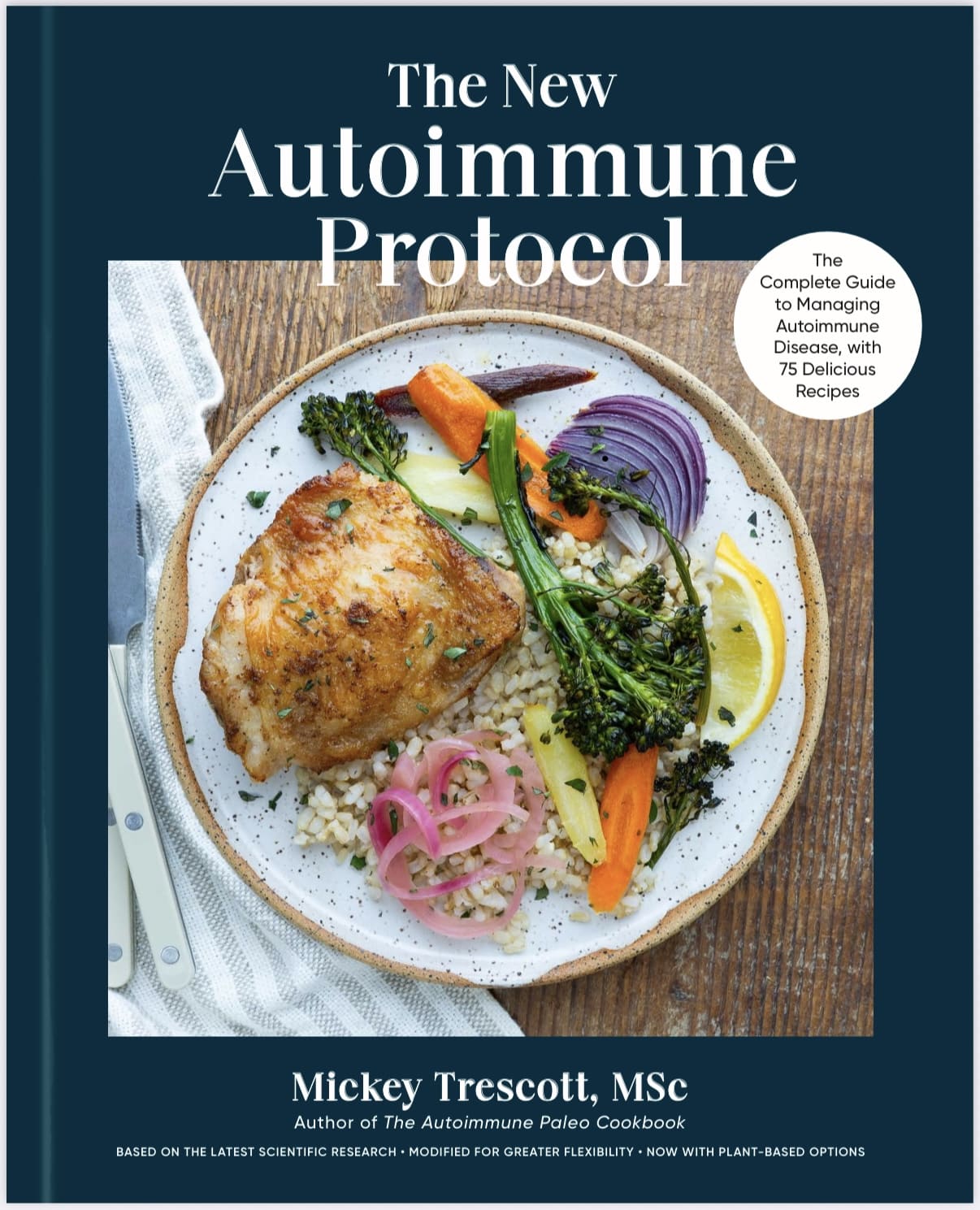
To celebrate the release of The New Autoimmune Protocol, I invited readers to join a guided community experience. Together, we completed the new Transition Phase, moved into 30 days of either Core or Modified AIP, tracked symptoms through three surveys, and supported one another along the way.
While this wasn’t a formal research study, it became something incredibly meaningful. The improvements participants reported closely mirrored many of the outcomes seen in published AIP research—and the personal stories behind those numbers reminded me why I started teaching AIP in the first place.
In Episode 93 of the Autoimmune Wellness Podcast, I take you behind the scenes of this community experience, share the survey results, compare them with published research, and reflect on what I learned watching hundreds of people implement AIP together.
.
Watch the Episode
.
Who Joined the Community?
One of the biggest surprises came before anyone even started.
I expected many participants to be brand new to AIP, but that wasn’t the case.
- 27% were trying AIP for the first time.
- 59% had tried it before.
- 14% were already somewhere in Elimination or Reintroduction when they joined.
Nearly three out of four participants already had experience with AIP.
That told me something important: most people weren’t looking for more information about AIP—they were looking for a better way to implement it.
Many had attempted the protocol before and wanted more structure, accountability, and community support this time around.
.
The Transition Phase Changed How People Started
One of the biggest updates in The New Autoimmune Protocol is the addition of the Transition Phase.
Instead of jumping directly into elimination, participants spent several weeks preparing: stocking their kitchens, identifying obstacles, clarifying their goals, and learning the protocol before making major dietary changes.
Over and over, participants described feeling:
- More prepared
- More confident
- Less overwhelmed
- Better equipped to succeed
Several also shared that simply tracking their symptoms before starting helped them recognize how much progress they had already made—and gave them a clearer picture of what they hoped to improve.
.
Overall Autoimmune Symptoms Improved
After 30 days of either Core or Modified AIP, participants reported meaningful improvements across nearly every symptom we tracked.
Overall autoimmune symptom severity decreased from 5.6 to 3.8 out of 10—a 32% reduction in just one month.
When all individual symptom scores were averaged together, overall symptom burden improved from 4.9 to 3.0 out of 10, representing a 39% reduction.
While not everyone experienced dramatic changes, the overall trend across the community was remarkably consistent.
.
Energy and Sleep Improved
Energy and sleep were measured separately from symptom severity.
Participants rated:
- Energy: 5.5 → 7.0 out of 10
- Sleep: 5.5 → 6.9 out of 10
Those improvements may sound modest, but anyone living with autoimmune disease knows that even a small increase in energy or better sleep can have a tremendous impact on quality of life.
.
Digestive Symptoms Showed the Biggest Improvements
Digestive symptoms improved more than any other category.
Average improvements included:
- Bloating: ↓ 30%
- Gas: ↓ 24%
- Abdominal pain: ↓ 22%
- Bowel irregularity: ↓ 13%
Many participants also reported that bloating had already started improving during the Transition Phase—even before beginning Elimination—which suggests that slowing down, cooking more meals at home, and preparing intentionally may have benefits of their own.
.
Pain, Brain Fog, and Inflammation Improved Too
Beyond digestion, participants also reported improvements in many of the symptoms most commonly associated with autoimmune disease.
Average changes included:
- Inflammation: ↓ 23%
- Daytime fatigue: ↓ 20%
- Joint pain: ↓ 19%
- Brain fog: ↓ 18%
- Skin symptoms: ↓ 18%
- Muscle aches: ↓ 16%
- Headaches: ↓ 15%
- Sinus symptoms: ↓ 14%
- Mood: ↑ 12%
Several participants also described improvements that weren’t included in the survey, including lighter endometriosis symptoms, fewer heart palpitations, healthier-looking skin and hair, and an overall greater sense of wellbeing.
.
The Stories Behind the Numbers
The survey averages were encouraging, but the individual stories were what stayed with me.
One participant saw bloating fall from 10/10 to 1/10, abdominal pain from 10 to 1, and joint pain from 9 to 1 after just 30 days.
Another described dramatically improved energy, less swelling, and significantly less brain fog.
A third participant experienced improvements across multiple systems, including eczema, fatigue, sinus symptoms, digestion, and neurological symptoms.
Not everyone experienced this level of change—but these stories illustrate what’s possible and bring the survey results to life.
.
How Did These Results Compare to Published Research?
Although this community experience wasn’t a clinical study, many of the findings echoed published AIP research.
Across studies involving inflammatory bowel disease, Hashimoto’s thyroiditis, and rheumatoid arthritis, researchers have consistently reported improvements in:
- Digestive symptoms
- Energy
- Fatigue
- Sleep
- Pain
- Brain fog
- Skin symptoms
- Overall quality of life
Seeing many of those same themes emerge from a community implementing AIP in everyday life was incredibly encouraging.
.
My Biggest Takeaway
Perhaps the most meaningful lesson had nothing to do with symptom scores.
It was community.
Watching participants troubleshoot vacations, celebrate wins, encourage one another through setbacks, and simply realize they weren’t alone reminded me that healing isn’t only about food.
Connection matters.
That’s why I’ve decided to keep The Autoimmune Protocol Community open as a free space where people can continue learning, asking questions, and supporting one another long after finishing Elimination.
.
Episode Timeline
00:00 – Introduction and overview of the community experience
02:39 – Why Mickey created The New Autoimmune Protocol community
06:38 – Who joined the community?
09:45 – The Transition Phase
14:33 – What happened after 30 days?
17:16 – Overall autoimmune symptom improvements
19:12 – Energy and sleep results
20:03 – Digestive health results
21:53 – Joint pain and inflammation
22:42 – Brain fog, skin, and other symptom changes
23:59 – Three standout participant stories
28:58 – Comparing the results to published research
32:06 – Biggest takeaways
36:26 – An invitation to join the community
40:11 – Wrap-up
.
Listen to the Episode
.
Transcript
Below is the full transcript of Episode 93 of the Autoimmune Wellness Podcast. This transcript is provided for accessibility and reference.
Title: Beyond the Studies: Results from the New Autoimmune Protocol Community (Ep 093)
Beyond the Studies: Results from the New Autoimmune Protocol Community (Ep 093)
Mickey: What happens when hundreds of people come together to follow the Autoimmune Protocol, not in a research study, but in real life? Over the past few months, our community put the newly updated Autoimmune Protocol into practice. Together, we worked through the Transition Phase, completed 30 days of either Core or Modified Elimination, tracked symptoms along the way, and shared experiences through a series of community surveys, and the results were absolutely incredible.
While this wasn’t a clinical study, many of the improvements our community experienced closely mirrored what researchers have observed in published studies about AIP. But numbers only tell part of the story. Behind every survey response was a person navigating fatigue, pain, digestive issues, brain fog, or years of feeling like nothing else had worked.
So today, I am taking you behind the scenes to share what we learned, the stories that stood out to me, and why I believe community might be the most powerful and often overlooked ingredient in making lasting dietary change.
Mickey: Welcome to the Autoimmune Wellness Podcast. I’m your host, Mickey Trescott, and if you’ve been listening over the last several months, you know that leading up to the release of my latest book, The New Autoimmune Protocol, I invited readers who pre-ordered to join a special community experience. Together, we walked through the updated protocol exactly as it’s outlined in the book, beginning with the new Transition Phase before moving into 30 days of either Core or Modified AIP.
And along the way, participants completed surveys, they tracked their symptoms, they joined live meetups, asked thoughtful questions in the group, celebrated wins together, and supported one another through the inevitable challenges that come with making dietary changes. Today’s episode is a reflection on that experience.
I’m going to share what these community surveys revealed, highlighting some of the participant stories that moved me the most, comparing observations to the published research on the Autoimmune Protocol, and discussing what this experience taught me as both a practitioner and an educator. And because this community became something much bigger and more important than I expected, I’m also going to share how you can continue to be a part of it going forward.
[00:02:39] Why I Created The New Autoimmune Protocol Community
Mickey: Before I dive into the survey results and everything that we learned over the past few months, I want to tell you the story of how this community came to be. So when I was planning the launch of The New Autoimmune Protocol, my publisher asked me what I wanted to offer as a pre-order bonus. Now, most authors do something pretty simple after writing a whole book, right?
Maybe it’s a downloadable guide, or a bonus recipe collection, an exclusive webinar, Q&A sessions. But instead, I had this idea to personally guide my readers through the transition and Elimination phases in an online community setting. And when I explained this to them, they were like … Well, let’s just say they thought I was a little bit crazy, because what I was proposing wasn’t just, like, a webinar or a download.
It was going to be months of support directly from me. And my vision was really to just welcome everybody into a private online community before the book was even released, like two months before. I wanted to guide everybody through the new Transition Phase together before the book came out so that everybody was ready to start right once they had it in their hand.
And then once everybody had their books, I wanted to be able to lead everybody through 30 days of either Core or Modified Autoimmune Protocol. My plan was to host live meetups with small groups every couple of weeks so that everybody could get to know each other, answer each other’s questions, review progress, and create a space where everybody could learn from one another, not just from me.
It was going to be a really big commitment, especially right in the middle of a book launch, but I kept circling back to this thought. And that’s in the last 15 years, I have seen that one of the biggest predictors of success with the Autoimmune Protocol isn’t having all the information. And this is coming from somebody who now has written four books on this topic.
It’s having support while you’re putting what you know into practice. So with this community, I wanted to bridge that gap. I also realized that this was a unique opportunity because the book launch was going to hopefully have this big marketing moment. Hundreds if not thousands of people would be implementing the updated protocol at roughly the same time.
I wanted to give everybody starting around that book launch timing the opportunity to do it together and see what we could learn from each other. So in addition to the community, I had this idea to build community surveys into the experience. Participants completed one at baseline before they started transition or made any changes.
They did another one after the Transition Phase, right as they entered Elimination, and then one final survey after completing 30 days of either Core or Modified AIP, marking that beginning, middle, and end of the community experience. Now, I want to be really clear about something. This was not a clinical study, not official.
I’m not presenting these findings as scientific research, but that doesn’t mean that this experience isn’t valuable. Real-world implementation teaches us things that clinical studies can’t. It helps us understand what people struggle with, what surprises them, what motivates them to keep going, how they experience change in their everyday lives.
And as I started reviewing the survey responses, I realized there’s so much still to learn, not just from the numbers, but from the stories that people share as they implement a dietary protocol. And that’s what I want to take you through today.
[00:06:38] Who Joined the New Autoimmune Protocol Community?
Mickey: So the first thing we’ll talk about is who joined this community experience.
Were these people who mostly were discovering AIP for the very first time, or were they people who had experience and done this before? And the answer actually surprised me. On that baseline survey, I asked this question and learned that only 27% of participants reported that they would be attempting the Autoimmune Protocol for the very first time.
That means that nearly three out of every four people already had experience with AIP. From that, the further breakdown is that 59% reported having tried it before. Another 14% were either in the Elimination or the Reintroduction Phase when they joined the community. That told me something really important.
People weren’t necessarily looking for somebody to convince them that AIP could help. They already knew that. They were looking for a better way to implement it. In fact, a lot of them had a history of trying it in the past. And as I read through the feedback from these onboarding surveys, I started seeing that reflected in people’s goals that they reported coming into the program.
So of course, everybody hopes to improve their symptoms, right? This is why we are here. People want less joint pain, better digestion, more energy, clearer skin, fewer flares, and the ability to live your life and get back to the activities you love. But many of the comments went much deeper than that, and I’m just going to read a few of them to you.
One participant wrote, “I want to feel more normal. I want to protect my body as best I can from future problems.” Another shared, “I’m tired of being tired. I’m hoping AIP, along with medication adjustments, can help me get my energy back and do the things that I love.” Other members weren’t starting from scratch.
They were hoping to learn from their previous experiences. One person wrote, “I did AIP before, and I felt so great, but I rushed through reintroductions. This time, I want to do it slowly and methodically so I really understand my triggers.” Another said, “I want better tracking of my symptoms during reintroduction. I didn’t really do an inventory the first time.”
And one comment really captured why I wanted to build this community in the first place, “I want the support. I feel the group approach will be really good for me.” Because again, over the last 15 years, I’ve learned that implementing AIP isn’t just about having the details.
You guys have all the details, right? It’s about having a plan, knowing what to do when life gets busy, and understanding how to track your progress, when to move forward, and how to navigate setbacks without feeling like you’ve failed. And sometimes it’s simply about knowing you’re not doing it alone.
These responses reminded me exactly why I chose to pair this book with a live community experience.
[00:09:45] The Transition Phase
Mickey: Next, we’ll talk about the Transition Phase. One of the biggest changes in my new book, The New Autoimmune Protocol, is something that didn’t exist in early guidance for AIP, the Transition Phase. When I first started teaching about AIP many years ago, the common advice was to just pick a day, clean out your pantry, go grocery shopping, and jump straight into Elimination.
I did it myself. A lot of others did it, too. And for some people, that worked. But over the years, myself and other leaders in the AIP community noticed that the biggest barrier to success usually wasn’t the Elimination diet itself. It was everything that comes before it. That’s why for the new book, the Transition Phase got completely updated now as a five-step process that thoughtfully sets each person up for success in Elimination.
And for the community, we went through a guided Transition Phase the month before the book came out. I gave everybody weekly lessons with downloadable resources from the book. I walked everyone step by step through all the exercises so that they’d be fully ready to embark on Elimination together once the book was in their hands.
So this is when the second survey was captured, right at the end of Transition as they were starting Elimination, and there are a few questions about their experience walking through the Transition Phase. I was really happy to read over and over again that people described feeling prepared, supported, and empowered.
One participant wrote, “It’s been good for me to prepare, especially as a group. It’s given me the opportunity to do this the right way this time. I feel empowered to do it.” Another shared something that really captured what I hoped this phase would accomplish. “This guided Transition Phase has been very supportive, enlightening, thoughtful, and proactive, not reactive. I’m not entering AIP on the fly, but intentionally prepared because this Transition Phase assesses roadblocks before they happen.”
And yes, you guys, a real person wrote that. I could not have summed up my hope for the Transition Phase in a better way. I love the phrase proactive, not reactive.
And several participants talked about how simply tracking their symptoms before making any changes gave them a new perspective. One wrote, “Getting a solid baseline of my symptoms was super helpful, and getting clear on my why was incredibly empowering. I’ve been in the trenches so long that I’d forgotten my why, and I couldn’t even see the progress that I’d already made.” Others realized the biggest obstacles weren’t nutritional at all. One participant reflected, “I didn’t realize the nature of my psychological and social obstacles for nutritional success.” I think that is such a honest observation.
So often we think success with AIP comes down to willpower, but many of the real challenges are actually emotional, logistical. They’re about habits and routines, family, work, travel, the fear that if you have struggled before, you’re going to struggle again.
The Transition Phase creates space to recognize those challenges before you’re trying to change everything that you eat. Now, not everybody in the group loved moving more slowly. A few participants who had done AIP before said that they were eager to get started. They felt that the pace was a little too slow.
Others joined the community late, so really close to book launch. There was a big promotional push, and everybody felt like they were playing catch-up. That’s okay. The Transition Phase isn’t meant to be rigid. It’s actually a framework that’s meant to be personalized so that each person can move through at their own pace, depending on your experience and circumstances, and we modified that for this group setting.
So most people got about 30 days, but in reality, some people might actually need a couple weeks. Others might actually need a couple of months. What struck me the most was that even considering how the phase had to be standardized for the group, how many people described feeling ready. Now, not perfectly ready, not without fear, but they did feel ready, and that is a really important point.
The goal of Transition is to help you begin the Elimination phase with more confidence than you would have otherwise. And right as the group was finalizing that transition, the book was released. Everybody had their copies in hand, whether that’s the hardcover or the Kindle copy, and this happened one week before they officially started the Elimination phase together. And this is when we really saw what the group experience would yield.
[00:14:33] What Happened After 30 Days?
Mickey: So what happened after that 30 days? I know you’re waiting to hear about the results, but before we chat about that, I just want to acknowledge something. Doing AIP during the summer is not ideal. As the timing of this group was determined by my book launch, I didn’t have a lot of control over when we would make this happen.
But I have observed over the years that summer holidays and winter holidays are usually the most difficult times to make the Elimination phase work. There are people out there that have done it, a lot of people in the group did it, but I’m just telling you, we had participants from all over the world, including Australia, New Zealand, the UK, Europe, South Africa.
Most of our members lived in the Northern Hemisphere, making this a particularly challenging season to take on a new health routine. And as people implemented the protocol, there was a lot of troubleshooting around summer travel, vacations, kids home from school, barbecues, weddings, camping trips, and all of the things that tend to fill up the calendar this time of year.
I was incredibly impressed by the resilience of the group and how everybody showed up, not just to ask questions, but share what was working for them and encourage one another through these inevitable challenges. Turns out there wasn’t just one person camping, right? That thread turned into a whole brainstorming session for everybody who had a camping trip planned the whole summer.
And so at this point, those who felt ready after completing the Transition Phase moved on to 30 days of either Core or Modified AIP. Again, some of these people had already been in Elimination when the community began, so they just continued on their plan. Others decided that this timing wasn’t quite right for them, and they stayed focused on education and preparation, planning to begin Elimination later when the timing made more sense.
And for those that did complete the 30 days of Elimination, I asked them to complete one final survey to see how their symptoms had changed. I also left plenty of room for written feedback, again, so that everybody could tell their story in their own words.
And before I share those results, I want to repeat something I mentioned earlier. This is not a clinical study. These are self-reported survey responses from members of the community. They provide a snapshot of what the group experienced after implementing the protocol. And overall, I found the results incredibly encouraging, and I think we can learn a lot from them.
[00:17:16] Autoimmune Symptom Severity Results
Mickey: So let’s start with the big picture. Before beginning the program, participants rated their overall autoimmune symptom severity at an average of 5.6 out of 10. So for this measure, I asked them to rate on a 1 to 10 scale what they would consider the collective of their autoimmune symptoms, even if they experience multiple conditions together. So if they have psoriasis, it might be skin lesions, rheumatoid arthritis, joint pain, multiple sclerosis, the neurological symptoms, and so on.
Now, in 30 days, that average had dropped from 5.6 to 3.8 out of 10, which is amazing. That’s a 32% reduction from baseline in overall symptom severity in just one month of AIP. I find that to be incredibly encouraging.
I also asked participants to rate a long list of individual symptoms, including fatigue, joint pain, bloating, headaches, skin issues, brain fog, mood, digestive symptoms, and more. And when I averaged out all of those symptom scores together, the overall symptom burden dropped from 4.9 out of 10 to 3.0 out of 10, which is a 39% reduction from baseline.
So again, I found it really meaningful that every symptom we tracked improved on average. Of course, that doesn’t mean that everybody experienced dramatic changes. Some people had subtle improvements. A few didn’t notice much change at all. That’s exactly what you would expect in a real-world group with different diagnoses, medications, health histories, starting points.
But looking at this group as a whole, there was a very consistent trend towards improvement. So next let’s take a look at some of those individual symptoms a little bit more closely.
[00:19:12] Energy and Sleep Results
Mickey: The first area I want to highlight is energy and sleep. These were measured a little differently than the symptom scales. Instead of asking people how severe the symptom was, I asked them to rate the quality of their energy and sleep on a scale of 1 to 10, with 10 being the best. Average energy increased from 5.5 at baseline to 7.0 out of 10. That’s a great improvement.
Sleep improved from 5.5 at baseline to 6.9 out of 10, also a great improvement. They might not sound like huge changes at first glance, but when you’re living with autoimmune disease, having enough energy or even just a little bit more energy to make it through your day or finally waking up feeling a little bit more rested can make a tremendous difference in your quality of life.
[00:20:03] Digestive Health Results
Mickey: Next, moving on to the individual symptom categories, digestive symptoms showed some of the biggest improvements in the entire survey, and having done this for a long time, I am not surprised by this one. Bloating was the single largest improvement we measured, decreasing by just over 30%. Gas improved on average by 24%, abdominal pain by 22%, and bowel irregularity by roughly 13%.
Those numbers match what people described in their written responses. Again and again, community members talked about less bloating, less gas, more comfortable digestion, and healthier bowel movements. One participant wrote, “I am not bloated at all anymore, and my joint pain is almost zero. These were the two symptoms I wanted to address, and they both went away after two to three weeks.” Amazing.
Another shared, “No heartburn, much less flatulence, reduction in overall pain.” And somebody else wrote, “The biggest change has been less bloating, eating differently, learning to chew more slowly, and cooking with foods I haven’t used before.” I also thought it was interesting that bloating had already started improving for many people during the Transition Phase before they even completed the Elimination phase.
In fact, that’s really the only symptom category that improved before people started Elimination, because I had those Baseline, Transition, and Elimination surveys. While we can’t really draw conclusions from that alone, it does suggest that even just slowing down, planning your meals, cooking more at home, and making some of the gradual changes might have been helping people even before they fully implemented AIP.
[00:21:53] Joint Pain and Inflammation
Mickey: Moving on to other symptoms, pain and inflammation were another area where we saw meaningful improvements. General inflammation improved by about 23%, joint pain by nearly 19% muscle aches by 16%, and fatigue by just over 20%. In the written comments, people described those changes in simple but meaningful ways.
“Less aches and pains,” “Decreased joint swelling,” and, “My RA-related symptoms haven’t been this low in years.” Those statements might sound straightforward, but if you’ve lived with chronic pain, you know how significant they really are. Less pain means sleeping better, moving more comfortably, exercising again, gardening, playing with your kids, or simply getting through the day without constantly thinking about your joints.
[00:22:42] Brain Fog, Skin, and Other Symptoms
Mickey: The improvements weren’t limited to just digestion and pain. Brain fog improved by nearly 18%, as did skin symptoms. Headaches improved by about 15%, sinus by 14%, and mood improved by about 12%. What I found encouraging wasn’t that one symptom improved more than another. It was that nearly all of the areas that we measured moved in the right direction, and seeing that improvement spread across so many different systems was really encouraging.
[00:23:11] Other Improvements – Endometriosis, Heart Palpitations, Skin and Hair
Mickey: One thing I wasn’t expecting was how many participants described improvements that weren’t included in the survey. One person shared that their endometriosis symptoms had improved dramatically, with lighter periods and much less clotting. Another noticed that their resting heart rate had dropped, and they were no longer experiencing heart palpitations.
Someone else mentioned that friends had started commenting on how good their skin and hair looked. And one of my favorite responses was also one of the shortest. “My overall wellbeing is much better than before I started AIP.” I love this because this is exactly why I do what I do, and what I hope that everybody achieves when they implement this.
[00:23:59] Three Standout Individual Stories
Mickey: So after looking at the community survey averages, I thought it would be interesting to zoom in and look at a few individual participant stories. One of the advantages of collecting symptom scores from each person is that I could actually see exactly how their symptoms changed over time. Combined with the written feedback, it painted a much more complete picture than numbers alone.
Even though they don’t represent everybody’s experience and were better than average when looking at the group, I wanted to highlight these three stories because they just illustrate what is possible.
[00:24:36] Story One: Digestive Relief and Less Pain
Mickey: Story one is about a participant who joined hoping to improve bloating and joint pain. When they started, they rated both bloating and abdominal pain as a 10 out of 10, so as bad as it gets.
Joint pain was a 9, inflammation was a 6, and they rated their sleep at just 3 out of 10. 30 days after AIP, the picture looked completely different. Bloating dropped from 10 to 1, abdominal pain went from 10 to 1, joint pain improved from 9 to 1, inflammation dropped from 6 to 1, and sleep improved from 3 to 7.
And when I read those numbers, I had to go back and double-check them because they are really good. Here is what this participant wrote, “I’m not bloated anymore. My joint pain is almost 0%. These were the two symptoms I wanted to address. They both went away after about two to three weeks.” They also mentioned one thing that I thought was so insightful, “I made one decision at the start, and that has been very liberating.”
I thought that was such an interesting observation. Sometimes one of the hardest parts of changing your diet is making dozens of decisions every single day. Once the decision is made to do AIP, some people often tell me they feel like they can finally focus on healing instead of constantly debating what to eat.
So I love this, and I’m really happy for this person.
[00:26:06] Story Two: More Energy and Clearer Thinking
Mickey: For story two, this participant came into the program dealing with fatigue, brain fog, low energy, swelling, and mood changes. They rated their energy at just 2 out of 10. Fatigue and brain fog were both a 9.
By the end of the Elimination Phase, their energy had increased to 7 out of 10, from 2, which is amazing. Their fatigue had dropped to 3, their brain fog had improved to 2, and their mood had also improved substantially. They described it this way, “I’m less tired, less swollen overall. My watch fits on a smaller hole, my ankles are less swollen, my stomach is flatter, and I have less fatigue and brain fog.” I love that they include the details like their watch fitting differently.
It’s the kind of thing that I can’t really capture in a symptom questionnaire. And this person also finished by saying, “The changes I feel when I’m on AIP are almost magical.” Now, as a researcher, I probably wouldn’t use that word to describe this, but I completely understand what they mean.
When you’ve lived with persistent symptoms for years, feeling this noticeably better can be hard to believe.
[00:27:17] Story Three: Improvements Across Multiple Systems
Mickey: Our third story really illustrates how interconnected our bodies can be. This participant wasn’t just dealing with one symptom. They had eczema, fatigue, brain fog, low energy, digestive symptoms, and chronic sinus issues.
After the 30 days of AIP, their skin symptoms improved from a 9 to a 2, their fatigue improved from a 6 to a 1, brain fog improved from a 7 to a 1, energy increased from 3 to 8, and those sinus symptoms improved from a 6 to a 1. Here’s what they wrote. “Skin much less inflamed. Eczema basically gone. Energy much more stable. Neurological symptoms basically gone.” And then they added, “It feels so good to have stable, consistent digestion, stable energy, and clear skin.”
Obviously, these are three individual stories, they don’t represent everybody’s experience, but I wanted to share them because I think they bring the survey data to life. The averages tell us what happened across the group, and these stories show us what that looked like for individual people. And as I read through all of the survey responses, I couldn’t help notice that many of these themes, improvements in digestion, energy, pain, skin symptoms, and overall quality of life, they felt very familiar.
They’re the same patterns we’ve been seeing in the published research using the Autoimmune Protocol for specific conditions. So next, let’s do a quick comparison on what the community experienced with what we’ve learned from the clinical studies using AIP as an intervention.
[00:28:58] How Do These Results Compare to the Research?
Mickey: We’ve already discussed that the published AIP studies were designed as clinical research with standardized protocols and carefully measured outcomes, and what I collected here was a community survey. People with wildly different diagnoses, medications, life circumstances, and implementing AIP just out in the real world. They are not directly comparable.
But I do think that they complement one each other, and they hone in on the potential of AIP to help manage autoimmune symptoms and improve quality of life. Clinical research tells us whether an intervention can work under controlled conditions. Real world implementation helps us understand what it looks like when people actually try to fit it into their everyday life.
And I found it really fascinating how closely a lot of these themes overlapped. The first AIP study, published in 2017, looked at people with Crohn’s disease and ulcerative colitis, and these researchers found that 73% of participants achieved clinical remission by week six, with significant improvements in quality of life, and their follow-up studies showed changes in intestinal gene expression associated with reduced inflammation and tissue repair, as well as real world survey data showing similar outcomes in people implementing AIP on their own. If you want to listen to a deep dive into these studies, be sure to go back to episode 59 and 63 of the podcast.
Similar research using AIP for Hashimoto’s thyroiditis found significant reductions in symptom burden and inflammatory markers, while a second study out of Poland demonstrated improvements in nutrient intake, fatigue, brain fog, skin symptoms, and even thyroid ultrasound findings after 12 weeks. Again, if you want to listen to more about those studies, check out episodes 61 and 65.
And just this year, the first peer-reviewed clinical study in rheumatoid arthritis found improvements in disease activity, pain, fatigue, sleep, and quality of life. You can listen to my interview with the researcher of that study, Julianne Taylor, in episode 88.
So when I compare those findings with what I saw in our community, of course, there was a lot of overlap there. Across both the research and our survey, people consistently reported improvements in energy, digestion, pain, brain fog, sleep, skin symptoms, and overall quality of life. The Autoimmune Protocol is emerging as a framework for learning about your body. Sometimes it leads to dramatic symptom improvement.
Sometimes it reveals that other pieces of the puzzle, sleep, stress, medications, nutrient deficiencies, hormones, other factors still need attention. All of those outcomes are valuable because they help you move forward with more information. I’ve always said that AIP is not the destination. It’s a tool. And after reading every survey response, I think this community demonstrated that beautifully.
[00:32:06] My Biggest Takeaways From The Survey Results
Mickey: So let’s move on to talking about my biggest takeaways from the group experiment. Looking back on the experience, there were a few things that really surprised me. The first was just how many people came into it having tried AIP before. Nearly three-quarters of the participants weren’t starting from scratch. They had attempted AIP in the past or were already somewhere in the process when they joined the community.
That tells me that something has shifted over the last 15 years. The challenge isn’t introducing people to AIP. Most people can find the food lists or learn the basics online. The challenge is still implementation, figuring out how to make it work when you have a job, a family, travel, holidays, and everything else that comes with real life. And that was one of my biggest goals with the new book, The New Autoimmune Protocol, to create a systematic process that is more practical, flexible, and approachable, and I think this community reinforced just how important that is.
Another thing that stood out to me was how valuable it was to have a place where people could ask questions. Of course, some questions were about food, but a lot of them weren’t. A lot of people were needing help navigating vacations, their motivation, their setbacks, reintroductions if they had come through a little bit further along.
And I noticed that a lot of people weren’t lacking information. They just needed somebody to say, “Yes, that actually is a common experience, and I felt that way before,” or, “Here’s what works for me.” And a lot of the support that was given in the group wasn’t by me. It was by seasoned members sharing with others what they had learned or everybody collaborating to brainstorm ideas for a specific challenge for one member, only to discover that those ideas were actually really helpful for others, too.
One thing I feel especially encouraged by is how well the new Transition Phase was received and to see so many people put it into practice together. That was probably the biggest unknown for me when I was writing this new book. I knew from my years of coaching that slowing down and preparing first, focusing on specific barriers would help people feel more confident going into Elimination, but I didn’t know how people would embrace it.
And reading through the feedback, it was clear that many did, and instead of feeling rushed, a lot of community members described feeling actually organized. They had time to get their pantries ready, stock the freezer, find recipes they enjoyed, think through some of those potential obstacles, and reconnect with why they were doing this in the first place.
Now, it didn’t remove every challenge. Those always come up. I can tell you this for sure. You’re going to have challenges. But it made those challenges feel so much more manageable.
I was also reminded how valuable symptom tracking can be. Several participants told me that they wished they had tracked their symptoms the first time they tried AIP. Without a baseline, it’s surprisingly easy to overlook gradual improvements, so writing things down helps you recognize progress that might otherwise go unnoticed.
And finally, this experience reinforced something I’ve believed for a long time. There isn’t one successful picture of what an AIP journey looks like. Again, some of these participants experienced dramatic improvements in just a month. Others saw smaller but meaningful changes. Some realized that food wasn’t the only piece of the puzzle and that those other pillars, sleep, stress, movement, medications, or other factors, actually needed more of their attention.
And you guys know this already by now, but none of these outcomes represent failure. They are all valuable because they move someone closer to understanding more about their health. And that’s what The Autoimmune Protocol has always been about, not perfection or guaranteeing a particular result, but creating a structured framework that helps you learn how your own body responds.
And if there’s one thing this community reminded me, it’s that success doesn’t look the same for everyone. The goal is for each person to come away with a clearer understanding of what helps them feel their best, and I’m hoping that is what many in the community walked away with.
[00:36:26] Looking Ahead and An Invitation to Join the Community
Mickey: So one of the unexpected things that came out of this experience was realizing that community was something I had been missing in my own work. So when I first started blogging and sharing my personal health journey back in 2011, I felt incredibly connected to the online AIP community. The comments on blog posts turned into conversations and often friendships.
Some of the longest friendships I’ve had in my adult life now came out of that time. Facebook groups were active. You guys, I’ve been doing this since before Instagram even existed, but when that began, it was just so much smaller and felt like a place where people genuinely got to know each other. It was really easy to connect with people who were walking a similar path.
And over the years, we all know how that’s changed, right? Social media has become so much less meaningful. Algorithms have taken over. Conversations are just bite-sized. It’s really hard to build real relationships in these spaces, and honestly, I miss those early days.
So what surprised me about this community wasn’t just the survey results. It was the experience of being in the group, watching people connect with each other. During the program, we had these online meetups where we would spend time as a whole group in discussion, doing Q&A, but then we’d break out into smaller groups of three or four people. These conversations ended up being everybody’s favorite parts.
People shared what was working for them. They talked through challenges. They compared notes on recipes, upcoming travel, reintroductions, their everyday life. And they celebrated their wins together. And what I heard over and over again was, “I do not know anybody in my life who understands what this is like.” There is just something so powerful about sitting in a small group with your people. You don’t need to explain yourself. They already get it. And so all of that reminded me of something that we have talked about on this podcast. Healing is not just about food. It’s also about connection.
So when I was thinking about how I was going to close down this community when the book launch ended, I got really sad because I realized what a unique need it was filling in the autoimmune community, and how personally fulfilling it was for me to facilitate.
So I have decided to run another experiment. I’m going to open up the community to everyone for free as a place where the AIP community can come together, discuss topics of interest, share resources and recipes, and meet other people who are in various stages of implementing AIP.
Now, I won’t be doing a guided program like I did for the book launch, but I will be facilitating monthly meetups to answer your questions, post updates on new research and podcast episodes, and talk through topics that come up as people implement AIP.
But just as importantly, I will continue facilitating those small group conversations because I don’t want this just to be another place where people go to consume information. We have so much of that, right? I want it to be a place where you can all get to know each other, learn from each other, and build the kinds of connections that are so hard to find on today’s social media platforms.
So whether you are brand new to AIP, coming back to it after trying it years ago, or you’ve been doing this for a long time, you just want to stay connected to the community, I think you will find something valuable there. If that sounds like something you would enjoy, I’d love to have you join us. You can learn more at theautoimmuneprotocol.com/community, and I will also include a link in the show notes.
[00:40:11] Wrap-Up and Closing
Mickey: Whew. So that brings us to the end of today’s episode. I have a couple quick notes. First, if you are one of my pre-order angels and joined me in The New Autoimmune Protocol community over this past few months, thank you so much for showing up, asking thoughtful questions, sharing your experiences, completing the surveys, and just being a part of this community. This episode truly would not have been possible without your willingness to be a part of the process. I hope you experienced success and took something away that helps you feel your best going forward.
And if you have been listening and thinking about starting AIP, maybe giving it another try, I hope today’s conversation has given you both practical information and encouragement. Whether your progress is dramatic or gradual, every step you take teaches you something about your health, and that is a worthwhile investment.
If you enjoyed this episode, I would love it if you’d take a moment to follow or subscribe to the Autoimmune Wellness Podcast wherever you listen. And if you have a minute to leave a rating or review, it really does help people discover the show.
And if you’d like to learn more about my new book, The New Autoimmune Protocol, or join the community we talked about today, you’ll find the links in the show notes. Thank you so much for listening, and I’ll see you next time on the Autoimmune Wellness Podcast.
.




0 comments