
What does healing look like 15 years into living with autoimmune disease? For me, it looks very different than it did in the beginning.
These days, I’m less focused on getting out of a health crisis and more interested in maintaining stability, adapting to changes as I get older, and building resilience for the decades ahead. After a year of navigating a new autoimmune diagnosis, perimenopause, and some unexpected discoveries about my bone health, I’m grateful to be in a really good season.
In Episode 102 of the Autoimmune Wellness Podcast, I’m sharing what’s changed since my January healing update, what has stayed remarkably consistent, and how I’m thinking about long-term health as I move into this next chapter.
.
Listen to the Episode
.
What I’m Eating and How My Autoimmune Conditions Are Doing
After 15 years of AIP and careful reintroductions, my diet is more expansive than ever. Gluten is the only food I strictly avoid because of celiac disease, and I continue to experiment with individual tolerances, including some surprising progress with dairy.
I’m also happy to report that my autoimmune conditions have been remarkably stable. My psoriatic arthritis has remained quiet, with no further uveitis flares, and my Hashimoto’s continues to be well managed on the same thyroid medication I’ve taken for more than a decade.
One thing I’ve learned is that stability is worth celebrating. Not every healing update needs to involve a new intervention or dramatic improvement.
.
Perimenopause, Hormone Therapy, and an Unexpected Bone Health Discovery
One of the biggest changes this year has been my experience with hormone therapy. Cyclical progesterone has made a meaningful difference in my sleep, which had gradually declined as I entered perimenopause.
I also had my first DEXA scan and was surprised to discover osteopenia in my hips. Despite being active, strength training, and eating a nutrient-dense diet, my history of celiac disease and earlier years of illness likely contributed to my bone health.
That discovery led to some new conversations with my doctor, including a trial of low-dose testosterone. I noticed an unexpected improvement in longstanding tendon pain, although I can’t say for certain what caused it. Combined with physical therapy and progressive strength training, I’ve been able to rebuild strength and movement capacity in ways I haven’t experienced in years.
.
Building Resilience and Enjoying a Good Season
Another important part of this update is stress. With the intense period of publishing and promoting The New Autoimmune Protocol behind me, my stress level has come down significantly, and I think that’s contributing to how well I’m feeling.
My supplement routine remains minimal, and the foundation of my health hasn’t changed much: personalized nutrition, sleep, movement, stress management, and appropriate medical care.
After 15 years, I’m increasingly convinced that healing isn’t about finding the next breakthrough or preventing every future setback. It’s about building the knowledge, support, and resilience to adapt when life changes—and making room to actually enjoy living when things are going well.
.
Resources
- The Autoimmune Protocol
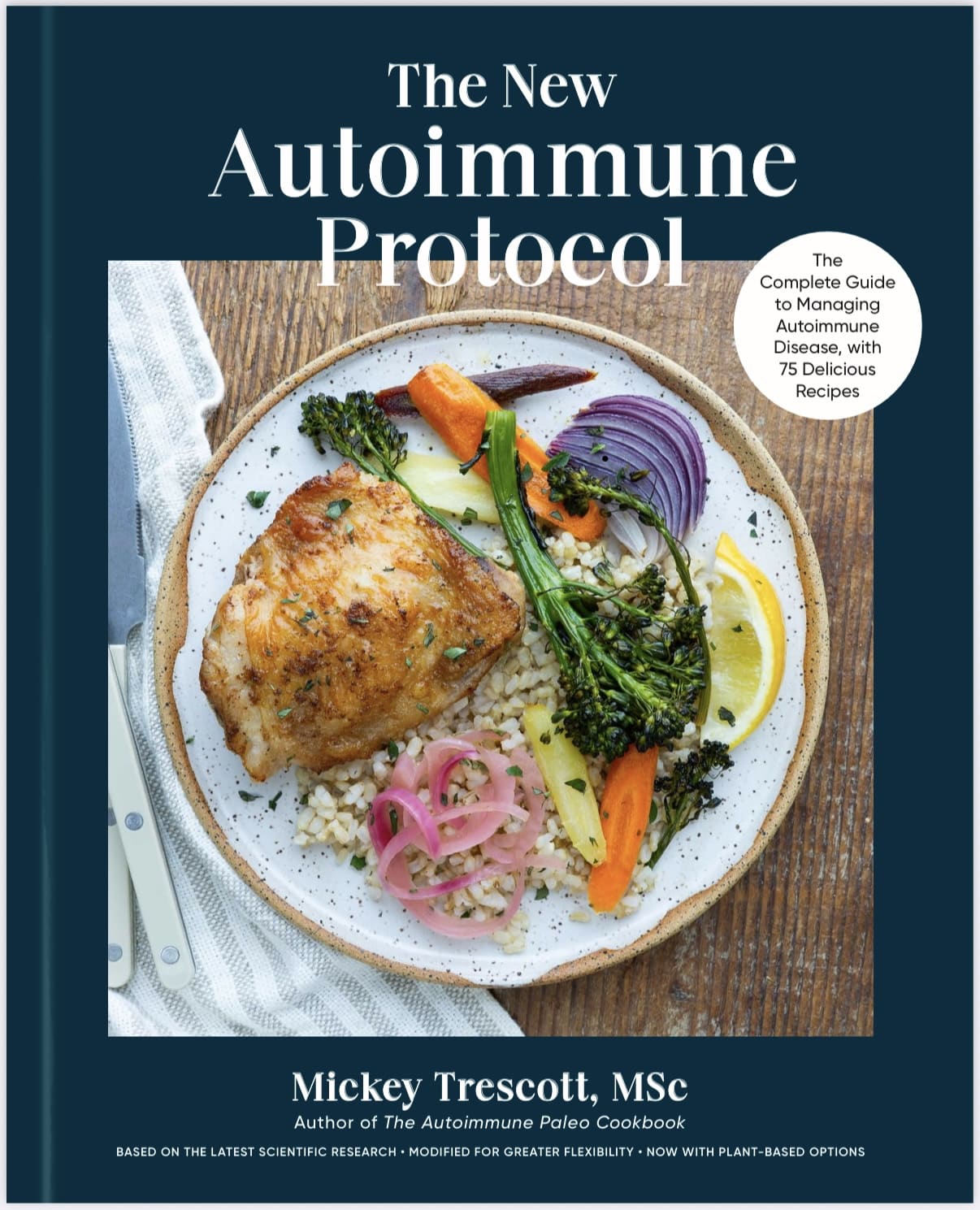
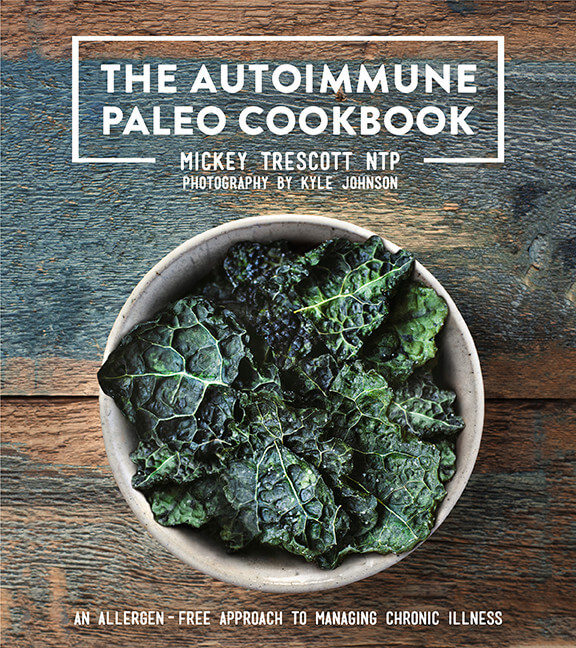
- The New Autoimmune Protocol by Mickey Trescott
- Episode 56: Healing Isn’t Linear — My January Healing Update
- Instagram: @mickeytrescott
.
Episode Timeline
00:00 – What healing looks like 15 years into autoimmune disease
03:10 – What I’m eating these days
10:43 – My autoimmune update
13:22 – Hashimoto’s and thyroid treatment update
15:32 – Perimenopause, hormone therapy, and sleep
19:06 – My DEXA scan and osteopenia surprise
22:13 – Testosterone, tendon pain, and getting stronger
25:18 – Stress, resilience, and enjoying a good season
28:00 – An update on supplements
29:14 – Wrap-up and closing
.
Episode Transcript
Below is the full transcript of Episode 102 of the Autoimmune Wellness Podcast. This transcript is provided for accessibility and reference.
Title: My Healing Update: Autoimmunity, Perimenopause & Building Resilience (Ep 102)
Mickey Trescott: What does healing look like 15 years into living with autoimmune disease? For me, it looks a lot different than it did in the beginning. Back then, healing was about getting out of a really difficult place, figuring out what I could eat, getting my energy back, finding the right dose and type of medication, and slowly rebuilding my health.
These days, the changes are much more subtle. I’m paying attention to how my body responds to different things as I get older. I’m newly navigating perimenopause and adapting to a third autoimmune diagnosis I got just a year ago, all this new information, and thinking a lot more about the health and resilience that I want to have, not just now, but decades from now.
And right now, I’m really grateful to be in a good season and to have this project before me. So today, I want to share what’s been working, what I’ve changed, what hasn’t really changed much in the last year, and what I am still learning about healing 15 years in.
Welcome to the Autoimmune Wellness Podcast. I’m your host, Mickey Trescott. I am a functional nutritionist, author, and educator, and I’ve been managing autoimmune disease for a very long time. I live with celiac disease, Hashimoto’s thyroiditis, and psoriatic arthritis, and this podcast is where we explore the latest research, practical strategies, and real-life experiences that can help those of us living with autoimmune disease make informed decisions about our health.
As always, this podcast is for educational and informational purposes only and isn’t intended to diagnose, treat, or replace individualized medical advice.
Way back in January, I shared a healing update, and quite a bit has happened since then. Some of it involves things in my health routine that I have added or changed, especially as I’ve been navigating perimenopause and started to think more seriously about bone health. More on that in a little bit.
But some of the most meaningful parts of this update are actually about stability. I am so happy to report that my autoimmune symptoms have been really quiet. My stress level has come down so much, especially since that book release. And I’m sleeping and moving better than I have in a long time.
And one thing I’ve learned after doing this for so long is that healing isn’t a finish line. This is part of why I do these updates, is because I want to demonstrate that there isn’t a point where you figure everything out and your body never changes again. Over time, we are building a foundation that makes the changes that are natural and normal and expected easier to navigate.
So I thought I’d bring you up to speed on where things stand right now, what I’m eating, what’s kinda happening with my autoimmune conditions, and some changes that I’ve made specifically with my hormone replacement and my movement routine, and kinda what I’m thinking as I head into this next chapter.
[00:03:10] What I’m Eating These Days
Mickey Trescott: Let’s start with food because I know that it’s always one of the biggest questions when I share these updates. What am I actually eating these days? So in my January healing update, episode 56, I shared that after about 15 years of AIP and a lot of diligent reintroduction, and to be clear, I’ve not been doing the elimination diet for 15 years. I did my original elimination 15 years ago, and I have been reintroducing and maintaining my personalized diet since then. So my diet is really personalized. It is very expansive, and that is still where I’m at today.
At this point, gluten is really the only food I strictly avoid because of my celiac disease. I do eat grains and pseudo-grains occasionally, like rice, quinoa, and oats. I eat plenty of nuts and seeds, and even some nightshades, depending on the type and amount. So I tolerate potatoes really well. I tolerate some spices. I do not tolerate as well fresh peppers, and tomatoes, and eggplants, the whole vegetable doesn’t really work for me.
Although, I will say I experimented a lot over this past summer. I grew some cherry tomatoes. I definitely ate them. They gave me some joint pain. I will say that homegrown tomatoes for me were worth it, having that experience, and I just say this to acknowledge that sometimes we really want to live our life, and have an experience, and deal with the consequences. And for me at this point, I know exactly what I was getting into, so I had a little moment with the tomatoes this summer.
Eggs are something that is also kind of a gray area food for me. They still give me a little bit of digestive symptoms, so I limit them. I generally don’t really eat them at home. I can eat them in baked goods. I can eat them maybe one or two meals a week, but any more than that, I have a problem. So I just loosely avoid them. Beans are something that I can eat with a little more attention to preparation and portion size.
So earlier this year, I shared a pretty surprising development with dairy. I have avoided it many, many years because of a severe sensitivity that started when I was a kid. And in the last year, I accidentally reintroduced a small amount and I discovered that I could tolerate some hard cheeses. So I’ve experimented a little more since then, and I’m really just trying to figure out where the threshold of tolerance is for me with dairy. I’m tolerating butter. I’m tolerating hard cheeses. And I experimented a little bit with softer cheeses, and I notice some digestive symptoms. I get some acne on my face when I eat them.
So I’m pretty sure that that is going to be the boundary for me, which is, small doses, occasional exposure to maybe harder cheeses, butter, I’m good, but I’m not really doing any other dairy other than that. And it’s been really fun to play around with that this year, especially my family loves to do a big cheese plate at our gatherings. And so it’s been a good opportunity for me to experiment a little bit and see what I can tolerate.
And I mention this because it is a really good example of what a long-term reintroduction can look like in real life. When we reintroduce foods, it isn’t always a simple yes or a no to an entire food category. Sometimes the specific food matters, sometimes the preparation matters, sometimes it’s the quantity, and sometimes your tolerance can change over time. I have no idea why now at 41 my lifelong dairy sensitivity, at one point I used to call it an allergy, has changed. It could be my microbiome. It could be my hormones with perimenopause. At any rate, I’m really happy to be able to unfurl the sails a little bit and have a little bit of dairy because it just makes things a little bit easier.
Another good example are beans. So I said already, I’m not somebody who can eat unlimited amounts of beans without consequences. But I have found that if I soak them in salted water, if I rinse them really thoroughly, I cook them well, and I keep the portion reasonable, I do fine. And I’ve especially been enjoying them now that we’re heading into fall here in the Northern Hemisphere. I’ve been making lots of soups and stews with root vegetables, and beans are such a easy addition.
They’ve also got protein and fiber, so they’re nutrient-dense. I have been making the nightshade-free chili from the New Autoimmune Protocol on repeat, which really hits the spot. And if you’re not familiar with a nightshade-free chili, I’ve actually been making this dish since the earliest days in AIP. It was something that really got me through the elimination phase. Over the years, I’ve had maybe five or six iterations of the recipe, and I will say there are two in the New Autoimmune Protocol. They are both incredible. They are kind of the pinnacle of what I’ve come up with in all of this time.
There is a Core AIP version that has no beans. It is also nightshade-free. There is a version that has some beans and meat. It’s got broth. It’s got root vegetables. It is just so comforting and nourishing and hits the spot, and it is the type of thing that I eat maybe every couple weeks. I batch it for the freezer. So if you’re wondering what kind of soup or stew is Mickey just putting on repeat, eating all the time, it is that. It is so good.
Another food project that I’ve gotten into is sprouting. I love sprouts. They’re so nutrient-dense. They’re so fun to add to salads. I usually have a lunch salad every day. But sprouts can be expensive at the store, and it turns out they’re really easy to grow yourself. I just bought some simple sprouting lids online. I didn’t fall into any of the sprout-specific marketing. I know it’s out there.
I’ve just been making broccoli and radish sprouts. I love radishes because they’re a little bit faster. I get a lot of volume out of them, and they’re really easy to manage. For me, they just sprout up in five days in a jar that I already had. I’ve also ventured into microgreens, which are a little bit more involved because you need a growing medium. My cats are just as interested in the project as I am, so keeping the cats out of the microgreens has become its own challenge. So I will say that is a little bit shelved for now.
But overall, I’m eating a diverse diet. I’m including fermented foods daily. I throw fermented carrots on my salad. I’m doing sauerkraut or purple cabbage on, in my soups and my stews. I’m enjoying seasonal foods, and I’m continuing to pay attention where my individual tolerances are instead of thinking about foods as just allowed or not allowed.
And I think where I’m at now illustrates something important about the long-term goal of AIP. Again, 15 years later, I’m not trying to eat an elimination diet. I’m not doing it as a cleanse or a reset or a seasonal thing. I am using what I’ve learned over the years to eat as expansively as I can while still respecting the feedback that my body has given me over time. And thankfully, right now, my body’s been giving me some pretty good feedback, which brings me to my autoimmune update.
[00:10:43] My Autoimmune Update
Mickey Trescott: So let’s talk about my autoimmune conditions. I’m coming up on one year since I was diagnosed with psoriatic arthritis, and I’m really happy to report that there actually isn’t a whole lot to report.
If you listened to my January update, you might remember that this diagnosis was still very new. It came after I developed uveitis, which is inflammation inside the eye. And I started working with a rheumatologist to put some of the other pieces of my health history together. Now, at the time, I was still trying to understand what this diagnosis was going to mean for me, whether I was going to need to make any major changes to my treatment.
And I’m really happy to report that almost a year later, things have been remarkably stable. I have not had another episode of uveitis in about a year and a half, which I’m really grateful for. If you’ve ever had this symptom, a flare of that, it is really painful. It is debilitating. It is scary losing your vision. The treatment is really hard. So I’m just really happy that that has stayed away.
And from a musculoskeletal standpoint, the main issue that I deal with has been some relatively mild tendon pain, which is a known feature of psoriatic arthritis called enthesitis. So my rheumatologist has been supportive of continuing to monitor things rather than making any major treatment changes for now, and I’m comfortable with that approach as long as my eyes remain flare-free.
And I think one of the things that can be difficult about receiving a new autoimmune diagnosis, even when you’ve already been living with autoimmune disease for a long time, for me personally, I’ve had symptoms of this condition for 15 years, even though I just recently got the diagnosis. It’s kinda not knowing what comes next.
It’s really easy to start projecting into the future and wondering what that diagnosis is going to mean, any changes you’re going to make. And I really feel that a year later, I have more information. It’s kinda settled in, and for now, the information is reassuring. Doesn’t mean that I’m assuming my psoriatic arthritis will never require more intervention or that I’m not paying attention to my symptoms.
I’m really still monitoring things, staying connected with my rheumatologist. I’m getting screened twice a year with lab work and radiology just to make sure that there’s nothing going on in my joints that I can’t feel. But I’m also not going to treat the possibility of a future flare as though it’s happening today.
And that mindset, paying attention without panicking, is something that I’ve gotten much better at over the years.
[00:13:22] Hashimoto’s and Thyroid Treatment Update
Mickey Trescott: So when it comes to my Hashimoto’s, the update is actually that nothing has changed, and I think it’s worth talking about because I’ve been on the same dose of compounded thyroid hormone for more than 10 years now. I feel really good on it. My labs have been stable. And interestingly, even though I have moved into perimenopause, I haven’t needed to adjust my thyroid medication.
And I just bring this up because I think there can be some misconceptions about what managing Hashimoto’s is supposed to look like. I was definitely exposed to this idea that Hashimoto’s means that you’re going to need more and more thyroid hormone as time goes on. I remember learning that very early on in my journey, a lot of doctors and influencers online would say, ” you just need more and more until your thyroid just burns out”. And that just hasn’t been my experience.
I will be honest, finding the right thyroid treatment was actually one of the harder parts of my early healing journey. It took trial and error, and it was over the course of years to find what worked for me. And if you’ve ever been through this as a thyroid patient, you know how hard it is to be either on too much or the wrong combination or not enough medication. You’re really out of whack for a while.
But once I found the right thing, it became one of those foundational pieces that has allowed me to feel well, and I even had this accidental experiment during COVID where I couldn’t access my medication for a couple of months, and the time off my medication taught me that, yes, I still need my thyroid hormone, and I’m completely okay with that.
So for me, healing has never meant proving that I can live without medication. I’m not one of those people. It means that using the tools that help me function my best, including that thyroid replacement hormone, continues to be one of those tools. And I mention this because sometimes we can be so focused on what we’re changing that we overlook the value of something that just is continuing to work.
So after more than 10 years on the same treatment, the stability is really the update here.
[00:15:32] Perimenopause, HRT, and Sleep
Mickey Trescott: Now, one area that there has been quite a bit of change for me is other hormones. When I gave you my healing update back in January, I had just started taking a low dose of micronized progesterone during the luteal phase, that’s the second half of my cycle, and I was really encouraged by what I was experiencing.
Now, almost a year later, I’m still doing it, and it continues to work incredibly well for me, especially for sleep. If you guys follow me on Instagram, you might have seen my reel over the summer where I actually went back through my Oura Ring data all the way to 2017. So I have been wearing this ring religiously for almost 10 years now, so I have a really interesting window into how my sleep has changed over time.
And there was a very clear slow decline as I approached perimenopause. My sleep efficiency went from around 86% at 33 years old, down to 81% at 39 years old. And over that time period, which is, seven or eight years, I was losing close to an hour of sleep at night. So this isn’t something that just happened suddenly. The cool thing about wearing a sleep wearable for many, many years is that it can average all of that data. So I actually saw the gradual change that became really obvious when I zoomed out and looked at it in the scope of all of those years.
And now that I have most of 2026 to look back at when I have been taking that progesterone consistently, my sleep actually returned to about where it was before I started noticing the perimenopausal changes, and that was about age 33 for me.
I do want to add an important caveat here because I have had such a positive experience with hormone therapy. I know that is absolutely not everyone’s experience. If you’ve listened to any of my perimenopause episodes this year, I’m thinking about the conversation I had with Cynthia Thurlow and Dr. Mariza Snyder.
Some of the things that we discussed was the importance of having foundational health practices in place alongside that hormone therapy, and I think that that’s a pretty important context from my own experience. I have been working on my health for now 15 years, the way that I eat, how I prioritize my sleep, my movement, my stress management, and even the other things like the consistent and stable thyroid medication.
They’re not new things that I’ve suddenly added. They’re deeply integrated into my life, and I really do think that that foundation plus working with a provider who is really knowledgeable about the options, starting with a really low dose early before I have a lot of overt symptoms, has really helped make adding that hormone therapy feel seamless for me.
So if you’ve tried HRT and you don’t feel great or you haven’t gotten the results you were hoping for, I don’t want you to hear my experience and think you’ve done something wrong. Hormones are so incredibly individualized, and it might mean working with somebody who can help you look at the whole picture and determine whether there are foundational pieces that need more support, whether a different dose, timing, formulation, or overall approach might work better for you.
My experience is just that. It’s my experience. But for me, the progesterone has been one of the most meaningful changes that I have made this year, and hormones actually ended up being even a bigger part of my health plan a few months later for a reason that I was not expecting. I had my very first bone density scan.
[00:19:06] My DEXA Scan and Osteopenia Surprise
Mickey Trescott: And so earlier this summer, I decided to get a baseline DEXA. This wasn’t because I thought there was a problem. I’m 41. I’m really active. I strength train. I play a high-impact sport, pickleball. If anything, I went into it expecting to get a nice baseline, showing that my bones were in great shape, and that is not what happened.
While my spine checked out, the scan showed osteopenia in my hips. And I have to say, this one really surprised me. I remember looking at my phone and the results when it came through the portal and thinking like, “Did they mess this up?” Right? I’m doing all of these things we’re told to do for our bones. I lift heavy, I run, I jump, I play hours of pickleball every week. I am so much more capable and athletic than I have ever been in my life, and I’m eating lots of protein and nutrient-dense foods. So what is going on?
But as I started digging into my history, the results started to make a little more sense. Celiac disease specifically is a very important risk factor for low bone density. I was not diagnosed until my mid-20s. I was 26, and looking back, I was likely symptomatic for years before that. And my autoimmune health really wasn’t well controlled until I was a little bit older than 30, maybe 31, 32. And for a woman, our best opportunity to build bone is from the years of 18 to 30. So I had to reckon with the fact that what I’m doing now is just one part of the story. I can have an incredibly active lifestyle at 41 and still be carrying forward some of the consequences of the illness that I had in my body maybe 15 or 20 years ago.
So once I got past that initial surprise, I actually became really grateful that I had this information. Again, we’ve had several conversations on this podcast about women’s health and bone health, including the one with Cynthia Thurlow, that really encouraged me to get that baseline DEXA earlier rather than waiting till the age when screening is routinely recommended, which you guys, right now is 65.
I would be in so much trouble if I did not know what I know now. So I’m just grateful that I have something actionable. I am not finding out about this after menopause when I’ve potentially lost even more bone, and I still have time to be proactive about strength, impact, nutrition, and all of these pieces that support bone health
So out of that, I started to look at things that I could do in order to modify this and what I could realistically change, what’s appropriate for me right now. And one of the conversations that came out of that was with my doctor about testosterone. We decided to try a very small dose of compounded testosterone, hoping that it might support my overall plan and help me tolerate a little bit more of jumping and some higher impact training that I wanted to do for my bones.
And what I wasn’t expecting was what happened to my tendon pain.
[00:22:13] Testosterone, Tendon Pain, and Getting Stronger
Mickey Trescott: So I started this very low dose of compounded testosterone, and I’ll say right away, compounded testosterone is kind of annoying. It’s messy. It’s like one more thing you have to remember to do every day. There’s a big reason why women are writing to the FDA and begging for an approved product formulated just for us, but that is another whole discussion. But I am sticking with it because I do think that it makes me feel really good.
I’ve noticed some subtle improvements in things like focus and brain fog, but the biggest change and the one that I really wasn’t expecting has been my tendon pain, which improved dramatically in the month that I started it. So you guys already know tendon issues have been a part of my life for a very long time, especially in my right knee, which has been cranky for probably 20 years now. And over time, I’ve really adapted around it. There are certain movements I always avoid because they cause me pain, like squatting, lunging, jumping.
So when I started the testosterone therapy and my tendon pain started improving, I realized I had an opportunity to work on some of those deficits, and that led to physical therapy. Once I made some progress there, I started doing a program with a personal trainer, specifically designed to build up my ability to squat, lunge, and tolerate a little more impact.
Because really, that is what is good for bones. But if you are not mobile and your tendons and joints can’t handle it, like you cannot go straight to jumping. So I have gone really slowly. This has been about four months of gradual progression, not just like suddenly deciding my knee feels better and loading up a barbell or doing a bunch of jumping.
Instead, I started with supported hops and heel drops to build up my tendon strength before progressing, and that slow progression has really paid off. I’m now able to move my body in ways that I haven’t been able to do comfortably in years. And I just reached the point where I can do a full body weight squat without pain, doing some modified lunges. I’m taking some baby jumps, and I’m gradually building strength and capacity in movements that I used to avoid, which has been really encouraging, especially in light of what I learned from my DEXA scan. Again, specifically loading the hips with squats and jumps are really helpful at building bone in that location.
Now, I want to be really clear that I’m not presenting testosterone as a treatment for tendon pain. Honestly, it was kind of a surprise how it worked out for me. I don’t know with certainty that it’s responsible for the improvement that I experienced. It’s just something that I noticed after starting it.
But whatever combination of factors that got me here, I’m taking advantage of this window, and I think that that’s one of the bigger themes of this update. When I’m feeling good, I don’t just want to think, “Great, nothing hurts. I’m just going to hang out.” I want to ask, what can I build from here? And right now, one of those things is physical resilience.
[00:25:18] Stress, Resilience, and Enjoying a Good Season
Mickey Trescott: So the other piece of this update that I don’t want to overlook is stress. My stress level is significantly lower right now than it was earlier in the year, and I think that that is probably contributing to how good I’m feeling. You guys know that this year I published The New Autoimmune Protocol, which was my fourth book.
I can tell you after doing this over and over, launching and promoting a book does not get easier. It is really a hard task. It’s exciting, and I am incredibly grateful to get to do this work, but it is also really intense. There are deadlines, interviews, events, social media, travel, and just this sustained period where there’s a lot being asked of you. And now that I’m on the other side of that really active promotional period, life has settled down quite a bit, and I feel a really big difference in my body. I think it’s important for me to acknowledge because it would be really easy to attribute the feeling good to maybe one thing like the hormone replacement or some of the changes that I’ve made with my training.
But health is rarely that simple. I’m sleeping well, I’m feeding myself well, I’m moving my body in ways that feel good, and I’m also under less stress. All of those things are happening at the same time, and right now I’m just trying to settle into that and enjoy feeling good. After living with autoimmune disease for this long, I know that feeling good today doesn’t guarantee that I will feel this way forever.
There might be another flare, there might be another diagnosis, or something just unexpected that I have to figure out. It’s going to happen. But one of the biggest differences between where I am now and where I was 15 years ago is the possibility doesn’t really scare me in the same way. If a flare comes, I know not to panic.
I know how to pay attention to what’s happening. I know how to go back to the foundations. I know when to bring in my healthcare team, and I know that I can make adjustments as I learn more. So I’m not trying to spend this good season worrying about when it’s going to end. Instead I’m asking, how can I use this time to bolster my resilience, get stronger, nourish myself well, and just as importantly, how can I actually live my life with some joy and gratitude while I’m feeling good?
And one of the things I’m starting to think about is doing a little more next year. I might be traveling and doing some more events, and there are some opportunities that I’m considering that I probably wouldn’t have felt as ready to say yes to at other points in my journey. So stay tuned, because ultimately, that’s what all of this work is for. It isn’t about creating a life where nothing ever goes wrong. It’s about building enough resilience that I have the capacity to do the things that matter to me when the opportunity is there.
[00:28:00] An Update on Supplements
Mickey Trescott: Now, before I wrap up, I want to give you a quick supplement update because I know if I don’t include it here, I’m going to get asked. And the update is not much has changed. You guys know that I’m pretty minimalist when it comes to supplements, and that continues to be my approach. And I think it’s worth mentioning because when we hear somebody say they’re doing really well, it’s tempting to want to know, what’s the new thing you found, right? Recency bias, we want to continue adding new things and say “This is really helping me feel great. What’s the supplement? What’s the treatment? What’s the hack?”
And for me, there isn’t one. The biggest changes this year have been getting more targeted with my hormones, working intentionally on that musculoskeletal health and strength, and then continuing to expand and personalize my diet. I still take some basic nutrient support like vitamin D. I take heme iron, magnesium, and fish oil, and underneath all of that are the same foundational practices I’ve been working on for years: nutrition, sleep, movement, stress management, appropriate medical care, and paying attention to my body. It is absolutely not flashy. I don’t have any affiliate links for you guys, but after 15 years, I am increasingly convinced that the boring stuff matters a lot.
[00:29:14] Wrap-Up and Closing
Mickey Trescott: So that’s it. That’s where I’m at now 15 years into my healing journey. And before I leave you, I want to remind you that every single healing journey looks different. Please do not listen to this update and compare where you are today to where I am 15 years into this process. Our diagnoses, bodies, resources, treatments, timelines, and lives are all different.
I share these updates not because I think my path is the path, but because I hope that there might be something in my experience that sparks an idea, gives you some encouragement, or helps you think differently about the next step in your own journey. Ultimately, that’s what all of this work is for, not to become perfect at managing autoimmune disease, but to build enough knowledge, support, and resilience that managing our health can take up a little less of our lives, and allowing the living them part to take up more.
So thank you so much for joining me in this healing update. If something I shared today resonated with you, come find me on Instagram @mickeytrescott. Send me a DM. Let me know. And make sure you’re subscribed to the Autoimmune Wellness Podcast so that you don’t miss what’s coming next.
I’ll see you next time.
.






0 comments